
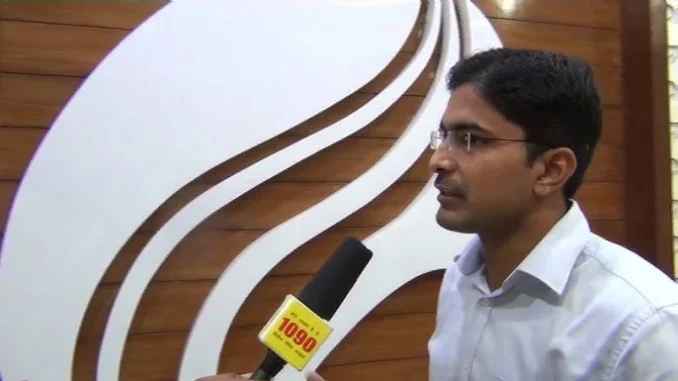
Ankit Khandelwal is a distinguished officer of the Indian Administrative Service (IAS) belonging to the 2016 batch of the Uttar Pradesh cadre, one of the largest, most complex, and administratively demanding cadres in the entire Indian civil service system.
A direct recruit through the Union Public Service Commission (UPSC) Civil Services Examination, he has steadily built a career in public administration in the state of Uttar Pradesh, taking on increasingly significant postings since his induction into the service.
From his early days as a Joint Magistrate in one of the National Capital Region’s most high-profile districts to his current role as District Magistrate of Sambhal, a district that has in recent years attracted considerable national attention, Ankit Khandelwal has demonstrated the administrative competence and composure that define effective district-level governance in India’s most populous state.
For thousands of young UPSC aspirants across India, officers like Ankit Khandelwal serve as quiet but inspiring examples of what dedication, academic preparation, and commitment to public service can achieve.
His career trajectory through the Uttar Pradesh cadre reflects the progression of a methodical and capable administrator, one who has earned his responsibilities through demonstrated performance at each stage of his career.
| Ankit Khandelwal | |
|---|---|
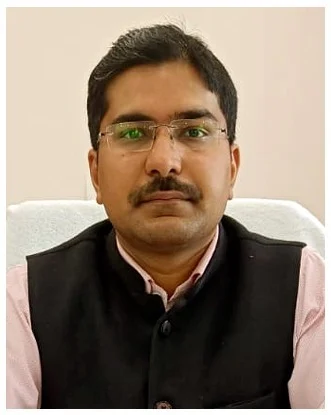 Ankit Khandelwal: History · Bio · Photo
|
|
| Wiki Facts & About Data | |
| Full Name: | Ankit Khandelwal |
| Born: | January 2, 1989 |
| Age: | 37 years old |
| Nationality: | Indian |
| Occupation: | Indian Administrative Service (IAS) Officer |
Early Life
Ankit Khandelwal hails from Rajasthan, a state with a rich tradition of producing both entrepreneurs and civil servants, deeply rooted in the Marwari and Rajasthani cultural identity of discipline, perseverance, and intellectual ambition. While the specific details of his birthplace, date of birth, and personal family background are not publicly disclosed, consistent with the professional culture of IAS officers who prefer to maintain a clear boundary between their public duties and private lives, his domicile state and the trajectory of his academic and professional career reflect the values of a family that placed a strong premium on education and public service.
Like many aspirants who make it into the IAS from non-metropolitan or smaller-city backgrounds, Ankit Khandelwal’s journey to clearing the UPSC Civil Services Examination would have required years of focused, self-directed preparation. The UPSC exam tests a candidate across a vast interdisciplinary canvas, from Indian history, polity, and governance to economics, science, environment, ethics, and essay writing, demanding not just academic breadth but a disciplined approach to learning and sustained motivation over a long preparation period. The fact that Ankit Khandelwal cleared this examination and secured the Uttar Pradesh cadre, one of the most coveted in the entire IAS system, speaks to the quality of his preparation and intellectual capability.
Education
The specific details of Ankit Khandelwal’s educational qualifications, the institutions he attended for school and undergraduate studies, and his academic discipline, are not publicly available in open-source government portals or verified media sources at this time. The DoPT IAS Civil List, which is the authoritative official registry of IAS officers in India, records educational qualifications for each officer; however, the specific educational details for Ankit Khandelwal have not been highlighted in publicly accessible databases or biographical sources.
What is confirmed from his service record is that he met the educational eligibility requirements for the UPSC Civil Services Examination, which mandates a bachelor’s degree in any discipline from a recognised university, and successfully cleared all three stages of the examination: the Preliminary (objective) test, the Main (written) examination comprising nine papers including essay, general studies, and an optional subject, and the Personality Test (interview) conducted by the UPSC Board. His successful selection into the IAS and allocation to the coveted Uttar Pradesh cadre indicates strong overall performance across these stages.
UPSC Civil Services Examination
Ankit Khandelwal cleared the UPSC Civil Services Examination as a member of the batch that was allocated to service in the year 2016, making him part of the cohort whose officers joined the Lal Bahadur Shastri National Academy of Administration (LBSNAA) in Mussoorie for their foundational and phase-one training in the 2017 period. He was allocated the Uttar Pradesh cadre, one of the most significant and demanding state cadres in the entire Indian Administrative Service, given Uttar Pradesh’s status as India’s most populous state with over 240 million residents and one of the most complex administrative landscapes in the country.
The UPSC Civil Services Examination is widely regarded as one of the most competitive public examinations in the world. Each year, approximately one million candidates register for the examination, of whom only around 180 to 200 ultimately make it into the Indian Administrative Service. Clearing the examination and being allocated the Uttar Pradesh cadre is therefore an achievement that represents the very top tier of competitive success in India’s educational and examination system.
His batch, the 2016 UPSC CSE batch, was confirmed in the IAS by the Uttar Pradesh Government along with sixteen other officers of the same batch, including names such as Akansha Rana, Akshat Verma, Anand Vardhan, Anuj Malik, Ekta Singh, Gaurav Singh Sogarwal, Eshan Pratap Singh, Soumya Pandey, and others. Confirmation in the IAS is a formal recognition of an officer’s successful completion of probation and their permanent induction into the service.
Career
Foundational Training, LBSNAA, Mussoorie
Like all IAS officers recruited through the UPSC Civil Services Examination, Ankit Khandelwal’s career began with the mandatory foundational training programme at the Lal Bahadur Shastri National Academy of Administration (LBSNAA) in Mussoorie, Uttarakhand, the premier institution for training India’s civil servants. The foundational course brings together officers selected across all the central services and gives them a shared grounding in governance, public administration, constitutional law, economics, ethics, and leadership. This is followed by phase-one IAS-specific training and then a period of district attachment in their allocated state, where trainee officers experience actual district administration at the ground level before assuming independent charge.
For officers of the Uttar Pradesh cadre, this district attachment phase involves being placed with an experienced District Magistrate in one of UP’s 75 districts, observing and participating in the daily functioning of district administration, from revenue courts and land records to law and order, developmental programme implementation, and public grievance redressal. This period of practical learning forms the foundation of an IAS officer‘s understanding of grassroots governance, a foundation that Ankit Khandelwal carried forward into his own independent career.
Joint Magistrate, Gautam Budh Nagar (Noida)
Among the confirmed postings of Ankit Khandelwal IAS in Uttar Pradesh is his tenure as Joint Magistrate in Gautam Budh Nagar, one of the most strategically significant and administratively demanding districts in the entire state. Gautam Budh Nagar, which encompasses the planned satellite city of Noida (New Okhla Industrial Development Authority) and Greater Noida, is a district that sits on the boundary of Delhi and is home to some of India’s largest industrial estates, information technology parks, educational institutions, and real estate developments. Its proximity to the national capital makes it one of the most sensitive and high-profile districts in Uttar Pradesh.
It was while serving as Joint Magistrate in Gautam Budh Nagar that Ankit Khandelwal was promoted to the Senior Time Scale, a formal recognition of his completion of the requisite years of satisfactory service and his readiness for more senior responsibilities. The promotion to Senior Time Scale is a standard milestone in an IAS officer‘s career progression, typically occurring around four years into service, and marks the transition from the junior level of the service to its mid-career phase. This promotion was officially noted and published by the Indian Bureaucracy news portal and confirmed by the Uttar Pradesh Government.
District Magistrate, Sambhal, Uttar Pradesh (2026)
The most significant appointment in Ankit Khandelwal’s career to date came in May 2026, when the Uttar Pradesh Government under Chief Minister Yogi Adityanath carried out a major administrative reshuffle involving 38 IAS officers, including the District Magistrates of eight districts. As part of this reshuffle, Ankit Khandelwal was appointed District Magistrate (DM) of Sambhal, marking his elevation to one of the most important and responsible positions available to an officer at his level of seniority.
The role of District Magistrate is widely regarded as the most significant field posting in the entire IAS career, it is the position at which an officer bears full executive, administrative, and magisterial responsibility for an entire district and its population. As DM of Sambhal, Ankit Khandelwal is the principal representative of the Government of Uttar Pradesh in the district, responsible for law and order, revenue administration, disaster management, developmental programme implementation, coordination with security forces, oversight of all government departments in the district, and the redressal of public grievances. The DM functions simultaneously as the District Magistrate (executive head), the Collector (revenue authority), and the District Election Officer during elections, a combination of roles that makes the position uniquely comprehensive and demanding in Indian public administration.
Sambhal is a district of considerable historical, cultural, and administrative significance in western Uttar Pradesh. It was carved out of Moradabad district in 2011 and has a population predominantly engaged in agriculture and small-scale manufacturing. The district has in recent years attracted national media attention, making effective and sensitive administration a particular priority at this posting. Ankit Khandelwal’s appointment as DM of Sambhal at this stage of his career reflects the Uttar Pradesh Government’s confidence in his administrative capabilities and his readiness for the demands of independent district command.
Notable Achievements and Contributions
While the specific details of individual administrative achievements during Ankit Khandelwal’s career in Uttar Pradesh are not extensively documented in publicly available media sources, consistent with the low-profile nature of effective district administration in India, several aspects of his career trajectory deserve recognition as markers of professional achievement.
His posting as Joint Magistrate in Gautam Budh Nagar, one of UP’s most complex and high-profile districts, and his satisfactory performance there, leading to promotion to the Senior Time Scale, reflects positively on his administrative competence. The Gautam Budh Nagar posting demands an officer who can manage the unique combination of industrial, real estate, IT sector, and urban governance challenges that characterise the Noida-Greater Noida region, while simultaneously maintaining the sensitivity required for a district that regularly features in national-level political and economic news.
His confirmation in the IAS alongside sixteen fellow officers of the Uttar Pradesh 2016 batch represents the formal seal of approval from the Government on the quality of his probationary performance. Confirmation in the IAS follows a comprehensive review of an officer’s probation period performance, including training assessments, district attachment reports, and conduct evaluations, and is not automatic, requiring active positive review.
His appointment as District Magistrate of Sambhal in 2026, roughly eight to nine years into his career, is itself an achievement, reflecting both his seniority and the Uttar Pradesh Government’s assessment of his readiness for full district command. In a state with 75 districts and a large pool of IAS officers competing for DM postings, reaching the DM level is a significant career milestone.
Social Media
Ankit Khandelwal IAS does not maintain a widely known or publicly prominent personal social media presence. In keeping with the professional culture of the Indian Administrative Service, particularly in the Uttar Pradesh cadre, which tends to be administratively focused and relatively media-averse, he conducts his public duties through official government channels rather than personal digital platforms.
Official information about his postings and career history is available through the Government of Uttar Pradesh’s Department of Appointment and Personnel portal (niyuktionline.upsdc.gov.in), the DoPT IAS Civil List maintained by the Ministry of Personnel, Public Grievances and Pensions of the Government of India, and India’s leading bureaucracy news portals, including Indian Bureaucracy (indianbureaucracy.com) and Whispers in the Corridors (whispersinthecorridors.com). His posting as District Magistrate of Sambhal is accessible through the official Sambhal district administration website (sambhal.nic.in) maintained by the National Informatics Centre under the Ministry of Electronics and Information Technology, Government of India.
Personal Life
Ankit Khandelwal IAS maintains a strictly private personal life, consistent with the broader culture of the Indian Administrative Service, where officers are expected to conduct themselves with propriety and keep personal matters separate from their official identities. Information about his marital status, wife or partner, children, and family background is not publicly available in any verified official or credible media source.
His professional identity is rooted in his Rajasthani origin and his service in Uttar Pradesh, two contexts that have shaped his administrative perspective. As a UP cadre officer serving in a state very different from his home state, he brings the perspective of an outsider who must understand and respond to local administrative challenges with both professional rigour and cultural sensitivity, a quality that is essential for effective district administration across the diverse geography and demography of Uttar Pradesh.
As with most IAS officers at the mid-career stage, Ankit Khandelwal’s primary identity and focus is entirely on his work, the day-to-day responsibility of governance, public service delivery, and the management of administrative challenges that arise in complex, densely populated districts like those to which he has been assigned. This professional dedication is characteristic of the most effective officers produced by India’s civil service system.
Salary and Service Details
As an IAS officer of the Uttar Pradesh cadre who has been promoted to the Senior Time Scale, Ankit Khandelwal’s salary is determined by the Government of India’s 7th Pay Commission Pay Matrix. In the Senior Time Scale (Level 12 of the Pay Matrix), an IAS officer receives a base salary of approximately ₹78,800 per month, supplemented by government allowances including Dearness Allowance (DA), House Rent Allowance (HRA), and other service-related entitlements. As District Magistrate, he is additionally entitled to official government accommodation, an official vehicle, staff support, and other position-specific benefits. His compensation will increase progressively as he advances to higher pay matrix levels with additional years of service and promotion.
Like all IAS officers, he is required to file annual property declarations in accordance with the All India Services (Conduct) Rules, a statutory obligation that ensures a basic level of financial transparency in India’s senior civil service. The specific details of these declarations are not publicly highlighted in any media coverage of his career.
The Uttar Pradesh Cadre, Context and Significance
To fully appreciate the significance of Ankit Khandelwal’s career, it is worth understanding the context of the Uttar Pradesh cadre. UP is India’s most populous state, with a population exceeding 240 million people, and one of the most administratively complex. It has 75 districts, 18 divisions, and a civil service apparatus of considerable size and historical depth. Governing UP effectively requires officers who can manage diverse and often competing pressures: development imperatives, law and order challenges, revenue administration, political sensitivities, and public service delivery at scale.
The UP cadre IAS is known for its demanding posting culture, officers are regularly moved between assignments, required to handle crises under public scrutiny, and expected to deliver results in challenging environments. Serving effectively in this cadre, and rising to the level of District Magistrate in a district of Sambhal’s profile, is a genuine measure of an officer’s administrative mettle. Ankit Khandelwal’s career in this demanding environment speaks positively to his professional calibre.
Frequently Asked Questions (FAQs)
Who is Ankit Khandelwal IAS?
Ankit Khandelwal is an Indian Administrative Service (IAS) officer of the 2016 batch, allocated to the Uttar Pradesh cadre through the UPSC Civil Services Examination. He is currently serving as District Magistrate of Sambhal, Uttar Pradesh, as of May 2026.
What batch is Ankit Khandelwal IAS?
He belongs to the 2016 batch of the IAS, Uttar Pradesh cadre. He is among the 17 UP cadre officers of this batch who were formally confirmed in the Indian Administrative Service.
What cadre is Ankit Khandelwal IAS?
He belongs to the Uttar Pradesh (UP) cadre of the Indian Administrative Service, one of the largest and most demanding state cadres in the entire IAS system.
What is Ankit Khandelwal IAS’s current posting?
As of May 2026, following a major administrative reshuffle by the Uttar Pradesh Government, Ankit Khandelwal is serving as District Magistrate (DM) of Sambhal, Uttar Pradesh.
Where was Ankit Khandelwal IAS previously posted?
He previously served as Joint Magistrate in Gautam Budh Nagar (Noida), Uttar Pradesh, one of the state’s most prominent and administratively demanding districts.
When was Ankit Khandelwal IAS promoted to Senior Time Scale?
He was promoted to the Senior Time Scale of the IAS while serving as Joint Magistrate in Gautam Budh Nagar, as officially confirmed and published by the Indian Bureaucracy news portal in January 2021.
Has Ankit Khandelwal IAS been confirmed in the IAS?
Yes. He was among the 17 officers of the Uttar Pradesh 2016 batch formally confirmed in the Indian Administrative Service by the UP Government.
What does a District Magistrate do in India?
The District Magistrate is the principal executive authority in an Indian district, responsible for law and order, revenue administration, disaster management, developmental programme implementation, coordination with all government departments, and public grievance redressal. The DM simultaneously holds the offices of Collector (revenue), District Magistrate (executive), and District Election Officer during elections.
Which state cadre is Ankit Khandelwal IAS?
He is an officer of the Uttar Pradesh cadre, the cadre serving India’s most populous state with over 240 million residents and 75 administrative districts.
What is the salary of Ankit Khandelwal IAS?
As a Senior Time Scale IAS officer, his base salary is approximately ₹78,800 per month under the 7th Pay Commission Pay Matrix, supplemented by Dearness Allowance, HRA, and other government allowances and entitlements.
Conclusion
Ankit Khandelwal IAS represents the generation of civil servants who have grown up in post-liberalisation India, been shaped by its rising aspirations, and chosen to channel their capabilities into the demanding but enormously consequential work of public administration.
From his UPSC success and allocation to the highly competitive Uttar Pradesh cadre, through his Joint Magistrate posting in one of the NCR’s most dynamic districts, to his current role as District Magistrate of Sambhal, a district at the intersection of history, culture, and present-day administrative challenge, his career has been one of steady, purposeful progression.
In India’s civil service culture, the most effective officers are often those who do not seek the limelight, who do their work quietly, effectively, and with sustained commitment to the people they serve. By all available evidence, Ankit Khandelwal IAS belongs to this tradition. As he continues in his role as DM of Sambhal and advances through the seniority structure of the Uttar Pradesh cadre in the years ahead, he carries with him the expectation that a 2016 batch UP cadre officer always carries: to govern India’s most populous and complex state with competence, integrity, and a genuine commitment to public service.
For the lakhs of young Indians who aspire to the Indian Administrative Service every year, Ankit Khandelwal’s career is a reminder that the IAS is built on the accumulated contributions of officers who may never make national headlines, but whose quiet, effective governance at the district level forms the bedrock of everything the Indian state is able to deliver to its citizens.
Related People





Leave a Reply