
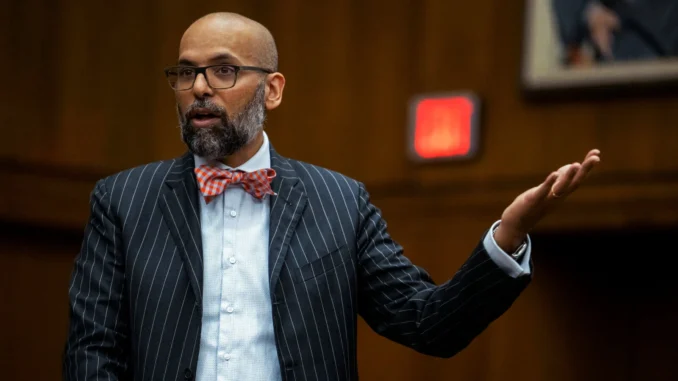
Most federal judges arrive on the bench after quiet careers in corporate law or routine prosecutorial work. Zia M. Faruqui arrived with a portfolio that reads more like a national security thriller.
Over the course of twelve years as a federal prosecutor, he dismantled ISIS cryptocurrency accounts, led the takedown of the largest darknet child exploitation network in history, authorized the seizure of a Russian oligarch’s superyacht, disrupted North Korean weapons financing, and oversaw money laundering and asset forfeiture proceedings totaling over $700 million.
Since his appointment to the United States District Court for the District of Columbia in September 2020, Judge Faruqui has become one of the most closely watched and widely respected magistrate judges in the American federal system. His rulings on cryptocurrency, sanctions law, and digital evidence have placed him years ahead of the broader legal conversation.
His willingness to hold both defendants and the government to the same constitutional standard has marked him as a judge of rare intellectual independence and principle. And in 2026, his public challenge to the conditions of a high-profile detainee’s jail confinement placed him at the center of a national debate about due process, pretrial detention, and the obligations the judiciary owes to every person in its custody regardless of the charges against them.
| Zia M. Faruqui | |
|---|---|
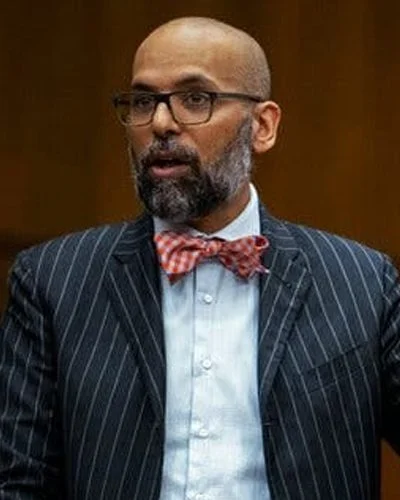 Zia M. Faruqui: History · Bio · Photo
|
|
| Wiki Facts & About Data | |
| Full Name: | Zia M. Faruqui |
| Nationality: | American |
| Occupation: | U.S. Magistrate Judge; Former Federal Prosecutor; Adjunct Law Professor |
| Religion: | Islam (Muslim) |
Early Life
Zia M. Faruqui’s personal background, like that of many federal judges, is not extensively documented in public records a deliberate reflection of the judiciary’s tradition of allowing the work to speak louder than the biography. What is publicly known situates him firmly within the American Muslim community, a demographic that has produced a growing and distinguished cohort of legal professionals in recent decades individuals whose personal experiences with questions of justice, fairness, and civil liberties have often shaped an especially acute sensitivity to due process and the rule of law.
Faruqui is known to have pursued an exceptionally rigorous academic path from early on, gravitating toward law and public service at a stage in life when many of his peers were still determining their direction. His decision to attend Georgetown University one of the most respected institutions in the United States for law, government, and international affairs was not incidental. Georgetown’s location in Washington, D.C., its deep ties to the federal legal community, and its longstanding emphasis on public service and constitutional law all aligned with the professional trajectory he would pursue.
Before his time on the federal bench, Faruqui also served as a board member for Jobs for Homeless People, an organization providing housing and vocational training in Washington, D.C. a commitment to community service that predates his judicial appointment and speaks to a set of values that have consistently animated both his private conduct and his public rulings.
Education
Zia Faruqui completed both his undergraduate education and his legal training at Georgetown University in Washington, D.C. one of the most prestigious academic institutions in the country for students pursuing careers in law, government, and international relations.
He earned his Bachelor of Arts degree from Georgetown in 2001, before enrolling at Georgetown University Law Center, where he completed his Juris Doctor (J.D.) in 2004. Georgetown Law is consistently ranked among the top law schools in the United States and has produced a remarkable number of distinguished federal judges, government officials, and legal scholars. The institution’s emphasis on public interest law, constitutional theory, and national security legal frameworks proved directly relevant to the prosecutorial and judicial career Faruqui would build in the years that followed.
In addition to his Georgetown credentials, Faruqui has taught as an adjunct professor at two institutions: Harris-Stowe State University, where he taught courses on criminal rehabilitation, and Georgetown University, where he has taught Constitutional Law a subject that his judicial opinions suggest he approaches with both intellectual rigor and a deep commitment to foundational principles.
Career
Private Practice – Willkie Farr & Gallagher LLP (2004–2008)
Upon graduating from Georgetown Law in 2004, Faruqui joined Willkie Farr & Gallagher LLP, a prominent international law firm based in Washington, D.C. There, he worked as a litigation associate, focusing primarily on government investigations and general commercial litigation. This period gave him a foundational grounding in how the federal government builds and pursues complex legal cases experience that would prove invaluable in his subsequent career as a prosecutor and, eventually, as a judge evaluating the government’s legal arguments.
Twelve Years as a Federal Prosecutor (2008–2020)
Faruqui left private practice to join the United States Attorney’s Office, beginning his prosecutorial career in the Eastern District of Missouri the federal jurisdiction encompassing St. Louis. He later transferred to the U.S. Attorney’s Office for the District of Columbia, where he would spend the majority of his prosecutorial career. Over the span of more than twelve years as an Assistant United States Attorney, Faruqui developed one of the most distinctive and technically sophisticated prosecutorial portfolios in the federal system one centered on the intersection of financial crime, cybercrime, cryptocurrency, and national security.
His case work during this period was genuinely extraordinary in its scope and complexity:
- ISIS and Al-Qaeda crypto financing: Faruqui led counter-terror-finance operations that implemented denial-of-service attacks against, and site takeovers of, websites used by ISIS and Al-Qaeda to collect cryptocurrency donations. These operations represented some of the earliest and most technically sophisticated uses of U.S. law to disrupt terrorist financing conducted through digital assets.
- Welcome to Video darknet child exploitation: He led the takedown of “Welcome to Video,” the largest darknet site ever dedicated to child sexual exploitation. The site was funded entirely through cryptocurrency. The operation involved law enforcement coordination across multiple countries and resulted in the arrest of more than 300 individuals worldwide. It remains one of the most significant darknet enforcement actions in history.
- North Korean weapons proliferation: Faruqui prosecuted cases involving North Korean weapons financing work that placed him at the forefront of efforts to use financial crime law to constrain rogue state weapons programs.
- Antiquities theft: He prosecuted cases involving the theft of cultural antiquities, including artifacts looted from conflict zones such as Syria.
- Money laundering and asset forfeiture: His involvement in money laundering and asset forfeiture proceedings over the course of his career totaled more than $700 million in seized assets a figure that reflects both the scale and success of his prosecutorial work.
Faruqui also represented the Department of Justice at numerous international conferences on financial crimes, cryptocurrency, and national security establishing him as one of the federal government’s foremost experts on the legal dimensions of digital assets long before cryptocurrency became a mainstream legal and regulatory concern.
Appointment to the Federal Bench (2020)
On September 14, 2020, Zia M. Faruqui was appointed as a United States Magistrate Judge for the District of Columbia. The timing was historically significant: he joined the bench just weeks before the 2020 presidential election, and within months would find himself presiding over one of the largest and most consequential criminal dockets in modern American legal history the cases stemming from the January 6, 2021 Capitol breach.
January 6 Capitol Breach Cases
Judge Faruqui has presided over hundreds of cases arising from the January 6, 2021 Capitol breach. His handling of this docket has been notable for both its volume and the quality of his procedural oversight. In at least one named case involving a Texas defendant identified as Denney Faruqui publicly and sharply criticized prosecutors at a March 2022 hearing for the defendant’s prolonged custody, warning that the unprecedented scale of the government’s investigation could not be invoked as justification for denying defendants their due process rights. He apologized directly to the defendant for apparent administrative failures, telling prosecutors that the government’s choice to pursue the “largest case ever” was no excuse for a defendant being effectively lost in the system without proper attention to his rights.
That willingness to hold the government accountable in cases that were politically charged and often prosecutorially ambitious established Faruqui as a magistrate judge who applies constitutional standards without adjustment for the nature or notoriety of the charges involved.
Landmark Cryptocurrency Rulings
Judge Faruqui’s most far-reaching contributions to American jurisprudence have come in the area of cryptocurrency law a field where the legal framework was largely undefined when he arrived on the bench and where his opinions have served as foundational guidance for courts, regulators, and legal practitioners across the country.
In a widely cited January 2021 memorandum opinion on a cryptocurrency forfeiture case, Faruqui directly challenged the popular myth that cryptocurrency is untraceable and therefore beyond the reach of law enforcement. He argued that cash is actually more difficult to trace than cryptocurrency, writing that “the public nature of the blockchain makes it exponentially easier to follow the flow of cryptocurrency over fiat funds.” He dismissed what he called “the horror story of unhosted wallets” as “fiction, not fact” a pointed rebuke to arguments that private crypto wallets represent an insurmountable barrier to law enforcement.
In a May 2022 opinion approving a criminal prosecution involving sanctions evasion via cryptocurrency, Faruqui became the first federal judge to apply U.S. sanctions law to a cryptocurrency transaction ruling that digital assets are subject to the same sanctions regime as any other form of money or financial instrument. The opinion was notable both for its legal precision and for its distinctively irreverent prose: in dismissing claims that crypto is untraceable and sanctions-exempt, he issued what he called a “big fat WRONG,” compared the myth of crypto anonymity to horror film villain Jason Voorhees who “refuses to die,” and cited the Office of Foreign Assets Control’s prior determinations on digital currencies as controlling authority.
In an August 2021 memorandum opinion tied to the massive Bitfinex Bitcoin seizure involving nearly 100,000 stolen bitcoins worth approximately $3.6 billion Faruqui analyzed, for the first time in any federal court, the reliability and evidentiary weight of blockchain analytics software as a basis for establishing probable cause. He concluded that cryptocurrency tracing tools such as clustering software are “one of the most reliable bases for a search ever” a ruling that, while not binding precedent, has been widely cited as a landmark contribution to digital evidence law. In characteristic fashion, his opinion included references to The Big Lebowski, Star Trek: First Contact, and NBA star Damian Lillard a writing style that has made his opinions unusually readable without diminishing their intellectual substance.
Russian Oligarch Superyacht Seizure
Among his other notable rulings, Faruqui authorized the seizure of a Russian oligarch’s superyacht following Russia’s invasion of Ukraine a legally complex action requiring the application of sanctions law, international asset forfeiture principles, and admiralty law. The ruling reflected both his deep expertise in financial crime law and his willingness to address novel legal questions with confidence and precision.
Rohingya Genocide – Facebook Records
In another landmark ruling, Judge Faruqui compelled Facebook to produce de-platformed records relating to the genocide of the Rohingya people in Myanmar an order with significant implications for human rights law, social media company obligations, and the use of digital evidence in international accountability proceedings.
Reentry Court and Prison Education
Beyond his courtroom work, Judge Faruqui supervises the D.C. District Court’s Reentry Court a specialized docket designed to bring support services, housing assistance, and vocational resources to high-risk individuals who have completed their terms of incarceration. He has also supported numerous prison education programs, including a coding class taught in partnership with the Massachusetts Institute of Technology (MIT). These commitments reflect a judicial philosophy that treats rehabilitation and reintegration as integral to the justice system’s purpose not as afterthoughts to punishment.
2026 – White House Correspondents’ Dinner Case
In May 2026, Judge Faruqui drew national media attention when he publicly expressed deep concern about the pretrial detention conditions of Cole Allen, a defendant charged in connection with an alleged assassination plot at the White House Correspondents’ Association dinner. At a hearing, Faruqui compared Allen’s confinement conditions unfavorably to those of defendants charged in connection with the January 6, 2021 Capitol attack and apologized directly to Allen for what he described as the court’s failure to ensure adequate treatment in custody. The remarks ignited a significant public and political debate, but were consistent with Faruqui’s longstanding judicial philosophy: that the constitutional guarantee of due process applies to every defendant in federal custody, regardless of the severity or political sensitivity of the charges they face.
Teaching and Academic Contributions
Judge Faruqui has maintained a meaningful commitment to legal education alongside his judicial and prosecutorial work. He taught criminal rehabilitation at Harris-Stowe State University as an adjunct professor, and has taught Constitutional Law at Georgetown University his alma mater. His chambers at the D.C. District Court actively advertises clerkship and internship opportunities, and he has participated in multiple law school events and panels, engaging directly with the next generation of legal professionals on topics including cryptocurrency law, national security, and the ethics of prosecution and judicial decision-making. He has also written for Lawfare, the respected national security and law publication, contributing analysis on issues at the intersection of law, technology, and government accountability.
Personal Life
Zia Faruqui is a practicing Muslim, and his faith has been recognized publicly including through his association with the Muslim Bar Association of New York, which has cited his career as an example of the path to federal judicial appointment for Muslim legal professionals. His trajectory is part of a broader, growing presence of Muslim Americans in the federal legal system, and he has been noted as an example of the community’s contribution to American jurisprudence at the highest levels.
Consistent with the traditions of the federal judiciary, Faruqui has maintained a high degree of personal privacy. Details of his family life, marital status, and personal relationships are not publicly disclosed. His public identity is defined almost entirely by his legal work which is, by any standard, exceptional.
His non-profit engagement has included board membership with Jobs for Homeless People, an organization in Washington, D.C., focused on providing housing stability and vocational training to the city’s most vulnerable residents. This commitment to community service reflects the same values that are evident in his judicial oversight of the Reentry Court and his support for prison education initiatives.
Net Worth
Judge Faruqui’s net worth is not publicly disclosed. As a United States Magistrate Judge, his compensation is set by Congress and is part of the federal judicial salary scale a figure that is publicly available but that does not constitute a pathway to significant personal wealth. Prior to his judicial appointment, he earned income as a litigation associate at Willkie Farr & Gallagher LLP and as a federal prosecutor.
He has not been publicly associated with any private business ventures or investment activities. Any estimates of his net worth circulating online should be treated as unverified speculation.
Legacy and Significance
Zia Faruqui’s significance in American law is difficult to overstate. He arrived on the federal bench at a moment when the legal system was entirely unprepared for the wave of cryptocurrency-related prosecutions, sanctions cases, and digital asset forfeiture actions that the 2020s would bring. His deep technical expertise built over a decade of prosecutorial work that was years ahead of its time positioned him to issue opinions that have shaped how federal courts across the country think about blockchain evidence, crypto traceability, and the applicability of financial crime law to digital assets.
At the same time, his handling of the January 6 docket, the Bitfinex Bitcoin case, the Russian oligarch superyacht seizure, the Rohingya Facebook records order, and the Cole Allen detention controversy all reveal a judge whose jurisprudential instincts are grounded in a single, unwavering principle: that the Constitution means what it says, and that it applies equally to every person who comes before the court regardless of who they are, what they are charged with, or how politically inconvenient their rights might be in a given moment.
In a legal system where institutional pressure frequently nudges toward the path of least resistance, Faruqui has consistently chosen the path of greatest constitutional fidelity. That, more than any single ruling, is the mark of a judge who will be studied and cited long after the specific cases that made him famous have faded from the public memory.
Frequently Asked Questions (FAQs)
Who is Zia Faruqui?
Zia M. Faruqui is a United States Magistrate Judge serving in the U.S. District Court for the District of Columbia. He was appointed to the bench in September 2020 after twelve years as a federal prosecutor and an earlier period in private legal practice at Willkie Farr & Gallagher LLP.
What is Zia Faruqui known for?
He is known for pioneering legal work at the intersection of cryptocurrency, sanctions law, and financial crime including issuing the first federal court ruling applying U.S. sanctions law to a cryptocurrency transaction. He is also recognized for his handling of hundreds of January 6 Capitol breach cases, his seizure orders against a Russian oligarch’s superyacht, his ruling compelling Facebook to produce records related to the Rohingya genocide, and his outspoken commitment to due process for all defendants regardless of the charges against them.
Where did Zia Faruqui go to school?
He earned both his Bachelor of Arts degree and his Juris Doctor from Georgetown University in Washington, D.C., graduating in 2001 and 2004 respectively.
What did Zia Faruqui do before becoming a judge?
He worked as a litigation associate at Willkie Farr & Gallagher LLP from 2004 to 2008, then served for over twelve years as an Assistant United States Attorney first in the Eastern District of Missouri and then in the District of Columbia. His prosecutorial work focused on the nexus between national security, financial crime, cybercrime, and cryptocurrency.
What religion is Zia Faruqui?
Zia Faruqui is Muslim. He has been recognized by the Muslim Bar Association of New York as an example of Muslim legal professionals who have reached the highest levels of the American federal judiciary.
What were Zia Faruqui’s most important cryptocurrency rulings?
His three most landmark crypto opinions are: (1) his January 2021 memorandum debunking the myth that unhosted cryptocurrency wallets are untraceable by law enforcement; (2) his May 2022 opinion establishing that U.S. sanctions law applies to cryptocurrency transactions the first such ruling in any federal court; and (3) his August 2021 memorandum in the Bitfinex Bitcoin seizure case, which was the first federal court analysis of the reliability of blockchain analytics software as a basis for establishing probable cause.
What was the “Welcome to Video” case?
Welcome to Video was the largest darknet site ever dedicated to child sexual exploitation. It was funded through cryptocurrency. As a federal prosecutor, Faruqui led the operation that took down the site an operation involving law enforcement from multiple countries that resulted in more than 300 arrests worldwide. It remains one of the most significant darknet enforcement actions in history.
Is Zia Faruqui’s net worth publicly known?
No. As a federal magistrate judge whose income is set by congressional statute, Faruqui’s net worth is not publicly disclosed. He has not been associated with private business ventures, and any figures speculated online are unverified estimates.
Conclusion
Zia M. Faruqui is a figure of rare distinction in contemporary American law. He is, simultaneously, a pioneer of cryptocurrency jurisprudence, a proven national security prosecutor, a committed educator, a community servant, and a judge who has demonstrated repeatedly and at political cost that constitutional principles are not negotiable.
His career defies easy categorization. He prosecuted terrorists and child exploitation networks with equal effectiveness. He issued landmark rulings on digital assets that have influenced regulatory and legal thinking far beyond the walls of the D.C. District Court. He has apologized from the bench to defendants whose rights the system failed not because it was politically convenient, but because it was constitutionally required.
In an era of intense polarization around the federal judiciary, Zia Faruqui represents something increasingly rare: a jurist whose decisions are guided by law and principle rather than political signal or institutional convenience. Whether authorizing the seizure of a billionaire’s superyacht, debunking the myth of crypto anonymity with a wry reference to The Big Lebowski, or holding the government accountable for a defendant’s jail conditions in a case the entire country was watching, he brings the same standard to bear rigorous, constitutional, and uncompromising.
He is, without question, one of the most consequential and intellectually distinctive federal magistrate judges of his generation, and a figure whose influence on American law is only beginning to be fully appreciated.
Related People








Muslim Bar Association? What is THAT ? The man is a MUSLIM!!!!! ” His trajectory is part of a broader, growing presence of Muslim Americans in the federal legal system….”, Just what America DOES NOT NEED NOR WANT. They don’t even tell us…is this guy an American? IS HE ???? Appointed by Biden……A MUSLIM!!! An America hater. Democrats are out to destroy our country and they are doing it!!!!
Reply
I agree !