
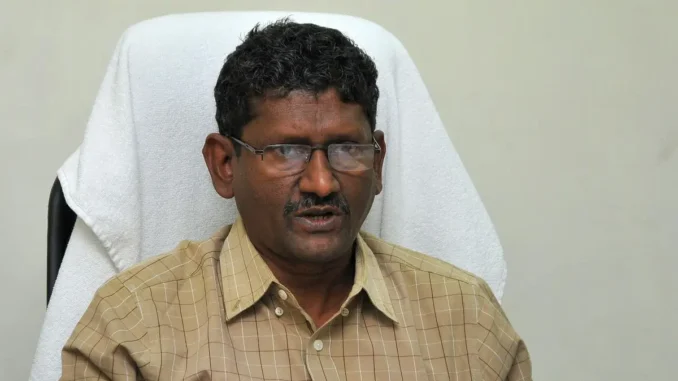
U. Sagayam IAS Biography: The Incorruptible Officer Who Slept in a Graveyard for Justice
U. Sagayam, whose full name is Ubagarampillai Sagayam, is one of the most celebrated and revered civil servants in the history of India’s Indian Administrative Service (IAS).
Known across Tamil Nadu and beyond as “the common man’s collector,” Sagayam has become a living legend of integrity, fearlessness, and honest public service in an era when corruption in government is widely taken for granted.
During his three decades in public service, Sagayam was transferred over 26 times in 29 years almost exclusively because he refused to bow to corrupt politicians, powerful industrialists, and entrenched bureaucratic networks. He uncovered a multi-thousand-crore illegal granite mining scam, confiscated thousands of illegally diverted gas cylinders, conducted what many believe was the fairest state election in Madurai’s modern history, and once spent an entire night alone in a graveyard to protect evidence from being tampered with all in a day’s work for India’s most famous honest IAS officer.
A man born to a farming family in a small Tamil Nadu village who rose through sheer merit, hard work, and an unshakeable moral compass to become a national symbol of what the civil services were always meant to be Sagayam’s story is extraordinary, inspiring, and deeply human.
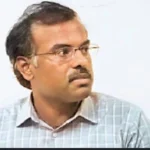
| Ubagarampillai Sagayam | |
|---|---|
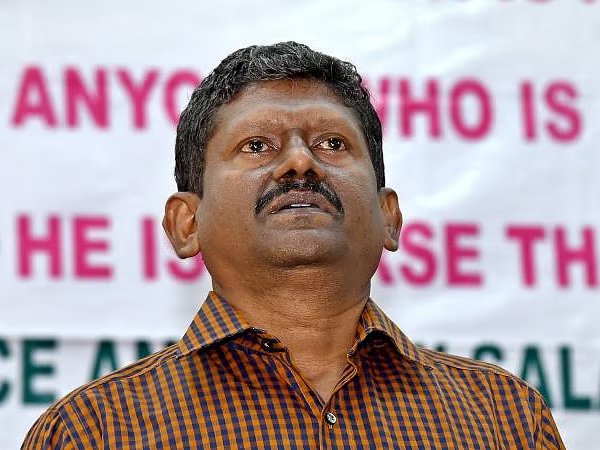 Ubagarampillai Sagayam: History · Bio · Photo
|
|
| Wiki Facts & About Data | |
| Full Name: | Ubagarampillai Sagayam |
| Born: | July 3, 1962 |
| Age: | 64 years old |
| Birthplace: | Perunchunai Village, Pudukkottai District, Tamil Nadu, India |
| Nationality: | Indian |
| Occupation: | Former IAS Officer (Retired), Public Speaker, Social Activist |
| Religion: | Christianity |
| Parents: | Farmer (name not publicly disclosed) |
| Siblings: | Four elder brothers (youngest of five sons) |
| Spouse: | Wife (name not publicly disclosed) |
| Net Worth: | Bank balance of ₹7,172 and a house worth ₹9 lakh (as declared in 2009) |
Early Life
U. Sagayam was born on July 3, 1962, in the small village of Perunchunai, in the Pudukkottai district of Tamil Nadu, India. He grew up in a humble, agrarian household his father was a farmer and his mother a housewife. Sagayam is the youngest of five sons, raised in conditions of modest means but rich in moral values.
From his earliest years, Sagayam’s mother played a defining role in shaping his character. In a now-famous anecdote that he has shared in numerous interviews, he recounts: “Our adjoining field had mango trees and my friends and I would pick the fallen fruit. But my mother made me throw the mangoes away, saying I should enjoy only what is mine.” This formative lesson that one must never take what does not rightfully belong to them became the ethical bedrock upon which his entire career was built.
Growing up in a deeply rural Tamil Nadu, Sagayam was exposed firsthand to the difficulties faced by ordinary farmers, daily wage labourers, and the rural poor experiences that would later fuel his fierce advocacy for the marginalized and his zero-tolerance stance against the corruption that perpetuated their suffering. He comes from a community that has historically faced social discrimination, and he has spoken openly about the importance of never allowing caste, background, or origin to define a person’s dignity or worth.
Education
Sagayam completed his early schooling entirely in the Tamil medium, attending the local Panchayat Elementary School in his village before moving on to the Government Higher Secondary School in Ellaippatti. His academic journey reflects the arc of a first-generation learner from a rural family navigating an education system with limited resources but unlimited determination.
For higher education, Sagayam pursued and earned two Master’s degrees one in Social Work and another in Law. These dual qualifications equipped him with a deep understanding of both community welfare frameworks and legal systems a combination that proved invaluable in his future roles confronting corruption, enforcing the law, and advocating for citizens’ rights.
Armed with his postgraduate qualifications, Sagayam appeared for the Tamil Nadu Public Service Commission (TNPSC) Group 1 examination and cleared it, joining the Tamil Nadu State Civil Service as a Deputy Collector. He subsequently appeared for the national Union Public Service Commission (UPSC) Civil Services Examination, which he also cleared, entering the Central Secretariat Service in 1989. After working in New Delhi for seven months, however, he voluntarily resigned and returned to Tamil Nadu choosing proximity to his people over the prestige and comfort of a central government posting. He was later promoted to the Indian Administrative Service (IAS) in the 2001 batch after gaining seniority in the Tamil Nadu State Civil Service.
Career
Entry into Civil Service (1989–1991)
Sagayam first qualified for the Central Secretariat Service in 1989 through the UPSC Civil Services Examination. He was inducted, trained, and began working in New Delhi. However, after just seven months, he made the highly unusual and voluntary decision to resign from the prestigious Central Secretariat Service. His reason was simple and characteristic: he wanted to serve the people of Tamil Nadu directly, at the ground level, rather than from a distant central government desk. He then appeared for the TNPSC exams and was appointed to the Tamil Nadu State Civil Service.
Sub-Divisional Magistrate, Ootacamund (1991)
In 1991, Sagayam began his career in Tamil Nadu as a Sub-Divisional Magistrate (SDM) in the Ootacamund (Ooty) district. He had barely started before controversy found him or rather, before he found the courage to name it. Sagayam openly accused the District Collector of showing favouritism toward the operators of large tea estates in the region, prioritizing powerful commercial interests over the welfare of ordinary workers and small landholders. The result? His very first transfer, at the very start of his career. It was the opening chapter of a pattern that would repeat itself more than two dozen times over the next three decades.
Kanchipuram and the Pepsi Bottling Plant Controversy (2000)
By 2000, Sagayam was posted as Additional District Magistrate in Kanchipuram. During his tenure, he discovered that a Pepsi Cola bottling plant near Chennai was producing products in dirty, unhygienic bottles. Characteristically, rather than issue a quiet warning, Sagayam shut down the plant entirely and banned the sale of its products in his jurisdiction. His decisive action demonstrated that his zero-tolerance approach extended to consumer protection and public health, not just financial corruption.
Civil Supplies Commissioner: The Gas Cylinder Operation (2004)
In 2004, while serving as Deputy Commissioner of Civil Supplies in Chennai, Sagayam uncovered a large-scale racket in which subsidized Liquefied Petroleum Gas (LPG) cylinders meant for domestic household use were being illegally diverted for commercial use by restaurants and eateries depriving poor families of their entitled subsidy. In a single swift operation, Sagayam confiscated an astonishing 5,000 such cylinders within three days, making national headlines and once again demonstrating his capacity for fast, resolute action against corruption.
District Collector, Namakkal History-Making Transparency (2009)
In 2009, Sagayam was appointed District Collector of Namakkal. This posting gave rise to two iconic moments in his career. First, he launched a determined effort to reform the Village Administrative Officer (VAO) system, through which VAOs officials charged with overseeing villages were discovered to be living in cities, completely disconnected from the villages they were supposed to serve. Sagayam pursued them, demanded accountability, and attempted to compel them to return to their posts. When VAOs and their political allies tried to have him transferred, an extraordinary thing happened: over 5,000 villagers took to the streets to protest against his transfer, forcing the withdrawal of the transfer orders. It was a powerful demonstration of the goodwill he had built with ordinary citizens.
Second, and most historically significant, Sagayam became the first IAS officer in Tamil Nadu to publicly disclose his personal financial assets on the district website. In a country where civil servants’ wealth is widely assumed to be far greater than their official salaries, Sagayam’s declaration was stunning in its modesty: a bank balance of ₹7,172 and a house in Madurai jointly owned with his wife, worth ₹9 lakh. He was 47 years old at the time. Using the voluntary disclosure provision under the Right to Information (RTI) Act, he explained: “It will create confidence in the people and also motivate the administration at large, as the impression of public servants in the eyes of the people is at low ebb.”
District Collector, Madurai The 2011 Elections (2011)
In March 2011, at the direction of the Election Commission of India, Sagayam was posted as the District Collector of Madurai and ex-officio District Election Officer, specifically because the Commission recognized that free and fair elections in Madurai were nearly impossible under the existing conditions given the dominance of the then-ruling party and the rampant practice of vote-buying.
Sagayam arrived in Madurai a full 20 days before voting commenced. He launched an aggressive voter education campaign, urging citizens to reject bribe money and exercise their franchise freely. He stepped up surveillance against vote-buying operations, deployed teams to detect illegal cash distribution, and successfully confiscated ₹20 lakh (₹2,000,000) intended for distribution to voters. His interventions were credited with delivering one of the most transparent elections Madurai had seen in years, and he received a formal appreciation certificate from India’s Chief Election Commissioner S.Y. Quraishi for his exemplary conduct.
The Granite Mining Scam Investigation (2012 Onwards)
Beginning in May 2012, while still serving as District Collector of Madurai, Sagayam launched what would become his most famous and most dangerous investigation: into rampant illegal granite quarrying in the vicinity of Madurai. The roots of this issue stretched back to 2008, when an RTI activist first filed a complaint. Despite a Madras High Court order in 2009 mandating an inquiry, the investigation had been buried and the RTI activist and a newspaper editor who reported on it were both arrested on fabricated charges.
Sagayam toured quarries, visited mining sites personally, and compiled a comprehensive report that exposed how mining companies including one founded by a scion of one of Madurai’s most powerful political families had been illegally extracting granite worth thousands of crores from government land, causing an estimated loss of ₹16,000 crore to the government exchequer. Almost immediately after submitting the report, Sagayam was transferred this was his 19th transfer.
However, the story refused to die. The report was leaked to the press in August 2012, triggering a public outcry. In July 2014, a citizen activist filed a petition with the Madras High Court, and in a landmark intervention, the court appointed Sagayam as Special Officer-cum-Legal Commissioner, directing him to investigate all mining operations across Tamil Nadu. When the state government tried to contest the order, the court rejected their arguments, and in November 2014, Sagayam was formally appointed.
The Night in the Graveyard
Perhaps the single most memorable episode of Sagayam’s career occurred during his investigation of the granite mining scam, when he received information that bodies of alleged victims of human sacrifices performed by granite quarry operators were buried in a graveyard. When Sagayam approached local police to begin the exhumation, they claimed an inability to start operations and he feared that evidence would be tampered with overnight. His response was quintessentially Sagayam: he spent the entire night alone in the graveyard, standing guard over the graves until operations could begin the following morning, ensuring the evidence remained intact.
Later Postings and Voluntary Resignation (2020–2021)
Sagayam went on to serve in various roles, including as Managing Director of the Tamil Nadu Handloom Cooperative, Commissioner of Civil Supplies and Consumer Protection, and Vice Chairman of Science City Chennai. In each role, he continued to champion transparency and consumer protection. In 2020, two years before his natural retirement, Sagayam applied for voluntary resignation from the IAS. The Government of Tamil Nadu accepted his resignation in 2021, bringing a curtain down on one of the most remarkable careers in India’s civil service history. He was reportedly transferred a total of 26 times in his first 29 years of service.
Awards & Recognitions
- Appreciation Certificate from India’s Chief Election Commissioner S.Y. Quraishi Awarded for conducting free and fair elections in Madurai District during the 2011 Tamil Nadu Legislative Assembly elections.
- First IAS Officer in Tamil Nadu to publicly disclose personal assets (2009) A historic act of voluntary transparency that set a benchmark for financial accountability in public service.
- Accolades for Excellence in Public Administration Recognized by various civic organizations and civil society groups across Tamil Nadu for sustained integrity in governance.
- Nationwide recognition as one of India’s most honest IAS officers Consistently featured in media lists, studies, and public surveys recognizing exceptional civil servants.
- “The Common Man’s Collector” An informal but deeply cherished public title conferred by the citizens of the districts he served, described by a Daily News and Analysis correspondent as “the hero of local folklore.”
Social Media
U. Sagayam is not known to maintain prominent personal social media profiles in the manner of public figures or politicians.
Given his characteristic preference for direct, ground-level engagement over public relations, his presence on digital platforms has been minimal.
However, his story, speeches, and interviews are extensively circulated on social media by admirers and civil services aspirants across India. Video clippings of his public addresses on anti-corruption, governance, and ethics regularly go viral on YouTube, Facebook, and Twitter/X, often reaching millions of views.
Sagayam is widely sought after as a public speaker at universities, NGOs, civil services coaching institutions, and governance forums across India.
His talks on ethics, accountability, and the meaning of public service draw large audiences and are widely shared in digital formats by civil services aspirants who look to him as a role model.
- Twitter/X: @SagayamArmy
- Facebook: @SagayamArmyTN
Personal Life
Sagayam is a married man, and in his landmark 2009 asset disclosure, he mentioned a house in Madurai that is “jointly owned with his wife.” Beyond this, he has maintained a studied privacy around his family life, keeping his wife and children well away from the public eye a choice consistent with a man who has always put public service first and personal aggrandizement last. The names of his wife and children have not been disclosed in public records.
His personal life is characterized by the same simplicity and austerity that defines his professional conduct. With a declared bank balance of just ₹7,172 at the age of 47 after nearly two decades of public service Sagayam’s lifestyle stands in sharp and deliberate contrast to the wealth accumulation associated with corrupt officials. He is a practising Christian, and his faith is believed to have been a source of the moral convictions that have guided his conduct throughout his life.
Outside his professional duties, Sagayam has shown a deep concern for farmer welfare and rural communities. He initiated the Uzhavan Unavagam (Farmer’s Food Court) concept allowing poor farmers to sell traditional dishes and generate supplemental income. He also assisted in the rehabilitation of the great-grandchildren of the legendary Indian freedom fighter V. O. Chidambaram Pillai, demonstrating a continuity of service toward those the system has failed.
Among the interesting human dimensions of Sagayam’s character is a particular emphasis on environmental consciousness. On one occasion, while travelling on a busy Madurai road, he spotted a young man speaking on his mobile phone while riding a motorcycle. He stopped the man and, as punishment, ordered him to plant ten saplings within 24 hours a memorable example of his unconventional but effective approach to public administration.
Net Worth
The question of U. Sagayam’s net worth is perhaps the most striking aspect of his biography because it perfectly encapsulates who he is. When he publicly disclosed his assets in 2009 as District Collector of Namakkal a historic first for an IAS officer in Tamil Nadu his declared wealth consisted of:
- Bank Balance: ₹7,172
- Immovable Property: A house in Madurai, jointly owned with his wife, valued at approximately ₹9 lakh (₹900,000)
- No vehicles, no additional land, no significant investments declared
At 47 years of age, with nearly two decades of government service behind him, Sagayam’s declared total net worth at the time was approximately ₹9.07 lakh less than what many junior private sector employees accumulate in a few years. His primary and essentially only source of income throughout his career was his government salary as an IAS officer. While his post-resignation financial status has not been publicly declared, there is little reason to believe it departs significantly from the model of extreme personal austerity he has maintained throughout his life. Sagayam’s financial profile is not simply a data point it is a statement of values, a declaration that a long and distinguished career in India’s most prestigious civil service can be pursued with complete and uncompromising honesty.
FAQs
Who is U. Sagayam IAS?
U. Sagayam (full name Ubagarampillai Sagayam) is a retired Indian Administrative Service (IAS) officer of the Tamil Nadu cadre (2001 batch), widely recognized across India as one of the most honest and fearless civil servants in the country’s history. He is celebrated for his decades-long battle against corruption, his landmark voluntary disclosure of personal assets, and his investigation of the massive illegal granite mining scam in Madurai.
When was U. Sagayam born?
U. Sagayam was born on July 3, 1962, in Perunchunai village, Pudukkottai district, Tamil Nadu, India.
How many times was Sagayam transferred?
Sagayam was transferred over 26 times in his first 29 years of government service, almost always in retaliation for his anti-corruption activities and his refusal to accommodate the demands of powerful politicians and business interests.
What is the granite scam that Sagayam investigated?
In 2012, while serving as District Collector of Madurai, Sagayam investigated rampant illegal granite quarrying operations in the Madurai region, uncovering a scam estimated to have caused a loss of approximately ₹16,000 crore to the government exchequer. Powerful political figures and mining companies were implicated. He was transferred immediately after submitting his report but was later reappointed by the Madras High Court to continue the investigation.
Why did Sagayam spend the night in a graveyard?
During his investigation of the granite mining scam, Sagayam needed to oversee the exhumation of bodies of alleged victims of human sacrifices committed by quarry operators. When local police were slow to begin operations, Sagayam feared evidence would be tampered with and spent the entire night alone in the graveyard to personally guard the site until operations began the following morning.
What is U. Sagayam’s net worth?
Based on his 2009 voluntary public disclosure, his declared assets were a bank balance of ₹7,172 and a jointly owned house worth ₹9 lakh making him one of the least wealthy senior government officials in India at the time, and a powerful symbol of honest public service.
Is U. Sagayam still in service?
No. Sagayam submitted a voluntary resignation from the IAS in 2020, two years before his scheduled natural retirement, and the Government of Tamil Nadu accepted his resignation in 2021. He is now retired from active service but remains an active public speaker on themes of integrity, governance, and social responsibility.
What does the sign on Sagayam’s office door say?
The famous sign on Sagayam’s office door reads in Tamil “Lanjam thavirtthu, nenjam nimirtthu”, which translates in English to: “Reject bribes, hold your head high.”
What is the Uzhavan Unavagam initiative?
The Uzhavan Unavagam (Farmer’s Food Court) was an initiative started by Sagayam to provide poor farmers with a platform to sell traditional dishes, thereby creating an additional and dignified source of income for rural communities.
Conclusion
The biography of U. Sagayam IAS is not merely the story of one man’s career in government it is a testament to the idea that integrity is not a relic of a more idealistic age, but a living, daily choice that one person can make, regardless of the pressures they face. Born in poverty in a small Tamil Nadu village, educated through sheer determination, and transferred more than two dozen times for the crime of doing his job honestly, Sagayam never compromised, never accepted a bribe, and never placed personal advancement above the interests of the ordinary citizens he was sworn to serve.
In a democracy like India, where civil servants wield enormous power over the lives of millions, Sagayam stands as both a reproach and an inspiration a reminder of what public service can and should look like. His story has motivated countless young people, especially from marginalized and rural backgrounds, to dream of a career in the IAS, believing that it is indeed possible to change the system from within by the sheer force of character and commitment.
With a bank balance of ₹7,172 after decades of service, with 26 transfers and zero corruption cases against him, and with the love of thousands of ordinary citizens who once marched in the streets to keep him in his post U. Sagayam has already earned a place in the permanent record of India’s most courageous public servants.
Related People






Leave a Reply