
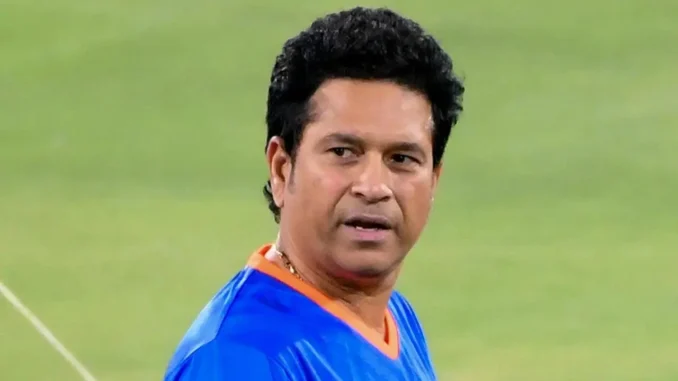
Sachin Ramesh Tendulkar is not merely the greatest cricketer who ever lived he is, for over a billion people, a religion.
Known the world over as the “God of Cricket,” “Master Blaster,” and “Little Master,” he is the only player in the history of the game to score 100 international centuries, the highest run-scorer in both Test cricket and One Day Internationals, and the first and, to date, the only sportsman ever to receive India’s highest civilian honour, the Bharat Ratna.
For 24 unbroken years, from 1989 to 2013, Sachin Tendulkar was not just India’s best cricketer he was India’s most beloved public figure, bar none, across every religion, language, caste, and state that makes up the world’s most diverse democracy.
Born in a middle-class family in Mumbai in 1973, he was a prodigy who debuted for India at 16, scored a century on his Ranji Trophy debut, and went on to amass records so extraordinary that statisticians simply ran out of adequate superlatives.
He played 200 Test matches, 463 One Day Internationals, and 1 T20 International scoring 34,357 runs across all formats, hitting 100 international centuries, and inspiring generations of Indian and global cricketers who grew up watching him bat as if the game had been invented specifically for him.
But numbers, extraordinary as they are, do not fully capture the Tendulkar phenomenon. At its heart, it is a story about a boy from Dadar who loved a game so completely that he gave it everything he had and in return, the game gave him immortality.
| Sachin Ramesh Tendulkar | |
|---|---|
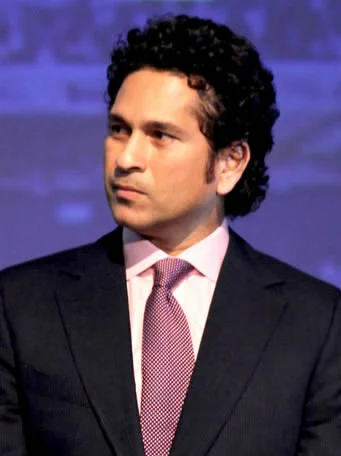 Sachin Ramesh Tendulkar: History · Bio · Photo
|
|
| Wiki Facts & About Data | |
| Full Name: | Sachin Ramesh Tendulkar |
| Stage Name: | Master Blaster, Little Master, God of Cricket, Tendlya, SRT |
| Born: | April 24, 1973 |
| Age: | 53 years old |
| Birthplace: | Dadar, Mumbai, Maharashtra, India |
| Nationality: | Indian |
| Occupation: | Former Cricketer, Mentor, Businessman, Philanthropist |
| Height: | 5 feet 5 inches (165 cm) |
| Religion: | Hinduism |
| Parents: | Ramesh Tendulkar (Marathi novelist and poet, deceased) |
| Siblings: | Nitin Tendulkar (half-brother), Ajit Tendulkar (half-brother), Savita Tendulkar (half-sister) |
| Spouse: | Dr. Anjali Tendulkar (married May 24, 1995) |
| Children: | Sara Tendulkar (daughter, born 1997), Arjun Tendulkar (son, born 1999) |
| Net Worth: | Approx. $170 million / ₹1,400+ crore (2025) |
Early Life
Sachin Ramesh Tendulkar was born on April 24, 1973, in the Dadar neighbourhood of Mumbai, Maharashtra, into a middle-class Maharashtrian Brahmin family.
His father, Professor Ramesh Tendulkar, was a respected and celebrated Marathi novelist and poet a man of letters whose name commanded its own dignity in Maharashtrian cultural life.
His mother, Rajni Tendulkar, worked in the insurance sector. Sachin was named after his father’s favourite musician, the legendary Indian classical composer and vocalist Sachin Dev Burman.
He is the youngest of four children his father had two sons, Nitin and Ajit, and a daughter, Savita, from an earlier relationship, and all three embraced the youngest Sachin as a full sibling.
Among the four, it was his half-brother Ajit Tendulkar who would prove most consequential to Sachin’s story it was Ajit who first recognized the exceptional talent in the restless, cricket-obsessed younger boy and took the initiative that changed Indian sporting history.
As a child, Sachin was energetic, impulsive, and intensely competitive by his own account, something of a troublemaker before cricket gave his energy a focus and an outlet. He was fanatical about tennis (particularly about John McEnroe) and also about Bollywood, but cricket was always the great love.
He would play with anything a ball, a stone, a taped-up rubber object on any surface street, terrace, corridor with an intensity that was immediately apparent to everyone who saw him.
The single most important event of his early life occurred when he was 11 years old: Ajit Tendulkar took him to meet Ramakant Achrekar a revered cricket coach at Shivaji Park, Mumbai’s legendary cricket nursery, who had produced dozens of state and national players over decades.
When Sachin first showed up for Achrekar’s training session, the coach was unimpressed, and the young boy appeared to perform below his best, sensing he was being observed. Ajit’s solution was inspired: he asked Sachin to hide and watch from a distance, out of sight. When Achrekar called for any remaining players, Sachin emerged and this time, batting freely without the pressure of being watched, he produced such extraordinary shots that Achrekar immediately accepted him as a student. Cricket’s greatest coaching relationship had begun.
Under Achrekar’s intensive tutelage, Sachin’s cricketing education accelerated dramatically. He would practice for hours each day at Shivaji Park, often cycling across Mumbai in the pre-dawn darkness to be on the pitch before anyone else.
Achrekar devised a famous motivational method: he would place a one-rupee coin on top of the stumps, and any bowler who dismissed Sachin in practice would keep the coin but if Sachin batted through the entire session without being dismissed, the coin was his.
Sachin’s collection of these coins reportedly 13 in total became one of the most charming legends of his formative years. “The 13 coins I got from Achrekar sir are my most prized possession,” Tendulkar said in his autobiography.
Education
Sachin Tendulkar attended Indian Education Society’s New English School in Bandra, Mumbai, before transferring to Sharadashram Vidyamandir (English) in Dadar the school most famously associated with Mumbai cricket and with Ramakant Achrekar’s coaching legacy.
It was at Sharadashram that Sachin flourished not just as a student but as the centrepiece of the school cricket team, which, under his captaincy, became dominant in the Harris Shield and Giles Shield school cricket tournaments in Mumbai.
His schoolboy cricket feats became the stuff of legend even before he reached his teens. At the age of 14, he scored a record 326 runs in a Harris Shield school match an extraordinary partnership with his close friend Vinod Kambli (who scored 349*) that remains one of the most celebrated partnerships in Indian school cricket history, their unbroken 664-run stand placing both boys on the national radar simultaneously. The partnership was so dominant that the opposing team’s captain reportedly burst into tears, and the match had to be abandoned.
Sachin’s formal education, inevitably, took a secondary role as his cricketing commitments accelerated. He did not pursue a university degree, his cricket trajectory making such a path unnecessary.
What he received instead was the education of 24 years at the highest level of international sport facing the world’s best bowlers on every surface and in every condition, managing the extraordinary pressures of being a national icon before he was old enough to vote, and learning the discipline of professional excellence that no university could teach.
Career
First-Class Debut and Ranji Trophy (1988)
Sachin Tendulkar made his First-Class cricket debut for Mumbai in the Ranji Trophy on December 11, 1988, against Gujarat, at the age of just 15.
He marked the occasion with a century (100* not out) becoming the youngest player ever to score a hundred on his Ranji debut. The performance announced to Indian cricket that something wholly unprecedented had arrived.
International Debut Test Cricket vs. Pakistan (November 1989)
On November 15, 1989, at Karachi’s National Stadium, a 16-year-old Sachin Tendulkar walked out to bat for India in his first Test match against Pakistan arguably the most hostile environment a young debutant could face.
He was hit on the mouth by a fierce bouncer from pace bowler Waqar Younis, drawing blood but instead of accepting the physio’s offer to retire hurt, he wiped the blood away, shook his head, and continued batting. It was, in microcosm, the portrait of everything Sachin Tendulkar would be for the next 24 years.
ODI Debut vs. Pakistan (December 1989)
His One Day International debut came on December 18, 1989 also against Pakistan, in Gujranwala. The pattern was set: debut in hostile territory, chin up, bat straight.
Breakthrough and Rise to Global Stardom (1990–1999)
Through the 1990s, Sachin Tendulkar’s ascent from prodigy to the undisputed best batsman on the planet was relentless and breathtaking. Several landmark moments defined the decade:
- First Test Century Old Trafford, England (1990): Tendulkar scored 119* at Old Trafford, Manchester, becoming the second-youngest player ever to score a Test century, saving India from certain defeat in a remarkable rearguard innings of extraordinary maturity. He was 17 years old.
- Desert Storm Sharjah 1998: In back-to-back innings in the Coca-Cola Cup in Sharjah against Australia, Tendulkar produced two of the greatest limited-overs innings in cricket history: 143 and 134, on a sand-blown pitch, in conditions so difficult that the match was suspended due to a sandstorm. Australia’s Shane Warne the greatest leg-spinner in history admitted after the tournament that he had nightmares about bowling to Tendulkar. The “Desert Storm” double is considered by many the most complete batting exhibition in ODI cricket history.
- First Batsman to 10,000 ODI Runs (1999): He became the first cricketer in history to score 10,000 runs in ODIs.
The 2003 World Cup A Nation’s Heartbreak
The 2003 Cricket World Cup in South Africa saw Tendulkar at arguably his most dominant ODI form. He was the tournament’s leading run-scorer with 673 runs at an average of 61.18, including a magical innings against Pakistan in Centurion that many rate as one of the greatest World Cup innings ever played.
India reached the final but lost to Australia, and Tendulkar was dismissed early in the biggest match of the tournament, a wound that took him years to fully process.
Double Century in Tests vs. Bangladesh (2010)
On February 24, 2010, in Mirpur against Bangladesh, Sachin Tendulkar became the first batsman in the history of Test cricket to score a double century (200*) in an ODI recording an astonishing 200* in just 147 balls.
The innings redefined what was possible in limited-overs cricket, and no batsman had scored an ODI double hundred before him. The innings ended questions about whether his best days were behind him. They were not.
The World Cup 2011 A Dream Fulfilled
The 2011 ICC Cricket World Cup, co-hosted by India, Sri Lanka, and Bangladesh, gave Sachin Tendulkar the one thing his trophy cabinet lacked: a World Cup winner’s medal. India won the final against Sri Lanka at Wankhede Stadium in Mumbai Tendulkar’s home ground, in his home city on April 2, 2011.
When Yuvraj Singh hit the winning runs, Tendulkar’s teammates hoisted him on their shoulders in celebration. It was one of the most emotional images in Indian sporting history. “Sachin has carried the burden of the nation for 21 years,” Virat Kohli said afterward. “It was time we carried him.”
The 100th International Century vs. Bangladesh (2012)
On March 16, 2012, at Mirpur, Sachin Tendulkar scored his 100th international century 51 in Tests and 49 in ODIs a milestone so far beyond any other player in cricket history that it required an entirely new record category to be created.
He had been stuck on 99 centuries for over a year, a drought that had generated enormous public pressure and media attention. The 100th, when it finally arrived, brought hundreds of millions of Indians to tears.
Retirement (November 2013)
Sachin Tendulkar played his 200th and final Test match at his beloved Wankhede Stadium in Mumbai, against the West Indies, on November 14–16, 2013. His farewell speech reduced the entire stadium players, officials, journalists, and over 35,000 fans to tears.
In a speech that lasted nearly 25 minutes, he thanked his father, his family, his coach Achrekar, his teammates, and the fans of India with a warmth, humility, and eloquence that crystallized why he had always been more than a cricketer to India.
IPL Career Mumbai Indians Mentor
Sachin Tendulkar was one of the founding stars of the Indian Premier League (IPL), associated with the Mumbai Indians franchise from the tournament’s inception in 2008 until his IPL retirement in 2013.
He scored 2,334 runs in 78 IPL matches at an average of 34.83, including one IPL century. After retirement, he has served as the club’s iconic mentor and brand ambassador, remaining one of Mumbai Indians’ most celebrated figures.
Post-Retirement Activities
Since retiring in 2013, Sachin Tendulkar has remained one of India’s most active and influential public figures. He served as a nominated Member of the Rajya Sabha (India’s upper house of Parliament) from 2012 to 2018 the first active athlete to hold such a position.
He has served as an UNICEF ambassador, a goodwill ambassador for Road Safety in India, and a vocal advocate for nutrition, fitness, and sports infrastructure development.
In June 2025, the ICC announced the creation of the Anderson-Tendulkar Trophy the bilateral Test series prize contested between England and India naming it jointly after two of Test cricket’s greatest representatives.
Key Career Records
- 100 International Centuries 51 in Tests, 49 in ODIs (world record, no other player has more than 70)
- Most Test Runs: 15,921 runs in 200 Test matches (world record)
- Most ODI Runs: 18,426 runs in 463 ODIs (world record)
- Most International Runs (all formats): 34,357 runs (world record)
- Most Test Matches: 200 (world record)
- Most ODI Matches: 463 (world record)
- First ODI double century: 200* vs. Bangladesh (2010)
- First batsman to 10,000 ODI runs (1999)
- First batsman to 11,000, 12,000, 13,000, 14,000, 15,000, 16,000, 17,000, and 18,000 ODI runs
- Number 1 ICC Test batting ranking held multiple times across his career
Awards & Nominations
- Bharat Ratna (2014) India’s highest civilian honour; first sportsman ever to receive it
- Padma Vibhushan (2008) India’s second-highest civilian honour
- Padma Shri (1999) India’s fourth-highest civilian honour
- Major Dhyan Chand Khel Ratna Award (1998) India’s highest sports honour (at the time called the Rajiv Gandhi Khel Ratna)
- Arjuna Award (1994) India’s second-highest sports honour
- ICC Cricketer of the Year (2010)
- ICC Test Player of the Year (2010)
- ICC ODI Player of the Year (2012)
- Wisden Cricketer of the Year (1997)
- Wisden Leading Cricketer in the World (2009, 2010)
- ICC Hall of Fame (2019) Inducted in recognition of his unparalleled contribution to Test cricket
- Sir Garfield Sobers Trophy (ICC Cricketer of the Decade, 2011)
- People’s Choice Award ICC Cricket World Cup (2003) Tournament’s highest run-scorer
- Anderson-Tendulkar Trophy (2025) The England vs. India Test series trophy co-named in his honour by the ICC, ECB, and BCCI
Social Media
Sachin Tendulkar is one of the most followed sportspeople in the world on social media, maintaining active platforms that reflect his personality warm, family-oriented, sports-passionate, and socially conscious.
- Twitter/X: Active under @sachin_rt with over 43 million followers one of the most followed Indian sports personalities on the platform. He uses it for cricket commentary, social causes, birthday wishes to fellow cricketers, and interaction with fans.
- Instagram: Active under @sachintendulkar with over 38 million followers. His Instagram is a warm visual diary cricket nostalgia, family moments, philanthropic activities, and the occasional running or fitness update.
- Facebook: One of his most followed social platforms globally, with over 38 million Facebook followers.
Personal Life
Sachin Tendulkar met Dr. Anjali Mehta a paediatrician from a prominent Mumbai family through a mutual friend at Mumbai airport in 1990, when Sachin was 17 years old.
Despite the early age of the introduction and the extraordinary public pressure that accompanied any aspect of Tendulkar’s personal life, the relationship developed steadily and discreetly over five years. On May 24, 1995, they married in a private ceremony in Mumbai.
Their marriage has been one of Indian cricket’s most celebrated and enduring love stories a partnership that survived 24 years of international cricket, global fame, the most crushing professional pressures imaginable, and the constant invasion of public scrutiny. Dr. Anjali Tendulkar gave up her flourishing medical career to support Sachin’s cricketing life, a sacrifice he has acknowledged repeatedly with deep public gratitude. “She is the best thing that happened to me off the cricket field,” Sachin has said on numerous occasions.
The couple have two children: Sara Tendulkar (born October 12, 1997), who has established her own public profile as a model and social media personality, and Arjun Tendulkar (born September 24, 1999), who followed his father into professional cricket and made his first-class debut for Mumbai in 2021, going on to represent India A and several IPL franchises as a left-arm pace bowler.
Sachin is deeply religious and has been associated with various Hindu spiritual traditions throughout his life. He is also famously passionate about cars and motorcycles, and has been a BMW India brand ambassador. He is known for his love of music, particularly old Hindi film songs, and for an enthusiasm for cooking particularly seafood and Maharashtrian cuisine.
Controversies
Ball-Tampering Accusation Mike Denness Affair (2001)
The most significant controversy of Sachin Tendulkar’s career came in November 2001, during India’s series in South Africa. Match referee Mike Denness a former England captain charged six Indian players with various offences following the second Test in Port Elizabeth.
Tendulkar was charged with ball-tampering: the charge was that television footage showed him cleaning dirt from the seam of the ball without the umpire’s knowledge. Denness imposed a one-match suspended sentence on Tendulkar.
India, the BCCI, and the Indian government reacted with fury describing the charges as baseless and deeply offensive. The third Test in Centurion, which was due to be played shortly afterward, was stripped of its Test status by the ICC after the BCCI refused to accept Denness as match referee.
The entire episode became one of the bitterest diplomatic incidents in cricket’s governance history. Tendulkar himself consistently denied any intentional wrongdoing, and many former cricketers including the batsman’s own teammates defended him vigorously. The matter was never adjudicated to any final judicial conclusion.
Rajya Sabha Attendance Controversy (2012–2018)
Following his nomination as a Member of the Rajya Sabha in April 2012, Tendulkar came under sustained criticism for his poor attendance record in Parliament.
Over the course of his six-year tenure, he attended only a handful of parliamentary sessions prompting critics to question why the honour of a parliamentary seat had been extended to a sportsman who showed no meaningful interest in legislative work.
Supporters argued that his public advocacy on issues like road safety, nutrition, and sport more than compensated for his parliamentary absence, while critics maintained that the Rajya Sabha nomination was more symbolic than substantive.
Pepsi Endorsement vs. Anti-Pesticide Advocacy (2003)
In 2003, Sachin Tendulkar faced a minor but pointed public controversy when the Centre for Science and Environment (CSE) published a report alleging that several popular Indian soft drinks including Pepsi, which Tendulkar endorsed contained high levels of pesticide residues.
Critics pointed to the apparent contradiction between Tendulkar’s role as a Pepsi brand ambassador and his simultaneous status as a children’s health role model. Tendulkar navigated the issue carefully without abandoning his endorsement, but the episode briefly tarnished his image as an unconditional national inspiration.
Anderson-Tendulkar Trophy Naming Controversy (2025)
In June 2025, when the ICC and the ECB announced that the bilateral Test series between England and India would be named the Anderson-Tendulkar Trophy honouring both James Anderson and Sachin Tendulkar the decision attracted criticism from former Indian batting great Sunil Gavaskar, who publicly objected to Tendulkar’s name appearing second in the trophy’s title. Gavaskar argued that Tendulkar’s name should have come first and encouraged Indian fans to invert the name when referencing the trophy. The ECB responded that the naming was determined purely by alphabetical order. Tendulkar himself characteristically stayed publicly above the dispute, having reportedly suggested the trophy’s addition of the Pataudi Medal of Excellence to honour India’s former captains.
Net Worth
Sachin Tendulkar’s estimated net worth in 2025 stands at approximately $170 million (₹1,400+ crore), making him one of India’s wealthiest sportspeople and among the richest cricketers in the world. His wealth derives from multiple streams:
- Brand Endorsements: Across his career, Tendulkar endorsed some of the world’s biggest brands MRF, Pepsi, Adidas, BMW, Boost, Canon, Gillette, Castrol, Coca-Cola, and more. His endorsement portfolio at the peak of his career was worth approximately ₹50–60 crore annually, making him the highest-paid athlete endorser in India for much of the 2000s and early 2010s.
- Cricket Earnings: BCCI central contract fees, match fees, and IPL contracts across his international and franchise career.
- Business Investments: Sachin has invested in several businesses, including Smaaash Entertainment (sports and gaming), Paytm First Games (fantasy sports and gaming), and various other ventures in the sports technology and nutrition space.
- Real Estate: Tendulkar owns several properties across Mumbai, including his family home in Bandra, a seafacing bungalow, and other investments.
- Restaurant Business: He co-owns and has been associated with restaurant ventures and sports cafes.
- Public Appearances and Speaking Engagements: His continued public profile generates significant income from corporate events, speaking engagements, and celebrity appearances.
FAQs
Who is Sachin Tendulkar?
Sachin Ramesh Tendulkar is an Indian former cricketer widely regarded as the greatest batsman in the history of cricket. He is the world record holder for most Test runs (15,921), most ODI runs (18,426), most international runs overall (34,357), and the only player in history to score 100 international centuries.
When was Sachin Tendulkar born?
He was born on April 24, 1973, in Dadar, Mumbai, Maharashtra, India.
What is Sachin Tendulkar’s height?
He stands at 5 feet 5 inches (165 cm).
Who is Sachin Tendulkar’s wife?
He is married to Dr. Anjali Tendulkar (née Anjali Mehta), a paediatrician. They married on May 24, 1995, and have two children: Sara Tendulkar (daughter) and Arjun Tendulkar (son).
How many centuries has Sachin scored?
He has scored 100 international centuries 51 in Test cricket and 49 in ODIs a world record that no other cricketer has come close to matching.
When did Sachin Tendulkar retire?
He retired from all forms of international cricket in November 2013, following his 200th Test match at Wankhede Stadium, Mumbai.
What is Sachin Tendulkar’s net worth?
His estimated net worth in 2025 is approximately $170 million (₹1,400+ crore).
What is the Bharat Ratna?
The Bharat Ratna is India’s highest civilian honour. Sachin Tendulkar received it in 2014, becoming the first sportsman in India’s history to be awarded this honour.
What is the Anderson-Tendulkar Trophy?
The Anderson-Tendulkar Trophy is the bilateral Test series prize contested between England and India, announced by the ICC in June 2025 and named jointly after England’s James Anderson and India’s Sachin Tendulkar two of Test cricket’s greatest performers.
Did Sachin Tendulkar play in the IPL?
Yes. He played for the Mumbai Indians in the IPL from 2008 to 2013, scoring 2,334 runs in 78 matches, before retiring from all professional cricket in 2013.
What was Sachin Tendulkar’s coach’s name?
His formative and most influential cricket coach was Ramakant Achrekar, who trained him at Shivaji Park, Mumbai, from the age of 11. Achrekar passed away in January 2019, and Tendulkar’s public tribute to him was one of the most moving expressions of gratitude in Indian sporting history.
Conclusion
Sachin Tendulkar’s biography is ultimately a story about what happens when extraordinary talent meets extraordinary devotion. There have been batsmen of great genius before him and since but none who combined the full package of technical perfection, mental fortitude, longevity, prolificacy, humility, and cultural resonance with the same completeness and consistency across 24 unbroken years at the very top of the world’s most demanding sport.
When he walked out to bat, India stopped. Schools let out early. hospitals delayed non-emergency procedures. Streets went quiet. No other individual in the country’s history not a film star, not a politician, not a spiritual leader has commanded that universal, cross-cutting attention from a nation of over a billion people with the regularity and certainty of Sachin Tendulkar walking to the crease.
At 52, Sachin Tendulkar is still, a full decade after his retirement, the gold standard against which every Indian batsman is measured and found either inspired or wanting. The 100 centuries. The 34,357 runs. The Bharat Ratna. The World Cup medal finally won at home. The farewell at Wankhede. The trophy that now bears his name. In cricket, as in life, some things are beyond argument. Sachin Tendulkar is the greatest. He always was.
Related People






Leave a Reply