
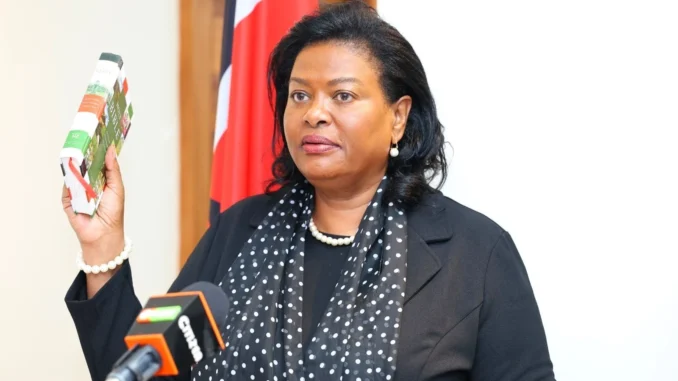
Lady Justice Njoki Susanna Ndungu is one of the most consequential legal figures in the history of Kenya’s democratic transformation.
A lawyer, legislator, human rights advocate, constitutional drafter, Supreme Court judge, and now a candidate for the International Criminal Court her career over more than three and a half decades has touched virtually every dimension of Kenya’s legal and constitutional landscape.
She is the woman who almost single-handedly drove the passage of Kenya’s landmark Sexual Offences Act 2006, transforming the legal framework for the prosecution of sexual violence in one of Africa’s most important democracies.
She is the judge who brought the boldest and most intellectually ambitious dissenting opinions to Kenya’s Supreme Court in its formative decade, shaping constitutional jurisprudence through disagreement as much as through agreement. And she is now the judge who on 13 May 2026 officially launched her candidature for election as a judge of the International Criminal Court, carrying the ambitions of Kenya’s legal community and Africa’s human rights movement onto the world’s most prominent international criminal justice stage.
She has over thirty-five years’ experience in legal practice at the national, regional, and international levels, with expertise in constitutional governance, legislative reform, and human rights.
| Njoki Susanna Ndungu | |
|---|---|
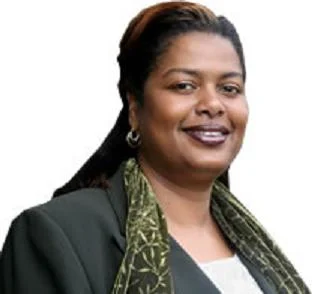 Njoki Susanna Ndungu: History · Bio · Photo
|
|
| Wiki Facts & About Data | |
| Full Name: | Njoki Susanna Ndungu |
| Born: | 20 September 1965 |
| Age: | 60 years old |
| Nationality: | Kenyan |
| Occupation: | Judge of the Supreme Court of Kenya; Member, Judicial Service Commission; ICC Candidate Judge (2026) |
| Children: | One child |
Early Life
Njoki Susanna Ndungu was born on 20 September 1965. She was raised in Kenya during one of the most formative periods of the country’s post-independence development a time when the expectations placed on women in professional and public life were significantly constrained by social convention and structural inequality, and when the legal architecture for addressing gender-based discrimination and violence was largely absent.
The world Njoki Ndungu grew up in was precisely the world she would spend her career fighting to transform through legislation, through advocacy, through the judiciary, and through the international human rights frameworks she has engaged with across her professional life.
The specific details of her family background her parents’ identities and professions, her siblings, and the domestic environment in which she was raised are not extensively documented in public sources. What is documented is that she attended one of Kenya’s most prestigious secondary schools, suggesting a family background that valued and invested in high-quality education for their daughter at a time when this was far from universal for girls in Kenya.
Her subsequent life trajectory from the Kenya High School to the University of Nairobi to the University of Leicester to the drafting committee of Kenya’s 2010 Constitution to the Supreme Court and now to international criminal justice reflects a combination of intellectual talent, personal determination, and family investment in her educational development that set the conditions for an extraordinary career.
Education
Njoki is an alumna of The Kenya High School (Class of 1980/82). The Kenya High School one of Kenya’s most prestigious national secondary schools for girls, located in Nairobi is an institution that has produced generations of Kenya’s most distinguished women in public life, business, medicine, law, and the arts.
Its alumni community is among the most accomplished in Kenya’s educational history, and its rigorous academic culture and emphasis on leadership and service formed the intellectual foundation for Njoki Ndungu’s subsequent academic and professional journey.
After Kenya High School she attended the Valley Secretarial College in Nairobi to do her secretarial course. Her brief time at Valley Secretarial College acquiring practical professional skills was followed by her more consequential academic decision to pursue law at the University of Nairobi.
She holds an LL.B. from the University of Nairobi. The University of Nairobi’s School of Law is the oldest and most distinguished law school in East Africa, and its graduates have gone on to occupy the highest positions in Kenya’s legal system from the Supreme Court to the Attorney General’s office to the leading law firms and civil society organisations.
Her Bachelor of Laws from the University of Nairobi was the foundation of a legal career that would ultimately reach the highest court in the land.
She holds an LL.M. in Human Rights and Civil Liberties from the University of Leicester. The University of Leicester a well-regarded British university with one of the UK’s most respected law schools gave her the theoretical framework in international human rights law that has underpinned her legislative and judicial work.
Her LL.M. focus on Human Rights and Civil Liberties was not merely an academic choice; it was a statement of purpose that defined the trajectory of her entire career. She also holds a Diploma on Women’s Rights from the World University Service in Austria a specialist qualification in the specific application of human rights frameworks to the protection and advancement of women’s rights that directly informed her advocacy work and her legislative achievements.
She is a Fellow of the Chartered Institute of Arbitrators (FCIArb) a globally recognised professional designation in the field of arbitration and alternative dispute resolution, reflecting the breadth of her legal expertise beyond the courtroom.
Career
State Counsel Office of the Attorney General (1989–1993)
Ndungu began her career as a State Counsel in the Office of the Attorney General (1989–1993). The Attorney General’s office is the apex legal advisory body of the Kenyan government responsible for providing legal advice to the executive, drafting legislation, and representing the government in legal proceedings.
Her four years as State Counsel gave her an insider’s understanding of how the state’s legal machinery works, how legislation is drafted and enacted, and how the gap between the law as written and the law as lived is experienced by Kenya’s citizens particularly its women and most vulnerable communities.
Programme Officer Institute for Education in Democracy (1993–1995)
She later worked as a Programme Officer (Civic Education) with the Institute for Education in Democracy until 1995.
The Institute for Education in Democracy was a civic education and democratic governance organisation working in Kenya during the critical period of the transition from single-party rule to multiparty democracy in the early 1990s.
Her role in civic education at this institution placed her at the intersection of legal expertise and democratic activism at one of the most significant moments in Kenya’s post-independence political history.
National Protection Officer UNHCR Kenya (1995–1996)
From 1995, she worked as the National Protection Officer at the United Nations High Commissioner for Refugees. In 1995 she moved and worked for one year at UNHCR Kenya Branch Office as a National Protection Officer.
Her UNHCR role protecting the rights and physical safety of refugees and asylum seekers in Kenya gave her direct, operational experience of some of the most acute manifestations of human rights violations: displacement, statelessness, gender-based violence against refugee women, and the institutional failures that leave the most vulnerable populations without legal protection.
This work deepened both her commitment to human rights advocacy and her understanding of the specific vulnerabilities of women in conflict and displacement contexts.
Political Analyst in Conflict Management African Union (OAU) (2000–2002)
She was also a Political Analyst in Conflict Management at the African Union, formerly OAU. Between 2000–2002 she worked as a Political Analyst for the Organization of African Unity (OAU), which is now the African Union.
Her two years as Political Analyst for Conflict Management at the OAU in Addis Ababa the continental organisation responsible for facilitating peace, security, and cooperation across Africa gave her a pan-African perspective on the political economy of conflict, the role of international institutions in preventing and resolving violence, and the structural factors that make African societies vulnerable to political instability.
This experience proved directly relevant to her later testimony before the US Congress on the 2007–2008 post-election violence in Kenya and to her ICC candidature in 2026.
Member of the Pan-African Parliament
She was also a former Member of the Pan-African Parliament, where she represented Kenya. The Pan-African Parliament established under the African Union’s Constitutive Act is the continental legislative body that brings together representatives from all AU member states to deliberate on matters of common continental interest.
Her membership of the Pan-African Parliament extended her legislative and advocacy work beyond Kenya’s borders, giving her a platform for continental-level engagement on human rights, gender justice, and democratic governance.
Member of Parliament 9th National Assembly (2003–2007)
Njoki Susanna Ndungu was nominated to the 9th Parliament by the National Alliance Rainbow Coalition (NARC) to serve as a nominated member of Parliament between 2003–2007.
She sat on the following Parliamentary committees: the Departmental Committee on Administration of Justice and Legal Affairs, the Departmental Committee on Defense and Foreign Affairs, and the Parliamentary Select Committee on the Constitution.
Her parliamentary career though lasting only one term produced legislative achievements of extraordinary and enduring consequence. The most significant is the Sexual Offences Act 2006. She is the architect of the Sexual Offences Act 2006.
Before this Act, Kenya’s legal framework for prosecuting sexual violence was outdated, inadequate, and deeply hostile to survivors. The Penal Code provisions on rape required corroboration that was practically impossible to obtain, the definitions of sexual offences were narrow, penalties were inconsistent and often absurdly lenient, and the entire procedural framework of criminal prosecution of sexual offences was experienced by survivors as traumatic and re-traumatising.
The Sexual Offences Act 2006 transformed this landscape comprehensively: it broadened the definitions of sexual offences to include a wide range of acts beyond traditional rape; it removed the corroboration requirement; it dramatically increased penalties; it introduced provisions for the protection of child victims and persons with disabilities; and it created a framework for the medical examination of both survivors and accused persons. Its passage was a landmark moment in Kenyan legal history and has since served as a model for sexual violence legislation in multiple other African countries.
She is also the architect of the amendments to the Employment Act 2007 providing for paid maternity and paternity leave as well as amendments to the Political Parties Act 2007 on affirmative action measures for women in political participation.
These legislative achievements transforming parental leave rights for Kenya’s working population and embedding affirmative action for women in the Political Parties Act reflect the comprehensive scope of her parliamentary reform agenda, which extended beyond sexual violence into the economic and political empowerment of women.
Member of the Committee of Experts Kenya’s 2010 Constitution
Justice Ndungu was a Member of the Committee of Experts that drafted the Constitution of Kenya, 2010. The Committee of Experts on Constitutional Review the technical body responsible for producing the draft text of Kenya’s new constitution was one of the most consequential constitutional drafting exercises in African legal history.
The 2010 Constitution of Kenya is widely regarded as one of the most progressive constitutions on the African continent: it introduced a Bill of Rights of exceptional breadth, established the Supreme Court, created the devolved county government system, introduced the two-thirds gender rule in public appointments, provided constitutional protection against discrimination, and fundamentally transformed the relationship between the state and its citizens.
During the constitutional review process leading to the 2010 Constitution, FIDA–Kenya, with contributions from Njoki and other women’s rights advocates, successfully lobbied for the inclusion of provisions on gender equality, affirmative action, and protection against discrimination.
Her contribution to this constitutional moment both as a member of the drafting committee and as an advocate for the gender justice provisions that were ultimately embedded in the document is part of her most enduring institutional legacy.
Judge of the Supreme Court of Kenya (2011–Present)
In June 2011, she was among 5 justices nominated to the Supreme Court of Kenya by the Judicial Service Commission (Kenya) which had interviewed 25 applicants. On 26 August 2011, she was appointed as a Judge of the Supreme Court of Kenya.
Her appointment to the inaugural Supreme Court of Kenya established by the 2010 Constitution as the country’s apex court was one of the most consequential judicial appointments in the court’s formative period. As one of the original justices of the Supreme Court, she has been part of every major constitutional moment in the court’s first fifteen years of existence.
The 2013 Presidential Election Petition
When the first round of the presidential election took place on March 4, 2013, Uhuru Kenyatta was declared the president-elect of Kenya by the Independent Electoral and Boundaries Commission. Raila Odinga challenged this in the Supreme Court of Kenya.
She was one of the six judges who dismissed the petition on March 30, 2013. The unanimous dismissal of Raila Odinga’s 2013 presidential petition in a ruling delivered within the strict constitutional timeline was the first major test of Kenya’s new Supreme Court and its capacity to adjudicate the country’s most politically charged disputes with independence and rigour.
The court’s ruling, and the manner in which it was delivered, was widely commended as a significant step forward for Kenya’s judicial independence and democratic maturity.
The 2017 Presidential Election Petition Historic Dissent
At the conclusion of the 2017 presidential election petition, Lady Justice Njoki Ndungu rendered a dissenting opinion alongside Justice Jacktone Boma Ojwang, citing no evidence to announce the elections as null and void.
In this landmark case, the Supreme Court majority in a 4–2 decision nullified the August 2017 presidential election results, finding that the Independent Electoral and Boundaries Commission had not conducted the election in a manner consistent with the Constitution.
This was only the second time in African history that a court had annulled a sitting president’s election results. Justice Ndungu and Justice Ojwang dissented, expressing a contrary view that the evidence before the court did not meet the standard required to justify nullifying an election.
Her dissent in this case carefully reasoned and articulated with characteristic precision became one of the most studied and debated judicial opinions in the history of Kenyan constitutional law.
The 2022 BBI Judgment
In the 2022 Building Bridges Initiative (BBI) judgment, she agreed with the majority, in rejecting the application of the basic structure doctrine and holding that the Constitution of Kenya, 2010 does not contain unamendable provisions.
The BBI case involving President Uhuru Kenyatta and Raila Odinga’s joint constitutional amendment initiative was one of the most significant constitutional law cases in Kenya’s history, touching on questions about the limits of constitutional amendment, the concept of an unamendable constitutional core, and the relationship between popular sovereignty and constitutional entrenchment.
Her position aligned with the majority in rejecting the basic structure doctrine, reflecting her constitutional philosophy that Kenya’s constitution should be amendable through the processes it prescribes rather than through judicially imposed limitations.
Notable Dissenting Opinions
Justice Njoki Susanna Ndungu is noted for her detailed dissenting opinions in the Supreme Court of Kenya, particularly in high-profile constitutional and electoral cases. Her dissents have been widely discussed in legal scholarship and public discourse for their emphasis on constitutional interpretation and the protection of rights.
Among her other notable dissents is her opinion in the Judges and Magistrates Vetting Board matter: In the Judges and Magistrates Vetting Board v. Justice Mohammed Warsame matter, she dissented from the majority, holding that members of the Judicial Service Commission elected under Article 171(2)(b), (c), (d), (f), and (g) of the Constitution were subject to parliamentary vetting and approval before appointment.
In her view, parliamentary approval was necessary to check presidential powers of appointment, to ensure compliance with Chapter Six on leadership and integrity, and to uphold national values under Article 10 and Article 250(4) of the Constitution.
Judicial Service Commission Supreme Court Representative (January 2026)
On 9 January 2026, she was elected unopposed as the Supreme Court Representative to the Judicial Service Commission (JSC). She joined the Judicial Service Commission on 13th January 2026 following her election by the Judges of the Supreme Court pursuant to Article 171(2)(b) of the Constitution of Kenya.
The JSC is the constitutional body responsible for the appointment, discipline, and welfare of all judicial officers in Kenya from the Chief Justice to magistrates across the country’s courts. Her election as the Supreme Court’s representative to this body reflects the confidence of her fellow Supreme Court judges in her institutional judgment and her commitment to the highest standards of judicial governance.
Institutional Contributions to Judicial Governance
In the Judiciary of Kenya, she has been on the lead in the development of the Employee Protection Unit which oversees a complaint mechanism for sexual harassment complaints and also the Gender and Inclusion Unit which implements policies on gender, diversity, and affirmative action for employees.
These internal institutional contributions bringing her legislative expertise on sexual harassment and gender equality to the judiciary’s own governance structures reflect a commitment to ensuring that the institution of justice practices internally what it preaches externally.
Lady Justice Njoki Ndungu heads the Supreme Court governance and regulatory affairs portfolio, which focuses on the effective governance of the Supreme Court to ensure consistency and predictability in the management of the Court.
ICC Candidature (May 2026)
Justice Njoki Ndungu has cited her experience at Kenya’s Supreme Court, commitment to victim-centred justice and record of independent judicial reasoning as key pillars of her candidature for election as a judge of the International Criminal Court (ICC).
Speaking during the official launch of her candidature at State House Nairobi, Justice Ndungu said her years on the bench had exposed her to complex constitutional and criminal matters that demanded impartiality, courage and fidelity to the rule of law.
“Serving at Kenya’s apex court has strengthened my understanding of international criminal justice, human rights protections and the importance of safeguarding the rights of victims within judicial systems,” she stated. Officials at the launch described her as one of Africa’s most experienced legal minds, highlighting her role in shaping constitutional jurisprudence following the promulgation of Kenya’s 2010 Constitution. Beyond the judiciary, Justice Ndungu is widely recognised for championing the Sexual Offences Act and advocating for stronger legal protections for survivors of gender-based violence.
Supporters say her emphasis on victim-centred justice aligns closely with the ICC’s mandate of prosecuting genocide, crimes against humanity, war crimes and crimes of aggression while ensuring justice for affected communities. The ICC, headquartered in The Hague in the Netherlands, is the world’s permanent international criminal court mandated to prosecute the gravest international crimes. If elected as an ICC judge, Justice Ndungu would become one of the most senior and distinguished Kenyan jurists ever to serve on an international criminal tribunal a fitting culmination of a career that has been consistently oriented toward the intersection of law, justice, and human rights.
Post-Election Violence Testimony US Congress (2008)
Following the post-election violence in Kenya after the 2007–2008 general elections, Ndungu testified before the United States Congress in 2008 as part of her civil society advocacy work. In her testimony, she highlighted the impact of electoral violence on women and communities, and called for stronger international support for democratic reforms and human rights protections in Kenya. Her testimony before the US Congress bringing the voices of Kenya’s victims of electoral violence to the world’s most powerful legislature was a remarkable act of advocacy that demonstrated the global reach of her human rights commitment.
Awards and Honours
Lady Justice Njoki Susanna Ndungu’s extraordinary contributions to Kenya’s legal, constitutional, and human rights landscape have been recognised through numerous prestigious national and international awards. Her confirmed honours include:
- United Nations Person of the Year in Kenya 2006, awarded for her contributions to constitutional reform and human rights.
- International Commission of Jurists (Kenya Section) Jurist of the Year Award 2006.
- Elder of the Burning Spear (EBS) Presidential Commendation conferred in 2006. The EBS is one of Kenya’s most prestigious state honours, awarded by the President in recognition of outstanding national service.
- Chief of the Burning Spear (CBS) a higher rank of the same Presidential Commendation, awarded subsequently.
- Fellow of the Chartered Institute of Arbitrators (FCIArb) a globally recognised professional distinction in the field of arbitration and dispute resolution.
- Appointment to the inaugural Supreme Court of Kenya in 2011 one of the most prestigious judicial appointments in the country’s history.
- Election as Supreme Court Representative to the Judicial Service Commission January 2026.
- Official endorsement of ICC candidature at a launch hosted at State House Nairobi May 2026.
Social Media
Lady Justice Njoki Susanna Ndungu does not maintain a publicly known personal social media presence. Consistent with the professional culture and judicial ethics requirements of the Kenyan judiciary which require sitting judges to maintain a public profile that preserves the dignity and independence of the court her public communications are conducted through official judicial channels, the Supreme Court’s official website, and the Judicial Service Commission’s institutional platforms.
Her official profile is maintained on the Supreme Court of Kenya’s website at supremecourt.judiciary.go.ke and on the Judicial Service Commission’s website at jsc.go.ke. Her ICC candidature launch was covered across Kenya’s major print, broadcast, and digital media outlets.
Personal Life
Lady Justice Susan Njoki Ndung’u is blessed with one child. Details about her marital status and personal relationships are not extensively documented in public sources, consistent with the personal privacy she has maintained throughout her public life. She has focused her public identity on her professional and institutional contributions rather than on personal biographical disclosure.
She was an active member of Women in Law and Development in Africa (WiLDAF), where she advocated for women’s legal rights. WiLDAF is one of Africa’s most important women’s rights networks, bringing together legal professionals, civil society advocates, and policymakers across the continent to advance women’s legal empowerment. Her involvement in WiLDAF was consistent with the broader values of women’s rights, legal reform, and community advocacy that have defined her public persona across her entire career.
Her dedication to legal reform has not been limited to the formal institutions of government. Throughout her career across government, international organisations, civil society, Parliament, and the judiciary she has consistently maintained a connection to the grassroots human rights community and to the specific needs of survivors of gender-based violence and sexual offences. The Sexual Offences Act 2006, for which she is the principal architect, emerged not from bureaucratic deliberation but from her direct engagement with the experiences of survivors women and children who needed the law to see them, protect them, and hold their abusers accountable. That engagement with the lived reality of injustice has been the moral engine of everything she has built.
Net Worth and Salary
Justice Njoki’s salary as a Supreme Court judge is KSh 757,770 basic salary and KSh 324,758 in allowances, which amounts to KSh 1,082,528 per month. At current exchange rates, this represents a total monthly compensation of approximately KSh 1.08 million around $8,400 USD per month. Her net worth has not been publicly disclosed in any verified source, though as a sitting judge she is required to file annual wealth declarations with the judiciary’s ethics and accountability mechanisms.
Her income sources have included her government salary across her various public service roles over more than three and a half decades, remuneration from her international assignments at the UNHCR and the African Union, her parliamentary emoluments during her 2003–2007 term, and her Supreme Court judicial salary since 2011. She has not been publicly associated with any significant private business interests, consistent with the ethical requirements of her judicial office.
Frequently Asked Questions (FAQs)
Who is Njoki Ndungu?
Lady Justice Njoki Susanna Ndungu is a Kenyan lawyer and Judge of the Supreme Court of Kenya. She is best known as the principal architect of the Sexual Offences Act 2006, one of Africa’s most progressive pieces of legislation on sexual violence. She has also served as a nominated Member of Parliament (2003–2007), a member of the Committee of Experts that drafted the 2010 Constitution of Kenya, a National Protection Officer at the UNHCR, and a Political Analyst at the African Union. In May 2026, she launched her candidature for election as a judge of the International Criminal Court.
When was Njoki Ndungu born?
She was born on 20 September 1965.
How old is Njoki Ndungu?
As of 2026, Lady Justice Njoki Ndungu is 60 years old.
What is the Sexual Offences Act 2006?
The Sexual Offences Act 2006 is landmark Kenyan legislation that transformed the country’s legal framework for prosecuting sexual violence. It broadened the definitions of sexual offences, removed the corroboration requirement for rape convictions, dramatically increased penalties, and introduced protections for child victims. Njoki Ndungu is its principal architect and drove its passage through Parliament during her 2003–2007 parliamentary term.
What is Njoki Ndungu’s educational background?
She attended The Kenya High School, then Valley Secretarial College, then earned an LL.B. from the University of Nairobi, an LL.M. in Human Rights and Civil Liberties from the University of Leicester (UK), a Diploma in Women’s Rights from the World University Service (Austria), and is a Fellow of the Chartered Institute of Arbitrators (FCIArb).
What is Njoki Ndungu’s most famous judicial opinion?
Her dissenting opinion in the 2017 presidential election petition delivered alongside Justice Ojwang is her most widely discussed judicial opinion. She dissented from the majority’s 4–2 decision to nullify the election, citing insufficient evidence to justify annulling the presidential results. The dissent has been widely studied in Kenyan constitutional law scholarship.
Has Njoki Ndungu been elected to the Judicial Service Commission?
Yes. On 9 January 2026, she was elected unopposed as the Supreme Court’s Representative to the Judicial Service Commission (JSC), joining the Commission on 13 January 2026.
Is Njoki Ndungu running for the ICC?
Yes. On 13 May 2026, she officially launched her candidature for election as a judge of the International Criminal Court at a ceremony held at State House Nairobi, with the backing of the Kenyan government. She cited her Supreme Court experience, commitment to victim-centred justice, and record of independent judicial reasoning as the pillars of her candidature.
What awards has Njoki Ndungu received?
Her awards include the United Nations Person of the Year in Kenya (2006), the International Commission of Jurists – Jurist of the Year Award (2006), the Elder of the Burning Spear (EBS) Presidential Commendation (2006), and the Chief of the Burning Spear (CBS) Presidential Commendation (conferred subsequently). She is also a Fellow of the Chartered Institute of Arbitrators (FCIArb).
What is Njoki Ndungu’s salary as a Supreme Court judge?
Her monthly salary as a Supreme Court judge is KSh 757,770 as basic pay plus KSh 324,758 in allowances, totalling approximately KSh 1,082,528 per month (approximately $8,400 USD).
Conclusion
Lady Justice Njoki Susanna Ndungu’s biography is, at its core, the story of a woman who decided early in her career that she would not merely observe the injustice around her but would use every institutional platform available to her the state counsel’s office, the civic education sector, the UNHCR, the African Union, Parliament, the constitutional drafting committee, and the Supreme Court to systematically dismantle it. The Sexual Offences Act 2006 alone would be sufficient to secure a remarkable legal legacy for most advocates. The 2010 Constitution’s gender equality provisions, the amendments to employment law, the Supreme Court dissents that have shaped constitutional jurisprudence, the UNHCR refugee protection work, the post-election violence testimony before the US Congress, the institutional contributions to judicial governance together, they constitute a body of work of extraordinary breadth and depth.
At 60, as she launches her bid for the International Criminal Court, Lady Justice Njoki Ndungu is not at the end of her story. She is, characteristically, opening its most consequential chapter yet taking Kenya’s human rights tradition onto the world stage where the most heinous crimes against humanity are prosecuted, and where the protection of victims demands exactly the qualities that have defined her career: intellectual courage, fidelity to law, independence from political pressure, and a profound personal commitment to the human beings whose lives hang in the balance of the decisions judges make.
Kenya’s legal history is marked by her fingerprints at every turning point. The world’s legal history is now, potentially, about to be marked by them too.
Related People







Leave a Reply