
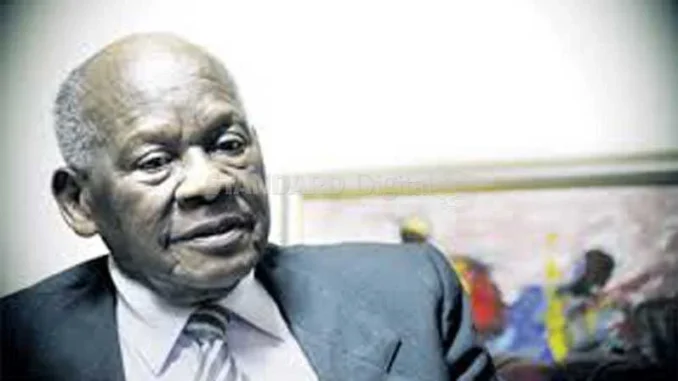
James Maina Wanjigi was one of the most consequential figures in Kenya’s post-independence history a man whose fingerprints are on the very architecture of modern Kenya.
From resettling hundreds of thousands of landless citizens on colonial farms, to Africanising Kenya’s commercial sector, to founding Gikomba Market one of East and Central Africa’s largest open-air markets to championing free primary education three decades before it became reality, Wanjigi left an indelible mark on his nation.
He served as Kamukunji’s Member of Parliament for over 25 years, became a Cabinet Minister under two presidents, and built a business empire that his son Jimi Wanjigi continues to expand today.
He was, in the truest sense, a maker of the Kenyan nation. He passed away on June 28, 2024, at the age of 92, at Nairobi Hospital closing an extraordinary chapter in Kenya’s history.
| James Maina Wanjigi | |
|---|---|
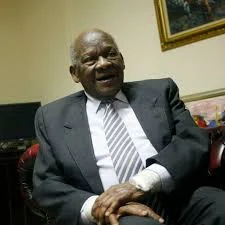 James Maina Wanjigi: History · Bio · Photo
|
|
| Wiki Facts & About Data | |
| Full Name: | James Maina Wanjigi |
| Born: | October 7, 1931 |
| Age: | 94 years old |
| Death: | 92 years old |
| Birthplace: | Wahudura Village, Murang'a County, Kenya |
| Nationality: | Kenyan |
| Occupation: | Politician, Civil Servant, Agriculturalist, Businessman, Philanthropist |
| Religion: | Christian |
| Spouse: | Mary Wambui Wanjigi |
| Children: | Josephine, Jimi, Nancy, and Sani |
| Net Worth: | $3.2 billion USD |
Early Life
James Maina Wanjigi was born on October 7, 1931, in Wahudura Village, Murang’a County, in central Kenya then part of the British colonial territory of Kenya.
He was born to Wanjigi wa Mucugia and Mariamu Wangeci, and grew up in a modest rural setting during a deeply turbulent era in East African history.
Kenya was firmly under British colonial rule, with African citizens denied basic rights, land ownership, higher education, and political participation.
It was within this oppressive environment that the young Wanjigi developed the stubborn ambition, intellectual curiosity, and sense of justice that would define his entire life.
From his earliest years, Wanjigi showed exceptional intelligence and academic drive. He was deeply influenced by the injustice of colonial hierarchies particularly the indignity of being an educated African professional who was routinely subordinated to unschooled but senior white colonial officers.
This experience hardened his conviction that education, land reform, and economic empowerment were the only paths to true independence for his people.
He grew up as a devout churchgoer who organised church groups and choirs, and these values of community service and collective uplift remained central to his character throughout his life.
Education
Maina Wanjigi began his formal schooling at Wahudura Primary School in 1938. He excelled academically and proceeded to Kagumo Intermediate School in Nyeri, where he passed the common entrance examination in 1943.
His performance earned him admission to Alliance High School one of Kenya’s most prestigious and selective secondary schools where he served as the school’s medical prefect and demonstrated his early capacity for leadership. His Alliance classmates included Jeremiah Kiereini, who would go on to become one of the most powerful figures in Kenya’s post-independence government.
After Alliance, Wanjigi enrolled at Makerere University in Uganda in 1951, where he obtained a Diploma in Agriculture. Returning to Kenya, he worked for the colonial government but was encouraged by Dr. Julius Gikonyo Kiano Kenya’s first PhD holder to pursue a full university degree.
This advice changed his life. He applied for and was accepted into the famous Mboya Airlift a programme championed by trade unionist Tom Mboya to send bright young Africans to American universities, supported by figures like Martin Luther King Jr., Harry Belafonte, Jackie Robinson, and Sidney Poitier.
Through the airlift, Wanjigi gained admission to the University of Connecticut, where he earned a Bachelor of Science degree in Agriculture, graduating with top honours.
His academic excellence earned him a prestigious Rockefeller Foundation Fellowship, which took him to Stanford University’s Food Research Institute, where he earned a Master of Science degree in Applied Agricultural Economics.
While at Stanford, he served as President of the African Students Union in the Bay Area of California and helped settle Kenyan students who arrived through the airlift programme. He returned to Kenya in 1961, by which time the colonial government reportedly considered him “overqualified.”
Career
Pre-Independence Agricultural Service
Before Kenya gained independence in 1963, Maina Wanjigi worked as an assistant agricultural extension officer in Nyeri District.
Despite his impressive American qualifications, he endured the indignity of being answerable to unschooled senior colonial officers an experience he later reflected on as formative and radicalizing.
Nevertheless, his expertise, professionalism, and deep knowledge of land and agriculture were impossible to ignore, and they would soon be deployed in one of the most important nation-building exercises in Kenya’s history.
First Director of Settlement (1963–1968)
With Kenya’s independence in 1963, Maina Wanjigi’s career transformed dramatically. He was appointed as Kenya’s first Director of Settlement one of the most consequential posts in the new republic.
His mandate was to oversee the implementation of the ambitious one-million-acre settlement scheme, funded by a £26 million loan from the British government and the World Bank, designed to transfer land from colonial white settlers to landless Kenyans.
Wanjigi’s responsibilities were immense: identifying suitable land for settlement across the country, negotiating buy-outs with white settlers, and overseeing the orderly transfer of land titles to landless citizens.
Thousands of families particularly from Kiambu and the Mount Kenya region were settled in the Central and North Rift Valley regions, as well as in Lamu and other coastal areas, directly because of Wanjigi’s work. He later chronicled the complexities and politics of this role in his memoir, The Shepherd Boy in Pursuit of Virtue.
One of his most revealing anecdotes from this period involves a tense early encounter with President Jomo Kenyatta. When Kenyatta visited one of the settlement farms in Timau and requested 20 cattle, Wanjigi then a young officer told the president the cattle would cost Sh18,000 and that he could not bend the rules.
He was later summoned to State House to collect the cheque, marking his first ever visit there. The story became a defining illustration of his reputation for integrity and principle in the face of power.
Chief Executive of ICDC and the Africanisation Programme (1968–1969)
Satisfied with his performance as Director of Settlement, President Kenyatta appointed Wanjigi as Chief Executive (Executive Director) of the Industrial and Commercial Development Corporation (ICDC) in 1968. This role placed him at the centre of Kenya’s Africanisation Programme the effort to transfer commercial and industrial ownership from the Asian and European communities that dominated the economy to African Kenyans.
When Wanjigi took over ICDC, entire wholesale and retail sectors in Nairobi including River Road, Kirinyaga Road, and Biashara Street were dominated by Asian traders, while manufacturing remained largely in white hands.
Wanjigi’s task was to assure investors that Kenya would not pursue outright nationalisation but would instead pursue “limited nationalisation” and progressive Africanisation.
Under his leadership, two critical institutions were established: the Kenya National Trading Corporation (KNTC) and Kenya Industrial Estates (KIE), both designed to promote local entrepreneurship and reduce dependence on imports and foreign traders.
He also played a foundational role in establishing the Co-operative Bank of Kenya, which gave small-scale farmers and traders access to formal banking.
Member of Parliament for Kamukunji (1969–1992)
In 1969, Wanjigi resigned from ICDC to enter politics following the assassination of Tom Mboya the dynamic trade unionist and Cabinet Minister whose murder on the streets of Nairobi on July 5, 1969, shook Kenya to its core.
The death left the Kamukunji Constituency seat vacant, and Wanjigi contested the resulting by-election in November 1969, winning and entering Parliament.
He went on to represent Kamukunji for over 25 years except for two brief interruptions in 1979 and 1983 when he lost to Philip (Nicholas) Gor.
He was deeply identified with the constituency and its people, particularly the working poor, small traders, and migrants who populated Eastlands Nairobi.
Among his most celebrated achievements as MP was the founding and development of Gikomba Market today one of the largest open-air markets in East and Central Africa, a thriving commercial ecosystem born from his determination to give small traders a permanent base.
He also established the Jua Kali informal business sector in Shauri Moyo, which became a model for informal sector empowerment across Kenya.
In June 1973, Wanjigi made a landmark speech in Parliament calling for free primary education for all Kenyan children.
He declared: “Unless you have a good education which every child has access to and that can be harnessed to reach their full potential, you cannot build a sound population and a sound nation. It is about time somebody got the message that we want free primary education.”
His vision would not become reality until 2003 under President Mwai Kibaki three decades later but Wanjigi is credited as one of its earliest and most consistent champions.
Cabinet Minister
Maina Wanjigi served in several Cabinet positions across two presidential administrations. President Jomo Kenyatta appointed him Assistant Minister for Agriculture in 1970 under Minister Bruce McKenzie.
After Kenyatta’s death in 1978, President Daniel arap Moi whom Wanjigi had supported during the 1976 constitutional battles continued to value him, appointing him Chairman of Kenya Airways in 1979.
Wanjigi is credited with helping transform the national carrier into a profitable venture and facilitating the landmark partnership between Kenya Airways and Royal Dutch Airlines (KLM).
After losing and regaining his seat, Wanjigi was appointed to full Cabinet positions, including Minister of Public Works and Housing, Minister of Cooperatives Development, Minister of Tourism and Wildlife, and Minister of Agriculture portfolios that placed him among the most influential ministers of the Moi era.
Political Fall and Multi-Party Advocacy
Wanjigi’s fall from grace with the Moi government came dramatically in May 1990. While he was away on official duty, the Nairobi City Commission under Fred Gumo deployed bulldozers to demolish the Muoroto slum in his Kamukunji Constituency, displacing over 2,000 families.
Seven people were killed. Wanjigi publicly condemned the demolition as “an act of war with the poor and aimed at finishing me politically” and protested loudly against it. He was subsequently sacked as a Cabinet minister and denounced by the Moi regime as a “tribalist.”
Refusing to be silenced, Wanjigi aligned himself with the growing movement for multi-party democracy. He was expelled from the ruling KANU party and briefly detained without trial for three days as part of the government’s crackdown on multi-party proponents.
He went on to ally with Kenneth Matiba’s Ford Asili party but contested the 1992 election on the Kenya National Congress (KNC) ticket, losing the Kamukunji seat. He made a final bid in the Mathira Constituency (Nyeri County) in 1997, but lost to the sitting MP, after which he withdrew permanently from electoral politics and returned to his business interests.
Business Career
Beyond politics, Maina Wanjigi built one of Kenya’s most substantial private business empires under the Kwacha Group of Companies.
His investments spanned multiple sectors including aviation (Kenya Airways), petroleum (TotalEnergies Kenya, formerly Total Kenya), banking (Barclays Bank Kenya, now ABSA), cables and infrastructure (East African Cables), real estate (Centum Investments involved in Two Rivers Development, Vipingo Development, and Pearl Marina), and agriculture (coffee estates in Murang’a, Nyeri, and Kitamaiyu).
He also served as a long-standing director on the board of Carbacid Investments, a major carbon dioxide producer in Kenya, a position he held for nearly five decades before stepping down in 2018. His son Jimi Wanjigi now leads the Kwacha Group and has expanded its reach considerably.
Awards and Honours
- Elder of the Golden Heart of Kenya (EGH) a national honour conferred by the Kenyan government to statesmen and distinguished citizens in recognition of his service to the nation.
- His biography was featured in the prestigious “Makers of a Nation” documentary series by Nation Media Group, recognizing him as one of the individuals most responsible for building independent Kenya.
Philanthropy and Community Work
Maina Wanjigi devoted significant energy to charitable and community development work throughout his life. For 25 years, he served as Chairman of the SOS Children’s Home Programme in Kenya, overseeing the welfare and development of vulnerable children across the country one of his longest and most personal philanthropic commitments.
He established the Maina Wanjigi Foundation, which focused on revitalising the 700-hectare Dagoretti Forest in Nairobi a major environmental conservation effort.
He also founded the Maina Wanjigi Secondary School in Eastleigh, Nairobi, built entirely from scratch long before the Constituency Development Fund existed, providing quality education to children in one of Nairobi’s most densely populated low-income areas.
He also played a central role in establishing and overseeing the construction of Murang’a University in his home county.
Personal Life
Maina Wanjigi was married to Mary Wambui Wanjigi, with whom he had four children: Josephine, Jimi (the prominent businessman and political figure), Nancy, and Sani.
He was blessed with eight grandchildren Maria, Kesa, Muthandi, Maina, Maina Jr., Wambui, Wanjiru, and Kairu and at least one great-grandchild, Wanjiru.
By all accounts, Wanjigi was a devoted family man who balanced an enormously demanding public career with genuine involvement in the lives of his children and grandchildren.
He authored his own memoir, The Shepherd Boy in Pursuit of Virtue, which provides a candid and self-reflective account of his journey from the hills of Murang’a to the corridors of power.
His last known public interview was conducted by the Daily Nation at his Karen, Nairobi home on March 28, 2024 just three months before his death.
In that interview, he recalled with characteristic frankness his first encounter with President Kenyatta at State House, his years at ICDC, and his philosophical views on governance, land, and education. He appeared jovial and sharp, a man at peace with his legacy.
Death
Maina Wanjigi passed away on Friday, June 28, 2024, at The Nairobi Hospital, where he had been receiving treatment for undisclosed health issues. He was 92 years old. His death was confirmed by his family and was widely reported across Kenya and East Africa.
The news prompted an outpouring of tributes from political leaders, business figures, community members, and ordinary Kenyans who remembered him as a founding father of modern Kenya.
His son Jimi Wanjigi himself a prominent businessman and former presidential aspirant in the 2022 Kenyan elections and other family members received condolences from across the country.
The Daily Nation, which had conducted his final interview just months before, published a major tribute describing him as an “agricultural economist who straddled Kenya’s public service like a colossus.”
Net Worth
At the time of his death, Maina Wanjigi’s estimated net worth was approximately $3.2 billion USD, derived from decades of strategic investment through the Kwacha Group of Companies and its extensive portfolio across aviation, real estate, banking, energy, agriculture, and infrastructure.
His business interests were among the most diversified in Kenya’s private sector, and the empire he built has been inherited and expanded by his son Jimi Wanjigi, who continues to run the Kwacha Group.
Social Media
Maina Wanjigi did not maintain a personal social media presence, consistent with his generation and his preference for principled, understated public engagement. News about him, his legacy, and his death circulated extensively across Twitter/X, Facebook, and Instagram largely through tributes from followers of his son Jimi Wanjigi and from major Kenyan media outlets.
His son Jimi Wanjigi is active on social media and has used his platforms to share memories and tributes to his father.
FAQs
Who is Maina Wanjigi?
James Maina Wanjigi was a Kenyan politician, civil servant, agricultural economist, and businessman. He was Kenya’s first Director of Settlement after independence, a former Kamukunji MP for over 25 years, a Cabinet Minister, founder of Gikomba Market, and father of businessman Jimi Wanjigi.
When did Maina Wanjigi die?
Maina Wanjigi died on June 28, 2024, at Nairobi Hospital, Kenya. He was 92 years old.
Who is Maina Wanjigi’s son?
His most prominent son is Jimi Wanjigi, a billionaire businessman, political strategist, and former 2022 presidential aspirant who now leads the Kwacha Group of Companies.
What is Maina Wanjigi famous for?
He is famous for being Kenya’s first Director of Settlement, for founding and developing Gikomba Market in Nairobi, for championing free primary education in Parliament in 1973, for Africanising Kenya’s commercial sector through ICDC, and for serving as Kamukunji MP for over 25 years.
Where did Maina Wanjigi study?
He attended Alliance High School, Makerere University (Diploma in Agriculture), the University of Connecticut (BSc Agriculture, top honours), and Stanford University (MSc Applied Agricultural Economics via Rockefeller Foundation Fellowship).
Who was Maina Wanjigi’s wife?
He was married to Mary Wambui Wanjigi, with whom he had four children: Josephine, Jimi, Nancy, and Sani.
What is the Kwacha Group of Companies?
The Kwacha Group is Maina Wanjigi’s business empire, now led by his son Jimi Wanjigi. It holds investments in East African Cables, Centum Investments, Kenya Airways, TotalEnergies Kenya, Carbacid Investments, ABSA Group (formerly Barclays), and real estate projects including Two Rivers Development and Vipingo.
What award did Maina Wanjigi receive?
He was awarded the Elder of the Golden Heart of Kenya (EGH) a national honour conferred to statesmen in recognition of distinguished service to the nation.
What did Maina Wanjigi write?
He authored his memoir titled The Shepherd Boy in Pursuit of Virtue, which chronicles his life from his rural upbringing in Murang’a to his career in government, politics, and business.
What was Maina Wanjigi’s net worth?
At the time of his death, Maina Wanjigi’s estimated net worth was approximately $3.2 billion USD, derived from his extensive investments under the Kwacha Group of Companies.
Conclusion
Maina Wanjigi was, by every meaningful measure, a maker of Kenya. Born in rural Murang’a during the colonial era, he rose through sheer intellectual brilliance and moral fortitude to occupy the very highest levels of Kenya’s post-independence government, economy, and civil society.
He gave landless Kenyans a stake in their own country through the settlement scheme. He gave Nairobi’s small traders their most important commercial platform in Gikomba Market. He gave a generation of Kenyan children the dream of free education a dream realised three decades after he first voiced it. And he gave Kenyan business a framework for Africanisation that helped shift economic power from colonial-era elites to ordinary citizens.
His was a life characterised by conviction, courage, and genuine service qualities rare in public life and rarer still when maintained across seven decades of active engagement. The legacy he leaves behind in the institutions he built, the policies he drove, the market stalls of Gikomba, and the school desks of Maina Wanjigi Secondary School is one that will endure long after the last tributes have been paid. He was, as those who knew him said, a colossus and Kenya is smaller for his passing.
Related People






Leave a Reply