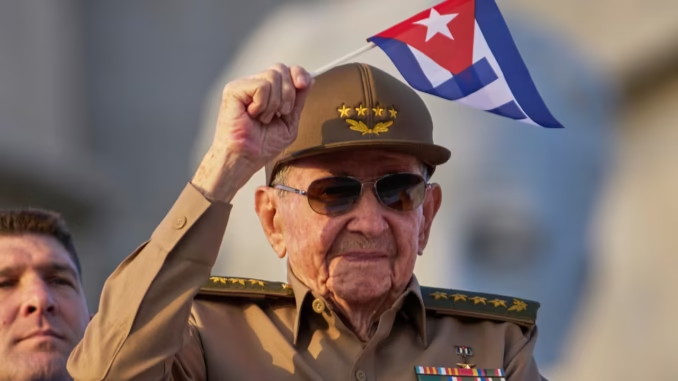
Raúl Modesto Castro Ruz known to the world simply as Raul Castro is one of the most consequential and enigmatic political figures of the 20th and 21st centuries.
As the younger brother and lifelong deputy of Cuban revolutionary leader Fidel Castro, Raul spent decades operating in his brother’s considerable shadow commanding the military, building political alliances, managing the security state before assuming the Cuban presidency in his own right in 2008.
During his decade as Cuba’s president, he surprised observers with a series of pragmatic economic reforms and a historic diplomatic rapprochement with the United States under President Barack Obama.
He stepped down from the presidency in 2018 and from leadership of the Cuban Communist Party in 2021, formally concluding the Castro era in Cuba’s official government structures. But history has not finished with Raul Castro.
On May 20, 2026, the United States Department of Justice unsealed a federal indictment charging the 94-year-old former Cuban president with conspiracy to murder US nationals, destruction of aircraft, and four counts of murder charges stemming from the 1996 downing of two civilian planes flown by the Miami-based Cuban exile group Brothers to the Rescue.
The indictment, the first of a senior Cuban leader in nearly 70 years, made headlines around the world and instantly placed Raul Castro back at the centre of global geopolitical attention.
| Raúl Modesto Castro Ruz | |
|---|---|
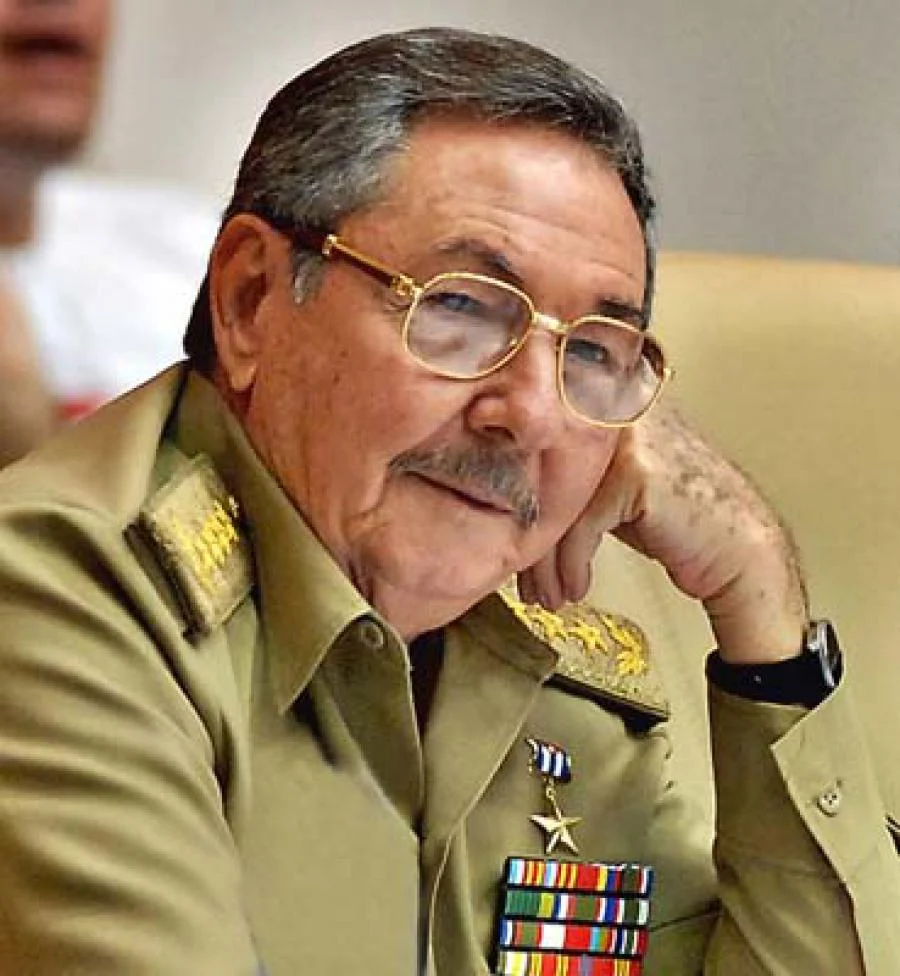 Raúl Modesto Castro Ruz: History · Bio · Photo
|
|
| Wiki Facts & About Data | |
| Full Name: | Raúl Modesto Castro Ruz |
| Born: | June 3, 1931 |
| Age: | 95 years old |
| Birthplace: | Birán, Holguín Province, Cuba |
| Nationality: | Cuban |
| Occupation: | Former President, Military Commander, Revolutionary |
| Religion: | Atheist (formerly Catholic; Jesuit-educated) |
| Parents: | Ángel Castro Argiz (Spanish immigrant, farmer, landowner) |
| Siblings: | Fidel Castro (older brother, revolutionary leader, President 1959–2008, died 2016), Ramón, Ángela, Juanita, Emma, Agustina |
| Spouse: | Vilma Espín Guillois (m. 1959; died June 18, 2007) |
| Children: | Deborah, Mariela, Nilsa, and Alejandro Castro Espín |
| Net Worth: | Not publicly disclosed |
Early Life
Raúl Modesto Castro Ruz was born on June 3, 1931, in Birán a small village in what is now Holguín Province in eastern Cuba. He was the youngest of six surviving children (and seventh overall) born to his parents, making him the baby of the Castro family.
His father, Ángel Castro Argiz, was a Spanish immigrant who had arrived in Cuba as a young man and eventually prospered as a landowner and farmer, cultivating a substantial sugarcane estate in the Oriente region. His mother, Lina Ruz González, was a native Cuban who worked on the family farm and raised the large Castro brood. Raul’s older siblings included Ramón, the eldest; Fidel Alejandro who would become the towering figure of 20th century Cuban politics; and sisters Ángela, Juanita, Emma, and Agustina.
As the youngest Castro child, Raul grew up partly in the shadow of his physically imposing and intellectually dominant older brother Fidel a dynamic that would define much of his public life for the next several decades. But Raul was no passive passenger in the family story.
He was, from early on, observant, organised, and deeply responsive to the political currents swirling through mid-20th century Cuba.
Like his older brother Fidel, Raul received his early education at Jesuit institutions. He attended the Jesuit school of Colegio Dolores in Santiago de Cuba before being transferred to the more prestigious Belen Jesuit Preparatory School in Havana the same school attended by Fidel.
The Jesuit educational tradition emphasised rigorous academic standards, ethical reasoning, and public service values that would shape both brothers, even as they eventually turned sharply away from the Catholic faith and toward Marxist ideology.
As a young man, Raul showed an early and intense interest in left-wing politics. In his student years, he joined a communist youth organisation making him, of the two brothers, arguably the more ideologically consistent Marxist from the outset.
His early embrace of communism placed him to the left of Fidel in their formative years, though the two would eventually arrive at very similar political positions as the Cuban Revolution took shape.
Education
Raul Castro received his formal education at two of Cuba’s Jesuit schools: the Colegio Dolores in Santiago de Cuba and the prestigious Belen Jesuit Preparatory School in Havana. However, he did not graduate from Belen he was reportedly expelled before completing his studies.
He subsequently enrolled at the University of Havana, where he studied social sciences, but his academic career was cut short by his deepening involvement in revolutionary politics.
In 1953, he travelled to Vienna, Austria to attend a youth conference, during which he also visited Eastern European communist countries an experience that deepened his ideological formation and his connections with the international communist movement.
These travels reinforced his commitment to socialism and gave him a direct window into the Soviet-aligned world that Cuba would eventually join.
While Raul Castro never completed a formal university degree, his real education came through decades of military experience, political administration, intelligence work, and governance.
As Cuba’s Defense Minister for nearly five decades and then as President, he became one of the most experienced heads of state in the world governing a country under sustained international pressure, economic isolation, and the constant challenge of maintaining a socialist state in the post-Soviet world.
Career
The Cuban Revolution (1953–1959)
Raul Castro’s revolutionary career began formally on July 26, 1953, when he participated alongside Fidel in the ill-fated attack on the Moncada Barracks in Santiago de Cuba an audacious assault on a major Cuban military installation intended to spark a popular uprising against the dictatorship of Fulgencio Batista. The attack was a military failure. Fidel and Raul were captured, tried, and imprisoned at the Isla de Pinos prison. They spent nearly two years incarcerated before Batista, yielding to public pressure, granted them a general amnesty and pardoned them in May 1955.
After their release, the brothers went into exile in Mexico, where they met Ernesto “Che” Guevara and began the serious business of preparing for a guerrilla revolution.
On December 2, 1956, Raul was among the 82 rebels who landed on the southeastern coast of Cuba aboard the yacht Granma, a crossing that would later become one of the most celebrated moments in Cuban revolutionary mythology. The landing was met by Batista’s forces, and most of the 82 were killed or captured in the immediate aftermath. Fidel, Raul, Che, and a small group of survivors escaped into the Sierra Maestra mountains of eastern Cuba and began building their guerrilla force.
Over the following two years, Raul proved himself a capable and at times ruthless military commander. He led the Second Eastern Front “Frank País” in Oriente Province a separate guerrilla front that allowed the revolutionary movement to extend its territorial control beyond the Sierra Maestra. By October 1958, the two brothers had around 2,000 fighters under their joint command.
On January 1, 1959, Batista fled Cuba, and the revolutionary forces captured Santiago de Cuba and then Havana on January 8 completing the Cuban Revolution.
Post-Revolution Government (1959–2006)
With Fidel Castro assuming the premiership and then the presidency of Cuba, Raul was installed as the head of the armed forces and appointed Cuba’s Minister of the Revolutionary Armed Forces a position he would hold for nearly half a century, from 1959 to 2008.
In the immediate post-revolution period, he oversaw the purging of Batista loyalists, setting up military tribunals that resulted in the execution of hundreds of former policemen, army officers, and government officials loyal to the deposed dictator. This period established his reputation as a hard-line enforcer of revolutionary discipline.
Throughout the following decades, Raul served as Fidel’s indispensable second-in-command. He played key roles in shaping the events of the early 1960s including Cuba’s transformation into a one-party communist state, the disastrous Bay of Pigs invasion of 1961 (in which CIA-trained Cuban exiles attempted and failed to overthrow the revolutionary government), and the Cuban Missile Crisis of 1962 the thirteen-day confrontation between the United States and the Soviet Union over the placement of Soviet nuclear missiles on Cuban soil, widely regarded as the closest the world came to nuclear war during the Cold War era.
As Defense Minister, Raul forged and maintained Cuba’s military alliance with the Soviet Union securing weapons, training, economic subsidies, and political backing that kept the Cuban state functioning despite the American trade embargo imposed in 1960.
He also managed Cuba’s overseas military interventions, most notably in Angola during the long civil war that followed Angolan independence in 1975, where Cuban forces played a decisive role in supporting the Soviet-aligned MPLA government against South African and UNITA forces. Cuban involvement in Angola which stretched from the mid-1970s through the late 1980s and involved tens of thousands of Cuban soldiers was one of the most significant military operations carried out by any developing nation during the Cold War.
Raul also developed a reputation as the architect of Cuba’s intelligence and security apparatus building one of the most sophisticated counter-intelligence systems in the Western Hemisphere, which helped the Castro government survive multiple CIA assassination plots and exile-backed destabilisation campaigns over the decades. His network of military loyalists known as raulistas, gave him a distinct power base within the Cuban state, separate from Fidel’s revolutionary charisma.
The 1996 Brothers to the Rescue Shootdown
One of the most internationally condemned acts associated with Raul Castro’s military command occurred on February 24, 1996. On that day, the Cuban Air Force shot down two unarmed civilian planes operated by Brothers to the Rescue a Miami-based Cuban exile humanitarian organisation that regularly flew missions over the Florida Straits to search for Cuban migrants attempting the dangerous sea crossing to the United States.
The two planes, flying outside Cuban territorial airspace over international waters, were struck by air-to-air missiles fired by Cuban MiG fighter jets. All four men aboard the two planes were killed: Carlos Costa, Armando Alejandre Jr., Mario de la Peña, and Pablo Morales three of whom were American citizens and one a permanent US resident.
As Cuba’s Minister of the Revolutionary Armed Forces at the time, Raul Castro bore command responsibility for the Cuban military operation. International condemnation was swift and fierce. The United Nations Security Council condemned the shootdown.
The United States imposed additional sanctions on Cuba through the Helms-Burton Act. Cuba’s government maintained that the planes had entered its airspace and that the action constituted legitimate self-defence a position it has never abandoned.
Presidency of Cuba (2006–2018)
In July 2006, Fidel Castro underwent emergency intestinal surgery and, for the first time in nearly five decades, temporarily transferred his governmental powers to Raul.
When it became clear that Fidel would not recover sufficiently to resume his duties, Raul was formally confirmed as President of the Council of State and the Council of Ministers on February 24, 2008 Cuba’s official head of state and government.
The presidency of Raul Castro was a study in pragmatic incrementalism. Compared to his brother’s ideological rigidity and rhetorical maximalism, Raul was widely seen as more practical, more open to acknowledging Cuba’s failures, and more willing to experiment with reform while maintaining firm commitment to the one-party communist system.
He acknowledged publicly that Cuba’s economy was in serious trouble, that inefficiencies and bureaucratic stagnation were holding the country back, and that reform was necessary for the revolution’s survival.
His economic reforms collectively described as the “updating of the economic model” included the expansion of self-employment, allowing Cubans to open small private businesses for the first time since the revolution’s early years; legalising the buying and selling of private property including houses and cars; opening up agricultural land to private farmers; reducing the size of the state payroll; and encouraging foreign investment in specific sectors. These were significant changes in the context of Cuban history, though critics argued they did not go nearly far enough and that the fundamental structures of the command economy remained intact.
Perhaps the most dramatic development of Raul’s presidency was the historic diplomatic thaw between Cuba and the United States announced jointly by Raul Castro and US President Barack Obama on December 17, 2014. The announcement known informally as “17D” in Cuba followed 18 months of secret negotiations facilitated by Pope Francis and the Canadian government, and included the release of American contractor Alan Gross who had been held in Cuba since 2009.
The two countries restored full diplomatic relations in 2015, reopened embassies in Havana and Washington, and began a gradual process of normalising ties that had been severed since 1961. The rapprochement was greeted with enormous optimism in both countries, though it stalled significantly under the subsequent Trump administration and then the Biden administration’s more cautious approach.
Raul Castro stepped down from the Cuban presidency on April 19, 2018, handing power to Miguel Díaz-Canel the first time in nearly 60 years that Cuba had a head of state who was not a member of the Castro family.
He remained First Secretary of the Communist Party of Cuba until April 2021, when he retired from that role as well, formally bringing the Castro era in Cuban official leadership to a close.
Awards & Recognition
- Hero of the Republic of Cuba – Cuba’s highest state honour
- Order of Lenin – awarded by the Soviet Union for services to international socialism
- Multiple Orders of the Revolution and military decorations from Cuba and allied socialist states
- Commanded Cuba’s military through two of the Cold War’s most defining moments: the Bay of Pigs invasion (1961) and the Cuban Missile Crisis (1962)
- Oversaw Cuba’s Angola military intervention (1975–1991), one of the most significant military operations by a developing nation during the Cold War
- Brokered the historic diplomatic rapprochement with the United States in 2014–2015, alongside President Barack Obama
The 2026 US Federal Indictment
On May 20, 2026, the United States Department of Justice unsealed a landmark federal indictment against Raul Castro at a ceremony held at Freedom Tower in Miami, Florida a building historically associated with the processing of Cuban refugees in the 1960s and 1970s, and a deeply symbolic choice of venue.
The indictment, which had been returned by a federal grand jury on April 23, 2026, and held under seal until its public announcement on Cuba’s Independence Day, charged Raul Castro and five Cuban military co-defendants with the following federal crimes in connection with the 1996 Brothers to the Rescue shootdown:
- Conspiracy to kill United States nationals
- Two counts of destruction of aircraft
- Four counts of murder (for the deaths of Carlos Costa, Armando Alejandre Jr., Mario de la Peña, and Pablo Morales)
The five co-defendants named alongside Castro were Lorenzo Alberto Pérez-Pérez, Emilio José Palacio Blanco, José Fidel Gual Barzaga, Raúl Simanca Cárdenas, and Luis Raúl González-Pardo Rodríguez Cuban military pilots and officials allegedly directly involved in executing the attack.
The indictment alleged that Raul Castro, as head of the Cuban military at the time, had directly authorised the use of deadly force against the Brothers to the Rescue planes, and that the attack was carried out using intelligence from Cuban spies embedded in the Miami exile community.
Acting US Attorney General Todd Blanche announced the charges at the Freedom Tower press conference, declaring: “For the first time in nearly 70 years, senior leadership of the Cuban regime has been charged in this country for acts of violence resulting in the deaths of American citizens. Nations and their leaders cannot be permitted to target Americans, kill them, and not face accountability.
President Trump is committed to restoring a very simple but important principle: if you kill Americans, we will pursue you no matter who you are, no matter what title you hold, and in this case, no matter how much time has passed.”
Cuba’s current President Miguel Díaz-Canel responded by characterising the 1996 shootdown as an act of legitimate national self-defence, stating that the United States “knows full well for there is abundant documentary evidence that no reckless actions were taken, nor was international law violated.”
Analysts noted that the indictment was widely seen as a pressure tactic by the Trump administration against the Cuban government similar to its earlier indictment of Venezuelan President Nicolás Maduro on narco-terrorism charges in 2020 and that the practical possibility of Castro, at 94 years old and living in Cuba, ever facing trial in an American court was extremely limited.
Social Media
Raul Castro does not maintain personal social media accounts, consistent with his and the Cuban government’s general approach to state communication, which relies on official state media channels primarily Granma (the official newspaper of the Communist Party of Cuba) and Cuban state television rather than Western social media platforms.
Cuba’s official government accounts and state media organs serve as the primary channels through which statements attributed to or about Raul Castro are disseminated.
Personal Life
Raul Castro married Vilma Espín Guillois on January 26, 1959 just weeks after the triumph of the Cuban Revolution. Vilma was no ordinary spouse.
Born on April 7, 1930, in Santiago de Cuba into a wealthy family, she had trained as a chemical engineer at the Universidad de Oriente in Santiago and completed postgraduate studies at the prestigious Massachusetts Institute of Technology (MIT) in Cambridge, Massachusetts making her one of the most academically distinguished women in Cuba before she was even thirty years old.
Despite her privileged background, she became a fierce and capable revolutionary, serving as a courier, organiser, and underground operative during the anti-Batista struggle.
After the revolution’s triumph, Vilma founded and led the Federation of Cuban Women in 1960 an organisation that claimed virtually every woman and adolescent girl in Cuba as a member and served as a major pillar of support for the communist government.
She served as the Federation’s president for over four decades until her death. As Raul Castro’s wife and as the sister-in-law of Fidel Castro (who was divorced and whose relationship with his later partner Dalia Soto del Valle was never publicly acknowledged), Vilma functioned as Cuba’s de facto First Lady for 45 years appearing at National Assembly gatherings, Communist Party events, and diplomatic functions as the public face of the Castro family. She received the Lenin Peace Prize in 1977–78 in recognition of her work.
Vilma Espín died on June 18, 2007, in Havana, following a long illness, at the age of 77. Her death was met with national mourning in Cuba, with an official mourning period declared. She was buried with full state honours. Raul Castro has not publicly remarried since her death.
Together, Raul and Vilma had four children: Deborah Castro Espín, Mariela Castro Espín, Nilsa Castro Espín, and Alejandro Castro Espín. Mariela Castro born July 27, 1962 has become one of Cuba’s most prominent public figures in her own right, serving as the director of the Cuban National Center for Sex Education (CENESEX) and an outspoken advocate for LGBTQ+ rights in Cuba a striking role for the daughter of Cuba’s most powerful military figure in a country that once criminalised homosexuality. Alejandro Castro Espín has served as a senior intelligence and security official within the Cuban state and has been mentioned in 2026 reports as one of the figures potentially involved in US-Cuba negotiations.
Raul Castro’s personal character has always been described as notably different from his brother Fidel’s. Where Fidel was theatrical, verbose, charismatic, and given to marathon public speeches, Raul was described as quiet, methodical, disciplined, and more at ease in private military and political settings than on the public stage. He was known to have a fondness for rum and reportedly a relaxed personal manner among those close to him.
He has also been described as a dedicated advocate for education and has been involved in conservation efforts within Cuba. Outside of politics, he was known to enjoy painting depicting scenes of Cuban life and to have a genuine love of animals.
Net Worth
Raul Castro’s personal net worth has never been publicly disclosed, and independent verification of any financial estimates is not possible given the opacity of Cuba’s political system.
As the head of state of a communist country for over a decade, and as Cuba’s defense minister for nearly fifty years before that, he would not have accumulated personal wealth through conventional means such as private business ownership or investment activities that were largely illegal in Cuba under the socialist system he helped create.
However, like most heads of state of single-party systems, he would have had access to extensive state resources, housing, transport, security, and other privileges of office throughout his career.
Various Western media estimates have speculated about undisclosed wealth potentially held in offshore accounts or other vehicles, but none of these estimates have been substantiated with credible evidence.
What can be said is that as a former head of state of a sovereign nation, Raul Castro retains a level of access to state resources and protection in Cuba that ensures his material comfort, regardless of any personal liquid wealth.
FAQs
Who is Raul Castro?
Raúl Modesto Castro Ruz (born June 3, 1931) is a Cuban revolutionary leader who served as President of Cuba from 2008 to 2018, Defense Minister from 1959 to 2008, and First Secretary of the Communist Party of Cuba from 2011 to 2021. He is the younger brother of Fidel Castro and a key figure in the 1959 Cuban Revolution.
How old is Raul Castro?
Raul Castro was born on June 3, 1931, making him 94 years old as of 2026.
Why was Raul Castro indicted by the US in 2026?
On May 20, 2026, the US Department of Justice unsealed a federal indictment charging Raul Castro with conspiracy to kill US nationals, destruction of aircraft, and four counts of murder in connection with the February 24, 1996 shootdown of two unarmed civilian planes operated by Brothers to the Rescue a Miami-based Cuban exile humanitarian group. The attack killed four men, including three American citizens. Castro was Cuba’s Defense Minister and head of the military at the time and is alleged to have directly authorised the attack.
Who was Raul Castro’s wife?
Raul Castro was married to Vilma Espín Guillois, a chemical engineer, MIT postgraduate, revolutionary leader, and founder of the Federation of Cuban Women. They married on January 26, 1959, and she served as Cuba’s de facto First Lady for 45 years until her death on June 18, 2007, aged 77.
How many children does Raul Castro have?
Raul Castro and Vilma Espín had four children: Deborah, Mariela, Nilsa, and Alejandro Castro Espín. Mariela Castro is widely known as a director of the Cuban National Center for Sex Education and an LGBTQ+ rights advocate.
What were Raul Castro’s main reforms as president?
During his presidency (2008–2018), Raul Castro implemented what he called the “updating of the economic model” reforms that included expanding self-employment and small private businesses, legalising the sale of private property, opening agricultural land to private farmers, reducing the state payroll, and encouraging limited foreign investment. His most dramatic geopolitical achievement was the 2014 diplomatic rapprochement with the United States under President Barack Obama.
What was the Brothers to the Rescue incident?
Brothers to the Rescue was a Miami-based Cuban exile humanitarian organisation that flew missions over the Florida Straits to locate and rescue Cuban migrants attempting to reach the United States by sea. On February 24, 1996, the Cuban Air Force shot down two of their unarmed civilian planes over international airspace, killing all four men aboard. The four victims were Carlos Costa, Armando Alejandre Jr., Mario de la Peña, and Pablo Morales three American citizens and one permanent US resident.
When did Raul Castro step down from power?
Raul Castro stepped down from the Cuban presidency on April 19, 2018, handing power to Miguel Díaz-Canel. He continued as First Secretary of the Communist Party until April 2021, when he retired from that role as well, formally ending the Castro era in Cuba’s official leadership.
Who is Raul Castro’s brother?
Raul Castro’s most famous brother is Fidel Castro the iconic leader of the Cuban Revolution who served as Cuba’s Premier from 1959 to 1976 and as President from 1976 to 2008. Fidel died on November 25, 2016, at the age of 90. Raul also had another brother, Ramón, and four sisters.
Is Raul Castro still alive?
As of May 2026, Raul Castro is alive at the age of 94 and is living in Cuba. He was federally indicted by the United States on May 20, 2026, though he is not in US custody and remains in Cuba.
Conclusion
Raul Castro’s life spans nearly a century of Cuban and world history from the poverty and landowner politics of rural Holguín Province to the guerrilla mountains of the Sierra Maestra, from the corridors of Cold War power to the complex, reform-minded presidency that made him a surprisingly nuanced figure in his own right, and finally to his retirement and the unprecedented legal jeopardy brought on by the May 2026 US federal indictment. Whether seen as a ruthless enforcer of communist orthodoxy, a pragmatic moderniser who opened Cuba to the world, or the man who authorised the killing of four innocent people in the Florida Straits in 1996, Raul Castro defies simple characterisation.
What is beyond dispute is that he shaped the trajectory of a nation for more than six decades quietly and methodically, from the shadows of his more famous brother and then in his own right and that his legacy will be debated for generations by historians, political scientists, Cuban exiles, and the citizens of the island he ruled for so long. At 94, and now facing criminal charges in the United States that he will almost certainly never answer in court, Raul Castro remains as he has been for most of his life at the very centre of the turbulent, unresolved story of Cuba and its relationship with the world.
Related People




Leave a Reply