
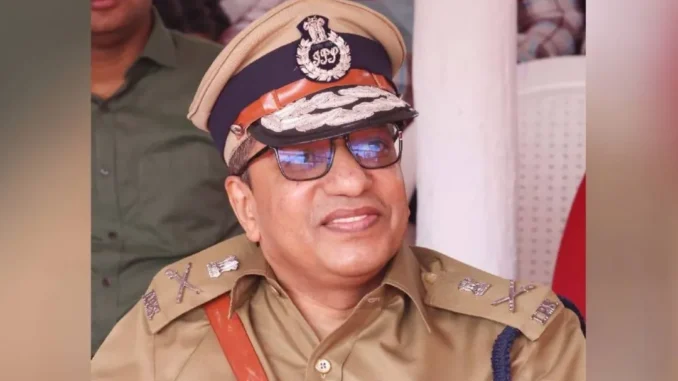
Yogesh Gupta IPS is one of India’s most distinguished financial crime investigators, a 1993-batch IPS officer of the Kerala cadre whose unique combination of Chartered Accountancy, Cost and Management Accountancy, and police leadership has made him a formidable force in the fight against corruption, money laundering, and large-scale financial fraud.
The creator of the TRACK Model of financial crime investigation, he has been credited with some of India’s landmark anti-money laundering prosecutions and has, in recent years, been at the center of a high-profile legal battle with the Kerala government over his career advancement. He was empanelled for Director General-level posts at the Centre in 2026.
| Yogesh Gupta | |
|---|---|
 Yogesh Gupta: History · Bio · Photo
|
|
| Wiki Facts & About Data | |
| Full Name: | Yogesh Gupta |
| Birthplace: | Mumbai, Maharashtra, India |
| Nationality: | Indian |
| Occupation: | IPS Officer, Kerala cadre |
Early Life
Yogesh Gupta was born and raised in Mumbai, Maharashtra — India’s financial capital and a city whose complex economic ecosystem, from the Bombay Stock Exchange to the street-level chit fund networks of ordinary citizens, would later become the hunting ground of the very fraudsters he would dedicate his career to pursuing.
From an early age, Gupta demonstrated a prodigious aptitude for numbers, finance, and analytical thinking. This intellectual gift would set him apart not just as a student, but as the kind of investigator that financial criminals genuinely fear, one who understands their methods from the inside.
Education
Yogesh Gupta’s academic achievements are remarkable by any standard. He cleared the Chartered Accountancy (CA) examination conducted by The Institute of Chartered Accountants of India (ICAI) with an All India Rank of 12 — placing him among the top twelve CA candidates in the entire country in his year. He simultaneously achieved an All India Rank of 12 in the Cost and Management Accountancy (CMA) examination as well, a dual All-India ranking achievement that is extraordinarily rare. He further holds an MBA, giving him a comprehensive education in business, finance, management, and strategic operations.
Armed with these credentials, Gupta joined the 1993 batch of the Indian Police Service, assigned to the Kerala cadre, bringing to law enforcement a depth of financial expertise that most police officers lack entirely.
Career
CBI and High-Profile Fraud Investigations
Yogesh Gupta spent five years at the Central Bureau of Investigation (CBI), where his financial qualifications immediately set him apart. He led or contributed to investigations into some of India’s most landmark financial fraud cases, including the Harshad Mehta security scam — the ₹4,000 crore stock market manipulation that rocked India in the early 1990s, and the Ketan Parekh stock scam of the early 2000s, another devastating manipulation of Indian equity markets.
Enforcement Directorate, Eastern Region Special Director
Gupta spent seven years at the Enforcement Directorate (ED), heading the Eastern Region headquarters in Kolkata from 2014 onward. This tenure produced some of the most consequential anti-money laundering prosecutions in Indian legal history. He led the ED’s investigations into the Saradha chit fund scam, the Rose Valley ponzi scheme, the Seashore scam, and the Narada bribery tape scandal — cases that resulted in the questioning and prosecution of senior politicians across West Bengal and neighbouring states. During his tenure at the ED’s Eastern Region, properties worth approximately ₹10,000 crore were attached under the Prevention of Money Laundering Act (PMLA).
Most significantly, Gupta is credited with achieving the first two convictions in Indian legal history under the Prevention of Money Laundering Act (PMLA) — a landmark achievement that established legal precedents that continue to guide anti-money laundering jurisprudence in India.
The TRACK Model
Gupta pioneered the TRACK Model of financial crime investigation: an acronym standing for Track, Reconstruct, Analysis, Connect, Key Insights. This structured investigative framework provides a systematic methodology for untangling complex financial fraud trails, following money across jurisdictions, reconstructing the flow of funds, analytically identifying the mechanics of fraud, connecting the dots between seemingly unrelated entities, and extracting the key insights that lead to prosecution. The TRACK Model has been widely adopted as a reference framework within India’s investigative agencies.
Kerala VACB and Controversy
Back in his Kerala cadre, Gupta served as Director of the Vigilance and Anti-Corruption Bureau (VACB) and was subsequently promoted to the Director General of Police (DGP) rank. He also served as CMD of the Kerala State Beverages Corporation and later as Director General, Fire and Rescue Services, Kerala.
His time as VACB Director became the source of a major professional and legal controversy. After he directly submitted case files against Chief Minister’s aide KM Abraham to the Kerala High Court, prompting a CBI investigation, he was removed from the VACB and transferred to the less prominent Fire and Rescue Services department. The Kerala government subsequently withheld a crucial vigilance clearance report from the Union Home Ministry that was required for his empanelment to central government posts, despite nine separate requests from the MHA. Gupta moved the Central Administrative Tribunal (CAT), which ordered the Kerala government to forward the report. In March 2026, the Appointments Committee of the Cabinet (ACC) approved his empanelment for Director General-equivalent posts at the Centre — a vindication of his long legal battle.
He is the President of the Kerala IPS Association, is due to retire in 2030, and is considered one of the most intellectually formidable financial crime investigators in India’s law enforcement history.
Published Works
- Leaves of Life — A book for the youth
- Inspector Chougule — Simple but true police stories
- Madam Commissioner — His journey in service
Social Media
As a senior intelligence and vigilance officer, Yogesh Gupta does not maintain a public social media presence. He has a professional LinkedIn profile listing his qualifications as FCA (AIR 12), FCMA (AIR 12), and MBA, along with his career assignments.
Awards & Recognition
- President’s Medal for Distinguished Service
- President’s Medal for Meritorious Service
- First officer to secure PMLA convictions in India, a legal landmark
- Credited with attaching ₹10,000 crore in fraudulent assets during ED tenure
- Empanelled for DG-level central posts by the Appointments Committee of the Cabinet, 2026
Net Worth
At the DGP rank with over 32 years of service, Yogesh Gupta’s monthly salary falls in the apex pay scale of ₹2.05 lakh to ₹2.24 lakh, as reflected in public promotion orders.
His estimated net worth, built entirely from government service salary, pension entitlements, and income from his published books, is in the range of ₹2 crore to ₹5 crore. He is a native of Mumbai and has no publicly known private business interests.
Related People









Leave a Reply