

Who is Leandro Leviste?
Leandro Antonio Legarda Leviste is a Filipino businessman, entrepreneur, renewable energy pioneer, and politician. Born on March 18, 1993, he is the son of former Batangas Governor Antonio Leviste and incumbent Senator Loren Legarda. He is the founder of Solar Philippines, which grew into Southeast Asia’s largest integrated solar developer.
He is currently serving as the Representative for Batangas’ 1st Congressional District in the House of Representatives of the Philippines, having won his seat in the May 2025 midterm elections. He is also recognised by the Manila Bulletin as the youngest self-made billionaire in Philippine history.
| Leandro Antonio Legarda Leviste | |
|---|---|
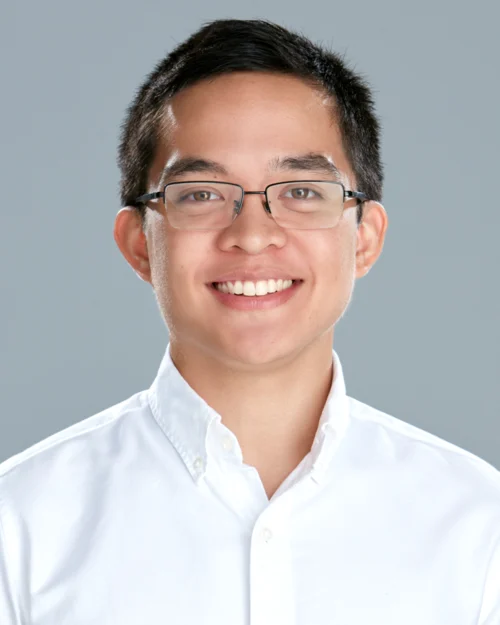 Leandro Antonio Legarda Leviste: History · Bio · Photo
|
|
| Wiki Facts & About Data | |
| Full Name: | Leandro Antonio Legarda Leviste |
| Born: | March 18, 1993 |
| Age: | 33 years old |
| Birthplace: | Makati, Philippines |
| Nationality: | Filipino |
| Occupation: | Politician · Businessman · Entrepreneur · Renewable Energy Pioneer |
| Religion: | Roman Catholic |
| Parents: | Antonio Leviste (Former Governor of Batangas) |
| Siblings: | Lorenzo Antonio Leviste (older brother) |
| Net Worth: | Estimated ₱20+ billion (approx. $350–400 million USD) |
Early Life
Leandro Antonio Legarda Leviste was born on March 18, 1993, in Makati the financial capital of the Philippines into a family that sat at the very intersection of Philippine political power and business prominence.
His father, Jose Antonio “Tony” Casals Leviste, is a Filipino politician and businessman who served as the Governor of Batangas from 1972 to 1980 and is the chief executive officer of the Leviste Group of Companies, a real estate firm engaged in housing, subdivision, condominium and resort development.
His mother, Loren Legarda, is one of the most decorated and longest-serving politicians in Philippine history a former television broadcaster turned veteran Senator who has championed environmental causes and women’s rights across multiple decades of public service.
His parents met at his father’s family-owned Matabungkay Beach Club in the 1980s, after Antonio had seen Loren on television as a reporter. They married in 1989 and had two children: Lorenzo Antonio (born 1990) and Leandro Antonio (born 1993).
Their third child was lost to miscarriage in March 2002. The couple began living separately in 2001, with Loren taking custody of both children, and their marriage was eventually annulled in 2008 a separation that played out partly in the public eye and that would later have significant personal consequences for Leandro.
Growing up primarily with his mother, Leandro was raised in an environment of public affairs, media engagement, and advocacy. Senator Legarda was frequently in the national spotlight campaigning, legislating, attending environmental conferences and her home was one where current affairs were not merely dinner table conversation but a lived professional reality. At the same time, his father’s lineage gave him deep roots in Batangas, a province south of Manila known for its agricultural heritage, coastal beauty, and strong political dynasties. Leandro absorbed both worlds.
His early public appearance is a detail that has charmed many Filipinos: as a child of approximately ten years old in 2003, Leandro appeared in a Wyeth Promil television commercial the famous series of advertisements featuring exceptionally gifted Filipino children hinting at the exceptional trajectory that lay ahead.
He was educated at elite Manila schools before heading abroad for his university education. From a young age, he was drawn to innovation, numbers, and solving large-scale problems qualities that would define his later entrepreneurial approach to energy.
Education
Leandro Leviste attended elite schools in Manila before enrolling at Yale University in New Haven, Connecticut, USA one of the world’s most prestigious Ivy League universities.
He chose to study Political Science, a discipline that broadened his understanding of governance, policy, and the relationship between institutions and markets.
His time at Yale was formative in unexpected ways: a summer internship with Meralco the Philippines’ largest electricity distribution company exposed him to the country’s deeply inefficient, expensive, and fossil-fuel-dependent energy infrastructure, planting the seed of what would become his defining entrepreneurial ambition.
His awareness was further sharpened by following the work of Elon Musk’s Tesla, Inc. and SolarCity in the United States disruptive energy companies that demonstrated how solar power, backed by the right business model, could challenge entrenched conventional energy players.
He saw a direct parallel in the Philippines, where electricity prices were among the highest in Asia and where millions of Filipinos in remote and underserved areas had no access to grid power at all.
In 2013, between his second and third years at Yale, Leandro made one of the most consequential decisions of his young life: he left university to return to the Philippines and launch a solar energy company. He was 20 years old.
He has subsequently explained this decision not as a permanent abandonment of education, but as a time-sensitive response to a business opportunity that would not wait.
He reportedly graduated from Yale in 2014 or 2015 (sources vary on whether he formally completed his degree before or after launching Solar Philippines, with some noting he continued his studies remotely and obtained his degree while running the business).
His name appears in Yale Daily News records as Secretary of the Yale Conservative Club in the class of 2015, suggesting he at minimum remained enrolled through 2015.
Regardless of the precise timing, his departure from Yale’s lecture halls to Manila’s energy sector is one of the most cited examples of entrepreneurial boldness in contemporary Philippine business history.
Career
Founding Solar Philippines (2013)
In 2013, Leandro Leviste founded Solar Philippines Power Project Holdings, Inc. (SPPHI) commonly known as Solar Philippines with a bold and singular mission: to make clean, affordable, reliable solar electricity accessible to every Filipino.
The initial capital for the enterprise was secured in a characteristically audacious fashion: his father Antonio Leviste provided the critical early catalyst by using family-owned agricultural land in Batangas as collateral for bank loans.
The Bank of the Philippine Islands (BPI) subsequently provided the company’s first $1 million loan in 2014 to fund the installation of a 700-kilowatt solar rooftop power system at Central Mall Biñan Solar Philippines’ inaugural commercial project.
The choice of business model was deliberate: rather than manufacturing solar panels, Leviste’s company would buy panels from various global suppliers and then provide Philippine customers with a complete package financing, engineering, and installation.
This asset-light, service-oriented approach allowed Solar Philippines to scale quickly without the capital-intensive burden of manufacturing infrastructure. The business model worked. Solar Philippines’ early rooftop installations at commercial malls including SM North EDSA in Quezon City established its credibility with corporate clients and gave it a visible national profile.
Calatagan Solar Farm and Early Expansion (2015–2016)
In 2015, Solar Philippines made its most ambitious commitment to date: the construction of a large-scale solar farm near the foot of Mt. San Piro in Calatagan, Batangas. The 63-megawatt project involved the installation of approximately 200,000 photovoltaic (PV) panels across 106 hectares, financed by pledging the company’s total common shares to a consortium of three banks.
To finance the construction, SPPHI pledged its total common shares as collateral. The project eventually became a partnership with Korea Electric Power Corp. (KEPCO) and was completed in 2016, becoming the Calatagan Solar Farm one of the largest solar farms in the Philippines at the time of its completion.
Solar Para sa Bayan Corp. and the 25-Year Franchise (2019)
In July 2019, then-President Rodrigo Duterte signed Republic Act No. 11357, granting a 25-year congressional franchise to Leviste’s company Solar Para sa Bayan Corp. (SPBC) a renewable energy distribution firm described on its website as “a Filipino social enterprise which aims to serve Filipino communities with cheap, clean, reliable 24/7 electricity.” The franchise authorised SPBC to construct, install, establish, operate and maintain solar-powered facilities in areas without electricity or underserved nationwide.
The franchise was controversial from the outset. Several business groups formally asked President Duterte to review it, arguing it would “create an undue competitive edge in favor of SPB Corp. and put at a disadvantage other renewable energy companies.” Duterte nevertheless signed the law. The franchise would later become the subject of an Ombudsman investigation in 2026.
Tarlac Solar Farm (2019)
In 2019, Solar Philippines opened its Tarlac Solar Farm, a commercial-scale solar power facility in Tarlac province further expanding the company’s footprint from its Batangas base into Central Luzon, one of the Philippines’ most industrially active regions.
SPNEC IPO: The Youngest PSE Chairman (2021)
The most transformative milestone of Leviste’s early business career came in 2021, when his Solar Philippines subsidiary SP New Energy Corporation (SPNEC) became the first solar company ever to perform an Initial Public Offering (IPO) on the Philippine Stock Exchange (PSE).
The IPO raised approximately ₱2.7 billion, with funds earmarked for the construction of a massive 500-megawatt solar project in Nueva Ecija. SPNEC was the first company to qualify for the PSE’s decade-old but never-previously-used renewable energy listing rules, which allow RE firms without operating history to list as long as they hold a valid DOE service contract.
The IPO made Leandro Leviste, at 28 years old, the youngest Chairman and CEO of a company on the Philippine Stock Exchange at the time a historic milestone that generated enormous media attention and confirmed his status as the Philippines’ most prominent young entrepreneur. The Manila Bulletin subsequently named him the youngest self-made billionaire in the Philippines in 2024.
Meralco Investment and the World’s Largest Solar-Battery Project
The defining strategic transaction of Leviste’s business career unfolded between 2023 and 2025, when tycoon Manuel V. Pangilinan (MVP)‘s Metro Pacific Investments Corp. and its affiliate Meralco PowerGen Corp. (MGEN) made a series of major investments in SPNEC. In March 2023, MVP announced a ₱2 billion investment in SPNEC.
In September 2024, MGen invested a further ₱7.5 billion. Earlier, in a landmark transaction, Meralco injected ₱15.90 billion into SPNEC for the construction of the SPNEC 3,500 MW Meralco Terra Solar Farm in Nueva Ecija described as the world’s single largest solar-battery integrated project.
The total project cost was estimated at ₱200 billion, and it attracted what was described as the largest foreign investment for an infrastructure project in Philippine history.
Between 2023 and 2025, Leviste sold 14.60 billion shares of SPNEC to Meralco for ₱18.26 billion and a further 1.84 billion shares to public shareholders for ₱2.23 billion generating approximately ₱20.5 billion in proceeds from the gradual divestment of his majority stake in SPNEC. Pangilinan’s MGEN took controlling ownership of SPNEC in December 2023. Leviste retained a 27.34% stake in SPNEC (valued at approximately ₱18.9 billion as of June 2025) and continued to serve as Vice Chairman of the SPNEC board, with Pangilinan as Chairman.
Other Business Interests
Beyond solar energy, Leviste has diversified his business portfolio significantly. He became the largest non-Lopez shareholder of ABS-CBN Corp. the Philippines’ largest media conglomerate, which had its franchise controversially stripped by Congress in 2020 during the Duterte administration. His stake in ABS-CBN represented a significant media investment at a time when the network’s future was uncertain.
He also made strategic investments in Roxas & Co. Inc. (a major sugar and agribusiness firm) through Central Azucarera Don Pedro, and acquired the historic Solidaridad Bookshop a beloved cultural institution in Manila associated with the literary and intellectual left for over half a century.
Political Career: Congressional Victory (2025)
In October 2024, Leandro Leviste formally filed his Certificate of Candidacy (COC) to contest the Batangas 1st District congressional seat in the May 2025 midterm elections.
He was 31 years old. Running on a platform emphasising economic development, infrastructure integrity, education, and sustainability, he challenged incumbent Eric Buhain a veteran politician whose family and political allies had dominated the district for years and who was also backed by powerful provincial political forces.
The result was historic. In the May 2025 midterm elections, Leviste won the Batangas 1st District seat in a landslide of extraordinary proportions, garnering 268,764 votes approximately 74.58% of all votes cast and recording the largest raw vote total of any House race in Batangas’ history.
The scale of his victory, against an entrenched incumbent, was widely interpreted as a decisive mandate from the people of Batangas’ first district for his vision and his personal brand of reform-oriented, accountability-focused politics.
On his first day in office, Representative Leviste demonstrated his legislative priorities by filing a bill proposing a monthly allowance for all Filipino students a flagship social investment proposal that reflected his commitment to education and economic access.
Anti-Corruption Campaign: The DPWH Engineer Entrapment (August 2025)
Barely three months into his congressional term, Leviste made national and international headlines through a dramatic anti-corruption operation.
After conducting personal inspections of DPWH flood control and infrastructure projects in his district in August 2025 following typhoon damage and discovering alarming evidence of substandard construction, including flood control sheet piles measured at 3.9 to 5.5 metres when the required specification was 15 metres he was approached by DPWH Batangas 1st District Engineer Abelardo Calalo.
Calalo, according to Leviste, offered him a ₱3.1 million bribe to stop his House probe into the DPWH projects. Calalo allegedly described the arrangement as “SOP” (standard operating procedure) explaining that contractors were willing to give Leviste five to ten percent of the ₱3.6 billion worth of projects in his district, equivalent to ₱180 million to ₱360 million annually, as political “support.”
Leviste refused and reported the offer to police, coordinating a sting operation. On August 22, 2025, Calalo was arrested in an entrapment operation conducted by the Taal Municipal Police Station. On August 26, Leviste filed charges of direct bribery, corruption of public officials, anti-graft violations, and violations of the Code of Conduct for Public Officials against Calalo at the Batangas Provincial Prosecutor’s Office.
The arrest was applauded across the Philippine political spectrum. Senator Panfilo “Ping” Lacson praised Leviste for the successful entrapment. Akbayan party-list Representative Chel Diokno himself from Taal, Batangas called the incident “a blatant attempt to obstruct an investigation into questionable projects.”
Leviste described Calalo as merely “a pawn” and indicated that a far more powerful figure was behind the scheme, stating that the “big fish” was currently “very popular” a characterisation that set off intense speculation about who he was referring to.
The “Cabral Files” and the DPWH Corruption Probe (2025–2026)
The DPWH corruption story deepened significantly when Leviste revealed his possession of what he described as the “Cabral Files” confidential budget documents allegedly belonging to the late DPWH Undersecretary Catalina Cabral, purportedly showing the identities of project proponents and the political networks behind billions of pesos in DPWH spending.
Leviste released portions of these files on social media in November and January 2026, alleging that 146 DPWH projects worth approximately ₱20 billion in the 2025 National Expenditure Program were linked to CWS Partylist Representative Edwin Gardiola.
He presented the files to the Independent Commission for Infrastructure in November 2025 and to the Ombudsman’s field investigation team on November 26, 2025. The revelations triggered a broader Senate Blue Ribbon Committee investigation into flood control corruption and generated intense political controversy.
The Leviste-Recto Clash (May 2026)
On May 5, 2026 just two days before the current date of this biography Leviste delivered an extraordinary privilege speech in the House plenary, alleging that Executive Secretary Ralph Recto had colluded with Gardiola in a DPWH corruption scheme and that Gardiola had financed the 2025 election campaigns of Recto’s wife, acclaimed actress and Batangas Governor Vilma Santos-Recto.
He also alleged that he had been directly invited by Gardiola to join the scheme to identify road “opening” sites, share information for land purchases, and participate in contractor selection in exchange for infrastructure kickbacks.
The response from the Recto camp was fierce. Executive Secretary Recto countered that it was Leviste himself who had approached him with an offer of ₱400 million to convince Leviste’s political opponent to withdraw from the 2025 election race, and a further offer of ₱1 billion to persuade Governor Vilma Santos-Recto to withdraw from the gubernatorial race so Leviste could run in her place. Recto said he refused both offers.
He also described Leviste in highly personal terms, calling him a “bitter brat prone to tantrums” and accusing him of “badmouthing the woman who gave birth to him” referring to Senator Legarda in front of others, and characterising him as “a deranged and dangerous person.”
The extraordinary public clash between two members of powerful political families was closely watched as one of the most dramatic confrontations in the Philippine Congress in recent memory.
Controversies
The ₱24-Billion DOE Penalty (2026)
While Leviste has cultivated a public profile as an anti-corruption crusader in Congress, his own business record has come under severe scrutiny.
In early 2026, the Department of Energy (DOE) imposed a final ₱24-billion penalty against his firm Solar Philippines Power Project Holdings Inc. (SPPHI) for non-compliance across 28 so-called “ghost contracts” renewable energy projects that were awarded to SPPHI under the Green Energy Auction Program (GEAP) but failed to reach even the ground-breaking stage.
The DOE confirmed the cancellation of 33 contracts awarded to SPPHI representing approximately 11,427.83 megawatts of capacity due to non-delivery. Of the ₱24 billion total penalty, approximately ₱14 billion corresponded to performance bonds mandated under GEAP.
Representative Zia Alonto Adiong in the House described Leviste’s non-performing solar initiatives as “ghost projects” and accused him of “reneging” on his obligations to the state by selling his company after receiving a 25-year franchise while failing to fulfil his energy production commitments.
Leviste defended himself vigorously, drawing a sharp distinction between SPPHI (which held the ghost contracts) and SPNEC (the publicly listed company he sold to Meralco).
He stated that he had never received a single peso from the government in relation to the cancelled GEAP contracts, comparing the situation to starting construction on a building and being unable to obtain a permit to operate. “Wala po ako kahit piso na natanggap mula sa gobyerno,” he stated. Critics, including Executive Secretary Recto, were unconvinced, with Recto characterising the solar projects as Leviste’s “biggest scam against the government and the Filipino people.”
The Franchise-Flipping Investigation (January 2026)
In January 2026, Ombudsman Jesus Crispin “Boying” Remulla confirmed that an investigation was underway regarding the alleged unauthorised transfer of a congressional franchise held by firms associated with Leandro Leviste.
The investigation centred on whether Leviste’s sale of controlling interests in SPNEC to the Meralco-Pangilinan group violated the terms of Republic Act No. 11357, the law granting a 25-year franchise to Solar Para sa Bayan Corp. (SPBC). Remulla described the arrangement as “franchise flipping” the use of a state-granted legislative privilege as a commercial asset for private sale and asserted that under Philippine law, the transfer of a national franchise required prior approval from Congress.
Leviste responded that SPBC had been inactive for several years and that its franchise was “ipso facto revoked” in 2022 due to non-operation, arguing he currently holds no active congressional franchise.
He also disclosed that he had donated all his SPBC shares to an associate, Hazel Iris Lafuente Buencamino, upon winning his congressional seat an action he said was taken to avoid conflict of interest.
He further noted that he had been transparent through SALN (Statement of Assets, Liabilities and Net Worth) disclosures. He filed a civil defamation complaint against a government press official for allegedly making untrue public statements about him in relation to this controversy.
Conflict of Interest as a Congressman (2025–2026)
As of June 2025, Leviste was still listed as President and CEO of Solar Philippines Power Project Holdings (SPPPHI) in company filings submitted to the Securities and Exchange Commission one month after winning his congressional seat.
The overlap between his role as a legislator with regulatory jurisdiction over the energy sector and his continuing ownership of a major energy holding company has raised persistent conflict of interest concerns. He has stated that he declared all relevant holdings in his SALN and has taken steps to divest, including selling his remaining 16.3% stake in SPNEC to foreign investors including Japanese conglomerate Mitsui & Co. in February 2026.
The “Cabral Files” Possession
The manner in which Leviste came to possess the confidential “Cabral Files” internal DOE budget documents belonging to a deceased undersecretary has itself been questioned.
Critics have noted that the files, while containing information of genuine public interest, are classified government documents, and the circumstances of their acquisition and dissemination have never been fully and publicly explained by Leviste.
Awards and Recognition
- Forbes 30 Under 30 Asia Manufacturing & Energy (2016) Ranked at the top of his category for contributions to the renewable energy sector in the Philippines
- International Finance Corporation (IFC) Sustainable Energy Finance Award (2016) Awarded to one of Solar Philippines’ early commercial projects
- Youngest Chairman and CEO on the Philippine Stock Exchange (2021) Upon SPNEC’s historic IPO at age 28
- First solar company IPO in Philippine history (2021) SPNEC’s landmark market debut
- Manila Bulletin Youngest Self-Made Billionaire in the Philippines (2024)
- Largest raw vote total in Batangas House history (2025) 268,764 votes, approximately 74.58% of all votes cast in the Batangas 1st District
Social Media
Leandro Leviste is highly active on social media, which he uses as a primary platform for political accountability work, congressional updates, and public communication. He has been particularly aggressive in using social media to release information and documents including the Cabral Files directly to the public, bypassing traditional media gatekeepers.
- Facebook: His Facebook page (Lingkod Legarda Leviste) serves as a central hub for constituency updates, legislative activities, and disclosure of documents related to his anti-corruption work. He released portions of the Cabral Files directly on Facebook, generating enormous engagement and national media coverage.
- Twitter / X: He maintains an active Twitter/X presence used for political commentary, congressional announcements, and rapid responses to controversies surrounding both his legislative work and his business record.
- Instagram: @leandrolegardaleviste
Personal Life
Leandro Leviste is the younger of two sons born to Senator Loren Legarda and former Batangas Governor Antonio Leviste.
His older brother, Lorenzo Antonio Leviste, was born in 1990. His parents’ separation in 2001 and eventual annulment in 2008 meant that he was raised primarily by his mother, Senator Legarda one of the Philippines’ most prominent public figures.
He has spoken warmly of his mother in various public forums. However, Executive Secretary Recto’s May 2026 claim that Leviste had been overheard “badmouthing” his mother in front of others is among the most personal and explosive allegations made against him in his brief political career, and one that attracted significant public comment in the Philippines.
His father, Antonio Leviste, served a prison sentence after being convicted of homicide in January 2009 following the shooting death of his aide, Rafael de las Alas, in January 2007. Antonio Leviste was sentenced to six to twelve years in prison and released on parole on December 6, 2013. This aspect of his family history has occasionally been referenced in political commentary about Leandro.
Leandro Leviste’s personal romantic life has not been publicly disclosed. He has not confirmed any publicly known romantic partnership or children.
He is known for an intense, driven work ethic and a bold, sometimes combative public style. He has described himself as motivated by opportunity going wherever he sees the greatest chance for impact, whether in business or in public service.
His stated political ambition goes beyond his congressional seat: he has expressed interest in future roles in higher government, and his record of landslide electoral success and high-profile anti-corruption activism has made him one of the most-watched young politicians in the Philippines entering 2026.
Net Worth
Leandro Leviste’s net worth is estimated at over ₱20 billion (approximately $350–400 million USD), making him one of the wealthiest people of his generation in the Philippines.
His wealth is derived almost entirely from his solar energy business ventures, with the majority crystallised through his partial divestment of SPNEC shares to the Meralco-Pangilinan group.
Between 2023 and 2025, he received approximately ₱18.26 billion from MGEN for the sale of 14.60 billion SPNEC shares, and approximately ₱2.23 billion from public shareholders for additional share sales generating approximately ₱20.5 billion in direct proceeds.
As of early 2026, he retains a 27.34% stake in SPNEC, valued at approximately ₱18.9 billion, which he has been in the process of selling to foreign investors including Mitsui & Co. to avoid conflict of interest as a legislator. He also holds stakes in ABS-CBN Corp., Roxas & Co., and other ventures.
His SPPHI parent company which holds the ghost contracts subject to the ₱24 billion DOE penalty represents a potential significant liability that could reduce his net effective wealth substantially if the penalties are enforced in full.
FAQs About Leandro Leviste
Who is Leandro Leviste?
Leandro Antonio Legarda Leviste is a Filipino businessman, entrepreneur, and politician. He is the founder of Solar Philippines, the Philippines’ youngest self-made billionaire, and the current Representative for Batangas’ 1st Congressional District in the Philippine House of Representatives.
When was Leandro Leviste born?
He was born on March 18, 1993, in Makati, Philippines. He is 33 years old as of 2026.
Who are Leandro Leviste’s parents?
His father is Antonio Leviste, former Governor of Batangas. His mother is Loren Legarda, one of the Philippines’ most prominent senators and former television broadcaster. His parents were married in 1989, separated in 2001, and their marriage was annulled in 2008.
Did Leandro Leviste graduate from Yale?
Leviste enrolled at Yale University to study Political Science. He left during his second year in 2013 to found Solar Philippines, though he has stated he continued studying while running the business and is listed in Yale records as a member of the class of 2015. Whether he formally completed his degree remains a subject of some ambiguity in public records.
What is Solar Philippines?
Solar Philippines is a renewable energy company founded by Leviste in 2013. It grew to become Southeast Asia’s largest integrated solar developer. Its publicly listed subsidiary, SP New Energy Corporation (SPNEC), conducted the first-ever solar company IPO in Philippine history in 2021. Leviste sold controlling shares of SPNEC to Meralco/MGEN between 2023 and 2025, and the company is behind the world’s largest solar-battery integrated project in Nueva Ecija.
How did Leandro Leviste win his congressional seat?
In the May 2025 midterm elections, Leviste ran for the Batangas 1st District congressional seat and won in a historic landslide, capturing 268,764 votes approximately 74.58% of all votes cast the largest raw vote total in Batangas House history. He defeated incumbent Eric Buhain.
What is the ₱24-billion DOE penalty against Solar Philippines?
In early 2026, the Department of Energy imposed a ₱24-billion penalty on Solar Philippines Power Project Holdings Inc. (SPPHI) for failing to deliver on over 30 renewable energy service contracts under the Green Energy Auction Program. The cancelled contracts represented approximately 11,427 megawatts of capacity projects that never reached the ground-breaking stage, described by critics as “ghost projects.”
What are the Cabral Files?
The Cabral Files are confidential budget documents reportedly belonging to the late DPWH Undersecretary Catalina Cabral, which allegedly show the political identities of project proponents behind billions of pesos in DPWH spending. Leviste has released portions of these files publicly and submitted them to the Ombudsman and the Independent Commission for Infrastructure, claiming they expose systemic corruption in DPWH contracting.
What is Leandro Leviste’s net worth?
His net worth is estimated at over ₱20 billion (approximately $350–400 million USD), derived primarily from the sale of SPNEC shares to the Meralco-Pangilinan group, his retained stake in SPNEC, and other business investments. He is recognised as the Philippines’ youngest self-made billionaire.
Is Leandro Leviste married?
Leandro Leviste has not publicly disclosed any romantic relationship or marriage. Details about his personal romantic life remain private as of 2026.
Conclusion
Leandro Leviste is one of the most genuinely fascinating and genuinely contested figures in contemporary Philippine public life. In less than fifteen years, he has dropped out of Yale, built Southeast Asia’s largest solar company from a base of borrowed agricultural land, taken a business public at age 28, sold majority control of that business for nearly ₱20 billion, and won a congressional seat by the largest margin in Batangas’ electoral history.
Along the way, he successfully entrapped a corrupt DPWH engineer, released classified government files exposing alleged billions in infrastructure corruption, and delivered one of the most explosive privilege speeches in recent House history accusing a sitting Cabinet Secretary of corruption in front of the entire chamber.
At the same time, his own business record is under intense scrutiny. A ₱24-billion government penalty against his solar firm, an Ombudsman investigation into alleged franchise violations, and ongoing questions about conflict of interest between his legislative role and his energy business holdings present formidable challenges to his carefully crafted reform narrative.
His political opponents most powerfully, Executive Secretary Recto have mounted devastating counter-attacks that include personal, financial, and character-based allegations.
The question of whether Leandro Leviste’s public career ultimately traces the arc of a visionary reformer who built something real and is now fighting genuine corruption or of a privileged insider who leveraged family connections, state franchises, and political positioning for private gain while deploying anti-corruption rhetoric as cover is one that Filipinos are actively debating.
What is beyond doubt is that at 33 years old, he is one of the most consequential, polarising, and watchable figures in the Philippine Republic. His story is emphatically still being written.
Related People








Leave a Reply