
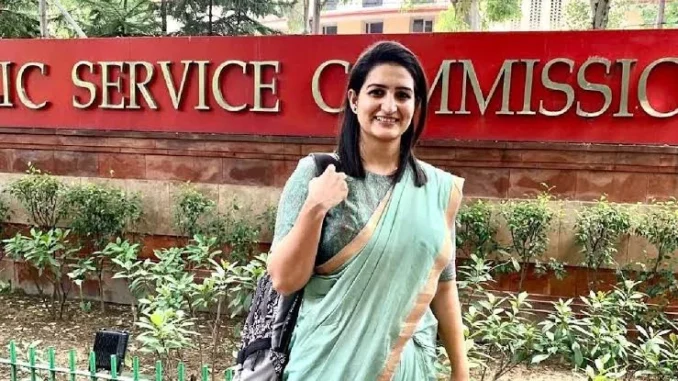
Ishita Rathi is an Indian Administrative Service (IAS) officer of the 2022 batch, belonging to the AGMUT cadre. She was born on October 19, 1994, in Baghpat, Uttar Pradesh, though she grew up and was educated in Delhi.
She secured All India Rank 8 in the UPSC Civil Services Examination 2021, her third and final attempt with Economics as her optional subject. She is a graduate of Lady Shri Ram College, University of Delhi (BA Economics Honours) and holds a postgraduate degree in Economics from the Madras School of Economics, Chennai.
She belongs to a family deeply embedded in public service both her parents are serving police personnel in the Delhi Police and she entered the IAS with a stated mission to work for the empowerment of women and children in Indian society. She is currently serving as the District Collector of Karaikal, Puducherry (2026).
| Ishita Rathi | |
|---|---|
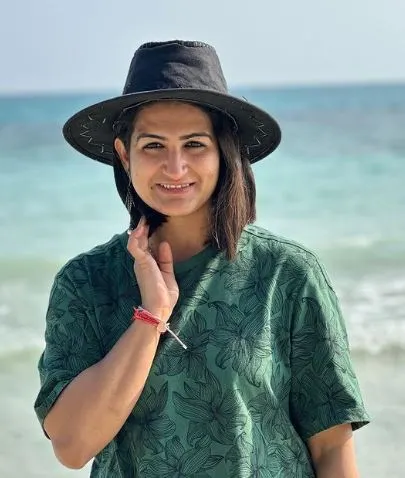 Ishita Rathi: History · Bio · Photo
|
|
| Wiki Facts & About Data | |
| Full Name: | Ishita Rathi |
| Born: | October 19, 1994 |
| Age: | 31 years old |
| Birthplace: | Baghpat, Uttar Pradesh, India |
| Nationality: | Indian |
| Occupation: | Indian Administrative Service (IAS) Officer |
| Height: | 5 feet 6 inches (170 cm) |
| Religion: | Hinduism |
| Parents: | Iqbal Rathi (Head Constable, Delhi Police Traffic Unit) |
| Siblings: | One younger brother (preparing for competitive government examinations) |
| Spouse: | Ravi Kumar Sihag IAS (married December 16, 2025) |
Early Life
Ishita Rathi was born on October 19, 1994, in Baghpat a district in the western reaches of Uttar Pradesh, historically associated with the Mahabharata and today a mixed urban-agricultural district on the border with Delhi.
While Baghpat is her place of birth and the origin of her family’s roots, Ishita grew up almost entirely in Delhi, where her family settled and where both her parents built their careers as serving police officers.
The family resides in Chhatarpur Village in South Delhi a semi-urban locality that straddles the old village character of the capital’s southern fringe and the expanding urban landscape of modern Delhi.
Her family is, by all accounts, a household built on the values of public service, discipline, and education. Her father, Iqbal Rathi, serves as a Head Constable in the Delhi Police Traffic Unit. Her mother, Meenakshi Rathi, is an Assistant Sub-Inspector (ASI) posted in the Delhi Police’s South-East District. An uncle on her father’s side holds a position in the Central Bureau of Investigation (CBI).
Growing up in a household where both parents wore government uniforms and served the public daily was deeply formative for Ishita. She has spoken in interviews about how watching her parents go about their duties with commitment, discipline, and pride planted in her from a very early age the desire to serve the country and the public in a meaningful way.
Her mother, Meenakshi Rathi, was a particularly influential figure. Ishita has described growing up listening to her mother’s accounts of celebrated administrators and public servants who had shaped India’s institutional life stories that made the IAS feel not merely like a career option but like a calling.
The image of her mother navigating a male-dominated police environment with competence and quiet determination also gave Ishita her first model of a woman breaking conventional barriers in public service. She has cited her parents as the primary motivation behind her decision to attempt the UPSC civil services examination.
Ishita has one younger brother, who is, at the time of writing, preparing for competitive government examinations suggesting that the family’s ethos of public service ambition is generational.
From a household where academic excellence was a deeply embedded expectation and public service was a daily lived reality, Ishita Rathi emerged with both the intellectual tools and the personal values needed to pursue one of India’s most demanding career paths.
Education
Schooling: DAV Public School, Vasant Kunj, Delhi
Ishita completed her primary and secondary schooling at DAV Public School, Basant Kunj (Vasant Kunj), New Delhi a reputable CBSE-affiliated institution under the DAV College Managing Committee network, which runs one of the largest chains of privately managed schools in India.
At DAV Public School, she was a consistent merit scholar maintaining strong academic performance throughout her years of schooling. She completed her Class 10 board examinations with a score of 94%, and her Class 12 board examinations with an outstanding score of 97% marks that established her as a high-achieving student and opened the door to Delhi University’s most competitive undergraduate programmes.
Undergraduate: Lady Shri Ram College, University of Delhi (BA Economics Honours)
On the strength of her exceptional Class 12 results, Ishita secured admission to Lady Shri Ram College (LSR) one of the most prestigious women’s colleges affiliated with the University of Delhi, widely considered among the finest undergraduate institutions in India. LSR has produced some of the country’s most distinguished alumni, including numerous IAS and IPS officers, academics, journalists, economists, and public figures.
At LSR, Ishita pursued a Bachelor of Arts (Honours) in Economics a programme that provided her with rigorous grounding in economic theory, quantitative methods, macroeconomics, microeconomics, and applied economics.
Her undergraduate degree gave her both the intellectual framework for analytical thinking and the specific disciplinary knowledge that she would later leverage as her optional subject in the UPSC Civil Services Examination.
The academic environment of LSR known for its intellectually demanding faculty, competitive peer culture, and strong tradition of student achievement further sharpened the critical thinking and research skills that would be essential to her UPSC preparation.
Postgraduate: Madras School of Economics, Chennai (MA Economics)
After completing her undergraduate degree from Lady Shri Ram College, Ishita moved to Chennai to pursue a Master’s Degree in Economics from the prestigious Madras School of Economics (MSE). MSE is an autonomous institution associated with the Central University of Tamil Nadu and is one of India’s most respected graduate schools of economics, known for its rigorous curriculum in economic theory, econometrics, and policy analysis. Faculty at MSE include some of India’s leading economists, and the institution has an exceptional track record of placing graduates in top academic, corporate, and government positions.
Her decision to pursue postgraduate economics in Chennai far from her family in Delhi demonstrated both intellectual seriousness and personal independence. The master’s programme deepened her understanding of economic policy, quantitative research methods, and development economics areas of knowledge highly relevant to the work of an IAS officer and particularly to the analytical demands of the UPSC mains optional paper in Economics.
It was around the time of completing or shortly after her postgraduate degree that Ishita began her UPSC preparation in earnest starting at approximately 20 to 21 years of age, early enough to allow multiple attempts while still in her early to mid-twenties.
UPSC Journey: Three Attempts to AIR-8
First Attempt (UPSC CSE 2019)
Ishita Rathi made her first attempt at the UPSC Civil Services Examination in 2019. Preparing independently without enrolling in any formal coaching institute she relied on self-study, online resources including YouTube lectures by subject experts and previous toppers, and standard UPSC preparation materials. Her first attempt gave her a direct experience of the examination’s scale, complexity, and unpredictability.
She did not clear the preliminary examination or did not make it to the final merit list in this attempt (sources vary on the precise stage at which she was not selected), and she returned to her preparation with renewed focus and a more structured understanding of what the examination demanded.
Second Attempt (UPSC CSE 2020)
In 2020, Ishita made her second attempt at the UPSC Civil Services Examination. This time, she progressed further but still did not achieve the final selection. A critical challenge she identified in this attempt was her performance in Economics her optional subject.
Despite choosing a subject she had studied at both undergraduate and postgraduate levels, she found that Economics presents a particularly daunting challenge in the UPSC context: the optional syllabus is vast, there is limited structured guidance available compared to more popular optionals like Public Administration or History, and scoring consistently well in it requires not just conceptual understanding but the ability to present economic analysis in a manner calibrated to the UPSC evaluation framework.
She has publicly acknowledged the difficulty of the Economics optional, noting that “the topic of economics is highly challenging due to its extensive curriculum and there is very little educational assistance accessible for this topic.”
Her second attempt was a period of important self-correction she identified her weak areas, revised her strategy for the optional, and doubled down on her preparation for the third attempt with greater precision.
Third Attempt: AIR-8, UPSC CSE 2021 (Result Declared 2022)
In 2021, Ishita appeared for her third and ultimately triumphant attempt at the UPSC Civil Services Examination. On this occasion, every element of her preparation came together.
She cracked the Preliminary examination, excelled through the Mains, and performed brilliantly in the Personality Test (Interview) during which she was questioned extensively on her Detailed Application Form and on current economic issues, demonstrating the analytical depth that her background in economics provided.
When the UPSC CSE 2021 final results were declared in 2022, Ishita Rathi found her name at 8th position among all candidates across India an extraordinary achievement that placed her in the top ten of the most competitive examination in the country.
She was shocked and overwhelmed: “This test is quite unpredictable. Every try varies greatly from the previous attempt. Therefore, it is impossible to know which technique was successful until the final findings are out. Like many other aspirants, the journey has been challenging for me.”
The significance of her achievement was immediately recognised at the institutional level. Delhi Police Commissioner Rakesh Asthana personally honoured Ishita at the Delhi Police Headquarters with a formal felicitation and a memento, recognising her as a daughter of the Delhi Police family both her parents being serving officers who had brought pride to the department and to her family. Commissioner Asthana praised her achievement publicly and acknowledged the extraordinary effort it represented.
UPSC CSE 2021 Marksheet
Ishita Rathi’s officially released UPSC marksheet for the 2021 Civil Services Examination reflects the high quality of her performance across all three stages of the examination Preliminary, Mains, and Interview. Her Economics optional paper performance, which had been a weak point in her earlier attempts, showed significant improvement and was a key contributor to her top-ten ranking.
Her answer writing in the General Studies papers was noted by UPSC preparation coaches and fellow aspirants as structured, analytical, and concise qualities that the examination rewards. The full marksheet is available in the public domain through official UPSC and coaching platform publications.
Career
LBSNAA Foundation Training
Following her selection into the IAS, Ishita Rathi underwent the mandatory foundational training programme at the Lal Bahadur Shastri National Academy of Administration (LBSNAA) in Mussoorie, Uttarakhand the premier training institution for India’s civil servants.
The LBSNAA foundational course brings together freshly selected IAS, IPS, IFS, and other Central Services officers for a joint training programme designed to instil a common ethos of public service, an understanding of governance systems, and the practical administrative skills needed for the challenging roles ahead. It was during this training period that she met her future husband, IAS officer Ravi Kumar Sihag, with whom a relationship developed that would eventually lead to marriage.
She was allotted the AGMUT cadre which covers Arunachal Pradesh, Goa, Mizoram, and Union Territories including Delhi, Chandigarh, Andaman and Nicobar Islands, Puducherry, Jammu and Kashmir, Ladakh, and others.
The AGMUT cadre is distinctive in that it is not controlled by any state government but operates directly under the Ministry of Home Affairs giving officers in this cadre significant exposure to diverse geographical, cultural, and administrative contexts across the country.
Sub-Collector (Revenue) North-cum-Sub-Divisional Magistrate, Puducherry
After completing her foundational training at LBSNAA, Ishita Rathi was posted to Puducherry one of India’s Union Territories administered under the AGMUT cadre. Her initial posting was as Sub-Collector (Revenue) North-cum-Sub-Divisional Magistrate in Puducherry.
In this role, she was responsible for overseeing revenue administration, land records management, public welfare implementation, and sub-divisional magisterial functions in her assigned jurisdiction. Her background in economics proved invaluable in understanding the financial dimensions of revenue collection and developmental programme management.
District Collector, Karaikal, Puducherry (February 2026 – present)
The most significant milestone of Ishita Rathi’s career to date came in February 2026, when she took charge as the District Collector of Karaikal one of the four districts of the Union Territory of Puducherry, geographically separate from the main Puducherry district and encircled by Tamil Nadu.
The District Collector is the senior-most government administrator within a district responsible for land administration, law and order (in coordination with police), implementation of central and state government schemes, disaster management, election supervision, and overall coordination of all government departments at the district level.
Her appointment as District Collector in February 2026, at just 31 years of age, made her one of the youngest IAS officers to hold the office of District Collector in her cadre a testament to the confidence placed in her by the administration and a recognition of the qualities she demonstrated during her initial years of service.
The District Collector’s role is often described as the most complete expression of what the IAS represents: a single officer accountable for the welfare, administration, and development of an entire district and all the people who live within it.
UPSC Preparation Strategy
One of the most widely cited and studied aspects of Ishita Rathi’s UPSC journey is her preparation strategy particularly the fact that she cleared the examination entirely through self-study, without enrolling in any formal coaching centre.
Her approach has been dissected by UPSC aspirants, coaching platforms, and educational channels across India, and she has shared it generously in interviews and public platforms.
Her study approach was characterised by a target-based structure rather than a clock-based one. Rather than committing to a fixed number of study hours per day, she set daily and weekly content targets ensuring that specific portions of the syllabus were covered comprehensively within defined timeframes.
This approach allowed her to adapt the pace of her study to the natural demands of different subjects, without the anxiety of watching the clock. Some days she finished her targets in seven or eight hours; others required ten or more.
She was a habitual morning studier, rising early to study during the hours she found most mentally sharp. For the Preliminary examination, she emphasised thorough reading of NCERTs as a foundational step for subjects like Geography and Polity, supplemented by current affairs reading through newspapers and reliable online sources.
For the Mains, she focused on practising concise, structured answer writing, developing personalised notes that she revised repeatedly stressing that consistent revision was “the key in all this.” She practised extensively with past question papers and mock tests to identify areas of weakness and calibrate her responses to the examiner’s expectations.
For her Economics optional, she relied primarily on self-study and a careful analysis of past UPSC question papers to understand the patterns and depth of knowledge required. Key reference materials included M. Laxmikanth’s Indian Polity for General Studies Paper II and Spectrum’s Modern Indian History for General Studies Paper I.
She has encouraged fellow aspirants to follow the resources that most successful previous candidates had relied upon, noting that consistency in referring to a fixed set of high-quality materials rather than constantly switching between sources is far more valuable than attempting to cover every available resource.
For her Personality Test (Interview), she underwent mock interviews to sharpen her communication and developed a thorough familiarity with current economic and policy debates, allowing her to engage confidently with the panel’s questions on contemporary issues. She was questioned on her DAF and on current economic policy matters areas where her postgraduate background in economics gave her a natural advantage.
Awards and Recognition
- All India Rank 8 (AIR-8) UPSC Civil Services Examination 2021, Indian Administrative Service
- Consistent Merit Scholar DAV Public School, Vasant Kunj, Delhi (throughout schooling)
- Class 10 Score: 94% CBSE Board Examinations
- Class 12 Score: 97% CBSE Board Examinations
- Felicitation by Delhi Police Commissioner Rakesh Asthana At Delhi Police Headquarters, for securing AIR-8 in the UPSC CSE 2021 and bringing honour to the Delhi Police family
- District Collector, Karaikal Among the youngest IAS officers in the AGMUT cadre to be entrusted with the role of District Collector (February 2026)
Social Media
Ishita Rathi maintains a presence on social media, primarily through Instagram, where she has built a significant following among UPSC aspirants and the broader public who follow the journeys of India’s top civil servants.
- Instagram: @ias_ishita.rathi Her verified Instagram account has over 117,000 followers (as of the time of writing), making her one of the more widely followed IAS officers on the platform. She uses this account sparingly posting selectively about professional milestones, personal moments of significance, and occasional reflections on her journey but each post attracts significant engagement from aspirants who find her story motivational and from those who follow Indian civil service affairs.
She does not maintain a significantly active presence on Twitter/X or other major social media platforms, keeping her digital footprint relatively contained compared to some of her more publicly visible IAS contemporaries.
Personal Life
Marriage to IAS Officer Ravi Kumar Sihag (December 2025)
One of the most heartwarming and widely noted personal developments in Ishita Rathi’s life came in December 2025, when she married Ravi Kumar Sihag himself an IAS officer and her batchmate from the UPSC Civil Services Examination 2021 cohort.
The couple married on December 16, 2025, in what was described in administrative circles as a love marriage a relationship that reportedly began during their shared foundational training at LBSNAA in Mussoorie, where the chemistry between two like-minded, highly driven civil servants developed naturally over the course of their joint professional formation.
Ravi Kumar Sihag had been posted in the Madhya Pradesh cadre before their marriage, serving as Sub-Divisional Officer (SDO) in the Revenue Department at Lakhnadon, Seoni district. Following their marriage, he applied for a cadre transfer on marriage grounds a standard provision in Indian civil service rules allowing spouses serving in different cadres to seek transfer to the same cadre.
The Department of Personnel and Training (DoPT) approved his application, and the official cadre transfer order was issued on 9 March 2026, bringing Ravi Kumar Sihag from the Madhya Pradesh cadre to the AGMUT cadre aligning his administrative home with that of his wife Ishita.
Their union two toppers from the same UPSC batch who found each other during training and built a life together in public service generated considerable warmth and attention across India’s civil services community and among the millions of UPSC aspirants who follow the journeys of successful candidates.
The story of an AIR-8 topper and her IAS officer husband navigating a double-cadre life, eventually being brought together under the same administrative framework, has resonated widely as a testament to how the demanding world of Indian civil services can, even amid its intensity, also create space for human connection and love.
Family Values and Motivation
Ishita has repeatedly emphasised the centrality of family to her journey. She has said that her parents did not merely support her UPSC preparation they were its original inspiration.
Growing up watching her mother Meenakshi Rathi serve as an ASI in a police force that remains heavily male-dominated, and her father Iqbal Rathi serve with quiet dedication in the Traffic Unit, gave Ishita her most vivid and personal understanding of what it means to serve the public.
She has described wanting to “give back to society” through IAS a motivation she articulated explicitly when asked what she would have done if she had not cleared the exam: “I would have chosen to pursue an academic career in economics. But with my government services, I can give back to the society and help national development.”
Her stated focus as an IAS officer is on the empowerment of women and children ensuring their rights and welfare are prioritised in the administrative decisions she takes and the schemes she implements. This orientation is consistent with both her personal values and the broader policy priorities of the Indian government in areas of child welfare, women’s safety, and social inclusion.
Net Worth
Ishita Rathi’s net worth is estimated at approximately ₹60 lakhs, based on publicly available assessments of IAS officer compensation and assets at the early stages of their careers.
As a serving IAS officer in the AGMUT cadre at the rank of District Collector, she receives a government salary in accordance with the 7th Pay Commission pay scale for IAS officers at her level of seniority which, including house rent allowance, travel allowance, and other benefits, represents a comfortable but not extravagant income. IAS officers at her level also receive official government accommodation, official vehicles, and various service-related facilities.
Her modest background growing up in a Delhi Police family in Chhatarpur Village means that her personal wealth is almost entirely the product of her own public service earnings, with no inherited assets of note. Her net worth is expected to grow steadily as she advances through the ranks of the IAS over the course of what promises to be a long and distinguished career.
FAQs
Who is Ishita Rathi IAS?
Ishita Rathi is an Indian Administrative Service (IAS) officer of the 2022 batch, belonging to the AGMUT cadre. She secured All India Rank 8 (AIR-8) in the UPSC Civil Services Examination 2021 on her third attempt, without any formal coaching. She is currently serving as the District Collector of Karaikal in Puducherry.
When was Ishita Rathi born?
She was born on October 19, 1994, in Baghpat, Uttar Pradesh. She grew up in Delhi and is 31 years old as of 2026.
What was Ishita Rathi’s UPSC rank?
She secured All India Rank 8 (AIR-8) in the UPSC Civil Services Examination 2021, making her one of the top ten candidates in India that year.
How many attempts did Ishita Rathi take to clear UPSC?
She took three attempts in 2019, 2020, and 2021. She cleared the examination on her third and final attempt in 2021, securing AIR-8.
Did Ishita Rathi take any coaching for UPSC?
No. Ishita Rathi prepared entirely through self-study without enrolling in any formal coaching institute. She used standard UPSC preparation books, online resources, YouTube lectures by subject experts, and previous toppers’ strategies as her primary learning tools.
What was Ishita Rathi’s optional subject in UPSC?
Her optional subject was Economics consistent with her academic background in Economics Honours from Lady Shri Ram College and her Master’s degree from the Madras School of Economics. She acknowledged that Economics is a particularly challenging optional due to its vast syllabus and limited structured guidance, especially after struggling with it in her second attempt.
Where did Ishita Rathi study?
She attended DAV Public School, Vasant Kunj, Delhi for her schooling; Lady Shri Ram College, University of Delhi for her Bachelor’s degree (Economics Honours); and the Madras School of Economics, Chennai for her Master’s degree in Economics.
What cadre is Ishita Rathi in?
She belongs to the AGMUT cadre which covers Arunachal Pradesh, Goa, Mizoram, and Union Territories including Delhi, Puducherry, Chandigarh, Andaman and Nicobar Islands, Jammu and Kashmir, and Ladakh. The cadre is administered by the Ministry of Home Affairs.
Who is Ishita Rathi’s husband?
She is married to Ravi Kumar Sihag, an IAS officer from the same 2021 UPSC Civil Services batch. They married on December 16, 2025. Their relationship reportedly began during their joint foundational training at LBSNAA, Mussoorie. Following their marriage, Sihag’s cadre was transferred from Madhya Pradesh to AGMUT, effective March 9, 2026, so that they could serve in the same cadre.
What is Ishita Rathi’s current posting in 2026?
As of 2026, Ishita Rathi serves as the District Collector of Karaikal in the Union Territory of Puducherry. She took charge of this posting in February 2026, making her one of the youngest District Collectors in the AGMUT cadre.
What were Ishita Rathi’s board exam scores?
She scored 94% in her CBSE Class 10 board examinations and 97% in her CBSE Class 12 board examinations from DAV Public School, Vasant Kunj, Delhi.
What is Ishita Rathi’s net worth?
Her net worth is estimated at approximately ₹60 lakhs, derived from her IAS officer salary and government benefits. As a young officer early in her career, her financial standing is comfortable but modest.
Conclusion
Ishita Rathi’s story is one of the most inspiring chapters in the recent history of India’s civil services. She is not a product of privilege, elite coaching networks, or extraordinary inherited advantage.
She is the daughter of a Head Constable and an ASI in the Delhi Police a middle-class family from Chhatarpur Village in South Delhi, with roots in Baghpat, UP who watched her parents serve the public in uniform and decided she wanted to serve the nation in a different but equally meaningful uniform of her own.
She failed twice. She struggled with her optional subject. She studied alone, without the structured scaffolding of a coaching institute, relying on her own intellectual resources, her family’s emotional support, and the hard-won lessons of two unsuccessful attempts. And on her third try, she placed 8th in all of India a result that was, by her own account, as surprising as it was thrilling.
She was recognised by the Delhi Police Commissioner. She trained at LBSNAA. She fell in love with her batchmate. She got married. She became a District Collector at 31. And she is, by every measure, only just beginning.
For the millions of young Indians who are sitting with their UPSC books tonight wondering if the third attempt will be the one, wondering if self-study is enough, wondering if someone from a modest background can really make it to AIR-8 Ishita Rathi’s answer is clear, unambiguous, and beautifully human: yes, it can be done. And she is the proof.
Related People




Leave a Reply