
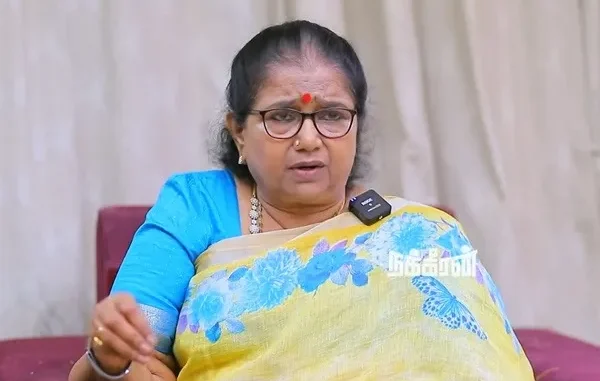
Who is G. Thilagavathi IPS?
G. Thilagavathi (also written as G. Thilakavathi, Tamil: ஜி. திலகவதி) is a retired Indian Police Service (IPS) officer and acclaimed Tamil writer from Tamil Nadu, India.
Born in 1952 in Kumarasamypettai village in Dharmapuri district, she cleared the UPSC Civil Services Examination in 1976 to become the first native woman from Tamil Nadu to enter the IPS.
She served in the Tamil Nadu cadre across a wide range of postings from ASP Vellore to DCP Chennai to DIG Railways to Inspector General of Police Headquarters to Director of Vigilance to Additional Director General of Police (2007) to Director General of Police (2010–2011).
In her literary career, she has penned 9 novels, 18 novellas, over 150 short stories across 9 collections, 11 essay collections, and 14 translations, and has edited 8 books. Her novel Kalmaram won the Sahitya Akademi Award for Tamil in 2005, making her the only woman IPS officer ever to receive the Sahitya Akademi Award. She was also honoured with the Kalaimamani Award by the Government of Tamil Nadu in 2005.
Profile Details
| Full Name | G. Thilagavathi (also G. Thilakavathi) |
| Tamil | ஜி. திலகவதி |
| Born | 1952 |
| Birthplace | Kumarasamypettai Village, Dharmapuri District, Tamil Nadu, India |
| Father’s Name | Govindasamy Reddiar |
| Nationality | Indian |
| Religion | Hinduism |
| Service | Indian Police Service (IPS) |
| Cadre | Tamil Nadu |
| UPSC Year | 1976 |
| Final Rank | Director General of Police (DGP) |
| Service Period | 1976 – 2011 (approximately 35 years) |
| Post-Retirement Role | Chairperson, Uniformed Services Recruitment Board, Tamil Nadu |
| Literary Awards | Sahitya Akademi Award for Tamil (2005) Novel: Kalmaram; Kalaimamani Award (2005) Government of Tamil Nadu; Government of Tamil Nadu Best Short Story Prize (1988–89) |
| First Marriage | At age 16 (abusive; separated); one daughter |
| Second Marriage | Dr. G. Nanchil Kumaran IPS (1982; ended due to marital differences) |
Early Life
G. Thilagavathi was born in 1952 in Kumarasamypettai village a small, remote community in the Dharmapuri district of Tamil Nadu, in the north-western reaches of the state, a region historically characterised by agricultural poverty, limited access to education, and deep-rooted patriarchal social structures.
Dharmapuri was, and to a significant extent remains, a backward region by the social and economic indicators that mattered most to the prospects of a child born there in the 1950s. Her father was Govindasamy Reddiar a man whose name and lineage she carries in her professional identity through the initial “G.”
From the earliest years of her schooling in Dharmapuri district, Thilagavathi displayed what The Hindu has described as an “extraordinary aptitude for academics.”
She was enrolled in school at an unusually young age, and so rapidly did she advance through her classes her intellectual ability outpacing her peers at every stage that she found herself frequently sharing a classroom with children significantly older than herself. This accelerated academic progression was both a source of pride and a marker of how unusually gifted she was in a region where female education was still not universally prioritised.
The promise of her early academic life was brutally interrupted at the age of sixteen, when her parents withdrew her from the first year of her BA Economics course at Auxilium College, Katpadi (near Vellore) and arranged her marriage to a man who, by Thilagavathi’s own account, turned out to be deeply abusive. Pregnant with her first child, she was subjected to domestic violence at her matrimonial home an experience of systematic cruelty that ended only when her father intervened and brought her back to the family home.
At seventeen with a baby in her arms, a broken marriage behind her, and no income of her own Thilagavathi faced a set of circumstances that would have defeated many women of her era and her region.
She was in a society that stigmatised separated women, in a family that lacked resources, in a region where opportunities for women were extraordinarily limited.
She refused to be defined by any of it. “I was desperate to find a job to support myself and my family,” she has recalled. “My mother preferred I take up ‘light’ jobs, such as teaching or clerical positions in banks. But I had set my mind on the civil services.”
With her infant daughter left in the care of her parents, she and her aunt moved to Madras (now Chennai), renting a house in Valluvar Kottam, and she began the process of rebuilding her educational and professional prospects from scratch alone, in an unfamiliar city, without a safety net.
Education
Schooling Dharmapuri District
Thilagavathi completed her primary and secondary schooling entirely within Dharmapuri district navigating the severe resource constraints of a rural school system in backward Tamil Nadu in the 1950s and 1960s, and excelling despite them.
Her accelerated academic progress through multiple classes ahead of her age group was the first clear signal of the exceptional intellect that would eventually carry her through one of India’s most competitive selection processes.
Auxilium College, Katpadi / Vellore BA Economics (incomplete, then completed)
At sixteen, she was enrolled at the Auxilium College at Katpadi (near Vellore) a respected women’s educational institution to pursue a degree in Economics. She was withdrawn from this course by her parents for marriage during her first year.
After her separation from her husband and her return to her parents, she managed to complete her BA Economics degree from Auxilium College an act of academic perseverance that, under the circumstances she was navigating, was remarkable in itself.
Stella Maris College, Chennai MA Economics
After relocating to Madras with her aunt, Thilagavathi enrolled at the prestigious Stella Maris College for Women in Chennai one of the finest women’s colleges in South India, affiliated with the University of Madras and completed her Master of Arts degree in Economics.
Stella Maris College provided both the academic rigour and the urban intellectual environment that sharpened her analytical abilities and broadened her understanding of the Indian economy and society. Her MA Economics degree would later become the academic foundation for her economics optional in the UPSC Civil Services Examination.
Civil Services Coaching Centre, Anna Nagar, Chennai
While pursuing her MA at Stella Maris, Thilagavathi enrolled in the Government-established Civil Services Coaching Centre in Anna Nagar, Chennai a state initiative to assist candidates from less privileged backgrounds in preparing for the UPSC examination.
She had already cleared the Tamil Nadu Public Service Commission (TNPSC) Group I examination twice and attended multiple job interviews, but her ambition extended to the UPSC and the all-India services. The coaching centre gave her access to structured preparation materials and competitive discipline that her remote Dharmapuri origins had not been able to provide. It was a pivotal intervention. “Nobody supported me,” she has recalled of her early UPSC preparation making the coaching centre’s existence, and her decisive seizure of the opportunity it offered, all the more consequential.
Career
UPSC Success and Historic Selection (1976)
In 1976, G. Thilagavathi successfully cleared the Union Public Service Commission (UPSC) Civil Services Examination and was selected for the Indian Police Service (IPS) allotted to the Tamil Nadu cadre.
Her selection made her the first native woman from Tamil Nadu to join the Indian Police Service a historic milestone in the history of Indian policing and Tamil women’s professional achievement. She was selected in the same batch as Letika Saran from Kerala, who was also allotted the Tamil Nadu cadre.
After her selection, Thilagavathi was told by UPSC officials that she could appear in the examination again to seek allocation to the Indian Administrative Service (IAS) a suggestion that implied that the IPS was somehow a lesser achievement for a woman of her abilities. Her father’s counsel was direct: remain in the IPS. She followed his advice.
She has since described the early culture of the uniformed services as a “shock” to a young woman from a rural background the male-dominated environment, the physical demands, and the cultural norms of a uniformed service built entirely without women in mind. But she adapted, persisted, and prevailed.
Assistant Superintendent of Police Vellore and Tiruchirappalli
Thilagavathi began her IPS career as an Assistant Superintendent of Police (ASP) in Vellore the district where she had studied at Auxilium College and subsequently in Tiruchirappalli (Trichy). The ASP role is the entry-level posting for an IPS officer completing probationary training, and it provides the foundational exposure to district-level policing that shapes an officer’s entire subsequent career.
Her early years in Vellore and Trichy exposed her to the full spectrum of field policing including law and order maintenance, criminal investigation, community engagement, and the management of a district police apparatus in two of Tamil Nadu’s major cities.
Deputy Commissioner of Police Chennai
From her district postings, Thilagavathi was posted to Chennai as a Deputy Commissioner of Police (DCP) a senior rank responsible for overseeing policing across one or more of Chennai’s police divisions. The DCP role in Chennai one of India’s largest and most complex metropolitan police environments demanded a sophisticated understanding of urban crime, communal dynamics, traffic management, and VIP security.
Her service in this capacity deepened her understanding of metropolitan policing and established her in the senior ranks of the Tamil Nadu police establishment.
Superintendent of Police Civil Supplies CID and Commercial Crime Investigation Wing
Thilagavathi was subsequently posted as Superintendent of Police in the Civil Supplies Criminal Investigation Department (CID) and later in the Commercial Crime Investigation Wing specialised policing roles focused on the investigation of economic offences, supply chain manipulation, food adulteration, black market activity, and commercial fraud.
These postings gave her a distinctive expertise in economic crime investigation that complemented her original academic background in Economics a rare combination in the senior Indian police service of her era.
Deputy Inspector General of Police Railways (1993)
In early 1993, Thilagavathi was promoted to the rank of Deputy Inspector General of Police (DIG) and posted to the Railways a specialised wing of the police responsible for security, law enforcement, and crime investigation on the Indian Railways network across Tamil Nadu and Union Territory jurisdictions.
The Railways DIG posting placed her at the head of a significant uniformed force responsible for one of the most challenging public security environments in India the vast, crowded, and crime-prone spaces of the Indian Railways system.
DIG Chengalpattu-MGR Range (1993)
Later in 1993, Thilagavathi was appointed as the DIG for the Chengalpattu-MGR Range a range that covered the districts of Chengalpattu East and West and South Arcot. A DIG (Range) is responsible for overseeing the police administration, crime investigation, and law and order management across all districts within the assigned range a substantial territorial responsibility that placed her at the supervisory apex of policing across a significant portion of Tamil Nadu’s southern coastal region.
Inspector General of Police Headquarters
Thilagavathi subsequently served as Inspector General of Police (Headquarters) a senior role at the state police headquarters responsible for administrative, planning, and policy coordination functions across the Tamil Nadu police establishment.
The IGP (Headquarters) role provides the officer with a panoramic view of how the entire state police machinery is organised, funded, and directed and places her at the interface between field operations and the apex leadership of the force.
Director of Vigilance and Anti-Corruption
Thilagavathi held the critical position of Director of Vigilance (and Anti-Corruption) a role of immense sensitivity and institutional importance, responsible for investigating corruption allegations against government servants and ensuring the integrity of the Tamil Nadu government’s administrative apparatus. This posting reflected the trust placed in her reputation for personal integrity and professional independence qualities essential for an officer tasked with investigating the misconduct of fellow officials.
Additional Director General of Police (ADGP) 2007
In 2007, Thilagavathi was promoted to the rank of Additional Director General of Police (ADGP) one of the highest grades in the IPS, just one step below the apex DGP rank. This promotion, however, came only after what she has described as a prolonged and bitter struggle against institutional resistance. “For every promotion, I had to struggle. I had to approach the court and Central Administrative Tribunal to get promoted as DGP. By the time, considerable time of service was lost,” she has stated publicly an indictment of the institutional gender discrimination that persisted in the Tamil Nadu police establishment even decades into her career. The delays in her promotions meant that she reached the apex of her career with significantly less service left than her male contemporaries in equivalent positions.
Director General of Police (DGP) 2010–2011
The culmination of G. Thilagavathi’s police career came with her elevation to the rank of Director General of Police (DGP) the highest rank in the Indian Police Service and in any state police force. She served as DGP from 2010 to 2011, specifically as DGP of the Uniformed Services Recruitment Board, Tamil Nadu. While she has expressed frustration that she was not given more operationally prominent DGP-level postings noting that she was kept on the “sidelines” and denied “plum postings” throughout her career the fact of her reaching the DGP rank at all represents an extraordinary personal and institutional achievement for a woman who entered the IPS in 1976 as its first Tamil native female officer.
Post-Retirement: Chairperson, Uniformed Services Recruitment Board
Following her retirement from active IPS service in 2011, Thilagavathi continued in public life as the Chairperson of the Uniformed Services Recruitment Board of Tamil Nadu the body responsible for conducting recruitment examinations and managing selections for the state’s uniformed services. This post-retirement role allowed her to contribute to the systematic strengthening of Tamil Nadu’s police recruitment processes from a position of deep experiential knowledge.
Literary Career
G. Thilagavathi’s literary career is, in many respects, as remarkable as her police career and unlike her police career, it was one in which she found consistent recognition, appreciation, and reward from the very beginning.
First Short Story: Dinakaran (1987)
Her literary career began in 1987 eleven years into her IPS service when her first short story was published in Dinakaran, one of Tamil Nadu’s most widely circulated Tamil-language daily newspapers.
The publication marked the beginning of what would become one of the most prolific literary careers of any active government official in the history of Tamil Nadu.
Her debut story immediately attracted attention, and the encouragement she received from readers and editors propelled her into increasingly ambitious literary production even as she continued to manage the full demands of her police career.
First Short Story Collection: Theyumo Sooriyan
Her first published short story collection Theyumo Sooriyan (Will the Sun Wane) established her as a writer of distinctive voice and thematic seriousness.
The collection engaged with themes of gender, power, social inequality, and the resilience of women in the face of structural oppression themes drawn from a life lived intimately within both patriarchal family structures and male-dominated institutional environments.
Government of Tamil Nadu Best Short Story Prize (1988–89)
In a remarkable early recognition of her literary talent, two of her short stories Theiyumo Sooriyan (Will the Sun Wane) and Arasigal Aluvathillai (Queens Don’t Rule / Queens Don’t Cry) won the Government of Tamil Nadu’s Best Short Story Prize for 1988–89. This award, early in her writing career, confirmed that her literary work was not a hobby but a serious creative enterprise of the highest quality.
Novel Pathini Penn (1983) Adapted as a Film (1993)
Her novel Pathini Penn written in 1983, early in her career was adapted into a Tamil-language film of the same name in 1993, directed by R.C. Sakthi and starring Rupini in the lead role alongside Livingston. The film explored themes of female virtue, societal constraints on women, and the endurance of a woman navigating a deeply patriarchal world thematic territory that mirrored both Thilagavathi’s literary concerns and her own lived experience. The adaptation of her work into cinema gave her stories a popular audience far beyond the readership of Tamil literary fiction.
Television Adaptations
Several of Thilagavathi’s works were adapted for Tamil television bringing her narratives to the mass audience of the small screen. Works adapted for television include Vaarthai Thavari Vittai, Arasigal Aluvathillai, and Muppathu Kodi Mugangal all of which addressed social issues, gender dynamics, and human relationships in ways that resonated strongly with Tamil audiences.
Kalmaram The Sahitya Akademi Award-Winning Novel (2005)
The pinnacle of G. Thilagavathi’s literary career is her novel Kalmaram (கல்மரம் literally The Stone Tree). Published in the years before 2005, when it won the Sahitya Akademi Award for Tamil, Kalmaram is a work of extraordinary social conscience and literary ambition. The novel portrays the dystopian realities of urban construction workers exploring the working-class exploitation of migrant labourers under capitalist development conditions, including inadequate wages, hazardous work environments, the absence of accident compensation, and the systemic erasure of the humanity of those who build India’s cities while remaining invisible within them.
The Sahitya Akademi Award India’s most prestigious national literary honour, awarded annually by the Sahitya Akademi (India’s National Academy of Letters) for the best literary work in each of India’s recognised languages placed Kalmaram among the finest works of Tamil literature of its generation. The award also made G. Thilagavathi the only woman IPS officer in Indian history to receive the Sahitya Akademi Award a distinction that she holds to this day. Kalmaram was subsequently translated into Malayalam by Shafi Cherumavilayi and published by Sahitya Akademi in 2018, extending the novel’s reach to Malayalam-language readers across Kerala.
Sahitya Akademi Translations
Beyond her own creative work, G. Thilagavathi has served as a translator for the Sahitya Akademi translating works from other Indian languages into Tamil to make them accessible to Tamil readers. Her translations include Nizhal Kodugal, Uthirum Ilaigalin Oosai (Patjhad Ki Aawaz by Qurratul Ain Haider), Govarthan Ram, and approximately 50 short stories into Tamil among them works by Mahasweta Devi and other leading writers of other Indian languages. Her translation work reflects both her multilingual range and her commitment to building literary bridges between India’s diverse language communities.
Complete Literary Output
The full scope of G. Thilagavathi’s literary output is staggering for a person who simultaneously managed a full-time, demanding career as a senior IPS officer. She has produced:
- 9 novels
- 18 novellas
- 9 short story collections (comprising over 150 published short stories)
- 11 essay collections
- 14 translation works
- 8 edited books
- Numerous individual poems
Bibliography
| Title (Tamil) | Title (English Translation) | Type | Notes |
| கல்மரம் (Kalmaram) | The Stone Tree | Novel | Sahitya Akademi Award for Tamil (2005); translated into Malayalam (2018) |
| பதினி பெண் (Pathini Penn) | Virtuous Woman | Novel | Written 1983; adapted into Tamil film (1993, dir. R.C. Sakthi) |
| தேயுமோ சூரியன் (Theyumo Sooriyan) | Will the Sun Wane | Short Story / Collection | First published short story collection; title story won Govt of TN Best Short Story Prize 1988–89 |
| அரசிகள் ஆளுவதில்லை (Arasigal Aluvathillai) | Queens Don’t Rule | Short Story | Won Government of Tamil Nadu Best Short Story Prize 1988–89; adapted for TV |
| வார்த்தை தவறி விட்டாய் (Vaarthai Thavari Vittai) | You Missed the Word | Novel / Short Story | Adapted for television |
| முப்பது கோடி முகங்கள் (Muppathu Kodi Mugangal) | Three Hundred Million Faces | Novel / Short Story | Adapted for television |
| உனக்காகவா நான் (Unakagavaa Naan) | Was It For You? | Novel | 2007 |
| தமிழ்க்கொடியின் காதல் (Tamizh Kodiyin Kadhal) | Love of the Tamil Flag | Novel | 2007 |
| நாளை எனது ராஜ்யம் (Nalai Enathu Rajangam) | Tomorrow is My Kingdom | Novel | |
| கனவை சூடிய நட்சத்திரம் (Kanavai Soodiya Natchathiram) | Star That Wore the Dream | Novel | |
| ஒரு ஆத்மாவின் டயரி சில வரங்கள் (Oru Aathamavin Diary) | Diary of a Soul Some Blessings | Novel | |
| அலை புரளும் கரையோரம் (Alai Puralum Karayoram) | Shoreline Where Waves Roll | Novel | |
| அன்புள்ள பிலாத்துவுக்கு (Anbulla Pilathuvukku) | Dear Pilate | Translation (from Malayalam) | Paul Zacharia’s work, translated into Tamil |
Awards and Honours
- Government of Tamil Nadu Best Short Story Prize (1988–89) For short stories Theiyumo Sooriyan and Arasigal Aluvathillai
- Sahitya Akademi Award for Tamil (2005) For the novel Kalmaram (The Stone Tree); making her the only woman IPS officer in India ever to receive this honour
- Kalaimamani Award (2005) Awarded by the Government of Tamil Nadu in recognition of distinguished achievement in Tamil literature and creative arts
- Historic First: First Native Tamil Woman in the IPS (1976) A milestone recognised by the Government of Tamil Nadu, the SABC, and literary and academic institutions across South India
- Director General of Police (2010–2011) The highest rank in the Indian Police Service, achieved after approximately 35 years of service in the Tamil Nadu cadre
Personal Life
First Marriage Abuse and Survival
G. Thilagavathi’s first marriage occurred when she was sixteen years old, having been withdrawn from her first year at Auxilium College by her parents and married to a man who subjected her to domestic abuse during her pregnancy. The abuse was severe enough that her father intervened and brought her back to the family home.
At seventeen, she was a young mother, separated, without income, and in a society that offered few paths forward for women in her situation.
Her response to this crisis to resume her education, move to Madras, pursue graduate study, clear the TNPSC Group I exam twice, and ultimately clear the UPSC is one of the most remarkable stories of personal resilience in the history of Indian women’s professional achievement.
Second Marriage Dr. G. Nanchil Kumaran IPS (1982)
In 1982, during her IPS career, Thilagavathi entered into a second marriage with Dr. G. Nanchil Kumaran a fellow IPS officer. This marriage also ended, due to what have been described as “marital differences.”
Despite having experienced two failed marriages one abusive and one incompatible Thilagavathi has never allowed her personal experiences to define or limit her professional or literary output. If anything, her personal understanding of the vulnerabilities and resiliences of women in Indian society has been the source material for some of the most powerful writing in her literary career.
Institutional Gender Discrimination
Thilagavathi has spoken candidly and with considerable bitterness about the institutional gender discrimination she faced throughout her IPS career. She was, in her own description, “kept on the sidelines” and denied “plum postings” throughout her service.
Every major promotion required her to fight including approaching the court and the Central Administrative Tribunal (CAT) to secure her promotion to DGP, a promotion that should have been automatic but was resisted by the institutional hierarchy. The delays caused by this discrimination meant that she lost “considerable time of service” at the apex of her career.
Her account of this experience is an important historical document of the systemic gender bias within the Indian police establishment of her era.
Social Media and Public Profile
G. Thilagavathi does not maintain a known personal social media presence consistent with her generation and her reserved personal style.
Her public profile is maintained primarily through her literary works, institutional appearances, and media interviews including her profile on the Thilakavathi Foundation website and her literary profiles on platforms such as Goodreads and the Sahitya Akademi’s official publication records.
She has given notable interviews to publications including The Hindu, in which she has spoken with characteristic candour about her personal struggles and her institutional experiences.
Net Worth
G. Thilagavathi’s personal financial assets are not documented in the public domain. As a retired DGP-level IPS officer, she receives a government pension commensurate with the highest grade of the Indian Police Service one of the more substantial pensions available in the Indian government system.
Her literary income from royalties on her 9 novels, 18 novellas, and multiple short story and essay collections, from translation fees, and from her Sahitya Akademi Award prize represents an additional and meaningful source of income.
Her post-retirement service as Chairperson of the Uniformed Services Recruitment Board would have generated additional remuneration. By the standards of a career entirely in government service combined with a literary career in a regional language market, her net worth is comfortable but not extravagant.
FAQs
Who is G. Thilagavathi IPS?
G. Thilagavathi (also written as G. Thilakavathi) is a retired Indian Police Service officer from Tamil Nadu who was the first native woman from the state to join the IPS in 1976. She rose to the rank of Director General of Police (DGP) and is also a celebrated Tamil writer who won the Sahitya Akademi Award for Tamil in 2005 for her novel Kalmaram making her the only woman IPS officer ever to receive this honour.
When was G. Thilagavathi born?
She was born in 1952 in Kumarasamypettai village, Dharmapuri district, Tamil Nadu.
What is G. Thilagavathi famous for?
She is famous for two historic achievements: being the first native Tamil woman to join the IPS in 1976, and winning the Sahitya Akademi Award for Tamil in 2005 for her novel Kalmaram making her the only woman IPS officer in India to have received the award. She is also known for her extraordinary personal resilience overcoming an abusive first marriage at 16 and rebuilding her life to reach the apex of both a government service career and a literary career.
What was G. Thilagavathi’s UPSC year?
She cleared the UPSC Civil Services Examination in 1976 and was allotted to the IPS, Tamil Nadu cadre.
Where did G. Thilagavathi study?
She attended school in Dharmapuri district, then enrolled at Auxilium College, Katpadi (Vellore) for her BA Economics. After her separation from her first husband, she moved to Chennai and completed her MA Economics at Stella Maris College for Women. She also enrolled at a government civil services coaching centre in Anna Nagar, Chennai, which helped her prepare for the UPSC examination.
What is the novel Kalmaram about?
Kalmaram (Tamil: கல்மரம், meaning The Stone Tree) is a novel that portrays the dystopian realities of urban construction workers exploring themes of working-class exploitation, inadequate wages, hazardous conditions, lack of accident compensation, and the systemic invisibility of those who build India’s cities. It won the Sahitya Akademi Award for Tamil in 2005 and was translated into Malayalam by Sahitya Akademi in 2018.
Did G. Thilagavathi face gender discrimination in the IPS?
Yes. She has spoken publicly and candidly about being kept on the “sidelines,” denied “plum postings,” and having to approach the courts and the Central Administrative Tribunal to secure her promotion to the DGP rank a promotion that should have been granted automatically based on seniority. She has acknowledged that the institutional resistance she faced caused her to lose “considerable time of service” at the apex of her career.
What awards did G. Thilagavathi win?
She won the Government of Tamil Nadu Best Short Story Prize for 1988–89 for stories Theiyumo Sooriyan and Arasigal Aluvathillai; the Sahitya Akademi Award for Tamil in 2005 for the novel Kalmaram; and the Kalaimamani Award from the Government of Tamil Nadu in 2005.
How many books has G. Thilagavathi written?
She has penned 9 novels, 18 novellas, 9 short story collections (over 150 stories), 11 essay collections, 14 translation works, and edited 8 books an extraordinary literary output for a person simultaneously managing a full-time career as a senior IPS officer.
Was G. Thilagavathi’s novel made into a film?
Yes. Her 1983 novel Pathini Penn was adapted into a Tamil film of the same name in 1993, directed by R.C. Sakthi and starring Rupini in the lead role alongside Livingston.
Conclusion
G. Thilagavathi’s life is, in every sense of the phrase, an extraordinary story of self-determination. Born in a backward village in Dharmapuri, forcibly married at sixteen, subjected to abuse, returned home at seventeen with a child and no resources she took the full weight of what society had given her and transformed it, systematically and without apology, into a career and a body of work that have made her one of the most significant women in the history of Tamil Nadu’s public life.
She did not merely survive her circumstances. She transcended them so completely that she ended up at the top of two of the most demanding professions in India simultaneously the Indian Police Service, where she reached the rank of Director General, and Tamil literature, where she won its most prestigious award. The fact that she had to fight her own institution at every step, approaching courts and tribunals for promotions that should have been granted automatically, does not diminish her achievement. If anything, it magnifies it. Every step was harder for her than it would have been for a man in her position and she made them all anyway.
G. Thilagavathi is not merely Tamil Nadu’s first woman IPS officer. She is a testament to what becomes possible when a person of exceptional intelligence and iron will refuses, absolutely, to accept the life that circumstances have assigned them. Tamil Nadu and India is richer for her refusal.
Related People






Leave a Reply