
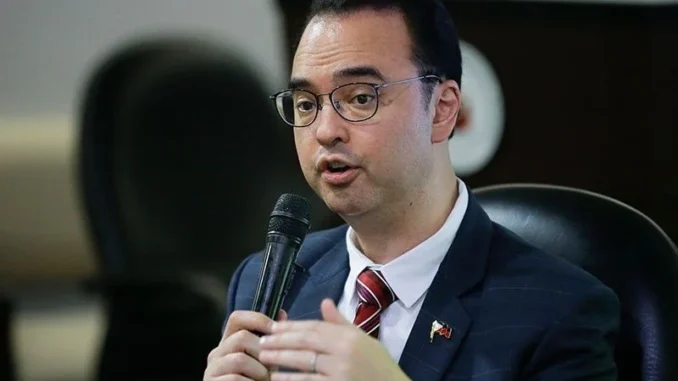
Alan Peter Schramm Cayetano is one of the most consequential, complex, and enduring figures in contemporary Philippine politics.
Known affectionately to colleagues and constituents as “Compañero”, he has spent over three decades in the highest offices of the Philippine government serving as city councilor, vice mayor, congressman, senator, Secretary of Foreign Affairs, Speaker of the House of Representatives, and, as of May 11, 2026, the newly elected President of the Senate of the Philippines.
Born into the Cayetano political dynasty and shaped by a German-American mother and a senator father, Alan Peter Cayetano is the product of both inherited political capital and fiercely earned personal credibility.
He is a lawyer, a diplomat, a self-described born-again Christian, an ardent champion of education, disability rights, and science and simultaneously a deeply controversial political figure whose career has been marked by the 2019 SEA Games fiasco, the ABS-CBN franchise denial, a spectacular falling-out with a Speaker colleague, and, most recently, his role in a dramatic Senate leadership coup that has placed him at the center of the highest-stakes political battle in the Philippines today: the impeachment trial of Vice President Sara Duterte.
On May 11, 2026 yesterday as these words are written Cayetano was elected the new Senate President of the Philippines in a 13-9 vote that ousted incumbent Senate President Vicente “Tito” Sotto III, in a political earthquake that reshapes the battleground for Vice President Sara Duterte’s looming Senate impeachment trial.
His biography is the story of a political family, a political dynasty, a political career, and right now a political moment that will define the Philippines’ democratic trajectory for years to come.
| Alan Peter Schramm Cayetano | |
|---|---|
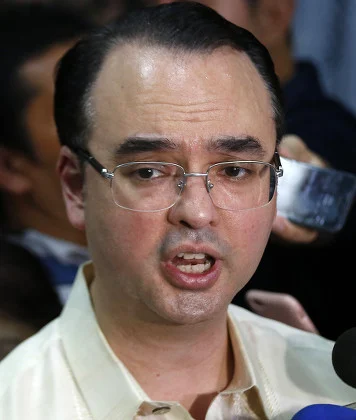 Alan Peter Schramm Cayetano: History · Bio · Photo
|
|
| Wiki Facts & About Data | |
| Full Name: | Alan Peter Schramm Cayetano |
| Stage Name: | Compañero, Alan |
| Born: | October 28, 1970 |
| Age: | 55 years old |
| Birthplace: | Mandaluyong, Metro Manila, Philippines |
| Nationality: | Filipino |
| Occupation: | Politician, Lawyer, Diplomat |
| Religion: | Christianity (Born-Again Christian) |
| Parents: | Senator Rene Cayetano (deceased) |
| Siblings: | Senator Pia Cayetano (older sister), Lino Cayetano (younger brother, former Taguig mayor and film director), Ren Cayetano (brother, former Muntinlupa councilor) |
| Spouse: | Lani Cayetano (Mayor of Taguig City, former Congresswoman) |
| Net Worth: | ₱50 million – ₱100 million |
Early Life
Alan Peter Schramm Cayetano was born on October 28, 1970, in Mandaluyong then a municipality, now one of Metro Manila’s most commercially vibrant cities.
He grew up in Parañaque, before his family eventually settled in Taguig in 1991, the city that would become the foundation of the Cayetano family’s extraordinary political dynasty.
His father, Senator Rene Cayetano, was a prominent member of the Philippine Senate a respected lawyer, politician, and public figure whose career gave young Alan Peter an intimate, firsthand education in the mechanics of Philippine legislative politics from his earliest years.
Indeed, Cayetano has admitted that he regularly skipped high school classes in the 1980s to accompany his father to the Batasang Pambansa (the Philippine national legislature under the Marcos constitution) an admission that speaks to the degree to which his father’s political world was, from childhood, also his own. Senator Rene Cayetano is now deceased.
His mother, Sandra Schramm Cayetano, is of German-American descent and worked as a schoolteacher giving Alan Peter a dual heritage that connects him to both the Filipino political tradition of his father’s family and the values of discipline, education, and civic engagement instilled by his American-German maternal lineage.
This mixed cultural identity Filipino political fire with a Western-educated mother’s emphasis on learning is evident in the breadth of his legislative interests across education, science, technology, disability rights, and governance.
Growing up in a political family, Alan Peter was exposed to the full landscape of Philippine democracy its aspirations and its failures, its ideals and its realities before he was old enough to vote.
His older sister Pia Cayetano now an incumbent senator shared this upbringing, and the Cayetano siblings’ collective political ambition would eventually produce one of the most remarkable concentrations of political power in a single family in Philippine history.
At its peak, the family simultaneously held the positions of Senator (both Alan Peter and Pia), House Representative (Lani Cayetano, Alan Peter’s wife), Mayor of Taguig (Lino Cayetano, Alan Peter’s brother), and later Mayor of Taguig again (Lani Cayetano).
Education
Alan Peter Cayetano received his elementary and secondary education at De La Salle Santiago Zobel School in Muntinlupa, Metro Manila one of the Philippines’ most prestigious Catholic educational institutions under the De La Salle Brothers’ tradition.
It was during his high school years that he began regularly accompanying his father, Senator Rene Cayetano, to the Batasang Pambansa a habit of political immersion that, by his own cheerful admission, nearly got him expelled due to chronic absenteeism.
For his undergraduate education, Cayetano enrolled at the University of the Philippines Diliman (UP Diliman) the country’s premier national university where he pursued a Bachelor of Arts in Political Science, graduating in 1993.
His time at UP was formative in multiple dimensions: it was at UP Diliman that he first tasted electoral politics directly, winning a post in the UP Diliman University Student Council in 1989 making him a first-year student politician at 18, the beginning of a political career that has now spanned 35 years without interruption.
After completing his political science degree at UP, Cayetano pursued law at one of the Philippines’ finest law schools: the Ateneo de Manila University School of Law.
He earned his Juris Doctor (JD) degree in 1997, graduating with the distinction of 2nd Honors (Silver Medalist) a recognition of exceptional academic performance in one of Asia’s most competitive law programs. He was admitted to the Philippine Bar in 1998, becoming a licensed attorney of the Republic of the Philippines.
His educational credentials BA Political Science from UP Diliman and JD (Silver Medalist) from Ateneo de Manila place him among the most academically distinguished members of the Philippine Senate, and have given him the legal and political-scientific toolkit he has deployed throughout his three-decade legislative and executive career.
Career
Taguig Councilor The Youngest (1992–1995)
While still a junior-year student at UP Diliman, Alan Peter Cayetano was elected as a councilor of the Municipality of Taguig in 1992, at the age of 21 beginning a public service career that has not been interrupted for even a single electoral cycle in the 34 years since.
His election as a 21-year-old councilor while still an undergraduate student exemplified the extraordinary precocity and political confidence that would define his entire career.
Vice Mayor of Taguig (1995–1998)
After three years as a councilor, Cayetano was elected Vice Mayor of Taguig in 1995, serving in that position until 1998. His vice-mayoral term coincided with his completion of his law degree at Ateneo, allowing him to build both his legal credentials and his executive governance experience simultaneously.
House of Representatives Taguig-Pateros (1998–2007)
In 1998, at the age of 27, Cayetano was elected to the House of Representatives as representative of the Taguig-Pateros lone district becoming the youngest representative in the 11th Congress of the Philippines.
He served three consecutive terms in the lower house, from 1998 to 2007, during which he established himself as a rising legislative force, serving as Assistant Majority Leader and chairman of the Oversight Committee on Bases Conversion, and eventually moving into the opposition in the latter part of his House tenure as a vocal critic of President Gloria Macapagal-Arroyo’s administration.
Senate of the Philippines First and Second Terms (2007–2017)
In 2007, Cayetano successfully transitioned from the House to the Senate, winning election as senator and placing 9th in the overall senatorial standings.
He was re-elected to a second six-year Senate term in 2013. During his decade in the Senate (2007–2017), he accumulated one of the chamber’s most significant legislative portfolios, holding multiple committee chairs and leadership positions:
- Senate Blue Ribbon Committee Chairman (2007–2009) Led the chamber’s most powerful investigative committee, conducting high-profile inquiries into government corruption and anomalies.
- Senate Minority Floor Leader (2010–2013) Served as the official leader of the Senate minority, replacing Aquilino Pimentel Jr. and providing a forceful opposition voice against the Arroyo administration’s remnants.
- Senate Majority Floor Leader (2013–2016) Upon the Aquino administration’s alignment with a new Senate majority, Cayetano assumed the Majority Leader’s post, chairing the Senate Committee on Rules a position of enormous procedural power.
As a senator, Cayetano authored and co-authored landmark legislation across several domains, including:
- Republic Act No. 9500 UP Charter Act of 2008, modernizing the governance framework of the University of the Philippines
- Republic Act No. 8545 Iskolar ng Bayan Act (Expanded Government Assistance to Students and Teachers in Private Education Act), providing scholarships to top public high school graduates
- Republic Act No. 10676 Student-Athletes Protection Act, prohibiting the commercialization of student-athletes
- Republic Act No. 7277 Magna Carta for Disabled Persons, the Philippines’ foundational disability rights legislation
- Republic Act No. 10928 Amendment of the Philippine Passport Act, extending passport validity to ten years
- Republic Act No. 12180 PHIVOLCS Modernization Act of 2025
- Republic Act No. 12254 E-Governance Law (signed September 5, 2025)
2016 Vice Presidential Bid and the Duterte Alliance
In 2015, Cayetano declared his candidacy for Vice President of the Philippines in the 2016 national elections. In one of the most consequential alliance decisions in recent Philippine political history, he chose to run as the vice presidential running mate of Davao City Mayor Rodrigo Duterte then widely regarded as a long-shot presidential candidate but who ultimately won the presidency in a landslide.
Despite Duterte’s presidential victory, Cayetano lost the vice presidential race to Leni Robredo by a narrow margin a result he and Duterte allies contested vigorously.
Secretary of Foreign Affairs (May 2017 – October 2018)
Following Duterte’s election victory, the new president rewarded his running mate by appointing Cayetano as Secretary of Foreign Affairs in May 2017.
As Foreign Secretary, Cayetano adopted what he described as an “objective-based” approach to the Philippines’ territorial disputes in the South China Sea (West Philippine Sea), emphasizing negotiation through historical facts and legal frameworks such as the UN Convention on the Law of the Sea, while deliberately avoiding what he termed “microphone diplomacy” the public grandstanding that had previously characterized Philippine-China relations.
His tenure as Foreign Secretary was not without controversy. In January 2018, it emerged that Cayetano had approved a Chinese scientific institution to perform a survey of the Philippine Rise a vast underwater plateau discovered by Filipino scientists while rejecting a French research offer for the same area, raising national sovereignty concerns.
The Philippines-Kuwait diplomatic crisis over Overseas Filipino Workers (OFWs) also erupted during his watch, with Philippine diplomats and Kuwait’s government in a sharply escalating confrontation over the treatment of Filipino domestic workers. He resigned as Foreign Secretary in October 2018 to run in the 2019 congressional elections.
Return to the House Speaker of the House (2019–2020)
In the 2019 elections, Cayetano returned to the House of Representatives as representative of Taguig-Pateros, while his wife Lani Cayetano simultaneously won the congressional seat for Taguig’s 2nd district a coordinated family political maneuver that maximized the Cayetano family’s legislative representation.
He was elected Speaker of the House of Representatives the 22nd in Philippine history in July 2019, succeeding Gloria Macapagal-Arroyo.
His speakership began under a term-sharing agreement with Marinduque Representative Lord Allan Velasco, under which Cayetano would serve as Speaker for 15 months before yielding the post to Velasco. However, Cayetano refused to honor the arrangement when Velasco and his allies moved to oust him after the agreed period expired.
The resulting internal House power struggle led to Cayetano’s dramatic ouster as Speaker in October 2020, when Velasco was elected Speaker in his place following a chaotic legislative session. Cayetano served as Speaker for approximately 15 months in total.
Return to the Senate (2022–Present)
In the 2022 Philippine national elections, Cayetano successfully ran for the Senate for a third time, winning a fresh six-year Senate term. Upon returning to the upper chamber, he initially served as Senate Minority Floor Leader a post he had previously held from 2010 to 2013 providing a base from which to rebuild his Senate profile and influence.
During the 19th Congress (2022–2025), Cayetano was notably prolific in the science and technology domain authoring or co-authoring five laws, including the landmark PHIVOLCS Modernization Act of 2025 and the E-Governance Law. He also chaired the Senate committees on accounts; higher, technical, and vocational education; and science and technology.
Elected Senate President (May 11, 2026)
In the most dramatic political development of his career since the House speakership battle, Alan Peter Cayetano was elected President of the Philippine Senate on May 11, 2026 just yesterday in a surprise leadership coup that ousted incumbent Senate President Vicente “Tito” Sotto III by a vote of 13 to 9, with two abstentions.
The Senate coup was orchestrated by senators aligned with the political network of detained former President Rodrigo Duterte, with the immediate political backdrop being the looming impeachment trial of Vice President Sara Duterte, who had been impeached by the House of Representatives for the second time by an overwhelming vote of 257 to 25 on May 10, 2026.
As Senate President, Cayetano will preside over the Senate impeachment court that will try Sara Duterte. Critics immediately characterized the coup as a political maneuver designed to protect Sara Duterte from conviction, pointing to Cayetano’s well-known alignment with the Duterte family’s political interests.
Cayetano was nominated to the Senate presidency by Senator Imee Marcos and voted into office by a coalition including Senators Bong Go, Robin Padilla, Loren Legarda, Imee Marcos, Camille Villar, Mark Villar, Ronald “Bato” dela Rosa, Joel Villanueva, Jinggoy Estrada, Francis Escudero, Rodante Marcoleta, and his own sister Senator Pia Cayetano.
He was administered his oath by Senator Camille Villar, with his wife Taguig Mayor Lani Cayetano and his sister Pia Cayetano standing beside him during the ceremony. Senator Dela Rosa’s appearance drew attention after he had largely stayed away from the Senate since late last year following reports of an alleged International Criminal Court arrest warrant linked to the Duterte administration’s anti-illegal drugs campaign.
In his inaugural remarks as Senate President, Cayetano called for unity within the chamber, said he respected Sotto as a statesman, and insisted that the leadership change was not exclusively about the impeachment while simultaneously making clear that a trial must proceed: “The impeachment will be much much more than dismissing a complaint because of political affiliation, and it is also much much more than convicting someone without evidence.”
Controversies
The 2019 SEA Games Logistical Failures and Corruption Allegations
Among the most damaging controversies of Cayetano’s career was his chairmanship of the Philippine Southeast Asian Games Organizing Committee (PHISGOC) and the blunder-filled hosting of the 2019 Southeast Asian Games.
Cayetano chaired PHISGOC from 2017 when he was still Foreign Secretary through his tenure as House Speaker in 2019, meaning he simultaneously held senior government positions while chairing what was technically registered as a private, non-stock, non-profit foundation.
The 2019 SEA Games was marked by a series of embarrassing logistical failures: athletes from visiting countries reported inadequate accommodations, poor food, transportation breakdowns, and organizational chaos in the lead-up to the games.
More seriously, questions were raised about the handling of a ₱1.5 billion budget lodged under PHISGOC categorized as “financial assistance” specifically to exempt it from procurement law, thereby allowing it to be spent without competitive bidding.
An additional ₱6 billion was lodged under the Philippine Sports Commission. The Commission on Audit flagged massive irregularities. The Ombudsman opened a probe but had not filed charges against Cayetano as of his recent Senate return.
ABS-CBN Franchise Denial (2020)
As House Speaker, Cayetano played a decisive and pivotal role in the denial of ABS-CBN Corporation’s franchise renewal in 2020 the closure of the Philippines’ largest and most watched broadcast network, which left thousands of employees jobless and shocked the international press freedom community.
The committee vote to deny the franchise renewal came under his speakership, and while Cayetano publicly stated that he believed ABS-CBN should have been given a temporary license to continue operating while the matter was being deliberated, he did not prevent the final denial.
Critics viewed Cayetano’s role in the ABS-CBN closure as a willing instrument of President Duterte’s long-standing vendetta against the network’s owners the Lopez family. Cayetano defended the vote by arguing it was about reclaiming media ownership from oligarchs language that mirrored Duterte’s own characterizations almost exactly.
The ABS-CBN closure remains one of the most controversial press freedom incidents in Philippine democratic history.
The Speaker Term-Sharing Controversy (2020)
Cayetano’s refusal to honor the agreed term-sharing arrangement with Lord Allan Velasco for the House Speakership led to one of the most chaotic and undignified episodes in Philippine legislative history with rival factions holding competing sessions, claiming quorums, and producing competing legislative records.
The situation was ultimately resolved by Cayetano’s forced ouster. His defenders argued he had not violated any binding legal obligation; his critics argued the episode demonstrated an inability to honor political commitments.
Kuwait Diplomatic Crisis (2018)
During his tenure as Secretary of Foreign Affairs, a diplomatic crisis erupted between the Philippines and Kuwait over the treatment of Overseas Filipino Workers. Philippine embassy personnel in Kuwait were issued warrants of arrest for allegedly kidnapping OFWs by removing them from their employers’ homes as part of rescue operations a policy Cayetano defended as humanitarian intervention. The incident resulted in the expulsion of the Philippine ambassador to Kuwait and a serious bilateral rupture. While Cayetano defended his diplomats, the episode was widely seen as a foreign policy embarrassment.
Senate Coup of May 11, 2026 Duterte Impeachment Controversy
The most recent and most politically significant controversy of Cayetano’s career is his election as Senate President on May 11, 2026 widely characterized by critics, opposition senators, and media commentators as a politically motivated Senate coup engineered to protect Vice President Sara Duterte from conviction in her impeachment trial.
The sudden ouster of Senate President Sotto and the election of staunch Duterte ally Alan Peter Cayetano to replace him just as the House deliberated on the impeachment case has cast doubt on whether Duterte’s impeachment trial would proceed. Even if Duterte goes to trial, it will be a rough road for the House prosecution team to convince at least 16 out of 24 senators or the constitutional two-thirds threshold to convict Duterte.
Cayetano has denied that the leadership change was driven exclusively by the impeachment case, insisting that it reflected broader concerns about Senate direction, economic policy, and institutional stability. His critics remain unconvinced.
Awards & Recognitions
- Silver Medalist (2nd Honors) Ateneo de Manila University School of Law (1997) One of the highest academic distinctions in one of Asia’s most competitive law schools.
- Youngest Representative in the 11th Congress of the Philippines (1998) Elected at 27, the youngest congressman of his cohort.
- 22nd Speaker of the House of Representatives of the Philippines (2019–2020)
- Secretary of Foreign Affairs of the Philippines (2017–2018)
- President of the Senate of the Philippines (Elected May 11, 2026)
- Author of the UP Charter Act, Magna Carta for Disabled Persons, Iskolar ng Bayan Act, Student-Athletes Protection Act, PHIVOLCS Modernization Act, and E-Governance Law among the landmark laws he has authored or co-authored across his legislative career.
- Principal Author of Bayanihan to Heal as One Act and Bayanihan to Recover as One Act (2020) The Philippines’ primary legislative pandemic response measures, enacted under his speakership.
Social Media
Alan Peter Cayetano maintains an active digital presence across multiple platforms, using social media to communicate directly with constituents, respond to political developments, and articulate his legislative agenda and political positions.
- Facebook: His official Facebook page is his primary social media platform for constituent engagement, reaching a substantial following across Metro Manila and nationally. He posts regularly on legislative developments, committee work, and political commentary.
- Twitter/X: Active on Twitter/X, where he engages with political discourse, responds to national news, and advocates for his legislative priorities. His Twitter presence has been particularly prominent during periods of political intensity, such as the VP Sara Duterte impeachment saga and the Senate leadership coup of May 2026.
- YouTube: Cayetano maintains a YouTube presence featuring speeches, congressional and Senate proceedings, and interviews, with his debates and Senate floor speeches regularly attracting significant viewership during major national controversies.
Personal Life
Alan Peter Cayetano resides with his family in Bagumbayan, Taguig City. He is married to Lani Cayetano the current Mayor of Taguig City and one of the Philippines’ most enduring local political figures, who previously represented the first and second districts of Taguig-Pateros at the House of Representatives.
Lani and Alan Peter’s marriage is both a personal partnership and a political one a joint political enterprise that has made the Cayetano name the dominant political brand in Taguig for over three decades.
His family’s political reach is extraordinary even by Philippine standards, where political dynasties are common. At various peak moments of the dynasty’s influence, the Cayetano family has simultaneously held the following positions: two Senate seats (Alan Peter and Pia), two House seats (Lani Cayetano and Lino’s congressional tenure), and the Taguig mayoralty (Lino, then Lani).
His sister Pia Cayetano is an incumbent senator who has held various committee chairmanships including health and women’s affairs. His younger brother Lino Cayetano served as both congressman and Mayor of Taguig before transitioning to a career as a film and television director. His brother Ren Cayetano was a former councilor of Muntinlupa.
Personally, Cayetano is a born-again Christian a faith he has spoken about publicly and consistently throughout his political career. He has described himself as an “ambassador of the Lord Jesus Christ” in the political arena, viewing public service through a framework of Christian values and moral accountability. His faith informs his advocacy on education, family welfare, and the rights of vulnerable groups.
He is known among colleagues for his intellectual energy, his lawyerly precision in debate, and a combative rhetorical style that can shift quickly from philosophical argument to political hardball.
His career has been marked by a consistent pattern of aligning with the most powerful political force of the moment from Arroyo’s opposition, to Aquino’s coalition, to Duterte’s administration while maintaining enough personal brand equity to survive the transitions between political eras.
Net Worth
Alan Peter Cayetano’s estimated net worth is approximately ₱50 million to ₱100 million, based on his Statements of Assets, Liabilities, and Net Worth (SALN) declarations submitted to the Philippine government across his decades of public service.
His wealth sources include his legislative salaries and allowances across his Senate and House tenures, his income as a licensed attorney, his Cabinet salary as Secretary of Foreign Affairs, Speaker’s allowances, family real estate and business investments, and the accumulated wealth of the Cayetano political family built over multiple generations of public service.
By the standards of the Philippine political elite where many legislators and former Cabinet officials declare assets worth hundreds of millions or billions of pesos Cayetano’s declared wealth is relatively moderate.
He has not been directly implicated in any adjudicated corruption case, though the SEA Games controversy and related COA findings remain subjects of ongoing scrutiny.
FAQs
Who is Alan Peter Cayetano?
Alan Peter Schramm Cayetano is a Filipino lawyer, diplomat, and politician who has served the Philippines across all three branches of government as Senator (2007–2017, 2022–present), Secretary of Foreign Affairs (2017–2018), and Speaker of the House of Representatives (2019–2020). On May 11, 2026, he was elected President of the Philippine Senate.
When was Alan Peter Cayetano born?
He was born on October 28, 1970, in Mandaluyong, Metro Manila, Philippines.
Who is Alan Peter Cayetano’s wife?
He is married to Lani Cayetano, the current Mayor of Taguig City and former Congresswoman for the Taguig-Pateros and Taguig 2nd district congressional seats.
Who is Pia Cayetano?
Pia Cayetano is Alan Peter’s older sister and a fellow Philippine Senator currently serving as an incumbent senator in the 20th Congress. She is one of the Senate’s leading voices on health, women’s rights, and sports legislation.
Where did Alan Peter Cayetano study?
He attended De La Salle Santiago Zobel School (elementary and secondary), then earned a BA Political Science from the University of the Philippines Diliman (1993), and a Juris Doctor (Silver Medalist, 2nd Honors) from the Ateneo de Manila University School of Law (1997). He was admitted to the Philippine Bar in 1998.
What is the 2019 SEA Games controversy?
As chairman of PHISGOC, Cayetano oversaw the hosting of the 2019 Southeast Asian Games, which was marred by logistical failures and allegations of corruption involving a ₱1.5 billion budget exempt from procurement law. The Commission on Audit flagged massive irregularities, and the Ombudsman opened a probe, though no charges had been filed against him as of 2026.
Why was Alan Peter Cayetano elected Senate President in 2026?
On May 11, 2026, pro-Duterte senators orchestrated a surprise Senate leadership coup, voting 13-9 to oust incumbent Senate President Tito Sotto and replace him with Cayetano. The move came on the same day the House voted to impeach Vice President Sara Duterte for the second time, and was widely interpreted as a political maneuver to shape the outcome of her Senate impeachment trial, given Cayetano’s alignment with the Duterte political family.
Did Alan Peter Cayetano deny ABS-CBN’s franchise?
As Speaker of the House in 2020, Cayetano presided over the House committee vote that denied ABS-CBN’s franchise renewal effectively shutting down the Philippines’ largest broadcast network. He publicly stated he believed ABS-CBN should have been given a temporary license while the matter was deliberated, but the franchise was ultimately denied under his speakership.
What is Alan Peter Cayetano’s net worth?
His estimated net worth is approximately ₱50 million to ₱100 million, based on his SALN declarations and accumulated income from legislative, executive, and legal career sources.
Was Alan Peter Cayetano Rodrigo Duterte’s running mate?
Yes. In the 2016 Philippine national elections, Cayetano was Rodrigo Duterte’s vice presidential running mate. Despite Duterte winning the presidency in a landslide, Cayetano lost the vice presidential race to Leni Robredo by a narrow margin one of the most consequential and contested election results of that cycle.
Conclusion
Alan Peter Cayetano’s biography is the story of a man who has been at the center of Philippine political life for over three decades shaping legislation, conducting diplomacy, presiding over the House, and now leading the Senate at what may be its most consequential institutional moment since the People Power Revolution.
From a teenage truant at the Batasang Pambansa watching his senator father work, to a 21-year-old councilor, to a Silver Medalist lawyer, to a congressman, senator, foreign secretary, and now Senate President the arc of his career spans the full breadth of Philippine democratic governance.
He is a figure whose record invites genuinely mixed assessments. The landmark legislation in education and disability rights. The SEA Games fiasco. The ABS-CBN closure. The Speakership betrayal. The alliance with Duterte. The Senate coup. These are not the biography of a politician who has consistently chosen the harder right over the easier expedient. But they are the biography of a politician who has survived, adapted, and continued to accumulate institutional power across six presidential administrations a measure of political endurance that demands its own form of respect.
As Senate President presiding over what promises to be one of the most politically explosive impeachment trials in Philippine history, Alan Peter Cayetano stands today at the fulcrum of a constitutional moment that will define not just his legacy, but the character of Philippine democracy itself. The nation is watching.
Related People




Leave a Reply