
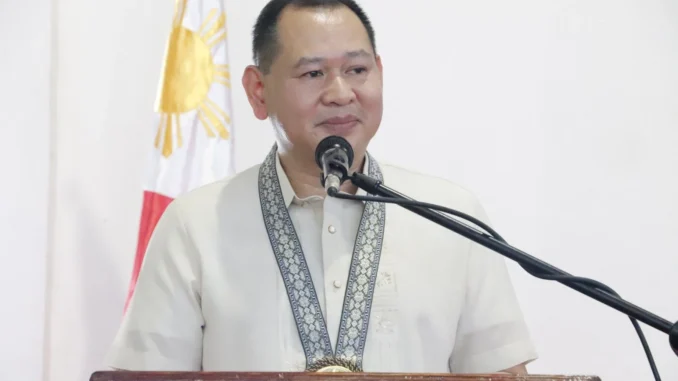
Ma.O Ranada Aplasca, widely known as Mao Aplasca, is a retired Police Major General of the Philippine National Police (PNP) and a distinguished public servant whose career spans decades of law enforcement, national security, aviation safety, and legislative service.
From leading the fight against the notorious “Tanim Bala” airport controversy to serving as the acting Sergeant-at-Arms of the Philippine Senate, Aplasca has consistently placed himself at the heart of the Philippines’ most pressing security challenges.
His story is one of disciplined service, academic excellence, and an unwavering commitment to institutional reform.
| Ma.O Ranada Aplasca | |
|---|---|
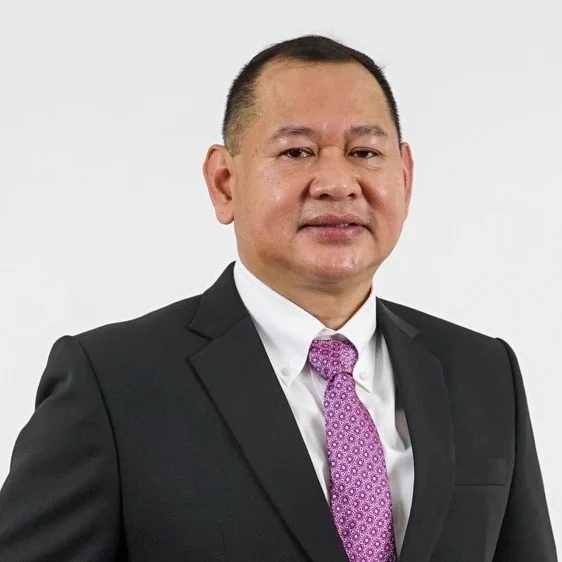 Ma.O Ranada Aplasca: History · Bio · Photo
|
|
| Wiki Facts & About Data | |
| Full Name: | Ma.O Ranada Aplasca |
| Stage Name: | Mao Aplasca |
| Born: | August 22, 1963 |
| Age: | 62 years old |
| Birthplace: | Maco, Davao de Oro, Philippines |
| Nationality: | Filipino |
| Occupation: | Retired Police Major General; Government Official; Acting Senate Sergeant-at-Arms |
| Religion: | Christian |
| Spouse: | Maria Rica Acab-Aplasca (Cookie) |
| Relationship: | Married |
| Net Worth: | Not publicly disclosed |
Who Is Mao Aplasca?
Ma.O Ranada Aplasca, commonly called Mao Aplasca, is a retired Police Major General of the Philippine National Police with a storied career in law enforcement, security, and public administration.
He is a graduate of the Philippine Military Academy (PMA), Class of 1987, and has built a reputation for firm, results-oriented leadership throughout his decades of service. Aplasca became a prominent public figure through his role in dismantling corruption within the airport security sector and his continued service in senior civilian government positions after retirement from the uniformed service.
He is currently one of the most recognizable names in Philippine law enforcement and legislative security circles.
Early Life
Ma.O Ranada Aplasca was born on August 22, 1963, in the municipality of Maco in Davao de Oro formerly part of Davao del Norte on the island of Mindanao in the southern Philippines.
He is of Filipino nationality and grew up in a provincial environment during a period of significant regional development in Mindanao.
The values of resilience, community, and public service were instilled in him from a young age, shaped largely by the culture and challenges of growing up in rural Mindanao.
Aplasca completed his elementary education at Maco Heights Central Elementary School in 1976, and then proceeded to Maco Maryknoll High School, where he completed his secondary education in 1980.
Even at a young age, he demonstrated academic discipline and the qualities that would later earn him entry into one of the Philippines’ most prestigious military institutions. Little is publicly known about his parents or siblings, as Aplasca has maintained a relatively private family profile throughout his career.
Education
Mao Aplasca’s educational journey is as distinguished as his professional career. After completing high school in 1980, he gained admission to the Philippine Military Academy (PMA) in Fort del Pilar, Baguio City a highly competitive institution that trains future officers of the Armed Forces and the Philippine National Police.
He graduated in 1987 as a member of the Sinagtala Class, ranking among the top performers and receiving academic honors. His time at the PMA gave him an enduring foundation in military science, leadership strategy, and national defense principles.
Never content to stop learning, Aplasca continued his education while serving in the police force. In 1999, he earned a Master in Development Management from the prestigious Asian Institute of Management (AIM) in Makati City.
In 2004, he obtained a Bachelor of Laws (LLB) from Jose Rizal University in Mandaluyong City, further broadening his legal and administrative expertise.
Internationally, Aplasca attended the highly respected FBI National Academy in Quantico, Virginia, USA, in 1995 a program considered among the world’s most elite law enforcement training programs.
He also undertook specialized courses at the University of Virginia, Cebu Institute of Technology, and the Haggai Institute in Maui, Hawaii. These diverse academic experiences equipped him with both local and global perspectives on policing, security management, and national governance.
Career
Mao Aplasca’s career in public service began immediately after his PMA graduation in 1987, when he was commissioned as a platoon leader in the Philippine Constabulary Special Action Force.
In the early 1990s, he served as Executive Officer for both the 214th and 213th PC Companies. A pivotal early highlight came in 1993, when he was deployed with the United Nations Transitory Authority in Cambodia, where he served as Chief of Provincial Investigation and as a member of the Board of Inquiry for Civilian Police an assignment that gave him invaluable international exposure in peacekeeping and investigative work.
Upon returning to the Philippines, he served as Aide-de-Camp to the PNP Chief in 1994 and was appointed Chief of Police in Marilao, Bulacan in 1996. Through the late 1990s and early 2000s, he occupied roles in public information, organizational development, and intelligence within the PNP hierarchy, progressively climbing the ranks.
The appointment that would bring Aplasca into the national spotlight came in 2016, when he was named Director of the PNP Aviation Security Group (AVSEGROUP). At the time, the Philippines was reeling from the “Tanim Bala” scandal a nationwide controversy in which airport security personnel were alleged to be planting bullets in passengers’ luggage and extorting money.
Aplasca immediately launched sweeping reforms, implementing accountability measures, reshuffling personnel, and restoring the public’s confidence in airport security operations. His decisive handling of the crisis became one of the defining moments of his career.
From February 2017 to April 2018, he served as Regional Director of PNP CALABARZON (Region 4A), overseeing law enforcement across one of the Philippines’ most populous and economically significant regions.
He then rose to become Director for Operations at PNP Headquarters from April 2018 to August 2019, a role in which he championed national programs to strengthen police effectiveness and accountability. He retired from the PNP in 2019 with the rank of Police Major General.
Retirement, however, did not mark the end of his public service. He joined the Office for Transportation Security (OTS) as Director for Policy and Program Service, before being elevated to Deputy Administrator.
In 2022, President Ferdinand Marcos Jr. appointed him as OTS Administrator with the rank of Undersecretary. In this civilian role, he oversaw the security of all airports, seaports, and transportation hubs across the country, pushing hard for systemic reforms.
His tenure as OTS Administrator was tested by a series of high-profile theft incidents at the Ninoy Aquino International Airport (NAIA) in 2023, including a case where a security officer attempted to swallow stolen cash.
Aplasca initiated an aggressive “internal cleansing program” and emphasized accountability, but he ultimately submitted a courtesy resignation in September 2023 following pressure from House Speaker Martin Romualdez, who threatened to block the OTS budget. Aplasca maintained that he had done nothing wrong and that he resigned to protect the department’s budget deliberations not because of personal wrongdoing.
Concurrently, from October 2020 to November 2021, he served as Sergeant-at-Arms for the 18th Congress in the House of Representatives.
In July 2025, following a nomination by Senator Ronald “Bato” dela Rosa his PMA classmate and longtime colleague Aplasca was appointed as the acting Sergeant-at-Arms of the Philippine Senate for the 20th Congress. In this high-profile position, he manages all security protocols for the Senate, including responses to heightened security alerts and ensuring the safety of senators and Senate premises.
Awards & Recognitions
Throughout his distinguished career, Mao Aplasca has received numerous commendations and medals recognizing his meritorious service and leadership in law enforcement and national security. Among them are:
- Medalya ng Natatanging Gawa – For outstanding performance in the line of duty
- United Nations Service Medal – For his peacekeeping deployment in Cambodia
- Military Merit Medal – In recognition of exemplary service in the Philippine Constabulary and PNP
- Multiple commendations for leadership, service excellence, and organizational reform contributions within the PNP
Social Media
Mao Aplasca is not widely active on personal social media platforms in the conventional sense. His public profile is maintained largely through official government communications, news coverage, and appearances on platforms such as Facebook through official PNP and Senate accounts.
He has been featured in interviews on major Philippine media outlets including ANC’s Headstart, One Balita, and Rappler.
He also engages with faith-based networks through My Brother’s Keeper Philippines (MBK), where he has shared testimonies about personal transformation and values-based leadership. Those wishing to follow his official activities may do so through the Philippine Senate’s official Facebook page and website at senate.gov.ph.
Personal Life
Mao Aplasca is married to Maria Rica Acab-Aplasca, fondly known as Cookie. The couple has maintained a relatively private family life, largely shielded from the public eye despite Aplasca’s high-profile career.
He is deeply rooted in his Christian faith and is known for his involvement in faith-driven leadership circles, including the My Brother’s Keeper Philippines (MBK) ministry, where he has openly shared about personal growth and the importance of integrity in public service.
Aplasca is also an active member of the PMA Alumni Association, the FBI National Academy Associates, and the Christian Officers Reform the Police Service reflecting his commitment to continuous personal development and community engagement even in retirement.
His close relationship with Senator Ronald “Bato” dela Rosa traces back to their PMA days, where both were officers from Mindanao backgrounds who formed lasting bonds of mutual support and loyalty. That relationship ultimately led to Aplasca’s nomination and appointment as Senate Sergeant-at-Arms in 2025.
On the controversy front, the most notable challenge of his post-retirement career was the string of theft scandals at NAIA during his OTS tenure in 2023. Aplasca faced public criticism and pressure from Congress, but he consistently defended his record and his reform agenda, insisting that he was a victim of political pressure rather than administrative failure. As of 2026, no formal charges have been filed against him in connection with the OTS controversies.
Net Worth
The exact net worth of Mao Aplasca has not been publicly disclosed. As a career government official who has served in various roles within the Philippine National Police and the civil service, his primary sources of income throughout his career have been his government salary, military pension as a retired Police Major General, and remuneration from his post-retirement civilian appointments, including his tenures at the OTS and as Sergeant-at-Arms of both the House of Representatives and the Senate.
Like all senior Philippine government officials, he is required to submit a Statement of Assets, Liabilities, and Net Worth (SALN) to the Office of the Ombudsman annually, though the specific figures in his SALN filings are not widely reported in available public sources.
FAQs
What is Mao Aplasca’s full name?
His full name is Ma.O Ranada Aplasca. He is commonly referred to as Mao Aplasca.
Where was Mao Aplasca born?
He was born on August 22, 1963, in Maco, Davao de Oro (formerly Davao del Norte), Philippines.
What rank did Mao Aplasca retire at?
He retired from the Philippine National Police in 2019 with the rank of Police Major General.
What school did Mao Aplasca attend?
He attended the Philippine Military Academy (Class of 1987), Asian Institute of Management (Master in Development Management, 1999), and Jose Rizal University (Bachelor of Laws, 2004).
What is the “Tanim Bala” controversy and how is Mao Aplasca connected?
The “Tanim Bala” (bullet planting) scandal involved airport security personnel allegedly planting bullets in passengers’ bags and extorting money. Aplasca, as Director of the PNP Aviation Security Group in 2016, spearheaded the reforms and accountability programs that dismantled these criminal networks.
Who is Mao Aplasca married to?
He is married to Maria Rica Acab-Aplasca, known as Cookie.
What is Mao Aplasca’s current position?
As of 2025–2026, he serves as the acting Sergeant-at-Arms of the Philippine Senate for the 20th Congress.
Why did Mao Aplasca resign as OTS Administrator?
He submitted a courtesy resignation in September 2023 following House Speaker Martin Romualdez’s threat to block the OTS budget amid recurring theft scandals at NAIA. Aplasca maintained he was innocent and resigned to protect the agency’s funding rather than due to personal wrongdoing.
What is Mao Aplasca’s connection to Senator Ronald Dela Rosa?
Both are graduates of the PMA from Mindanao, and they have maintained a strong bond since their academy days. Dela Rosa nominated Aplasca for the position of Senate Sergeant-at-Arms in 2025.
Conclusion
Ma.O Ranada Aplasca is one of the Philippines’ most distinguished public servants, whose career embodies a rare combination of military excellence, academic ambition, and civilian governance.
From his humble beginnings in Maco, Davao de Oro, to leading security operations at the national level, Aplasca has consistently demonstrated leadership that is both principled and pragmatic.
Whether dismantling corruption at NAIA’s airport security, commanding thousands of police officers across one of the country’s most densely populated regions, or safeguarding the Senate of the Philippines, he has approached every role with discipline and resolve.
His journey also reflects the broader story of Filipino public service its challenges, its controversies, and its enduring potential for reform. Aplasca’s legacy will likely be defined not only by the positions he held, but by the institutional changes he championed and the standard of accountability he attempted to set.
As he continues in his role as Senate Sergeant-at-Arms, his story remains an evolving testament to what dedicated public service looks like in the Philippines.
Related People









Leave a Reply