
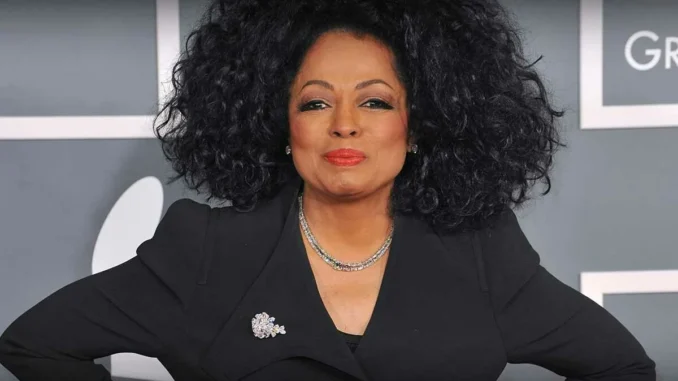
Diana Ross is one of the most celebrated and commercially successful entertainers in the history of American popular music.
Born in the Brewster-Douglass housing projects of Detroit, Michigan, she rose through the Motown Records system in the early 1960s as the lead singer of The Supremes, the label’s most successful act and one of the best-selling girl groups of all time.
After leaving The Supremes in 1970, she launched a solo career that produced some of the defining songs of the decade, earned her an Academy Award nomination for her portrayal of Billie Holiday in Lady Sings the Blues (1972), and established her as a global icon of music, film, and fashion.
With twelve number-one singles as a member of The Supremes, six number-one singles as a solo artist, and a performing career that has continued into her eighties, Ross’s longevity and impact are without peer among her contemporaries.
Billboard named her Female Entertainer of the Century. In 2023, she became the first woman to receive the Grammy Lifetime Achievement Award twice, once as a solo artist and once as a member of The Supremes.
| Diane Ernestine Earle Ross | |
|---|---|
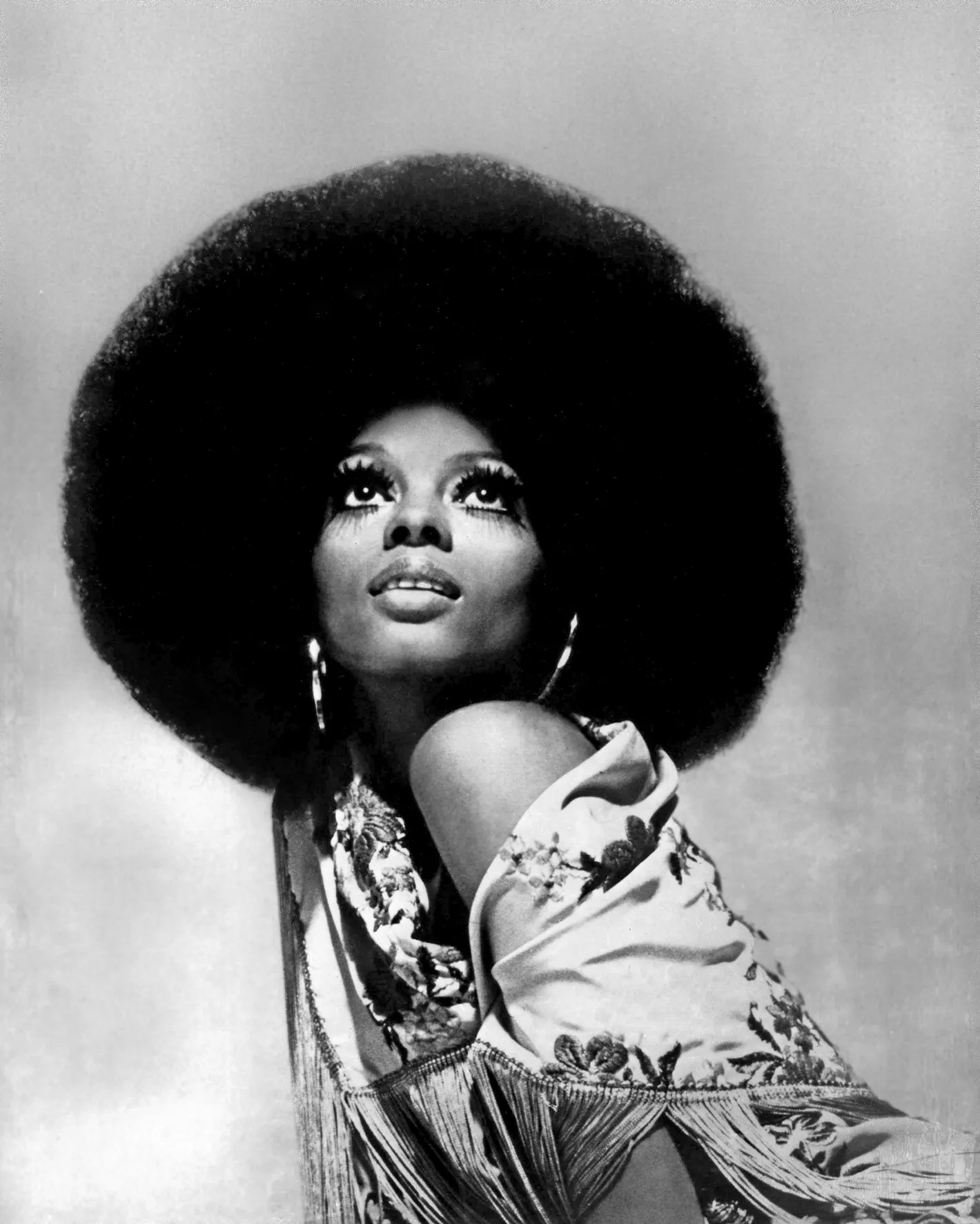 Diane Ernestine Earle Ross: History · Bio · Photo
|
|
| Wiki Facts & About Data | |
| Full Name: | Diane Ernestine Earle Ross |
| Born: | March 26, 1944 |
| Age: | 82 years old |
| Birthplace: | Detroit, Michigan, United States |
| Nationality: | American |
| Occupation: | Singer, Actress, Record Producer |
| Height: | 5 ft 5 in (165 cm) |
| Spouse: | Robert Silberstein (married 1971; divorced 1977); Arne Naess Jr. (married 1985; divorced 2000) |
| Children: | Five: Rhonda Ross Kendrick, Tracee Ellis Ross, Chudney Ross (with Robert Silberstein); Ross Naess, Evan Ross (with Arne Naess Jr.) |
| Relationship: | Single |
| Net Worth: | $250 million |
Early Life
Diane Ernestine Earle Ross was born on March 26, 1944, in Detroit, Michigan, the second of six children born to Fred Ross Sr. and Ernestine Ross.
She grew up in the Brewster-Douglass housing projects in Detroit, one of the largest public housing developments in the United States at the time, where many of Motown’s future artists also came of age.
Despite the financial constraints of her upbringing, the Ross household was loving and musically vibrant. Her parents encouraged her interest in singing from an early age.
As a teenager, Ross became acquainted with neighborhood friends who shared her passion for performing, and together they formed a singing group. It was through this group that she first came into contact with the network that would eventually lead her to Motown Records founder Berry Gordy.
She attended Cass Technical High School in Detroit, a prestigious public school known for its arts and vocational programs, where she studied clothing design.
Education
Diana Ross graduated from Cass Technical High School in Detroit in 1962, having studied clothing design.
She did not pursue formal higher education, choosing instead to pursue her musical career with The Supremes, who had just been signed to Motown Records.
Career
In 1959, at the age of fifteen, Ross joined a vocal group called the Primettes alongside Florence Ballard, Mary Wilson, and Betty McGlown.
The group auditioned for Berry Gordy at Motown Records and were initially turned away, but continued to perform until Gordy agreed to sign them in 1961, on the condition that they change their name. They became The Supremes.
Their early singles had modest success, but in 1964 the release of “Where Did Our Love Go” became their first number-one hit on the Billboard Hot 100, launching a run of commercial dominance that would make The Supremes the most successful Motown act of the 1960s and one of the best-selling American recording groups of any era.
Between 1964 and 1969, The Supremes scored twelve number-one Billboard Hot 100 singles, including “Baby Love,” “Stop! In the Name of Love,” “Back in My Arms Again,” “I Hear a Symphony,” “You Can’t Hurry Love,” and “Someday We’ll Be Together.”
Gordy repositioned the group as Diana Ross and the Supremes in 1967, recognizing Ross’s singular star power and her crossover appeal across racial and demographic lines. The group became fixtures on mainstream American television, performing on The Ed Sullivan Show multiple times and earning a level of cultural visibility that few Black artists had previously achieved.
Ross left The Supremes in January 1970 and launched her solo career. Her debut solo single, “Ain’t No Mountain High Enough,” reached number one on the Billboard Hot 100 and sold over one million copies in the United States.
Her solo career produced a string of further major hits throughout the 1970s and 1980s, including “Touch Me in the Morning” (1973, number one), “Theme from Mahogany (Do You Know Where You’re Going To)” (1975, number one), “Love Hangover” (1976, number one), “Upside Down” (1980, number one), “I’m Coming Out” (1980), and the duet with Lionel Richie “Endless Love” (1981, number one).
In 1972, Ross made her film debut in Lady Sings the Blues, a biographical drama loosely based on the life of jazz singer Billie Holiday. Her performance was widely hailed as a revelation, earning her nominations for the Academy Award for Best Actress and the Golden Globe Award for Best Actress in a Drama. She followed this with Mahogany (1975), for which she also served as a costume designer, and The Wiz (1978), a reimagining of The Wizard of Oz in which she played Dorothy alongside Michael Jackson as the Scarecrow.
In 1980, Ross negotiated a landmark $20 million contract with RCA Records, one of the largest recording deals for a solo artist at the time. She returned to Motown in 1988 when the label was sold to MCA Records, becoming part-owner in the process. Her touring career has remained active across subsequent decades. In 2025, she performed Diana Ross: A Symphonic Celebration, a concert series built around her catalog with full symphony accompaniment. In 2026, she launched Diana in Motion, a residency-style series of concert engagements continuing her fifth consecutive active touring year.
Awards and Nominations
- 1972 — Academy Award Nomination — Best Actress — Lady Sings the Blues
- 1972 — Golden Globe Nomination — Best Actress in a Drama — Lady Sings the Blues
- 1972 — Golden Globe Award — New Star of the Year — Won
- 2012 — Grammy Lifetime Achievement Award — Solo Artist — Won
- 2023 — Grammy Lifetime Achievement Award — The Supremes — Won (first woman to receive award twice)
- Billboard Female Entertainer of the Century
- Presidential Medal of Freedom — 2016 — Won
- Kennedy Center Honors — 2007 — Won
- Multiple Guinness World Records for recording achievements
- Inducted into the Rock and Roll Hall of Fame — as member of The Supremes — 1
Social Media
- Instagram: @dianaross
- X (Twitter): @DianaRoss
Personal Life
Diana Ross has been married twice. Her first marriage was to music business manager Robert Silberstein in January 1971; they divorced in 1977 and have three daughters together: Rhonda Ross Kendrick, Tracee Ellis Ross, and Chudney Ross.
Tracee Ellis Ross became a prominent actress and television star in her own right, winning the Golden Globe for Best Actress in a Comedy Series for her role in Black-ish.
Her second marriage was to Norwegian shipping magnate and mountaineer Arne Naess Jr. in 1985; they divorced in 2000 and have two sons together, Ross Naess and Evan Ross. Arne Naess Jr. died in a mountaineering accident in 2004.
Ross has been a major philanthropic figure, supporting children’s welfare causes, arts education, and civil rights organizations throughout her career. She has been deeply connected to the legacy of Motown and the cultural significance of the music she helped to create.
Her daughter Rhonda was notably the biological daughter of Berry Gordy, a fact that was kept private for many years and discussed in Ross’s memoir.
Net Worth
Diana Ross’s net worth is estimated at approximately $250 million, according to Celebrity Net Worth and multiple industry sources.
Her wealth derives from music catalog royalties, film residuals, decades of live performance income, her partial ownership stake in Motown Records, licensing deals, and real estate investments.
She is estimated to earn between $10 million and $15 million annually from ongoing royalties, touring, and licensing.
Discography
- Diana Ross — 1970
- Everything Is Everything — 1970
- Surrender — 1971
- Lady Sings the Blues (soundtrack) — 1972
- Touch Me in the Morning — 1973
- Last Time I Saw Him — 1973
- Live at Caesar’s Palace — 1974
- Mahogany (soundtrack) — 1975
- Diana Ross — 1976
- An Evening with Diana Ross — 1977
- Baby It’s Me — 1977
- Ross — 1978
- The Boss — 1979
- Diana — 1980
- To Love Again — 1981
- Why Do Fools Fall in Love — 1981
- Silk Electric — 1982
- Ross — 1983
- Swept Away — 1984
- Eaten Alive — 1985
- Red Hot Rhythm and Blues — 1987
- Workin’ Overtime — 1989
- The Force Behind the Power — 1991
- Take Me Higher — 1995
- Every Day Is a New Day — 1999
- I Love You — 2006
- Thank You — 2021
Conclusion
Diana Ross’s sixty-year career is a testament to what talent, discipline, and strategic vision can accomplish when applied to an industry and a moment in history that is ready to receive them.
She helped to bring Black music into the mainstream of American commercial culture at a time when that path was neither guaranteed nor without cost, and she did so with a sophistication and grace that made her a crossover phenomenon unlike anything Motown had produced before.
Now in her eighties and still performing, she remains one of the most active and beloved figures in the history of popular music, proof that great artistry, properly cultivated, does not diminish with age.
Related People





Leave a Reply