
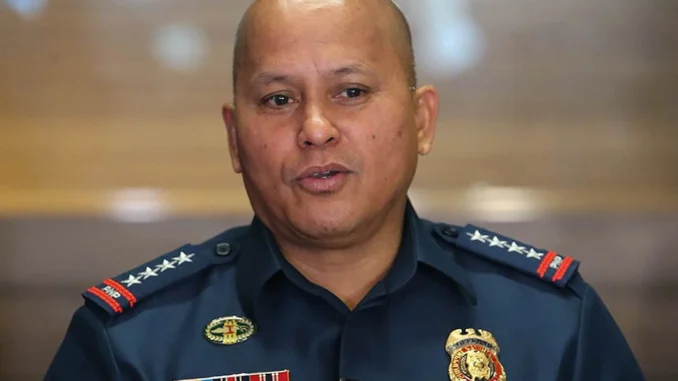
Ronald “Bato” Marapon dela Rosa is one of the most consequential, controversial, and currently most globally scrutinized figures in contemporary Philippine public life.
A retired police general who commanded the Philippine National Police (PNP) at the height of one of the deadliest anti-drug campaigns in modern history, and a two-term senator who has been one of the most loyal and vocal defenders of former President Rodrigo Duterte’s legacy his story has now reached a dramatic, internationally reported climax in May 2026.
Ronald Marapon dela Rosa was born on January 21, 1962, and is known by his nickname “Bato.” He is a Filipino politician, fugitive, and retired police officer who has served as a senator of the Philippines since 2019. He served under the Duterte administration as the chief of the Philippine National Police from July 1, 2016 to April 19, 2018, overseeing the government’s war on drugs.
Dela Rosa, who was known as the tough-talking national police chief who enforced former President Rodrigo Duterte’s sweeping crackdown on illegal drugs, which led to thousands of deaths in the Southeast Asian nation. Dela Rosa is currently wanted by the International Criminal Court (ICC) in The Hague for crimes against humanity due to his involvement in the drug war during the administration of Rodrigo Duterte, who was arrested in March 2025 and is currently detained at The Hague.
In the past week alone as these words are written on May 15, 2026 dela Rosa has been at the center of an extraordinary international drama: Security cameras recorded him running through the halls and stairwells of the legislature after NBI agents attempted to execute an ICC arrest warrant.
A series of security lockdowns followed as riot police surrounded the Senate compound, and diehard supporters gathered. Gunshots rang out within the Senate premises on the night of May 13–14, 2026, and he subsequently fled the building.
His biography from a poor farming family in Davao del Sur to the halls of the Philippine Senate to a fugitive from international justice is one of the most dramatic in modern Philippine history.
| Ronald Marapon dela Rosa | |
|---|---|
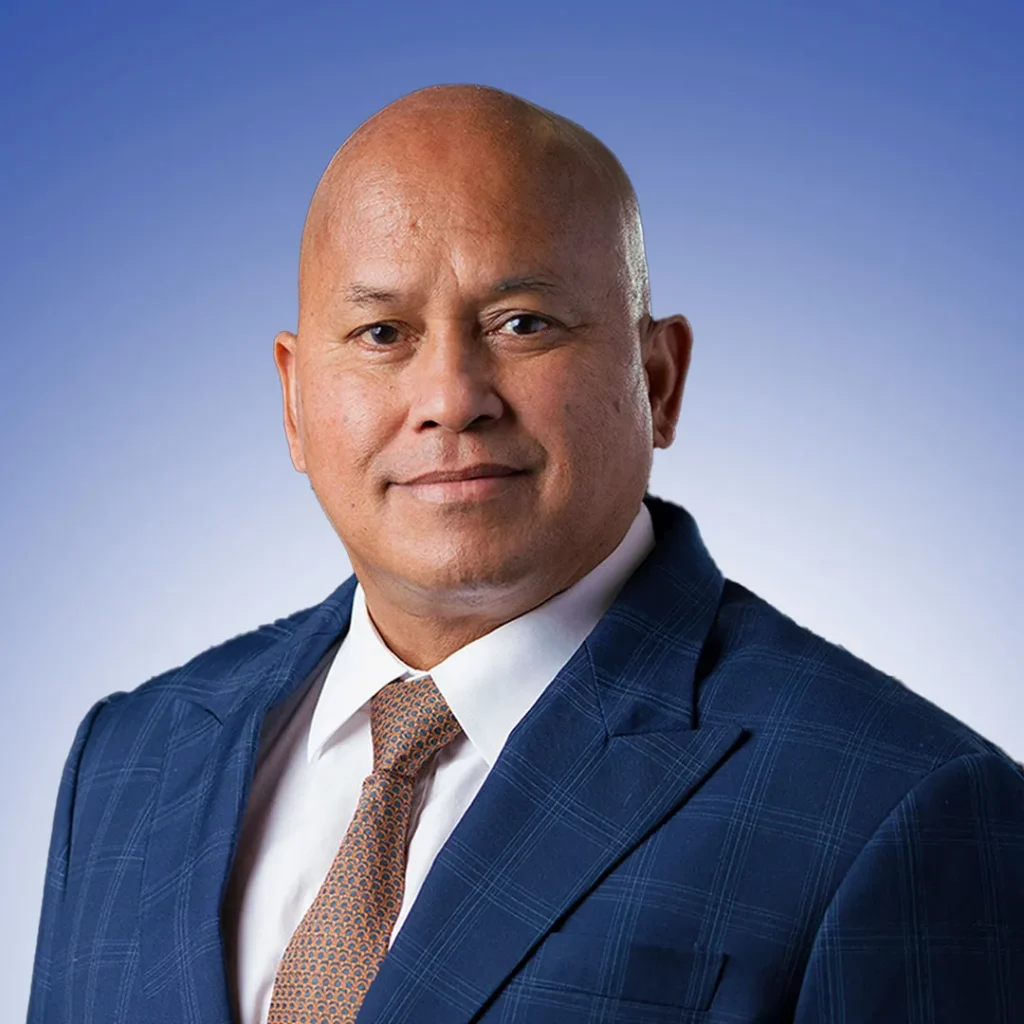 Ronald Marapon dela Rosa: History · Bio · Photo
|
|
| Wiki Facts & About Data | |
| Full Name: | Ronald Marapon dela Rosa |
| Stage Name: | Bato (Cebuano/Tagalog for "Rock" or "Stone") |
| Born: | January 21, 1962 |
| Age: | 64 years old |
| Birthplace: | Barangay Bato, Santa Cruz, Davao del Sur, Philippines |
| Nationality: | Filipino |
| Occupation: | Senator, Retired Police General |
| Religion: | Christianity (Roman Catholic) |
| Parents: | Teodoro Diamaton dela Rosa Sr. |
| Spouse: | Nancy dela Rosa |
| Children: | Liz, Macky, Rock |
| Net Worth: | ₱20 million – ₱50 million |
Early Life
Ronald Marapon dela Rosa was born at Barangay Bato, Santa Cruz, Davao del Sur, to Teodoro Diamaton dela Rosa Sr. The barangay from which he hails “Bato,” meaning “rock” or “stone” in both Cebuano and Tagalog would later lend him one of the most recognizable political nicknames in the Philippines. Dela Rosa grew up in a poor family in Davao del Sur and worked various jobs before joining the police force in 1986.
Growing up in the rural southern Philippines in the 1960s and 1970s, dela Rosa was shaped by the hard realities of provincial poverty and the deeply Catholic, community-oriented values of Mindanao’s farming communities.
His father, Teodoro, raised him in an environment that prized discipline, hard work, and personal toughness qualities that would later earn him the “Bato” nickname from his police academy upperclassmen, who compared his physique and demeanor to a rock.
Dela Rosa was nicknamed “Bato” during his first assignment in Davao, when his upperclassmen likened his body to a rock. It was a name that captured something essential about the man: solid, unyielding, and as his critics would later argue equally immovable in the face of evidence of wrongdoing.
His connection to Davao both the city and the surrounding region is foundational to understanding his career. It was in Davao that he would first encounter Rodrigo Duterte, then mayor of the city, and forge the decades-long relationship of mutual trust and shared ideology that would eventually carry both men to the highest offices of the Philippine government and ultimately to international criminal accountability proceedings in The Hague.
Education
Ronald dela Rosa’s educational path reflects the trajectory of a man who moved between academic institutions and military formation before committing fully to a life in uniform and who continued to pursue academic qualifications long after his police career was underway.
He initially enrolled at Mindanao State University (MSU), where he pursued a Bachelor of Science in Public Administration from 1979 to 1982. In 1982, he left MSU to join the Philippine Military Academy (PMA) and graduated in 1986 as part of PMA Sinagtala class.
His PMA degree is formally a Bachelor of Science in Military Science the standard degree conferred upon all Philippine Military Academy graduates.
After two decades of active police service, dela Rosa earned a Master of Public Administration degree in 1998 and a PhD in Development Administration in 2006 from the University of Southeastern Philippines in Davao City.
The completion of a doctoral degree while serving as an active police officer reflects the institutional culture of professional development within the AFP and PNP, where advanced academic credentials are valued alongside operational experience. His doctorate from the University of Southeastern Philippines gave him both the academic standing and the policy vocabulary he would later deploy as a legislator.
Career
Police Career From Philippine Constabulary to PNP (1986–2016)
Dela Rosa joined the police force in 1986 as a Lieutenant of the now-defunct Philippine Constabulary in Davao City.
His thirty-year police career was conducted almost entirely in and around Davao a geographical focus that brought him into regular professional proximity with the city’s most powerful political figure: Rodrigo Duterte.
In 1992, he was designated as Chief Inspector and worked as one of the staff at Police Regional Office (PRO)-Davao.
In 1997, he was designated as police provincial director of Compostela Valley. In 1999, he was assigned to the office of the Police Director of the Philippine National Police at Camp Crame in Quezon City. In 2001, he returned to PRO-Davao and continued his service as deputy chief of the Office of the Regional Personnel and Human Resource and Development Division of Region XI. In 2003, he was promoted to Police Superintendent and was assigned to Camp Catitipan in Davao City.
He was a chief handler of the extremist religious cult Tadtad during the 1980s an early indication of his willingness to operate in morally complex counter-insurgency environments. His work against the Tadtad, a violent cult known for ritual mutilation of perceived enemies, demonstrated both his operational courage and his capacity to engage with extreme violence as an instrument of order a disposition that would later define his approach to the drug war.
Dela Rosa previously served as Davao City Police Office (DCPO) Director from 2012 to 2013, implementing then-mayor Rodrigo Duterte’s strict anti-drug operations, including the controversial “Oplan Tokhang.” This posting was the crucible of the relationship that would define both men’s historical legacies. Oplan Tokhang from the Cebuano words “toktok” (knock) and “hangyo” (plead) was a police tactic of knocking on the doors of suspected drug users and dealers and urging them to “surrender.” Critics alleged that in practice, it served as a list-building exercise that led directly to extrajudicial executions of those who appeared on the lists.
After serving as Davao City Police Chief, Dela Rosa was assigned to the national headquarters of the Philippine National Police in Camp Crame where he worked for the PNP Intelligence Group from October 2013 to December 2014.
In 2015, he became a member of the PNP Board of Inquiry which investigated the Mamasapano clash that claimed the lives of 44 Special Action Force commandos, 17 Moro Islamic Liberation Front (MILF) members and five civilians.
A few days before the May 9, 2016 Philippine general election, Dela Rosa was relieved as brigade commander of the Reactionary Standby Support Force of the Philippine National Police allegedly due to his Facebook posts seen to be in favour of then-presidential candidate Rodrigo Duterte.
This public show of partisan alignment unusual for a serving military officer signaled the depth of his personal loyalty to Duterte and foreshadowed his role as the president’s most trusted law enforcement implement.
PNP Chief The Drug War (July 2016 – April 2018)
When Rodrigo Duterte won the Philippine presidency in May 2016 in a landslide, one of his first acts was to appoint his trusted Davao ally Ronald dela Rosa as the 21st Chief of the Philippine National Police.
He served as the first Chief of the Philippine National Police under the Duterte Administration and the 21st chief of the agency, a position he held for 21 months, from July 2016 to April 2018.
Dela Rosa’s 21-month tenure as PNP chief was defined entirely by the prosecution of Duterte’s declared “war on drugs” a campaign of unprecedented ferocity that he led with a combination of public bravado, operational aggression, and what the ICC has since alleged was systematic, state-sanctioned murder. The ICC arrest warrant alleges that Dela Rosa used his position as national police chief to implement “tokhang”-style killings nationally during Duterte’s presidency.
More than 6,000 people were killed in anti-drug operations after Duterte took office, according to police data. Many of the extrajudicial killings of suspected drug offenders happened in the poorest areas of the country, and independent monitors believe the number of those killed could be much higher.
The ICC’s own estimates are far more expansive: the ICC estimates that between 12,000 and 30,000 people were killed from 2016 to 2019 in the former president’s “war on drugs.”
During his time as PNP chief, dela Rosa became one of the most publicly visible and media-friendly police chiefs the Philippines had ever seen. Since he became the PNP chief, he appeared or guested in several TV shows, most notably in the Trabahula segment of ABS-CBN’s noontime variety show, It’s Showtime, and GMA’s Sunday variety show, Sunday PinaSaya.
His avuncular public persona smiling, self-deprecating, down-to-earth stood in deliberate and effective contrast to the deadly work being done in the name of the campaign he commanded.
Director General of the Bureau of Corrections (April – October 2018)
He also served as Director General of the Bureau of Corrections from April 30 to October 12, 2018. His tenure at BuCor was brief a transitional posting between his mandatory retirement from the PNP and his pivot to electoral politics. He left BuCor to prepare his senatorial campaign.
Senate First Term (2019–2025)
In the 2019 Philippine national elections, dela Rosa ran for the Senate under the PDP-Laban banner Duterte’s own party and won decisively. He won and placed 5th in the polls, garnering more than 19 million votes. His electoral platform was essentially a continuation of his PNP career: harsh on drugs, pro-death penalty, and unconditionally loyal to the Duterte administration’s agenda.
As a senator, his priority legislation centered on the drug war and public safety. Among his priority legislation are the revival and imposition of death penalty for those who will import, manufacture and cultivate illegal drugs; inclusion of substance abuse prevention education for grade school students; and strengthening the public health approach in the drug abuse prevention.
His legislative accomplishments include the BFP Modernization Act (RA 11589) and the PNP, BFP, BJMP and BuCor Height Equality Act (RA 11549) the latter a personal initiative lowering the minimum height requirements for law enforcement applicants, opening opportunities to thousands of Filipinos who had previously been excluded from careers in uniform on the basis of stature.
Re-election Second Term (2025–2031)
In the 2025 Philippine national elections, dela Rosa ran for re-election and won his second Senate term this time with an even larger mandate. During his reelection bid in Eleksyon 2025, Dela Rosa ranked third among all senatorial candidates with 20.5 million votes making him one of the highest vote-getters in that election cycle, a reflection of the enduring electoral appeal of the Duterte political brand among a substantial portion of the Filipino electorate even as the former president faced criminal proceedings at The Hague.
The ICC Warrant Saga (November 2025 – May 2026)
The most dramatic and consequential episode of dela Rosa’s political life began in November 2025, when Philippine Ombudsman Jesus Crispin Remulla publicly stated that the ICC had issued an arrest warrant against him.
The ICC initially declined to confirm the reported issuance of an arrest warrant at that time. However, on November 8, 2025, the Ombudsman claimed the ICC had allegedly issued an arrest warrant for Dela Rosa.
Following the Ombudsman’s announcement, dela Rosa had been absent from Senate sessions since learning of the warrant missing over six months of legislative work, including critical budget deliberations for the 2026 national budget.
Then came the extraordinary events of May 2026. The ICC confirmed the existence of the warrant on May 11, 2026. Dela Rosa returned to the Senate on May 11 after six months of absence in order to vote for the removal of Tito Sotto as Senate President amidst renewed efforts to impeach Vice President Sara Duterte. His sudden reappearance breaking a six-month silence specifically to cast a pivotal Senate leadership vote immediately attracted the attention of law enforcement.
Security cameras recorded him running through the halls and stairwells of the legislature, trailed by aides, as NBI agents attempted to carry out the ICC warrant. Dela Rosa had been staying within the premises of the Senate of the Philippines in Pasay City from May 11–14, 2026, where he was placed under protective custody while awaiting a Supreme Court decision on a petition to block his arrest and potential turnover to the ICC.
Chaos descended upon the Philippines’ Senate on the night of May 13 after gunshots rang out within its premises. Police identified a suspect in the shooting: a driver working with the country’s National Bureau of Investigation, the agency that had attempted to carry out the ICC warrant. On May 14, 2026, sources confirmed that he had left the Senate premises following the shooting incident, continuing to evade his ICC warrant.
Controversies
The Drug War and Extrajudicial Killings
The central and overriding controversy of Ronald dela Rosa’s career is his role as the operational commander of the Duterte drug war a campaign that the International Criminal Court has characterized as involving systematic crimes against humanity.
During a Senate hearing in October 2024, Duterte called Dela Rosa one of the commanders of his death squad. Dela Rosa has repeatedly denied the allegations. He has consistently maintained that police killings during the drug war were the result of lawful self-defense by officers whose lives were endangered by armed drug suspects a position that the ICC investigation has rejected on the basis of evidence of systematic, premeditated murder.
The ICC Arrest Warrant Crimes Against Humanity
The ICC arrest warrant alleges that Dela Rosa used his position as national police chief to implement “tokhang”-style killings nationally during Duterte’s presidency. The warrant unsealed and confirmed on May 11, 2026 makes him the second major figure in the Duterte drug war prosecution after former President Duterte himself, who was arrested at Manila’s international airport in March 2025 and transported to The Hague. Dela Rosa has denied involvement in the illegal killings.
The Senate Escape May 14, 2026
Dela Rosa fled the Senate building in the early hours of May 14, 2026, after gunshots rang out on the premises. A police spokesperson confirmed one person was arrested in connection with the shooting. Senate President Alan Peter Cayetano told reporters that “there’s no warrant, so he’s free to go” a position rejected by legal experts, noting that the ICC confirmed the warrant and that a local law mandates the Philippines to enforce warrants issued by international tribunals. Dela Rosa stated he would “exhaust all available remedies” to block his transfer to the ICC, and would only honor a warrant issued by a local court.
The Tadtad Cult Controversy
Dela Rosa was a chief handler of the extremist religious cult Tadtad during the 1980s a group known for extreme violence, including ritual mutilation of enemies. His role as a “handler” of this cult during the counter-insurgency era of the 1980s has been cited by critics as an early indicator of his willingness to use irregular and violent means in service of state security objectives.
Populism vs. Due Process Advocacy
Throughout his Senate tenure, dela Rosa has been among the most vocal proponents of the death penalty’s reinstatement for drug offenses a position condemned by human rights organizations, the Catholic Church, and a broad coalition of civil society groups as a return to state-sanctioned murder dressed in legal clothes. His legislative agenda has consistently prioritized punitive over rehabilitative approaches to drug policy, despite overwhelming international evidence that such approaches are ineffective and disproportionately harm the poorest and most vulnerable populations.
Awards & Recognitions
- Cavalier Award (2015) The highest distinction given to a PMA alumnus, for his several recognitions in the field of Police Operations.
- Medalya ng Pambihirang Paglilingkod Awarded for invaluable service in the field of Anti-Terrorism, presented by President Aquino and then-DILG Secretary Manuel A. Roxas II during the PNP’s Araw ng Parangal sa Kapulisan in 2014.
- Senior Police Commissioned Officer (PCO) of the Year for Operations Award (2012 & 2013) Conferred by the late President Benigno Aquino III.
- PAOCTF Satellite Office of the Year Award Conferred by then President Joseph Estrada.
- 21st Chief of the Philippine National Police Served as PNP Chief for 21 months under the Duterte administration.
- Biographical Film: Bato: The General Ronald dela Rosa Story (2019) Portrayed by Robin Padilla in Adolfo Alix Jr.’s 2019 biographical action film. Padilla would later become a senator alongside dela Rosa in 2022.
- Top 3 Senate Vote-Getter, 2025 Elections Ranked third among all senatorial candidates with 20.5 million votes in the 2025 elections.
Social Media
Ronald dela Rosa maintained an active social media presence during his years as PNP chief and senator using Facebook and other platforms to communicate directly with supporters, respond to critics, and project the accessible, plainspoken public persona that had made him one of the Philippines’ most recognizable public figures.
- Facebook: His Facebook posts including the posts in favor of then-candidate Duterte that resulted in his relief as a brigade commander in May 2016 have been among the most politically consequential social media activity of any Philippine law enforcement officer. His page remains one of the most followed among Philippine senators.
- Television Presence: He appeared or guested in several TV shows, most notably in the Trabahula segment of ABS-CBN’s It’s Showtime, and GMA’s Sunday PinaSaya. His willingness to appear on entertainment programs humanized him to a broad audience and solidified his populist appeal.
Personal Life
Sen. Dela Rosa is a loving husband to his wife Nancy, a doting and proud Father to Liz, Macky and Rock, and a devoted grandpa to Avi, Aera and Scot. By the accounts of colleagues and media who have covered him over the years, dela Rosa is in private a warm, family-oriented, and genuinely jovial man qualities that account for much of his popularity with ordinary Filipinos who find in him a relatable figure from a modest background who made good through discipline and hard work.
His election profile indicates that he was born in Santa Cruz, Davao del Sur, where he is a registered voter. His residence is in Barangay Magtuod, Davao City. He is fluent in Cebuano, Filipino, and English a multilingualism that has served him well in a nation where regional identity and language command fierce loyalty.
Dela Rosa is a longtime fan of the PBA team Barangay Ginebra San Miguel a characteristic that, in the Philippines, signals a working-class, populist identity that his constituency finds deeply relatable.
He is a devoted Catholic, and his faith has been both a personal anchor and a political asset in a country where the Catholic Church remains one of the most influential moral and political institutions.
His relationship with Rodrigo Duterte goes far beyond professional alliance it is, by all accounts, a deep personal friendship built over decades of shared work in Davao’s law enforcement community.
During a Senate hearing in October 2024, Duterte called Dela Rosa one of the commanders of his death squad an extraordinary public statement by the former president that, whatever its rhetorical context, represented an unprecedented admission of command responsibility by Duterte himself, and simultaneously confirmed the depth of the ties between the two men.
Net Worth
Ronald dela Rosa’s estimated net worth is approximately ₱20 million to ₱50 million, based on his SALN declarations filed across his government career and supplemented by his Senate salaries and allowances.
His income sources have included his salary and allowances as a police officer across a 30-year career, his brief tenure as Bureau of Corrections Director General, his Senate salaries across two terms (2019–present), and any personal investments or real estate holdings accumulated over decades of public service.
His financial profile is consistent with a man who rose from genuine poverty in Davao del Sur through institutional careers in law enforcement and then politics, without the accumulation of business wealth characteristic of many Philippine political families.
No adjudicated corruption case has been concluded against him in Philippine courts, though the ICC investigation into his role in the drug war and the crimes against humanity charges contained in the ICC arrest warrant represent an entirely different and far more serious dimension of legal accountability.
FAQs
Who is Bato dela Rosa?
Ronald “Bato” Marapon dela Rosa is a Filipino retired police general and politician serving his second term as Senator of the Philippines. He was the 21st Chief of the Philippine National Police under the Duterte administration (2016–2018), overseeing the bloody “war on drugs,” and is currently the subject of an ICC arrest warrant for crimes against humanity related to that campaign.
When was Bato dela Rosa born?
He was born on January 21, 1962, at Barangay Bato, Santa Cruz, Davao del Sur, Philippines.
Why is Bato dela Rosa called “Bato”?
Dela Rosa was nicknamed “Bato” during his first assignment in Davao, when his upperclassmen likened his body to a rock. “Bato” means “rock” or “stone” in both Cebuano and Tagalog.
Where did Bato dela Rosa study?
He attended Mindanao State University (BS Public Administration, 1979–1982), the Philippine Military Academy (BS Military Science, PMA Sinagtala Class of 1986), and the University of Southeastern Philippines (MPA 1998, PhD in Development Administration 2006).
What is the ICC arrest warrant against Bato dela Rosa?
The ICC arrest warrant alleges that Dela Rosa used his position as national police chief to implement “tokhang”-style killings nationally during Duterte’s presidency. The warrant was confirmed by the ICC on May 11, 2026, making him subject to international arrest for crimes against humanity.
Did Bato dela Rosa escape from the Philippine Senate?
Yes. On May 14, 2026, after gunshots rang out within the Senate premises where he had been taking refuge, dela Rosa fled the building, continuing to evade his ICC warrant. Senate President Alan Peter Cayetano subsequently confirmed that he was no longer in the building.
Who is Bato dela Rosa’s wife?
He is married to Nancy dela Rosa. They have three children Liz, Macky, and Rock and three grandchildren: Avi, Aera, and Scot.
How many votes did Bato dela Rosa get in 2025?
During his reelection bid in Eleksyon 2025, Dela Rosa ranked third among all senatorial candidates with 20.5 million votes.
Was a film made about Bato dela Rosa?
Yes. Ronald dela Rosa was portrayed by Robin Padilla in Adolfo Alix Jr.’s 2019 biographical action film Bato: The General Ronald dela Rosa Story.
What is Bato dela Rosa’s net worth?
His estimated net worth is approximately ₱20 million to ₱50 million, based on SALN declarations and income from his police and Senate careers.
Conclusion
Ronald “Bato” dela Rosa’s biography is one of the most extraordinary and morally complex in the contemporary political history of the Philippines. A man who rose from genuine poverty in a rural Mindanao village to command the entire Philippine National Police, who oversaw a drug war that killed thousands of the country’s poorest citizens, who won two Senate terms with tens of millions of votes, and who as of this writing is a fugitive from an international arrest warrant for crimes against humanity, having escaped through the corridors of the building that represents the highest deliberative body of the Philippine Republic.
His story forces a reckoning with some of the most difficult questions in democratic governance: What accountability do elected officials bear for the consequences of the policies they implement? What does it mean when tens of millions of voters repeatedly endorse a man who faces international criminal charges? What do the institutions of a democratic state owe to international justice?
Duterte was arrested at Manila’s international airport in March 2025 and put on a plane to The Hague. Whether dela Rosa will face the same fate or whether the combination of political protection, judicial maneuvering, and his own flight from the Senate will allow him to evade accountability indefinitely is the central unresolved question of his remarkable, troubling, and historically significant life.
Related People









Leave a Reply