
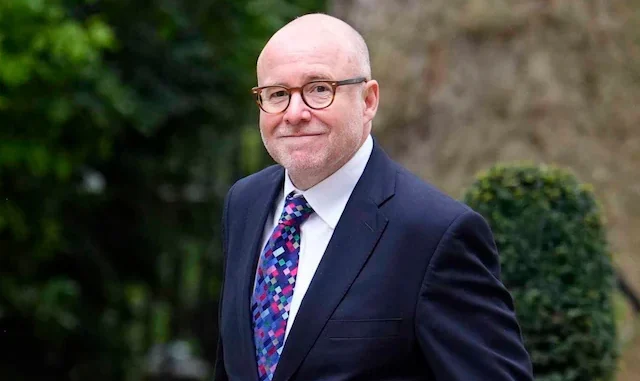
Judge Nicholas Rowland is a long-serving Circuit Judge in England and Wales, currently assigned to Southampton Crown Court on the South West Circuit.
While he has spent decades serving the English legal system as a barrister and later as a judge, he has come to broader public attention in 2025 and 2026 through a series of controversial sentencing decisions that have drawn fierce public criticism, government scrutiny, and a national debate about judicial accountability in the United Kingdom.
His case has become a focal point for discussions about whether the English justice system adequately protects victims of sexual violence.
| Nicholas Edward Rowland | |
|---|---|
 Nicholas Edward Rowland: History · Bio · Photo
|
|
| Wiki Facts & About Data | |
| Full Name: | Nicholas Edward Rowland |
| Nationality: | British |
| Occupation: | Circuit Judge (England and Wales) |
Early Life
Detailed information about Judge Nicholas Rowland’s early life, birthplace, family background, and personal biography has not been extensively documented in publicly available sources, as is common with many members of the English judiciary who tend to maintain a high degree of personal privacy.
What is known from professional records and appointment announcements is that he developed a distinguished legal career that began with his call to the Bar in 1988.
Education
Judge Nicholas Rowland was called to the Bar in 1988, having completed the necessary academic and vocational legal training required to practise as a barrister in England and Wales.
He was formerly associated with 3PB Barristers (3 Paper Buildings), one of the oldest and most established barristers’ chambers in the United Kingdom.
His chambers background suggests a career built on advocacy at both trial and appellate levels across various areas of criminal and civil law.
Career
Judge Rowland practised as a barrister for over 25 years before transitioning to the full-time judiciary.
His appointment to the Crown Court bench was announced in autumn 2014, when 3PB Barristers confirmed that Judge Nicholas Rowland had been appointed a Circuit Judge, based at Southampton. He has served on the Crown Court bench for over a decade, presiding over a wide range of criminal trials including cases involving serious violence, fraud, and sexual offences.
As a Circuit Judge, he sits in the Crown Court hearing cases too serious for the Magistrates’ Courts, including indictable-only offences. His work covers serious criminal matters, and Crown Court judges in the English system are expected to exercise both legal precision and proportionate sentencing in line with Sentencing Council guidelines.
Judge Rowland’s career came under significant public and governmental scrutiny over several sentencing decisions that critics labelled as unduly lenient. In one earlier instance, the Solicitor-General challenged a sentence he imposed on Joshua Blachford, a restaurant manager who pleaded guilty to rape.
Rowland sentenced Blachford to three years and nine months imprisonment after being presented with character testimonials from friends and family. The Court of Appeal, on review, found the sentence to be too low though ultimately decided not to increase it.
In a further case, Rowland sentenced convicted sex offender Daniel Rushton to a 12-month community order after Rushton was found with images of bestiality, despite Rushton having previously received a suspended sentence for attempting to engage in sexual communication with a child.
The case that brought Judge Rowland most intensely into the national spotlight occurred in March 2026 following a five-week trial at Southampton Crown Court involving three teenage boys from the traveller community in Hampshire.
The boys two aged 15 and one aged 14 were convicted of multiple counts of rape against two schoolgirls aged 14 and 15 in separate premeditated attacks in Fordingbridge in 2024 and 2025. The crimes were filmed and the footage was shared online. Despite the gravity of the offences, Judge Rowland handed all three defendants Youth Rehabilitation Orders rather than custodial sentences.
The decision provoked a nationwide outcry, led to multiple petitions on Change.org demanding judicial accountability, and was met with public calls for an independent review of Judge Rowland’s conduct on the bench. Critics, victims’ advocates, and members of the public argued that the sentences bore no relation to the severity of the crimes and failed the two victims profoundly.
Controversies
Judge Nicholas Rowland has become synonymous in public discourse with the debate about lenient sentencing in sexual violence cases in England and Wales.
His decisions across multiple cases have attracted scrutiny from the Solicitor-General, Court of Appeal judges, victims’ groups, and the general public.
The Fordingbridge rape case, in particular, generated tens of thousands of petition signatures and renewed calls for a formal framework of judicial accountability in the United Kingdom a country where judges enjoy significant independence and are rarely subject to public accountability processes.
The judicial accountability petition specifically called for an investigation into Judge Rowland’s conduct and the introduction of a formal Judicial Accountability Framework that would give the public greater visibility into judicial decision-making, particularly in serious sexual violence cases.
The debate underscores the tension between judicial independence a cornerstone of England’s rule of law and the public’s expectation that sentencing decisions reflect the seriousness of the harm done to victims.
Personal Life
As is standard for members of the English judiciary, Judge Nicholas Rowland keeps his personal life entirely private.
No information about his family, personal relationships, or private life has been placed in the public domain, and it would be inappropriate to speculate. His public identity is defined entirely by his work on the bench.
Conclusion
Judge Nicholas Rowland’s career represents both the strengths and the ongoing challenges within England’s criminal justice system.
A long-serving barrister and judge with over three decades of legal experience, his sentencing decisions in sexual violence cases particularly the Fordingbridge rape case have ignited one of the most significant public debates about judicial accountability in recent British legal history.
Regardless of the ultimate outcome of the public controversy surrounding him, his name has become permanently attached to the broader national conversation about how the English justice system treats victims of sexual violence, the independence of the judiciary, and what meaningful accountability for judicial conduct should look like.
Related People









Leave a Reply