
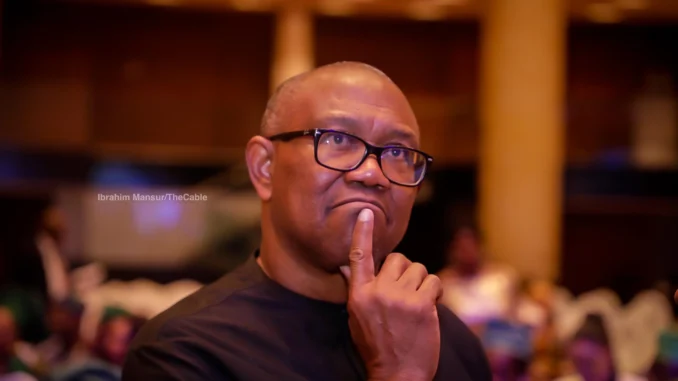
Peter Gregory Obi is one of the most consequential and widely discussed political figures in Nigeria’s modern democratic history.
A Harvard-trained businessman, former three-term Governor of Anambra State, and the 2023 presidential candidate of the Labour Party, Peter Obi galvanized a nationwide movement the “Obidient” movement — that transformed Nigeria’s electoral landscape and demonstrated the extraordinary power of youth-driven civic engagement in a country long dominated by two political parties.
Nicknamed “Okwute” (Igbo for “Rock”), Obi built his reputation on fiscal discipline, healthcare investment, education spending, and an unrelenting commitment to moving Nigeria from consumption to production.
Whether he is celebrated as Nigeria’s most capable administrator or criticized as a symbol of opposition politics’ limitations, Peter Obi is undeniably one of the most significant Nigerian political personalities of the 21st century.
| Peter Gregory Obi | |
|---|---|
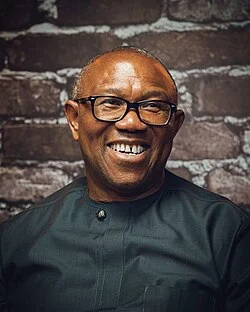 Peter Gregory Obi: History · Bio · Photo
|
|
| Wiki Facts & About Data | |
| Full Name: | Peter Gregory Obi |
| Stage Name: | Okwute (meaning "Rock") |
| Born: | July 19, 1961 |
| Age: | 64 years old |
| Birthplace: | Onitsha, Anambra State, Nigeria |
| State of Origin: | Anambra State |
| Nationality: | Nigerian |
| Occupation: | Politician, Businessman, Former Governor |
| Religion: | Christianity (Roman Catholic) |
| Spouse: | Margaret Brownson Obi (née Usen) — married 1992 |
| Children: | Gabriella Nwamaka Frances Obi (daughter), Gregory Peter Oseloka Obi (son) |
| Relationship: | Married |
| Net Worth: | $10 million |
Early Life
Peter Gregory Obi was born on July 19, 1961, in Onitsha, Anambra State one of the most commercially vibrant cities in southeastern Nigeria. Onitsha’s identity as a trading hub and commercial nerve center of the Igbo heartland profoundly influenced the young Obi, who would go on to forge his earliest career in trading before ascending to the heights of banking and politics. His upbringing in Onitsha immersed him in the rhythms of commerce, negotiation, and enterprise from an early age.
Obi grew up in a Roman Catholic household, a faith that has remained central to his personal identity and public conduct throughout his adult life. He is widely regarded by those who know him as a man of genuine personal frugality a trait strikingly rare in Nigerian elite politics who has been photographed carrying his own luggage in airports and reportedly flies economy class. These habits have become part of his political mythology, reinforcing his brand as a leader who prioritizes substance over show.
Education
Peter Obi received his secondary education at the prestigious Christ the King College (CKC), Onitsha — one of the most respected secondary schools in southeastern Nigeria, known for producing distinguished alumni across Nigerian public life.
He was admitted to the University of Nigeria, Nsukka (UNN) in 1980, graduating in 1984 with a Bachelor of Arts (Hons) in Philosophy. His philosophy degree emphasizing logic, ethics, critical thinking, and argumentation provided an intellectual foundation that has been evident in his career as both a businessman and a politician.
His academic journey extended internationally. He attended the Harvard Business School in the United States, where he completed executive education programmes.
Additional educational credentials include programmes at the London Business School and other international institutions, though his primary academic achievement remains his UNN philosophy degree and his Harvard executive training.
Career
Peter Obi began his professional career in trading, a natural starting point for a young man raised in Onitsha’s commercial ecosystem. He engaged in commodity trading and import-export business, gaining early experience in supply chain management, financial negotiation, and market dynamics. His success in trading provided the capital and credibility to transition into the banking and finance sector, where he would reach his greatest pre-political prominence.
In banking, Obi rose rapidly through executive ranks, eventually serving as Chairman of Fidelity Bank Plc — notably becoming the youngest chairman in the bank’s history at the time. He also held director positions at several other major Nigerian financial institutions, accumulating deep experience in corporate governance, financial regulation, and capital allocation. His banking career established his credentials as a serious, capable economic mind a reputation that would later form the cornerstone of his political identity.
Peter Obi entered electoral politics as a member of the All Progressives Grand Alliance (APGA), contesting the governorship of Anambra State in 2003. He lost the election a result widely attributed to electoral manipulation but refused to accept defeat and pursued justice through the courts. After three years of legal battles, the courts ruled in his favour and he was declared the rightful winner. He assumed office as Governor of Anambra State on March 17, 2006.
His first tenure was immediately turbulent: he was impeached on November 2, 2006 in what was widely condemned as a politically motivated move. However, the impeachment was overturned by the courts, and he returned to office on February 9, 2007. A fresh election was held on April 29, 2007, and a court ruling on June 14, 2007, affirmed that he should be allowed to complete his original four-year term. He won re-election on February 6, 2010 for a second term, which concluded on March 17, 2014 — giving him a total of three distinct gubernatorial tenures. His combined time as governor is widely regarded as one of the most impactful in Anambra State’s history.
As governor, Obi became famous for his extraordinary fiscal discipline. He significantly increased the state’s savings, paying off debts left by previous administrations, reducing recurrent expenditure, and investing massively in education, healthcare, and infrastructure. He is credited with paying off Anambra’s outstanding debt and reportedly leaving office with substantial cash reserves in the state’s coffers a virtually unheard-of achievement in Nigerian gubernatorial history. He received the Bill & Melinda Gates Foundation’s Best Performing Governor on Immunization in South-East Nigeria award in 2012 and numerous other governance recognitions.
After leaving the governorship, President Goodluck Jonathan appointed him as Chairman of the Nigerian Securities and Exchange Commission (SEC) in 2015. On October 12, 2018, he was announced as the vice-presidential running mate of PDP presidential candidate Atiku Abubakar for the 2019 election. The Atiku-Obi ticket finished second behind Buhari’s APC.
Obi’s national profile exploded in 2022 when he resigned from the PDP and declared his presidential ambition under the Labour Party platform. His candidacy unleashed one of the most extraordinary political movements in Nigerian electoral history the “Obidient” movement — a largely youth-driven, social media-organized wave of civic enthusiasm that cut across ethnic, religious, and regional lines. In the February 25, 2023 presidential election, Obi polled approximately 6.1 million votes and came third — behind Bola Tinubu (APC, winner) and Atiku Abubakar (PDP). He subsequently challenged the results at the Presidential Election Petition Court, but his petition was dismissed.
In 2025, Obi moved to the African Democratic Congress (ADC), continuing his political activities and remaining a central figure in Nigerian opposition politics and governance discourse.
Awards & Recognitions
- Bill & Melinda Gates Foundation — Best Performing Governor on Immunization in South-East Nigeria (2012)
- Ezeife Leadership Foundation — Leadership and Good Governance Award (2012)
- Methodist Church of Nigeria — Golden Award on Prudence (2012)
- Business Hallmark Newspaper — Man of the Year (2012)
- Commander of the Order of the Niger (CON) — National Honour
- Multiple international recognitions for fiscal governance and public administration
Social Media
- Twitter/X: @PeterObi
- Facebook: PeterObiGregory
- Instagram: @peterobigregory
Personal Life
Peter Obi married Margaret Brownson Obi (née Usen) in 1992. The couple has two children: a daughter, Gabriella Nwamaka Frances Obi, and a son, Gregory Peter Oseloka Obi. Obi is known for maintaining a deliberately modest personal lifestyle despite his considerable wealth and political prominence.
His personal frugality carrying his own bags, flying economy class, living simply has become almost legendary in Nigerian political discourse and stands in striking contrast to the ostentatious lifestyles of many of his peers.
He is a devout Roman Catholic and has spoken about his faith as a foundational guide to his values of stewardship, service, and accountability. His wife Margaret has maintained a low public profile throughout his political career, though she has been a constant supportive presence.
Net Worth
Peter Obi’s estimated net worth is approximately $10 million. His wealth was accumulated primarily through his successful career in commodity trading and the banking sector particularly his tenure as Chairman of Fidelity Bank Plc before he entered public life. He is widely regarded as one of the wealthier Nigerian politicians, though his personal lifestyle choices consistently project an image of simplicity and restraint. His asset declarations as a public official in Nigeria have been among the more transparent submitted by Nigerian political figures, further reinforcing his brand of fiscal probity.
Conclusion
Peter Gregory Obi occupies a unique and defining space in Nigeria’s political landscape.
He is simultaneously a symbol of what disciplined governance can achieve as demonstrated by his transformative tenure as Anambra’s governor and a mirror of the frustrations of a Nigerian electorate that hungers for accountability but repeatedly encounters a system resistant to genuine reform. The Obidient movement he inspired in 2023 proved that Nigerian youth can organize, mobilize, and dream differently.
Whether history ultimately judges him as a transformative figure or a pivotal but unfinished chapter, Peter Obi has already done what few Nigerian politicians manage: he made millions of his countrymen believe, even briefly, that a better Nigeria was not merely possible but imminent. That alone is a legacy worth reckoning with.
Related People
Leave a Reply