
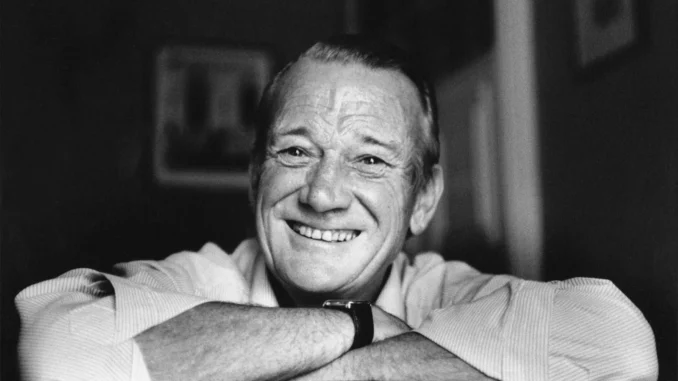
Denholm Mitchell Elliott CBE was one of the most celebrated and versatile British character actors of the twentieth century.
Across a remarkable 47-year career spanning stage, screen, and television, Elliott built a reputation as the consummate scene-stealer, a performer who could elevate any film simply by walking into frame. American film critic Roger Ebert famously described him as “the most dependable of all British character actors,” while The New York Times called him “a star among supporting players” and “an accomplished scene-stealer.”
From his wartime imprisonment that first sparked his passion for acting, to his iconic roles in the Indiana Jones franchise, Trading Places, and A Room with a View, Denholm Elliott’s legacy remains one of the most enduring in British cinema history.
| Denholm Mitchell Elliott | |
|---|---|
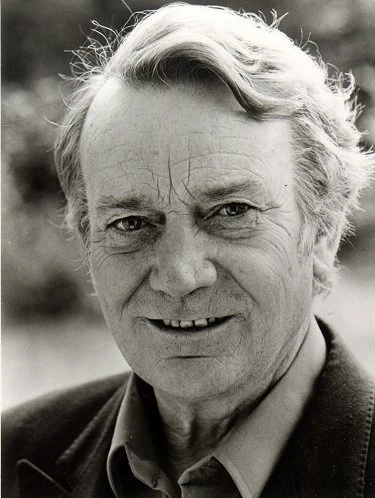 Denholm Mitchell Elliott: History · Bio · Photo
|
|
| Wiki Facts & About Data | |
| Full Name: | Denholm Mitchell Elliott |
| Born: | 31 May 1922 |
| Age: | (aged 70) |
| Death: | 6 October 1992 (aged 70) |
| Birthplace: | Kensington, London, England |
| Nationality: | British |
| Occupation: | Actor (Stage, Film, Television) |
| Height: | 5 ft 11 in (1.82 m) |
| Parents: | Myles Layman Farr Elliott (father), Nina née Mitchell (mother) |
| Spouse: | Virginia McKenna (m. 1954 – div. 1957); Susan Robinson (m. 1962 – his death, 1992) |
| Children: | 2 (Mark Elliott and Jennifer Elliott) |
| Relationship: | Deceased |
| Net Worth: | Approximately $3 million at time of death |
Early Life
Denholm Mitchell Elliott was born on 31 May 1922, in Kensington, London, England. He was the son of Myles Layman Farr Elliott and Nina née Mitchell.
His early childhood was marked by upheaval when, in 1933, his father was killed in a terrorist attack while serving as a crown prosecutor in Palestine. Following this tragedy, a young Denholm was sent to a boarding school in Hampshire.
Elliott first discovered a love for performing at Ripley Court Preparatory School in Surrey, where he participated in early theatrical activities.
He was of white British ethnicity, and his religious affiliation was broadly Christian, though specific details of his personal beliefs were not widely documented.
His early years were shaped by loss, displacement, and an inherent sensitivity that would later define his most memorable screen performances.
Education
Denholm Elliott received his secondary education at Malvern College, a prestigious boarding school located in Worcestershire, England.
Though he found public school life difficult and reportedly developed kleptomania during this period, a psychiatrist ultimately recommended that he pursue acting as an outlet, a decision that would change the course of his life.
Following this recommendation, Elliott enrolled at the Royal Academy of Dramatic Art (RADA) in London at the age of 17.
He studied there for two terms before dropping out, having found the experience uninspiring. Despite his brief and unhappy time at RADA, it was the crucible in which his professional ambitions were formally confirmed. His true theatrical education would come not in a classroom, but in a German prisoner-of-war camp.
Career
World War II and the POW Camp Theatre
When the Second World War broke out, Elliott joined the Royal Air Force in 1940, training as a wireless operator and air gunner with 76 Squadron under the command of Leonard Cheshire. On the night of 24 September 1942, his Handley Page Halifax heavy bomber was shot down during a raid on German U-boat pens in Flensburg, Germany.
The aircraft crashed into the North Sea near the island of Sylt; Elliott and two other crew members survived.
He was subsequently captured and spent three years as a prisoner of war in a camp in Silesia. Far from being idle, Elliott threw himself into the camp’s theatrical productions, participating in plays supplied by the Red Cross and helping to organise a drama group among his fellow prisoners.
It was in these extraordinary circumstances, a makeshift theatre built from old packing cases, that Elliott truly found his calling as an actor. Those years of wartime captivity did not diminish him; they created him.
Post-War Stage Career
After the war, Elliott joined a London repertory company and quickly made his mark on the West End stage. In 1946, he appeared in The Guinea Pig at London’s West End, and his career accelerated rapidly when Sir Laurence Olivier cast him in the starring role in Venus Observed (1950), for which Elliott won the prestigious Clarence Derwent Award. When Olivier’s subsequent production, Ring Round the Moon, transferred to Broadway, Elliott replaced Paul Scofield in what became a major hit, marking his successful Broadway debut in 1951.
He also appeared in notable productions including T.S. Eliot’s The Confidential Clerk and performed with the Royal Shakespeare Company during his prolific stage years.
Film Career: Early Roles (1949–1970s)
Elliott made his film debut in the comedy Dear Mr. Prohack in 1949, playing the role of Oswald Morfrey. He was subsequently signed to a film contract and appeared in productions such as The Sound Barrier (1952) and The Cruel Sea (1953). During the 1950s, he took smaller roles in films including The Heart of the Matter, Lease of Life, and The Night My Number Came Up.
A significant breakthrough came in the 1960s. He portrayed the black sheep of a family in Nothing but the Best (1964), and played a backstreet abortionist in the iconic British comedy-drama Alfie (1966), a film later nominated for the Academy Award for Best Picture.
He also appeared in the World War II film Too Late the Hero (1970) as the reckless Captain Hornsby, and played a washed-up film director in The Apprenticeship of Duddy Kravitz (1974). By this period, Elliott had firmly established himself as the premier British supporting actor, a performer whose presence in a film was a mark of quality and intelligence.
The 1980s: Peak Fame and Hollywood Recognition
The 1980s represented the pinnacle of Denholm Elliott’s international recognition. He appeared as the hapless archivist Dr. Marcus Brody in Steven Spielberg’s Raiders of the Lost Ark (1981), a role that introduced him to global audiences.
He followed this with a scene-stealing turn as the sycophantic butler Coleman in Trading Places (1983) alongside Dan Aykroyd and Eddie Murphy, earning him his first BAFTA Film Award for Best Supporting Actor.
He won the BAFTA Film Award for Best Supporting Actor in three consecutive years: for Trading Places (1983), A Private Function (1984), in which he played a greedy doctor, and Defence of the Realm (1985).
His portrayal of the warm-hearted Mr. Emerson in the Merchant Ivory adaptation A Room with a View (1985) earned him a nomination for the Academy Award for Best Supporting Actor, one of the most celebrated performances of his career. He reprised his role as Dr. Marcus Brody in Indiana Jones and the Last Crusade (1989), once again opposite Harrison Ford. His last stage appearance was in David Mamet’s A Life in the Theatre in London in 1989.
Television Career
Throughout his career, Elliott was equally prolific on television. He appeared in recurring roles in British series including The Man in Room 17 (1966), in which he played Imlac Defraits across 13 episodes. He won the BAFTA TV Award for Best Actor in 1981 for his performances in Blade on the Feather (1980) and episodes of BBC2 Playhouse and Tales of the Unexpected.
He received a further BAFTA TV nomination for his performance in Hotel du Lac (1986). His final film was the comedy Noises Off in 1992, playing an aging, drunken actor, a role that felt, in retrospect, like a valediction.
Awards
- 1951, Clarence Derwent Award, Best Supporting Performance, Win (Venus Observed)
- 1981, BAFTA TV Award, Best Actor, Win (Blade on the Feather / BBC2 Playhouse / Tales of the Unexpected)
- 1982, BAFTA Film Award, Best Actor in a Supporting Role, Nomination (Raiders of the Lost Ark)
- 1984, BAFTA Film Award, Best Actor in a Supporting Role, Win (Trading Places)
- 1985, BAFTA Film Award, Best Supporting Actor, Win (A Private Function)
- 1985, Peter Sellers Award for Comedy, Win
- 1985, Evening Standard British Film Award, Best Actor, Win (Bad Timing)
- 1986, BAFTA Film Award, Best Actor in a Supporting Role, Win (Defence of the Realm)
- 1987, BAFTA Film Award, Best Actor in a Supporting Role, Nomination (A Room with a View)
- 1987, Academy Award (Oscar), Best Actor in a Supporting Role, Nomination (A Room with a View)
- 1987, BAFTA TV Award, Best Actor, Nomination (Hotel du Lac)
- 1988, ACE Award, Supporting Actor in a Movie or Miniseries, Win (Hotel du Lac)
Personal Life
Denholm Elliott was bisexual throughout his life, a fact documented in detail by his widow Susan Robinson in her memoir Denholm Elliott: Quest for Love, published in 1994. His first marriage was to the British actress Virginia McKenna in 1954; the marriage ended in divorce in 1957 and produced no children.
In 1962, he married American actress Susan Robinson in what was an open relationship, and the couple remained together until his death. They had two children: a son, Mark Elliott, and a daughter, Jennifer Elliott. Tragically, Jennifer died by suicide in 2003 at the age of 41.
In 1987, Elliott tested HIV positive and was diagnosed with AIDS in 1988. He continued working for several more years and was appointed Commander of the Order of the British Empire (CBE) by Queen Elizabeth II in 1988, a recognition of his extraordinary contribution to British acting.
He died on 6 October 1992 at his home in Santa Eulària des Riu, Ibiza, Spain, from AIDS-related tuberculosis, at the age of 70. His widow Susan subsequently established the Denholm Elliott Project charity and collaborated closely with the UK Coalition of People Living with HIV and AIDS. Susan Robinson Elliott died on 12 April 2007, aged 65, in a fire at her flat in London.
Elliott was widely remembered by colleagues as warm, generous, and deeply committed to his craft. Gabriel Byrne, the star of Defence of the Realm, joked after Elliott won the BAFTA for that film: “Never act with children, dogs, or Denholm Elliott.” Producer Ismail Merchant described him as “an all-giving person, full of life… He had an affection and feeling for other actors, which is very unusual in our business.”
Director Steven Spielberg paid him perhaps the highest posthumous tribute: rather than recast the role of Marcus Brody for Indiana Jones and the Kingdom of the Crystal Skull (2008), Spielberg and writer David Koepp created an entirely new character instead.
Social Media
Denholm Elliott passed away in 1992, prior to the existence of social media platforms. He does not have verified official accounts on any platform.
Net Worth
Denholm Elliott’s net worth at the time of his death in 1992 was estimated at approximately $3 million, accumulated over his prolific 47-year career in theatre, film, and television. His primary income streams included film acting fees, television appearances, and stage work.
Given the era in which he worked and his status as a supporting rather than lead actor for much of his career, precise financial records are not in the public domain. No singular authoritative net worth figure has been officially confirmed.
Filmography
- Dear Mr. Prohack (1949), Oswald Morfrey
- The Sound Barrier (1952)
- The Cruel Sea (1953)
- Nothing but the Best (1964)
- King Rat (1965)
- Alfie (1966)
- Too Late the Hero (1970), Captain Hornsby
- The Apprenticeship of Duddy Kravitz (1974)
- Bad Timing (1980)
- Raiders of the Lost Ark (1981), Dr. Marcus Brody
- Trading Places (1983), Coleman
- A Private Function (1984)
- Defence of the Realm (1985)
- A Room with a View (1985), Mr. Emerson
- Indiana Jones and the Last Crusade (1989), Dr. Marcus Brody
- Noises Off (1992)
Conclusion
Denholm Elliott’s life was one of remarkable contrast, a childhood marked by loss, a wartime captivity that became his theatrical education, and a career that made him one of the most beloved character actors in the history of British cinema. He never sought the starring role, yet his presence was invariably the most indelible thing in any film he appeared in.
Honoured with a CBE, three consecutive BAFTA wins, and an Oscar nomination, Elliott transcended the limitations of supporting work to become, as The New York Times put it, a true star.
His legacy endures not only in the films that continue to be watched by new generations, but in the standard of craft, commitment, and humanity he brought to every performance.
Related People








Leave a Reply