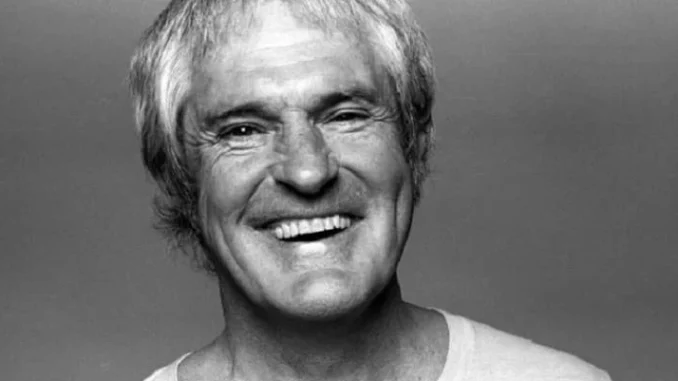
Timothy Leary is one of the most controversial and culturally significant figures of the 20th century, a Harvard psychologist turned counterculture icon whose advocacy for psychedelic drugs and altered states of consciousness made him simultaneously one of the most celebrated and vilified men in America.
Declared “the most dangerous man in America” by President Richard Nixon, praised as “a hero of American consciousness” by poet Allen Ginsberg, and described as a “brave neuronaut” by writer Tom Robbins, Leary defied easy categorization throughout his turbulent life.
This biography examines his early life, academic career, rise to cultural prominence, legal battles, and complex legacy.
| Timothy Francis Leary | |
|---|---|
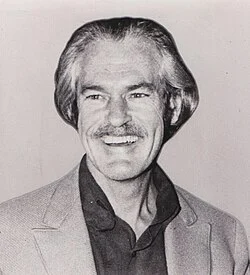 Timothy Francis Leary: History · Bio · Photo
|
|
| Wiki Facts & About Data | |
| Full Name: | Timothy Francis Leary |
| Born: | October 22, 1920 |
| Age: | aged 75 |
| Death: | May 31, 1996 () |
| Birthplace: | Springfield, Massachusetts, United States |
| Nationality: | American |
| Occupation: | Psychologist, Author, Lecturer, Activist |
| Spouse: | Marianne Busch (m. 1945; died 1955), Mary Della Cioppa (m. 1956–1957), Nena von Schlebrügge (m. 1964–1965), Rosemary Woodruff (m. 1967–1976), Barbara Chase (m. 1978–1992) |
| Children: | 3 children |
Early Life
Timothy Francis Leary was born on October 22, 1920, in Springfield, Massachusetts, into an Irish-Catholic household. His father, Timothy “Tote” Leary Sr., was a U.S. Army officer and dentist.
Despite being raised in a devout Catholic home, the young Leary showed early signs of the rebellious, independent, and intellectually restless spirit that would characterize his adult life.
He was raised in the predominantly Irish-American environment of New England, absorbing both the disciplined structure of his Catholic upbringing and the questioning, contrarian spirit that would eventually lead him far from the Church’s teachings.
From an early age, Leary demonstrated exceptional intelligence and a voracious intellectual curiosity that made him a gifted but often disruptive student.
His early years were marked by a tension between institutional conformity and his innate drive to challenge authority, a tension that would define his entire life’s arc.
Education
Timothy Leary attended the College of the Holy Cross before enrolling at the United States Military Academy at West Point, from which he was eventually expelled after a disciplinary incident. He later transferred to the University of Alabama, from which he earned his Bachelor of Arts degree in psychology in 1943.
He then served in the U.S. Army during World War II. After the war, he pursued graduate studies, earning his Master of Science degree from Washington State University, followed by a doctorate in clinical psychology from the University of California, Berkeley in 1950.
His academic training was rigorous and impressive, a foundation that made his later descent into controversy all the more dramatic. At UC Berkeley, he also worked as an assistant professor until 1955, during which time he developed groundbreaking research on interpersonal relationships that earned him early recognition in the field of clinical psychology.
Career
Timothy Leary’s career trajectory is one of the most dramatic and unusual in the history of American psychology. His early academic career was distinguished.
He developed a sophisticated model of interpersonal behavior, published in a widely respected 1957 monograph, that established him as a serious and innovative researcher in clinical psychology.
In 1960, Leary was appointed to the faculty of Harvard University’s Center for Personality Research, a prestigious appointment that placed him at the heart of American academic psychology.
His trajectory changed forever in 1960 when he first experimented with psilocybin mushrooms during a vacation in Cuernavaca, Mexico. The experience was, by his own account, profoundly transformative, triggering what he described as a deeper understanding of consciousness than all his years of academic study had provided.
He returned to Harvard determined to study psychedelics scientifically. Together with colleague Richard Alpert (later known as Ram Dass), Leary founded the Harvard Psilocybin Project in 1960, conducting research into the therapeutic effects of psilocybin and later lysergic acid diethylamide (LSD), both of which were legal in the United States at the time. Their experiments included the landmark Concord Prison Experiment and the Marsh Chapel Experiment.
However, their methods were highly controversial. Faculty colleagues questioned the scientific legitimacy and ethics of their research, noting that Leary and Alpert took the drugs themselves alongside their subjects, allegedly pressured students to participate, and failed to maintain rigorous scientific standards. Harvard fired both Leary and Alpert in May 1963. The dismissal, which paradoxically made Leary more famous than he had ever been as a professor, launched him into his second and more culturally explosive career as a psychedelic prophet and counterculture icon.
Through the mid-1960s, Leary lived at a mansion in Millbrook, New York, where he formed the center of a hedonistic community of researchers, artists, and cultural figures exploring psychedelic experience. He became the public face of the 1960s counterculture, coining the famous phrase “Turn on, tune in, drop out”, which became the defining motto of the decade’s psychedelic movement.
He was arrested 36 times over the course of his life, primarily for drug possession. President Richard Nixon reportedly called him “the most dangerous man in America.”
In 1970, he escaped from a minimum security prison in California with the help of the radical group the Weather Underground, subsequently living as a fugitive in exile in Algeria, Switzerland, and Afghanistan before his recapture in 1973. He served prison time and was eventually released in 1976.
In his later years, Leary reinvented himself as a technology enthusiast and futurist, exploring themes of space migration, intelligence enhancement, and life extension.
He became interested in cybernetics, digital consciousness, and the internet, writing and speaking about transhumanist ideas that presaged much of today’s conversation about artificial intelligence and human evolution. He published numerous books and became a celebrated figure on the speaking circuit and in countercultural entertainment circles.
In early 1995, he learned that he had inoperable prostate cancer. In characteristic fashion, he chose to document his dying process publicly through his website, leary.com, inviting followers to accompany him on his final journey.
Timothy Leary died on May 31, 1996, at his hilltop home in Beverly Hills, California, at the age of 75. According to his wishes, a portion of his ashes were sent into space aboard a rocket in 1997, a final cosmic gesture consistent with his lifelong obsession with consciousness expansion and the beyond.
Legacy and Cultural Impact
While Timothy Leary did not accumulate conventional awards, his cultural and intellectual impact has been recognized posthumously across multiple fields.
He is widely credited as the father of the psychedelic movement and a pioneering (if controversial) figure in the scientific study of consciousness. His Eight-Circuit Model of Consciousness and his concept of “Set and Setting” have influenced generations of researchers, therapists, and cultural thinkers.
The modern renaissance in psychedelic therapy, with institutions including Johns Hopkins University and NYU now conducting rigorous clinical trials into the therapeutic use of psilocybin and MDMA, owes much to the doors that Leary’s controversial experiments first opened.
Personal Life
Timothy Leary was married five times: to Marianne Busch (1945–1955, who died by suicide in 1955), Mary Della Cioppa (1956–1957), model Nena von Schlebrügge (1964–1965), Rosemary Woodruff (1967–1976), and Barbara Chase (1978–1992). He had three children.
His personal life was as turbulent and unconventional as his public one, marked by tragedy, passion, controversy, and an almost relentless refusal to conform to societal expectations.
His long-term partner Joanna Harcourt-Smith (1972–1977) was a particularly complex figure in his life, present during some of his most legally perilous years.
Bibliography (Selected Works)
Timothy Leary authored numerous books exploring psychology, consciousness, technology, and philosophy. Key works include: The Interpersonal Diagnosis of Personality (1957), The Psychedelic Experience (1964, co-authored with Ralph Metzner and Richard Alpert), High Priest (1968), The Politics of Ecstasy (1968), Exo-Psychology (1977), Flashbacks: An Autobiography (1983), Chaos and Cyber Culture (1994), and Design for Dying (1997, published posthumously).
Conclusion
Timothy Leary’s life was a paradox, a rigorously trained scientist who became the patron saint of psychedelic chaos; a Harvard professor who was labeled the most dangerous man in America; a convicted drug criminal whose ideas are now being validated by the very medical establishment that once vilified him.
Whether one views him as a visionary philosopher who glimpsed truths that society was not ready for, or as a reckless provocateur who endangered vulnerable minds in pursuit of his own celebrity, one thing is undeniable: Timothy Leary changed the world.
His legacy lives on in every therapy session that uses psychedelic-assisted treatment, in every question about the nature of consciousness, and in every person who has ever dared to think beyond the boundaries of the acceptable. For better or worse, Timothy Leary remains one of the defining figures of 20th century American culture.
Related People


Leave a Reply