
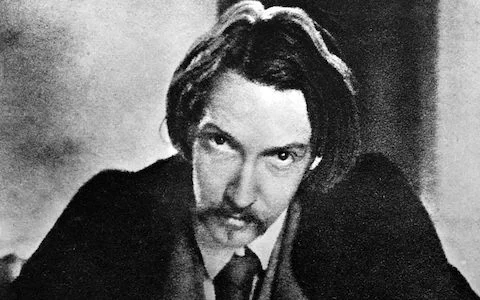
Robert Louis Stevenson is one of the most enduringly beloved writers in the English language. The Scottish author who gave the world Treasure Island, Kidnapped, and The Strange Case of Dr. Jekyll and Mr. Hyde lived only 44 years, yet produced a body of work, novels, essays, poetry, travel writing, and short stories, that has never gone out of print.
His genius lay in his ability to fuse thrilling narrative adventure with profound moral and psychological inquiry, producing stories that appeal equally to children and adults, to casual readers and literary scholars.
That he accomplished this while battling chronic illness for most of his life makes his achievement all the more extraordinary.
| Robert Louis Balfour Stevenson | |
|---|---|
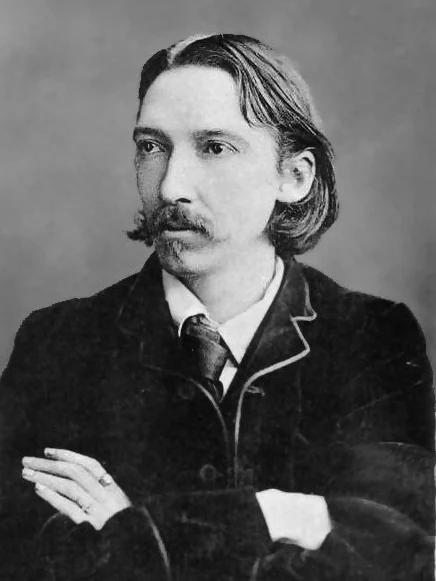 Robert Louis Balfour Stevenson: History · Bio · Photo
|
|
| Wiki Facts & About Data | |
| Full Name: | Robert Louis Balfour Stevenson |
| Born: | 13 November 1850 |
| Age: | (aged 44) |
| Death: | 3 December 1894 |
| Birthplace: | Edinburgh, Scotland |
| Nationality: | Scottish / British |
| Occupation: | Novelist, Poet, Essayist, Travel Writer |
| Parents: | Thomas Stevenson (father), Margaret Isabella Balfour (mother) |
| Spouse: | Fanny Van de Grift Osbourne (married 1880) |
Early Life
Robert Louis Balfour Stevenson was born on 13 November 1850 in Edinburgh, Scotland, the only child of Thomas Stevenson and Margaret Isabella Balfour. His father was a prosperous civil engineer who belonged to a distinguished family of lighthouse engineers, the Stevensons had designed and built most of Scotland’s deep-sea lighthouses along the coast.
His mother came from a family of lawyers and church ministers. The family was comfortably middle-class, and young Louis (as he was known) grew up in an intellectually stimulating though physically challenging environment.
From childhood, Stevenson suffered severely from chronic respiratory illnesses. What was frequently described as a “weak chest” manifested as persistent fevers, bronchial infections, coughing fits, and eventually haemorrhaging of the lungs, later confirmed to have been tuberculosis.
These illnesses confined him to bed for long periods throughout his childhood and adolescence, during which time he was largely educated by private tutors and spent his enforced rest reading widely and developing a vivid inner imaginative life.
Despite his ill health, Stevenson was a curious and spirited child. He attended Edinburgh Academy and several other schools before enrolling at Edinburgh University in 1867, initially at his father’s insistence to study engineering and follow the family profession.
He found himself drawn instead to writing and literature, and after prolonged tension with his deeply religious father, eventually agreed to study law as a compromise, though he always intended to be a writer.
Education
Stevenson attended Edinburgh Academy and various other schools before entering the University of Edinburgh. He enrolled as an engineering student before switching to law, completing his legal studies and being called to the Scottish Bar in 1875. He never practised law.
His true education was self-directed, he described consciously teaching himself to write by imitating admired authors in prose and verse, a method he later referred to as “playing the sedulous ape.”
Career
Stevenson’s literary career began in earnest in the early 1870s when he began publishing essays in various Edinburgh and London periodicals.
His travel writing brought him early recognition: An Inland Voyage (1878), an account of a canoe journey through Belgium and France, and Travels with a Donkey in the Cévennes (1879) established his reputation as a stylish and observant prose writer with a gift for narrative.
The publication of Treasure Island in serialised form in the children’s magazine Young Folks from 1881 to 1882, and then as a book in 1883, transformed his career and his fame. The story of young Jim Hawkins, the marooned pirate ship, and the unforgettable Long John Silver became an instant classic. It remains one of the most widely read and adapted adventure stories in the history of literature.
In 1886, Stevenson produced two works that confirmed his status as one of Victorian England’s foremost writers. Kidnapped, a historical adventure set in the Scottish Highlands following the Jacobite rebellion of 1745, drew on his deep knowledge of Scottish history and landscape and remains celebrated for its vivid characterisation and pace.
In the same year appeared The Strange Case of Dr. Jekyll and Mr. Hyde, reportedly written in just six days during a feverish burst of creativity. The novella’s exploration of the dual nature of humanity, the tension between civilised morality and unleashed impulse, struck a profound chord with Victorian readers and has never ceased to resonate. It entered Western culture as a defining metaphor for psychological duality and has been adapted for stage, screen, and other media hundreds of times.
Further major works followed: The Master of Ballantrae (1889), a dark and morally complex novel of two brothers locked in lifelong enmity; The Black Arrow (1888), a historical romance set during the Wars of the Roses; and the unfinished novel Weir of Hermiston, which many scholars consider his most ambitious and technically accomplished work, left incomplete at his death.
Stevenson’s health deteriorated progressively throughout his adult life. In search of climates more amenable to his fragile constitution, he undertook extended travels, to France, to the United States (where he crossed the continent in emigrant trains, an experience recorded in The Amateur Emigrant), and ultimately to the Pacific. In 1888, he chartered a yacht and sailed through the South Seas, settling finally in Samoa in 1890.
He built a home he named Vailima on the island of Upolu, where he spent the final four years of his life. The Samoan people, who revered him, called him Tusitala, “Teller of Tales.” He died suddenly on 3 December 1894 of a cerebral haemorrhage, aged 44.
Personal Life
The most significant personal relationship of Stevenson’s life was with Fanny Van de Grift Osbourne, an American woman he met in France in 1876. Fanny was ten years his senior, separated from her husband, and the mother of children. Their relationship scandalised his family and friends. When Fanny returned to California in 1878, Stevenson followed her across the Atlantic and the American continent, an arduous and physically dangerous journey for a man of his health, documented in his posthumously published travel writings. Fanny secured her divorce, and the couple married in San Francisco in 1880.
Fanny became his devoted companion and literary collaborator, and continued to promote and preserve his work after his death. Stevenson also had a close relationship with Fanny’s son Lloyd Osbourne, with whom he co-wrote several works including The Wrong Box (1889) and The Wrecker (1892).
Net Worth
As a historical figure of the 19th century, net worth in the modern financial sense is not applicable. Stevenson earned a comfortable living from his writing in the final decade of his life, though he also relied on financial support from his father during his earlier years.
The ongoing commercial value of his works, through reprints, adaptations, and licensing, is estimated to be substantial, though these revenues accrue to estates, publishers, and rights holders.
Major Works
- An Inland Voyage (1878) — Travel writing
- Travels with a Donkey in the Cévennes (1879) — Travel writing
- Virginibus Puerisque (1881) — Essays
- Treasure Island (1883) — Adventure novel
- A Child’s Garden of Verses (1885) — Poetry
- Prince Otto (1885) — Novel
- Kidnapped (1886) — Historical adventure novel
- The Strange Case of Dr. Jekyll and Mr. Hyde (1886) — Gothic novella
- The Black Arrow (1888) — Historical novel
- The Master of Ballantrae (1889) — Novel
- The Wrong Box (1889) — Comic novel (co-written with Lloyd Osbourne)
- The Wrecker (1892) — Novel (co-written with Lloyd Osbourne)
- Island Nights’ Entertainments (1893) — Short stories
- Catriona (1893) — Sequel to Kidnapped
- Weir of Hermiston (1896, posthumous) — Unfinished novel
- In the South Seas (1896, posthumous) — Travel writing
Conclusion
Robert Louis Stevenson’s life was brief and physically beleaguered, yet his literary legacy is vast, diverse, and enduringly vital.
He shaped the adventure genre, prefigured modern psychological fiction with his exploration of divided identity, wrote poetry that generations of children have grown up reciting, and composed essays of a clarity and elegance that continue to reward adult readers.
Characters he invented, Long John Silver, Jim Hawkins, Dr. Jekyll, Mr. Hyde, are cultural properties of humanity, recognised far beyond the readership of literature.
He died at 44 in a Pacific island paradise, beloved by the local people and by readers across the world, having lived and written with a passion and productivity that his frail body had no reason to support. That tension, between physical fragility and imaginative abundance, is perhaps the most Stevensonian quality of his life itself.
Related People





Leave a Reply