
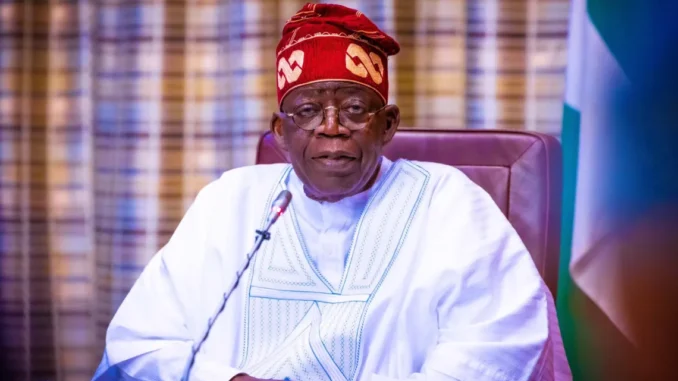
Asiwaju Bola Ahmed Adekunle Tinubu GCFR is the 16th President of the Federal Republic of Nigeria, having assumed office on 29 May 2023 following his victory in the February 2023 presidential election. He is widely regarded as one of the most consequential and strategically calculating figures in Nigerian political history.
As Governor of Lagos State from 1999 to 2007, he transformed one of Africa’s most chaotic megacities into a relatively well-administered revenue-generating hub, and in the years that followed, he operated as the pre-eminent political kingmaker of southwestern Nigeria. H
is path to the presidency, navigated through decades of coalition-building, party-switching, political patronage, and formidable organizational genius, was remarkable in its deliberateness.
His presidency has been defined by bold and controversial economic reforms, including the removal of Nigeria’s long-standing fuel subsidy, and by the fierce debates those reforms have provoked.
| Bola Ahmed Adekunle Tinubu | |
|---|---|
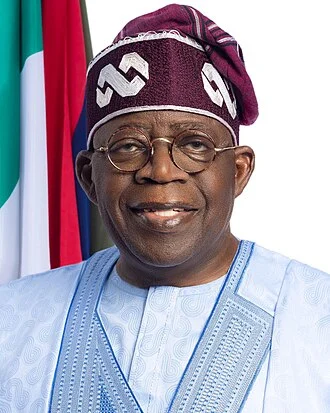 Bola Ahmed Adekunle Tinubu: History · Bio · Photo
|
|
| Wiki Facts & About Data | |
| Full Name: | Bola Ahmed Adekunle Tinubu |
| Born: | March 29, 1952 |
| Age: | 74 years old |
| Birthplace: | Lagos, British Nigeria (now Nigeria) |
| State of Origin: | Lagos State, Nigeria |
| Nationality: | Nigerian |
| Occupation: | Politician, Accountant; 16th President of Nigeria (2023–present) |
| Religion: | Islam |
| Parents: | Abibatu Mogaji (adoptive mother, late Ìyál'ọ́jà of Lagos) |
| Spouse: | Oluremi "Remi" Tinubu (married 1987) |
| Children: | 6 (3 biological with Remi: Zainab, Habibat, Olayinka; plus Olajide, deceased; Folashade; Oluwaseyi) |
| Net Worth: | $150 million – $160 million |
Early Life
Bola Ahmed Adekunle Tinubu was born on 29 March 1952 in Lagos, British Nigeria. He hails from the Iragbiji royal family in what is today Osun State. He was raised in the household of Abibatu Mogaji, his adoptive mother and the legendary Ìyálọ́jà (Leader of Market Women) of Lagos, a woman of enormous social and commercial influence who shaped his values, his ambitions, and his understanding of the social networks that sustain power in Lagos.
Tinubu’s early schooling took place in Lagos, where he attended St. John’s Primary School in Aroloya and later the Children Home School in Ibadan. His family subsequently sent him to the United States for higher education, a move that would prove formative. He studied first at Richard J. Daley College in Chicago, Illinois, before transferring to Chicago State University. He graduated in 1979 with a Bachelor of Science degree in Accounting, described by multiple sources as graduating with honours.
Education
Tinubu attended St. John’s Primary School, Aroloya, Lagos, and then Children Home School, Ibadan.
For tertiary education, he studied at Richard J. Daley College in Chicago, transferring to Chicago State University where he earned a Bachelor of Science in Accounting in 1979.
His accounting qualifications paved the way for a career in corporate finance before his transition to politics.
Career
Corporate Career
After graduating from Chicago State University, Tinubu returned to Nigeria and built a corporate career. He worked at Arthur Andersen, one of the world’s then-premier accounting and consulting firms, and subsequently at Mobil Oil Nigeria, where he served as an accountant and rose to a senior position.
His time in the corporate sector gave him financial literacy, business networks, and an understanding of capital flows that would prove valuable in his later political and financial career.
Entry into Politics: Senator for Lagos West (1992–1993)
Tinubu entered partisan politics during Nigeria’s abortive Third Republic. In 1992, he contested and won the Lagos West Senatorial seat under the banner of the Social Democratic Party (SDP), becoming a senator of the Federal Republic of Nigeria.
His time in the Senate was curtailed when military head of state General Sani Abacha dissolved all democratic institutions in November 1993 following the annulment of the June 12, 1993 presidential election won by Chief MKO Abiola.
Pro-Democracy Activism (1993–1998)
Following the military takeover, Tinubu became an active voice in the pro-democracy movement. He joined the National Democratic Coalition (NADECO), a group that pressed for the restoration of democracy and the recognition of the June 12 mandate.
His activism led to his arrest and, subsequently, to a period of exile abroad during which he continued to agitate for democratic governance in Nigeria from outside the country.
Governor of Lagos State (1999–2007)
With the return of democracy in 1999, Tinubu contested and won the governorship of Lagos State on the platform of the Alliance for Democracy (AD), defeating his opponents by a wide margin in what was regarded as a genuinely competitive election. He was reelected for a second term in 2003.
His eight years as governor are credited with transforming Lagos State’s revenue base, through aggressive enforcement of tax collection and the expansion of internally generated revenue, from a position of near-total dependence on federal oil allocations to a point where the state could fund its own major infrastructure projects.
Key initiatives during his governorship included road construction across Lagos, improvement of the water distribution system, investment in education, and the initiation of the Bus Rapid Transit (BRT) system that his successor Babatunde Fashola would complete.
Tinubu was also a fierce and litigious defender of Lagos’s revenues, famously going to court against the federal government when President Olusegun Obasanjo withheld Lagos’s local government allocations in 2004 following the state’s creation of additional local council development areas.
Post-Governorship Political Influence (2007–2023)
After leaving office, Tinubu emerged as the most powerful political figure in Nigeria’s South-West geopolitical zone.
He was instrumental in the formation of the Action Congress of Nigeria (ACN), the merger that eventually produced the All Progressives Congress (APC) in 2013, the coalition that defeated the incumbent People’s Democratic Party (PDP) and brought Muhammadu Buhari to power in the 2015 presidential election.
Tinubu’s political endorsement was sought and valued by presidential candidates across party lines, and he is widely credited as the principal architect of Buhari’s 2015 victory.
Presidency (May 2023–Present)
In the February 25, 2023 presidential election, Tinubu contested on the APC platform and was declared the winner by the Independent National Electoral Commission (INEC), having polled 8,794,726 votes, defeating PDP candidate Atiku Abubakar (6,984,520 votes) and Labour Party candidate Peter Obi (6,101,533 votes). He was inaugurated as Nigeria’s 16th President at Eagle Square, Abuja, on 29 May 2023.
His inaugural address included a landmark economic declaration, “fuel subsidy is gone”, which immediately triggered a surge in fuel prices and the cost of living across Nigeria. He also merged the Central Bank’s multiple exchange rate windows into a single market-determined rate, resulting in a significant depreciation of the naira.
These twin reforms, while praised by international financial institutions and economists as long-overdue structural corrections, generated severe hardship for ordinary Nigerians and sustained political controversy.
In addition to the economic portfolio, Tinubu appointed himself as the Federal Minister of Petroleum Resources, a highly scrutinised decision. In late 2024, he conducted a major cabinet reshuffle, dismissing most of his ministers and appointing new ones in a bid to accelerate economic reforms.
Awards and Honours
- Grand Commander of the Federal Republic (GCFR) — Presidential honour, highest Nigerian national honour
- African of the Year Award — 2022 (Africa Report)
Social Media
- Twitter/X: @officialABAT
- Instagram: @officialasiwajubat
Personal Life
Bola Tinubu married Oluremi Tinubu (née Ikusebiala) in 1987. Oluremi, also known as Remi Tinubu, served as a three-term Senator representing Lagos Central Senatorial District (2011–2023), and became Nigeria’s First Lady upon her husband’s inauguration in May 2023.
She is an ordained pastor with the Redeemed Christian Church of God. The couple has three children together: Zainab Abisola Tinubu, Habibat Tinubu, and Olayinka Tinubu. Tinubu also has children from previous relationships, including the late Olajide Tinubu, Folashade Tinubu-Ojo (who serves as Lagos’s Ìyálọ́jà General), and Oluwaseyi Tinubu.
Tinubu’s health has been a persistent subject of public discussion throughout his presidency. He has been observed using a walking aid on several public occasions and has been reported to have undergone medical treatment abroad multiple times, though his administration has provided limited official communication about the specifics of his health status.
Questions about his exact date of birth and the authenticity of certain aspects of his academic and professional record, including the circumstances surrounding his name change and the validity of his Chicago State University degree, have surfaced periodically and been vigorously contested by his supporters.
Net Worth
Bola Ahmed Tinubu’s net worth is estimated at approximately $150 million to $160 million, based on analyses of his declared assets and reported business interests, which span real estate, media, and corporate investments. He is widely regarded as one of the wealthiest politicians in Nigeria.
His wealth has been a subject of controversy and legislative scrutiny over the years, with political opponents and civil society organisations calling for greater transparency about his sources of income.
Political Career Summary
- Senator, Lagos West Senatorial District — Social Democratic Party — 1992–1993
- Pro-democracy activist, NADECO — 1993–1998
- Governor, Lagos State — Alliance for Democracy / Action Congress — 1999–2007
- Key architect of the APC merger — 2013
- Campaign manager and key strategist for Buhari presidential victory — 2015
- 16th President of the Federal Republic of Nigeria — APC — 29 May 2023–present
- Federal Minister of Petroleum Resources — self-held portfolio — 2023–present
Conclusion
Bola Ahmed Tinubu is a figure of uncommon political tenacity. Over three decades, he built a political machine from the streets of Lagos to the office of the presidency, waiting, planning, and mobilising with a patience and precision that most observers had not anticipated he possessed.
Whether history judges his presidency as the bold reformist chapter its architects envisioned, or as a period of severe hardship inadequately managed, his place as one of the most consequential political strategists in Nigerian democratic history is already settled. The “Jagaban,” as he is popularly known, has left an indelible mark on his country.
Related People

Leave a Reply