
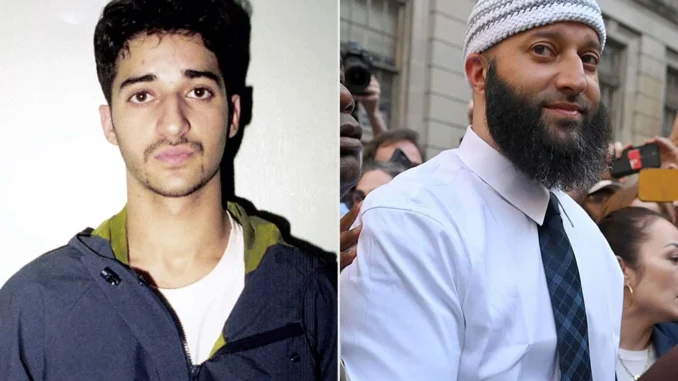
Adnan Masud Syed is an American man whose 2000 murder conviction for the 1999 killing of his high school ex-girlfriend Hae Min Lee became the subject of the most downloaded podcast in history and one of the most debated criminal cases of the twenty-first century.
Season one of the NPR and This American Life podcast Serial, released in 2014, brought global attention to questions about the fairness of his trial and the reliability of the evidence used to convict him. Over the following decade, Syed’s case passed through multiple convictions, appeals, and reversals.
In 2022, he was released from prison after serving twenty-three years. Although his murder conviction was ultimately reinstated by the Maryland Supreme Court, a Baltimore judge in March 2025 granted Syed a sentence reduction to time served under Maryland’s Juvenile Restoration Act, allowing him to remain free. He continues to maintain his innocence.
Profile
| Full Name | Adnan Masud Syed |
| Date of Birth | May 21, 1981 |
| Age | 44 |
| Birthplace | Pakistan (raised in Baltimore, Maryland, United States) |
| Nationality | American |
| Religion | Muslim |
| Occupation | Program Associate, Georgetown University Prisons and Justice Initiative |
| Spouse | Name withheld (married; met through prison correspondence in 2019) |
| Conviction Status | Convicted of first-degree murder (reinstated); sentenced to time served (March 2025); on supervised probation |
Early Life
Adnan Masud Syed was born on May 21, 1981, in Pakistan, and immigrated with his family to the United States as a young child. He grew up in Baltimore, Maryland, in a Pakistani-American Muslim family.
He attended Woodlawn High School in Baltimore County, where he was a popular student, a starting wide receiver on the football team, a participant in the school play, and a member of the track team.
He was known among classmates and teachers as charismatic, academically capable, and deeply involved in his school community. He also participated actively in his local mosque and was regarded as a devout young Muslim.
While at Woodlawn High School, Syed dated fellow student Hae Min Lee, a Korean-American student who was also widely liked in the school community.
The relationship ended in late 1998. Hae Min Lee disappeared on January 13, 1999, a date that would become the center of every subsequent legal proceeding.
She was a senior at Woodlawn High School and seventeen years old at the time of her disappearance. Her body was found buried in Leakin Park in West Baltimore on February 9, 1999. She had been strangled.
Education
Syed attended Woodlawn High School in Baltimore County, Maryland, where he was a senior at the time of his arrest in February 1999.
He was prevented by his incarceration from pursuing post-secondary education in the conventional sense, though he studied and earned qualifications during his time in prison.
The Criminal Case
Adnan Syed was arrested on February 28, 1999, approximately six weeks after Hae Min Lee disappeared. He was seventeen years old. Prosecutors in Harris County, Maryland, built a case against him based primarily on the testimony of Jay Wilds, a classmate who claimed Syed had shown him Lee’s body in a car trunk and had enlisted his help to bury it. Cell tower records were also presented as evidence placing Syed’s phone near Leakin Park on the afternoon of January 13, 1999. Syed has consistently and categorically denied any involvement in Lee’s death.
His first trial ended in a mistrial in December 1999. His second trial concluded on February 25, 2000, with a guilty verdict on counts of first-degree murder, kidnapping, false imprisonment, and robbery. He was sentenced on June 6, 2000, to life in prison plus an additional thirty years.
In 2014, journalist Sarah Koenig and producer Julie Snyder released Serial, a podcast that re-examined the evidence in the case over twelve episodes. The podcast raised serious questions about the reliability of Jay Wilds’s testimony, the effectiveness of Syed’s defense attorney Cristina Gutierrez (who was later disbarred for unrelated reasons), and the accuracy of the cell tower evidence. Serial attracted over 340 million downloads and made Syed’s case a global conversation about the criminal justice system.
The legal battle that followed Serial was long and winding. In 2016, a circuit court judge found that Gutierrez’s failure to properly challenge the cell tower testimony warranted a new trial and vacated Syed’s conviction. Maryland’s Court of Special Appeals reinstated it in 2019. In October 2022, Judge Melissa Phinn of the Baltimore City Circuit Court vacated Syed’s conviction for a second time after prosecutors presented evidence of two alternative suspects and new DNA evidence, and Syed was released from prison on September 19, 2022, after twenty-three years of incarceration.
However, in March 2023, a Maryland appellate court reinstated Syed’s conviction again, finding that Hae Min Lee’s brother Young Lee had not been given adequate notice of the 2022 hearing that freed Syed. The Maryland Supreme Court upheld this reinstatement in a 4–3 decision. Syed remained free while the case returned to a lower court. In March 2025, Baltimore City prosecutors withdrew their efforts to vacate the conviction, and Syed’s attorney petitioned for a sentence reduction under the Juvenile Restoration Act, a 2021 Maryland state law providing a pathway to release for individuals convicted of crimes committed as minors who have served at least twenty years. Judge Jennifer Schiffer granted the motion, ruling that Syed was no longer a danger to public safety and reducing his sentence to time served. He was placed on five years of supervised probation. His murder conviction stands.
Awards and Nominations
Not applicable. Syed has not received formal awards. He is recognized widely as a symbol of the wrongful conviction reform movement, though his conviction remains legally in place.
Social Media
Adnan Syed maintains a low public profile and does not operate prominent verified social media accounts. His case is covered extensively through Serial’s official platforms and associated media coverage.
Personal Life
Syed has maintained his innocence throughout his incarceration and since his release. Following his release in September 2022, he moved to Virginia, where he lives with his wife, a woman who began corresponding with him in 2019 after watching the HBO docuseries The Case Against Adnan Syed. They married while he was in prison and have now been together for several years.
He has not publicly disclosed her name. Since his release, Syed has worked at Georgetown University’s Prisons and Justice Initiative, an organization that advocates for criminal justice reform and supports individuals affected by incarceration.
He also cares for aging family members. An updated episode of the HBO docuseries, released in September 2025, documented aspects of his life since his release.
Net Worth
No verified net worth figure is currently available for Adnan Syed.
Conclusion
Adnan Syed’s story sits at the intersection of criminal justice, media power, and the limits of the legal system’s capacity for self-correction.
The Serial podcast that made him famous also made the question of his guilt or innocence into one of the most debated issues of the 2010s, while the procedural twists of the decade that followed illustrated both the possibilities and the constraints of post-conviction review.
As of 2026, he remains a free man with a standing murder conviction, living under supervised probation and working in criminal justice reform. Whether that outcome represents justice remains a question that the legal system has been unable to definitively answer.
Related People






Leave a Reply