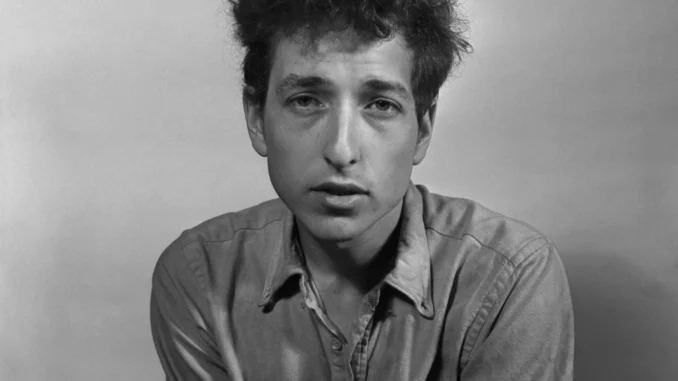
Bob Dylan is an American singer-songwriter, poet, and visual artist whose work has had a more profound and enduring impact on music, literature, and popular culture than perhaps any other artist of the twentieth century.
Born Robert Allen Zimmerman in Duluth, Minnesota, in 1941, Dylan arrived in New York City in 1961 with a battered guitar, a harmonica, and an ambition to follow in the footsteps of his folk hero Woody Guthrie.
Within a few years, he had become the voice of a generation, writing protest anthems, love songs, and existential puzzles that transformed what popular music was capable of saying. His decision in 1965 to “go electric” remains one of the most consequential and controversial artistic choices in music history.
In 2016, he became the first musician ever to be awarded the Nobel Prize in Literature, an honour that confirmed what millions of listeners had felt for decades: that Bob Dylan’s songs are literature, and among the most important written in the English language.
| Robert Allen Zimmerman | |
|---|---|
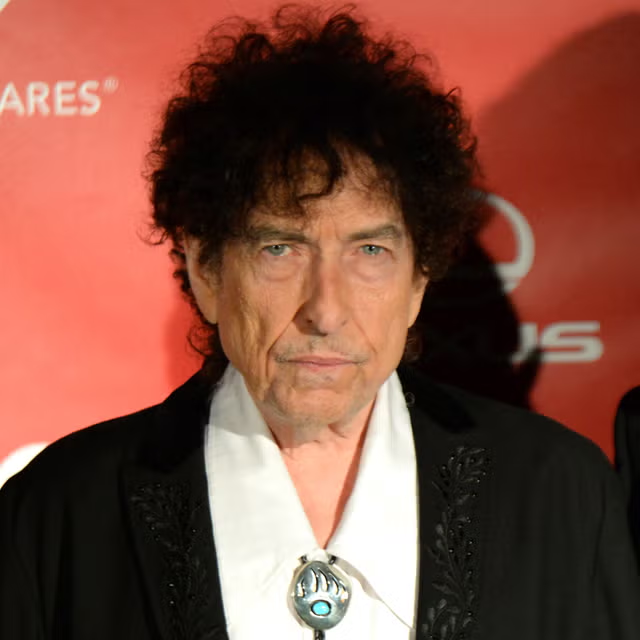 Robert Allen Zimmerman: History · Bio · Photo
|
|
| Wiki Facts & About Data | |
| Full Name: | Robert Allen Zimmerman |
| Stage Name: | Bob Dylan |
| Born: | May 24, 1941 |
| Age: | 85 years old |
| Birthplace: | Duluth, Minnesota, USA |
| Nationality: | American |
| Occupation: | Singer, Songwriter, Poet, Visual Artist, Author |
| Net Worth: | $500 million |
Early Life
Robert Allen Zimmerman was born on May 24, 1941, in Duluth, Minnesota, to Abram Zimmerman, an appliance store owner, and Beatrice “Beatty” Stone, both of whom were Ashkenazi Jewish immigrants. When Robert was six years old, the family moved to the northern Minnesota town of Hibbing, where he would spend his formative years. Growing up in a small iron-mining town, he was drawn to music from an early age, teaching himself guitar, piano, and harmonica and forming various high school bands. He was particularly captivated by early rock and roll artists including Little Richard and Elvis Presley, and later by the folk and blues traditions that would come to define his artistic identity.
In 1959, Robert Zimmerman enrolled at the University of Minnesota in Minneapolis, where he began performing at coffee houses in the Dinkytown neighbourhood and immersing himself in the folk music scene. It was during this period that he began calling himself “Bob Dylan”, a name he has said was inspired by the Welsh poet Dylan Thomas, though he has been characteristically evasive about definitive explanations over the years. He dropped out of university after less than a year to move to New York City, where he was determined to meet his greatest influence, Woody Guthrie, who was then hospitalised in New Jersey with Huntington’s disease.
Education
Dylan attended Hibbing High School in Hibbing, Minnesota, where he played in several local bands, and briefly enrolled at the University of Minnesota in 1959 before dropping out to pursue music. He is widely regarded as one of history’s greatest self-educated artists, absorbing the full range of American folk, blues, country, and literary traditions through listening, reading, and living rather than formal study.
Career
Dylan arrived in New York City in January 1961, quickly making a name for himself in the Greenwich Village folk scene. He was noticed by Columbia Records producer John Hammond, who signed him after seeing him play the harmonica on Carolyn Hester’s recording session. His self-titled debut album, “Bob Dylan” (1962), was dominated by folk and blues covers, with only two original compositions. It sold modestly but established his presence on the scene.
His second album, “The Freewheelin’ Bob Dylan” (1963), announced him as the most important new voice in American popular music. It contained “Blowin’ in the Wind” and “A Hard Rain’s A-Gonna Fall”, compositions of such moral urgency and poetic sophistication that they immediately became anthems of the Civil Rights Movement and the anti-war left. Dylan was crowned the voice of his generation, a mantle he would spend much of his career resisting and complicating.
“The Times They Are A-Changin'” (1964) deepened this reputation, producing the title track and “The Lonesome Death of Hattie Carroll.” But even as his protest credentials were being celebrated, Dylan was moving in new directions. “Another Side of Bob Dylan” (1964) was more personal and introspective. “Bringing It All Back Home” (1965) was half acoustic, half electric, a transitional work that pointed toward the seismic shift to come.
At the Newport Folk Festival in July 1965, Dylan performed with an electric band, drawing boos and outrage from folk purists who felt he had betrayed the genre’s political and acoustic traditions. The controversy was enormous, but the music was undeniable. “Highway 61 Revisited” (1965), containing the iconic six-minute single “Like a Rolling Stone”, and “Blonde on Blonde” (1966) represent the creative apex of Dylan’s most acclaimed period: dense, surrealistic, rock-inflected albums that permanently expanded what popular music could aspire to. “Like a Rolling Stone” is consistently ranked among the greatest songs ever written.
A motorcycle accident in 1966 gave Dylan a reason to withdraw from public life, and he spent the late 1960s in semi-seclusion in Woodstock, New York, recording the informal sessions with The Band that were eventually released as “The Basement Tapes” (1975). He returned with “John Wesley Harding” (1967), a stripped-back, country-influenced album that prefigured the Americana movement by decades. “Nashville Skyline” (1969) went further into country territory, featuring a duet with Johnny Cash.
The 1970s brought more evolution. “Blood on the Tracks” (1975), widely considered his masterpiece, was an album of devastating emotional clarity that Dylan has suggested was inspired by the breakdown of his marriage to Sara Lownds. “Desire” (1976) and the Rolling Thunder Revue tour cemented his continued commercial and artistic vitality. A conversion to Christianity in the late 1970s produced the trilogy of gospel-inflected albums “Slow Train Coming” (1979), “Saved” (1980), and “Shot of Love” (1981), which divided both critics and his audience.
The 1980s saw critical reassessment, but from the late 1980s onward, Dylan entered what has been called the “Never Ending Tour”, a sustained, relentless touring programme that has continued to the present day and generated immense revenue across decades. Critical respect was reclaimed with “Oh Mercy” (1989) and fully restored with the magnificent “Time Out of Mind” (1997), which won three Grammys including Album of the Year. Late-career albums “Love and Theft” (2001), “Modern Times” (2006), and “Tempest” (2012) all debuted at number one on the Billboard 200, demonstrating Dylan’s undiminished commercial power.
In December 2020, Dylan sold his entire songwriting catalogue, more than 600 songs, to Universal Music Publishing Group in a deal reported to be worth approximately $400 million, one of the largest music publishing transactions in history. This sale dramatically increased his net worth and reflected the extraordinary commercial value of his catalogue. In 2016, he was awarded the Nobel Prize in Literature “for having created new poetic expressions within the great American song tradition”, the first musician in history to receive the honour.
Awards and Nominations
- 2016 — Nobel Prize in Literature — Win (first musician in history to receive this award)
- 2009 — Academy Award — Best Original Song (Things Have Changed, from Wonder Boys) — Win
- 2009 — Golden Globe Award — Best Original Song (Things Have Changed) — Win
- 2008 — Pulitzer Prize Special Citation — for “profound impact on popular music and American culture”
- 2012 — Presidential Medal of Freedom — awarded by President Barack Obama
- Ten Grammy Awards total, including Grammy Lifetime Achievement Award (1991) and Grammy Album of the Year (Time Out of Mind, 1997)
- Rock and Roll Hall of Fame — Inducted as performer (1988)
- Five albums inducted into the Grammy Hall of Fame: Blonde on Blonde, Highway 61 Revisited, Bringing It All Back Home, The Basement Tapes, Blood on the Tracks
- Songs “Blowin’ in the Wind,” “Like a Rolling Stone,” and “Mr. Tambourine Man” inducted into the Grammy Hall of Fame
Social Media
- Official Website: bobdylan.com
- Facebook: Bob Dylan (Official Page)
Personal Life
Dylan has been notoriously private about his personal life throughout his career. He was married to Sara Lownds from 1965 to 1977; the couple had four children together, and he also adopted Sara’s daughter from a previous relationship. “Blood on the Tracks” is widely understood to document the painful dissolution of their marriage, though Dylan has sometimes denied this biographical reading. He was subsequently married to backup singer Carolyn Dennis from 1986 to 1992, a marriage kept entirely secret until it was revealed in a biography in 2001; they had one daughter together. Dylan has been open about his 1979 conversion to Christianity, though his religious identity has evolved in complex and often contradictory directions over the subsequent decades. He is a keen visual artist, and his first public art exhibition, “The Drawn Blank Series”, opened in 2007 at the Kunstsammlungen in Chemnitz, Germany, featuring over 200 watercolours and gouaches. He has also worked in bronze sculpture and neon art.
Net Worth
Bob Dylan’s net worth is estimated at approximately $500 million. The primary driver of this wealth was the 2020 sale of his songwriting catalogue to Universal Music Publishing Group for approximately $400 million, one of the largest music publishing transactions in history. Additional income streams include decades of touring revenue from the Never Ending Tour, album royalties, merchandise, licensing fees, visual art sales, and the Nobel Prize purse (approximately $900,000). He is one of the best-selling musical artists of all time, with over 125 million records sold worldwide.
Discography
- Bob Dylan (1962)
- The Freewheelin’ Bob Dylan (1963)
- The Times They Are A-Changin’ (1964)
- Another Side of Bob Dylan (1964)
- Bringing It All Back Home (1965)
- Highway 61 Revisited (1965)
- Blonde on Blonde (1966)
- John Wesley Harding (1967)
- Nashville Skyline (1969)
- Blood on the Tracks (1975)
- Desire (1976)
- Slow Train Coming (1979)
- Oh Mercy (1989)
- Time Out of Mind (1997)
- Love and Theft (2001)
- Modern Times (2006)
- Tempest (2012)
- Rough and Rowdy Ways (2020)
Conclusion
Bob Dylan is, by any reasonable measure, the most important songwriter in the history of popular music.
His career spans more than six decades, his catalogue encompasses some of the most profound lyrics ever committed to record, and his influence on subsequent generations of musicians, poets, and thinkers is incalculable.
He has reinvented himself multiple times, folk prophet, electric rock visionary, country wanderer, gospel convert, blues archivist, and at each turn he has brought his audience not just music but a worldview.
The Nobel Prize in Literature was the formal acknowledgment of what his listeners had always known: that Bob Dylan’s songs are not merely songs. They are, as the Nobel Committee said, a poetic tradition unto themselves.
Related People





Leave a Reply