
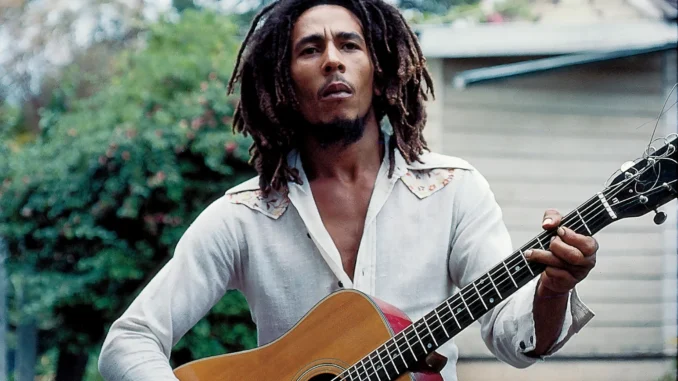
Bob Marley is the most famous and enduringly influential reggae artist in history, a Jamaican singer, songwriter, musician, and cultural prophet whose music carried the Rastafarian philosophy and the cry of the oppressed to every corner of the planet.
Born in poverty in rural Jamaica, he rose to become one of the best-selling recording artists of all time, with more than 75 million albums sold worldwide. Songs like “No Woman, No Cry,” “Redemption Song,” “One Love,” “Buffalo Soldier,” and “Get Up, Stand Up” transcended their reggae origins to become globally recognised anthems of resistance, unity, and spiritual freedom.
Marley died at just 36 years old, from a form of skin cancer that spread to his brain and vital organs, but his legacy has grown with every passing decade since.
Today, his estate generates tens of millions of dollars annually, and his face remains one of the most recognisable in the world, a symbol not just of Jamaican music but of a universal human longing for justice and peace.
| Robert Nesta Marley | |
|---|---|
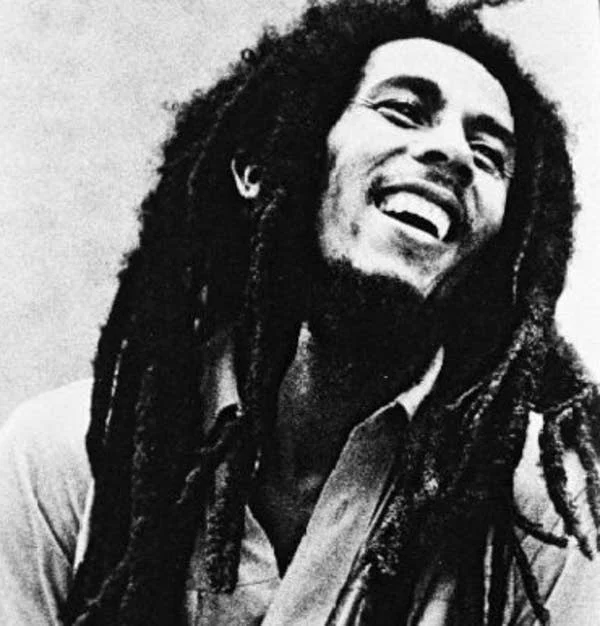 Robert Nesta Marley: History · Bio · Photo
|
|
| Wiki Facts & About Data | |
| Full Name: | Robert Nesta Marley |
| Stage Name: | Bob Marley |
| Born: | February 6, 1945 |
| Age: | 81 years old |
| Death: | May 11, 1981 |
| Birthplace: | Nine Mile, Saint Ann Parish, Jamaica |
| Nationality: | Jamaican |
| Occupation: | Singer, Songwriter, Musician, Cultural Icon |
| Religion: | Rastafari (Twelve Tribes of Israel mansion) |
| Spouse: | Rita Marley (married February 10, 1966) |
| Children: | 11 acknowledged children (including Ziggy, Cedella, Stephen, Damian, and others) |
| Net Worth: | $11.5 million (1981) |
Early Life
Robert Nesta Marley was born on February 6, 1945, in the small rural village of Nine Mile in Saint Ann Parish, Jamaica. His father, Norval Sinclair Marley, was a white Jamaican of English descent who worked as a plantation overseer and captain in the Royal Marines. His mother, Cedella Booker, was a young Black Jamaican woman. Norval was more than 50 years older than Cedella, and the interracial relationship was highly unconventional by the standards of the time. Norval was rarely present in his son’s life, and when he died in 1955, the family was left in difficult financial circumstances. Cedella, needing work, moved to Trench Town, one of the most impoverished and densely populated areas in Kingston, Jamaica, a place that would profoundly shape her son’s musical consciousness and his understanding of poverty and injustice.
Growing up in Trench Town, Marley was immersed in the music of the streets, the early ska and rocksteady sounds that were defining Jamaican popular culture in the late 1950s and early 1960s. He befriended Neville “Bunny” Livingston (later known as Bunny Wailer) and the two began learning guitar together. His mother eventually emigrated to Delaware in the United States, and Bob remained in Jamaica, where music had become his entire world. His childhood in Trench Town gave him a visceral understanding of poverty, social exclusion, and political marginalisation that would animate his music for the rest of his life.
Education
Marley received limited formal education in Jamaica before focusing entirely on music. He is believed to have left school at around age 14 to work as a welder before abandoning that profession to pursue music full-time. His true education came through the Rastafarian faith, through music, and through his lived experience of life in Trench Town, all of which gave his lyrics an authenticity and moral weight that formal schooling cannot confer.
Career
In 1963, Bob Marley formed The Wailers with Bunny Wailer, Peter Tosh, Junior Braithwaite, Beverley Kelso, and Cherry Smith. The group began recording ska music and within a year had their first number one single in Jamaica, “Simmer Down” (1964), a song calling for restraint among the “rude boys,” the young ghetto youths whose violence was becoming a social problem. The Wailers went through various lineup changes and musical evolutions through the late 1960s, recording reggae, rocksteady, and soul-influenced material with producers including Lee “Scratch” Perry, whose distinctive production style contributed significantly to shaping Marley’s sonic identity.
The band’s breakthrough on the international stage came in 1972 when they signed with Island Records, the British label founded by Chris Blackwell. Blackwell recognised that Marley had the potential to reach rock and pop audiences beyond the traditional reggae market, and he invested in recording and promoting the band accordingly. “Catch a Fire” (1973) was the result, a reggae album packaged and promoted like a rock album, with a striking guitar-shaped gatefold cover. It was followed within months by “Burnin'” (1973), which contained two of the most important songs in the reggae canon: “Get Up, Stand Up” and “I Shot the Sheriff”, the latter covered by Eric Clapton in 1974, giving it a global pop audience and drawing massive new attention to Marley.
Peter Tosh and Bunny Wailer left The Wailers in 1974, and Marley effectively went solo, though he retained the Wailers name for his backing group, which was substantially reinforced by a group of female backing vocalists known as the I Threes, including his wife Rita. The albums that followed constituted one of the most remarkable sustained creative periods in popular music history: “Natty Dread” (1974), “Rastaman Vibration” (1976), “Exodus” (1977), “Kaya” (1978), “Survival” (1979), and “Uprising” (1980) each built on the last, deepening Marley’s artistic and political vision while reaching ever-larger global audiences. “Exodus”, which contained “Jamming,” “Three Little Birds,” “One Love,” and “Waiting in Vain”, was named Album of the Century by Time Magazine in 1999.
In December 1976, two days before a scheduled peace concert in Kingston, gunmen entered Marley’s home and opened fire. Marley was wounded in the arm, his wife Rita was shot in the head, and his manager Don Taylor was also hit. Marley performed at the Smile Jamaica Concert as planned, two days after the attack, in what became one of the defining acts of personal courage in music history. He later went into voluntary exile in London, where he recorded “Exodus.”
In 1977, while playing soccer, Marley injured his right big toe. Medical examination revealed that he had acral lentiginous melanoma, a rare form of skin cancer, originating under his toenail. His doctor advised amputation of the toe, but Marley refused on the grounds of his Rastafarian faith, which prohibited the mutilation of the body. The cancer spread. Despite the diagnosis, he continued recording and touring through 1980. After collapsing during a tour of the United States in September 1980, he sought treatment in Germany. Bob Marley died on May 11, 1981, at Cedars of Lebanon Hospital in Miami, Florida, at the age of 36. He was buried in a mausoleum at his birthplace in Nine Mile, Saint Ann Parish, Jamaica.
Awards and Nominations
- 1976 — Rolling Stone Magazine — Band of the Year
- 1994 — Rock and Roll Hall of Fame — Inducted
- 1999 — Time Magazine — “Exodus” named Album of the Century
- 2001 — Grammy Lifetime Achievement Award
- Song “One Love” named Song of the Millennium by BBC
- BBC Radio 2 — “No Woman, No Cry” voted among the greatest songs of the 20th century
Social Media
- Instagram: @bobmarley (Official Estate Account)
- Facebook: Bob Marley (Official Estate Page)
- YouTube: Bob Marley Official
- Official Website: bobmarley.com
Personal Life
Bob Marley married Rita Anderson on February 10, 1966, and the marriage lasted until his death. Together they had four biological children: Cedella, Ziggy, Stephen, and Stephanie, though Marley fathered a total of eleven acknowledged children with multiple partners, including Damian Marley (with Cindy Breakspeare, Miss World 1976), Julian, Ky-Mani, and Rohan. Several of his children, most notably Ziggy Marley and Damian Marley, have gone on to successful careers in music, carrying the family’s reggae legacy forward.
Marley’s Rastafarian faith was central to every aspect of his life, his music, his philosophy, his diet, his visual appearance (including his famous dreadlocks), and his political worldview. He was a member of the Twelve Tribes of Israel, one of the mansions of the Rastafari movement, and belonged to the Tribe of Joseph (for those born in February). His support for Pan-Africanism, the idea that African peoples worldwide should be united in solidarity, was expressed directly in songs like “Africa Unite” and “Zimbabwe.” He was a devoted supporter of African liberation movements and performed at the independence celebrations of Zimbabwe in April 1980, just a year before his death.
Net Worth
At the time of his death in 1981, Bob Marley’s net worth was estimated at approximately $11.5 million, equivalent to approximately $40 million in today’s terms. He died without a will, which led to a complex legal battle over his estate that lasted approximately ten years and cost nearly $6 million in legal fees. The estate, now managed by the Marley family through Tuff Gong International and associated entities, generates an estimated $25–30 million per year in royalties. The overall value of the Marley estate and brand has been estimated at over $500 million. His Kingston home at 56 Hope Road has been converted into the Bob Marley Museum, which operates as one of Jamaica’s most visited tourist attractions. The posthumous compilation “Legend” (1984) is the best-selling reggae album of all time, with over 15 million copies sold in the United States alone.
Discography
- Catch a Fire (1973)
- Burnin’ (1973)
- Natty Dread (1974)
- Rastaman Vibration (1976)
- Exodus (1977)
- Kaya (1978)
- Survival (1979)
- Uprising (1980)
- Confrontation (1983 — posthumous)
- Legend (1984 — posthumous compilation)
Conclusion
Bob Marley lived for only 36 years, but he left a body of work and a cultural legacy that have outlasted and outgrown virtually any artist of his era. He took the music of Jamaica’s poorest communities and made it the soundtrack of global resistance.
He took the philosophy of Rastafari, with its emphasis on spiritual liberation, African pride, and rejection of oppressive systems, and made it accessible and compelling to people of every background around the world.
More than four decades after his death, his face remains everywhere, his songs are still played on every continent, and his estate continues to grow. Bob Marley did not just make music. He made meaning, and that is why he endures.
Related People








Leave a Reply