
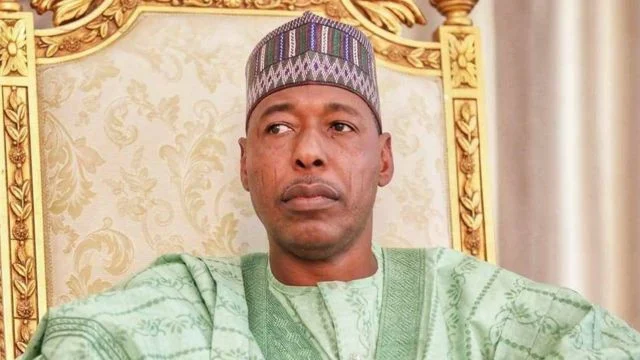
Professor Babagana Umara Zulum is one of the most celebrated and remarkable governors in Nigeria’s democratic history. A professor of Agricultural Engineering, former university rector, and committed grassroots public servant, Zulum has governed Borno State the epicentre of Nigeria’s devastating Boko Haram insurgency since 2019 with an extraordinary blend of intellectual depth, personal courage, and hands-on leadership.
His story is not one of inherited privilege or political dynasty; it is a story of a young boy who trekked kilometres barefoot to school, hawked firewood, drove commercial taxis for sixteen years to fund his education, and refused to let poverty determine his destiny.
Today, Professor Zulum is widely regarded as one of the finest governors Nigeria has produced in the democratic era a leader who does not manage from a distance but rolls up his sleeves, visits communities under fire from insurgents, and drives personal accountability in governance.
His administration has transformed Borno State in ways that were once considered unimaginable given the scale of destruction wrought by the Boko Haram crisis.
| Babagana Umara Zulum | |
|---|---|
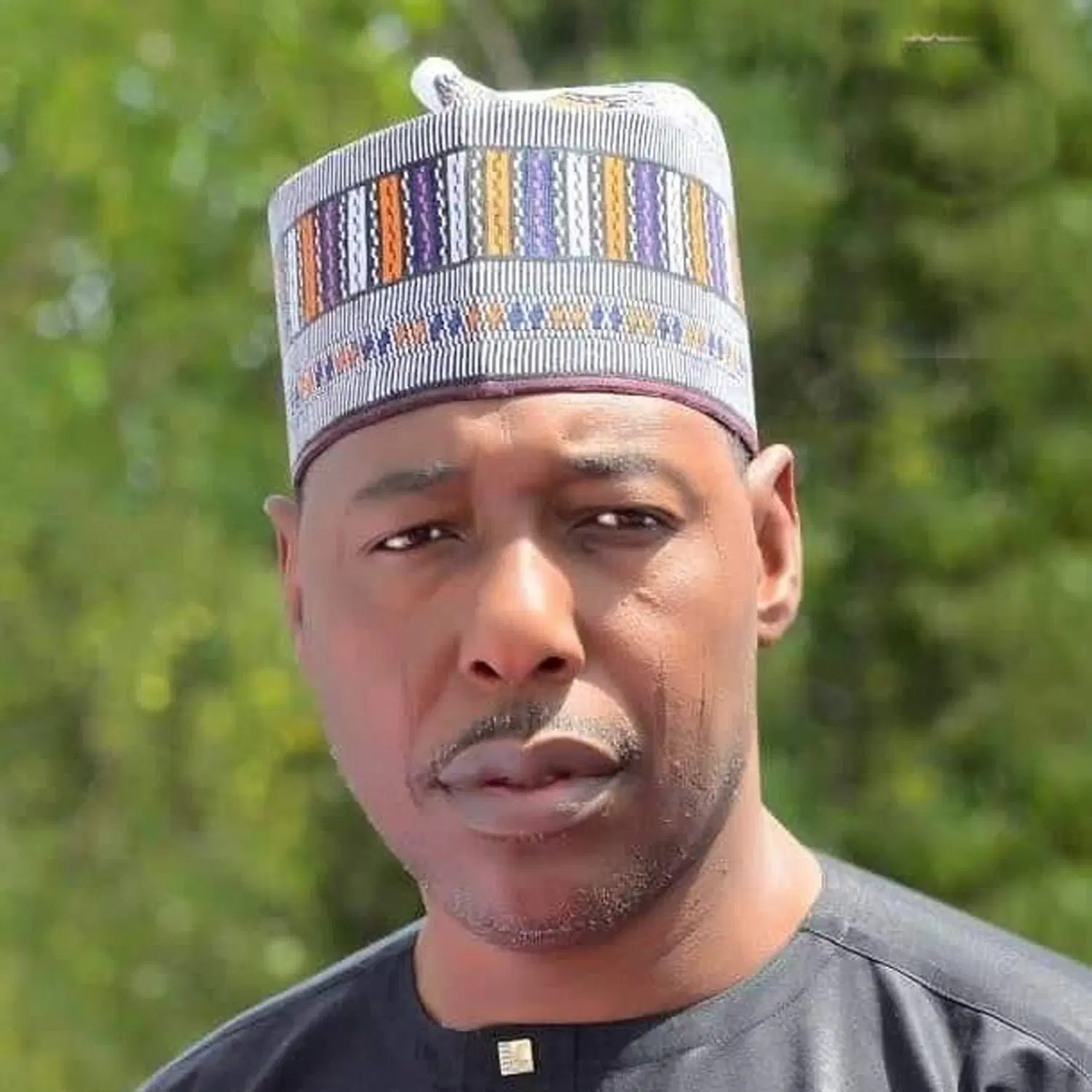 Babagana Umara Zulum: History · Bio · Photo
|
|
| Wiki Facts & About Data | |
| Full Name: | Babagana Umara Zulum |
| Born: | 25 August 1969 |
| Age: | 56 years old |
| Birthplace: | Mafa Local Government Area, Borno State, Nigeria |
| State of Origin: | Borno State |
| Nationality: | Nigerian |
| Occupation: | Politician, Professor, Engineer |
| Religion: | Islam |
| Spouse: | Dr. Falmata Umara Zulum |
| Relationship: | Married |
| Net Worth: | Estimated $3 Million USD |
Early Life
Babagana Umara Zulum was born on 25 August 1969 in Mafa Local Government Area of Borno State in northeastern Nigeria. He grew up in the same village whose name he bears Zulum Village in Mafa LGA a rural, arid community far removed from the corridors of power and privilege that are typically associated with Nigerian political leadership.
From the earliest years of his childhood, Zulum knew only hard work and determination. He has spoken candidly about walking seven kilometres every day to reach his father’s farm from their home. Farming was not a passion project it was survival. He combined agricultural labour with his schooling throughout his primary and early secondary school years, learning from a young age that nothing of value comes without sacrifice.
The most remarkable aspect of Zulum’s early life is how he financed his own education from a very young age. By the time he reached Class Five (Year 5) in secondary school around 1984, he had begun fully catering for his educational expenses himself. For approximately sixteen years from 1984 to around 1999 he worked as a commercial taxi driver, primarily operating a Peugeot 404. He also drove buses carrying passengers to different villages and neighbouring states, operated commercial pickup trucks transporting firewood from forests, and ran a grinding machine business in Mafa during weekends to generate additional income. Every kobo he earned went toward his school fees, books, and basic necessities.
Even when he gained admission into Ramat Polytechnic in Maiduguri in 1986, he could not afford accommodation on campus. He lived with relatives off-campus in Kofa Biyu, a densely populated neighbourhood, and walked eight kilometres to and from the polytechnic for lectures whenever he could not afford transport. These years of extraordinary hardship did not break Zulum they built him. They gave him an intimate understanding of what it means to be poor, to be overlooked, and to be entirely dependent on one’s own effort for survival. It is this lived experience that many believe defines his empathetic, people-centred style of governance today.
Zulum grew up in a Muslim family and has remained a devout Muslim throughout his life. He is of Kanuri and Hausa heritage, rooted in the culture and traditions of the Lake Chad Basin region of northeastern Nigeria.
Education
Despite the formidable financial obstacles of his childhood and youth, Babagana Umara Zulum built one of the most impressive academic portfolios of any sitting Nigerian governor. His educational journey is a testament to intellectual perseverance of the highest order.
He began his formal education at Mafa Primary School from 1975 to 1980, where he completed his primary school certificate. He then proceeded to Government Secondary School, Monguno, in Borno State, where he obtained his West African Senior School Certificate (WASSCE/GCE) in 1985.
In 1986, he gained admission into Ramat Polytechnic, Maiduguri the same institution he would later lead as Rector where he studied for a National Diploma (ND) in Irrigation Engineering, completing it in 1988. He then enrolled at the University of Maiduguri, where he pursued a Bachelor of Engineering (B.Eng.) degree in Agricultural Engineering, graduating in 1994. Following his mandatory National Youth Service Corps (NYSC) posting at Katsina State Polytechnic, he went on to the University of Ibadan, where he earned a Master of Science (M.Sc.) degree in Agricultural Engineering (specialising in Soil and Water Engineering) from 1997 to 1998.
Still not content, he returned to the University of Maiduguri in 2005 to pursue a Doctor of Philosophy (Ph.D.) in Soil and Water Engineering a programme he completed successfully in 2009. It bears emphasising that all of this academic achievement was accomplished by a man who drove commercial taxis for much of the period to keep himself in school. Zulum is not merely a politician with honorary degrees; he is a genuine scholar who earned every academic distinction the hard way.
In summary, his academic qualifications include: a Primary School Certificate (1980), a General Certificate of Education (1985), a National Diploma in Irrigation Engineering from Ramat Polytechnic (1988), a B.Eng. in Agricultural Engineering from the University of Maiduguri (1994), an M.Sc. in Agricultural Engineering from the University of Ibadan (1998), and a Ph.D. in Soil and Water Engineering from the University of Maiduguri (2009). He is also a Member of the National Institute for Policy and Strategic Studies (NIPSS), a COREN Registered Engineer, and a Fellow of the Nigerian Association of Technologists in Engineering (FNATE).
Career
Civil Service: Ministry of Agriculture (1989–1990)
Babagana Umara Zulum’s first formal employment came in 1989, when he joined the Borno State Civil Service as an Assistant Technical Officer in the State Ministry of Agriculture. This entry-level position marked the beginning of a distinguished public service career. Even then, he continued his driving work on the side to supplement his modest civil service income and fund his ongoing academic pursuits.
Local Government Service (1990–2000)
In 1990, Zulum transitioned into the Borno State Unified Local Government Service, where he served as a Senior Field Overseer and subsequently rose to the position of Principal Water Engineer. These grassroots postings gave him direct exposure to the infrastructural and development challenges facing rural communities in Borno State experience that would prove invaluable in his later roles as Commissioner and Governor.
Academic Career at the University of Maiduguri (2000–2015)
In 2000, Zulum joined the University of Maiduguri as an Assistant Lecturer in the Faculty of Engineering. Over the next fifteen years, he rose steadily through the academic ranks, publishing widely in local and international journals in the field of Agricultural Engineering. His research covered topics including soil and water management, irrigation engineering, waste water treatment, and water quality in semi-arid environments. He progressed from Assistant Lecturer to Lecturer, Senior Lecturer, Reader, and ultimately Professor one of the most respected academic titles in the Nigerian university system.
In 2010 and 2011, he served as Deputy Dean and Acting Dean of the Faculty of Engineering at the University of Maiduguri respectively, demonstrating his leadership ability in the academic arena. In 2011, the Borno State Government appointed him Rector of Ramat Polytechnic, Maiduguri the very institution where he had studied for his National Diploma and where he had once trekked eight kilometres a day to attend lectures. He retained his professorial appointment at the University of Maiduguri simultaneously, continuing to teach even while leading the polytechnic.
Commissioner for Reconstruction, Rehabilitation and Resettlement (2015–2018)
In 2015, Governor Kashim Shettima of Borno State appointed Zulum as the pioneer Commissioner for the newly created Ministry of Reconstruction, Rehabilitation and Resettlement (MRRR) a ministry established specifically to address the catastrophic destruction caused by the Boko Haram insurgency across Borno State. This appointment fundamentally changed the trajectory of Zulum’s life and career.
As Commissioner, Zulum oversaw the reconstruction of thousands of homes, schools, hospitals, and public infrastructure in communities ravaged by Boko Haram. In Bama Local Government Area alone, his ministry rebuilt over 10,000 houses, maternity hospitals, and public schools destroyed by the insurgents. He also coordinated similar reconstruction efforts in Konduga, Chibok, Askira-Uba, and numerous other conflict-affected local government areas across the state. His commitment to quality delivery and transparent execution combined with his habit of personally visiting and supervising project sites earned him a reputation as one of the most effective commissioners in Borno’s history.
His track record in the ministry was so impressive that by September 2018, Governor Shettima publicly endorsed him as his preferred successor. First-class traditional rulers and Borno elders impressed by his integrity, academic credentials, and visible results on the ground threw their weight behind him.
Governor of Borno State, First Term (2019–2023)
On 1 October 2018, Babagana Umara Zulum won the gubernatorial primaries of the All Progressives Congress (APC) for Borno State. On 9 March 2019, he won the governorship election with a commanding 1,175,440 votes and was sworn in as Governor of Borno State on 29 May 2019. He succeeded Kashim Shettima, who had governed the state for eight years.
His first term in office was defined by an almost impossible dual challenge: governing a state simultaneously ravaged by an active jihadist insurgency (Boko Haram and its splinter group ISWAP) and struggling to recover from over a decade of displacement, destruction, and humanitarian crisis. Despite these enormous obstacles, Zulum’s administration delivered an exceptional record of achievement.
His administration’s priorities in the first term included large-scale reconstruction and resettlement of displaced persons, education reform, healthcare expansion, agricultural revival, infrastructure development, and direct economic stimulus programmes. Over his first four-year term, his administration delivered over 900 projects, programmes, and policies. These included the rehabilitation of 300 health centres and construction of 64 new ones, the reconstruction of hundreds of schools, the resettlement of internally displaced persons (IDPs) into rebuilt communities, distribution of N4.2 billion in economic stimulus to vulnerable groups, and the launch of the Borno Cares (BO-Cares) programme that distributed N814 million to over 9,000 small business beneficiaries impacted by COVID-19.
Zulum also paid particular attention to the families of Civilian Joint Task Force (CJTF) members who had died defending their communities from Boko Haram, increasing monthly stipends and providing scholarships for their orphaned children from primary to university level.
Assassination Attempts
Zulum’s tenure has been marked by extraordinary physical courage in the face of repeated attempts on his life. On 29 July 2020, Boko Haram insurgents attacked his convoy on the Maiduguri-Damaturu highway. Five people were killed, including three police officers. On 26 September 2020, insurgents struck his convoy again near Lake Chad one of the deadliest attacks, with at least 18 people killed, a toll later revised upward to 30 as more bodies were recovered. Three days later, on 29 September 2020, his convoy encountered a donkey on the road, opened fire on it as a precaution, and the animal exploded it had been rigged as a bomb. Insurgents emerged from hiding and engaged the convoy. Several terrorists were killed; no one in the convoy was harmed. On 22 November 2020, his convoy was again ambushed while he travelled to Baga to meet government officials. Seven soldiers and two civilians were killed; the governor escaped unharmed.
Despite these repeated attempts on his life, Zulum has consistently refused to reduce his field visits to communities across Borno State. He continues to travel personally to volatile areas to assess conditions, inspect projects, and meet with residents a quality that has earned him enormous admiration from his people and national recognition as a leader of uncommon courage.
Governor of Borno State, Second Term (2023–Present)
In the 2023 general elections, Babagana Umara Zulum was re-elected as Governor of Borno State for a second and final four-year term, being sworn in on 29 May 2023. His re-election was a resounding endorsement of his first-term performance by the people of Borno State.
In just the first 100 days of his second term (May–September 2023), he executed 77 additional projects across health, education, and other sectors. By the end of his first year in the second term (May 2024), his administration had delivered 238 more projects, bringing the cumulative total across both terms to over 1,195 developmental projects and capital-intensive programmes. Among the landmark projects of this period were Borno’s second flyover, an underpass pedestrian bridge, 32.77 kilometres of new urban and rural roads, two new housing estates comprising 572 residential units for civil servants and residents, and three World Bank-supported mega secondary schools commissioned by the World Bank Country Director Dr. Ndiame Diop.
His administration’s 2026 budget titled the “Budget of Sustained Recovery and Growth” was set at ₦890.33 billion, with continued emphasis on security, education, infrastructure, agriculture, and post-insurgency recovery. Zulum’s name featured prominently among Nigerians’ preferred choices ahead of the 2023 APC presidential primaries, though he proactively ruled himself out, stating that he had more pressing work still to do in Borno State. President Bola Tinubu has publicly praised his governance, commissioning several Borno projects during an official visit to Maiduguri.
Awards and Recognition
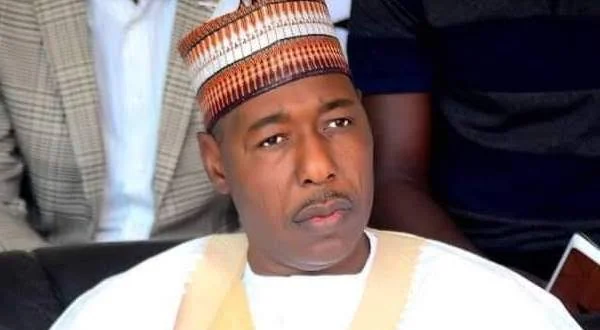
Professor Babagana Umara Zulum has received numerous prestigious awards and recognitions in acknowledgment of his outstanding governance and leadership. These include:
- Vanguard Newspaper Personality of the Year Award 2019/2020, awarded for compassionate, personal-touch leadership and extraordinary performance under insurgency pressure.
- Commander of the Order of the Niger (CON) Nigeria’s National Honour, conferred by President Muhammadu Buhari in October 2022.
- Grand Officer in the Order of National Honour (“de Grand Officer Dans I’Ordre”) Republic of Niger’s Second Order of National Honour, equivalent to Nigeria’s GCON, conferred in 2021.
- African Governor of the Year Award (Education and People Development Category) 2023 awarded by the African Leadership Magazine.
- Exemplary Leadership Award 2023 awarded by Naija Diaspora Magazine.
- Forbes Magazine African Leadership Award 2024 one of the most prestigious business and leadership recognitions on the continent.
- Member of the National Institute for Policy and Strategic Studies (NIPSS) conferring the post-nominal “mni”.
- Fellow of the Nigerian Association of Technologists in Engineering (FNATE).
- Registered Engineer, Council for the Regulation of Engineering in Nigeria (COREN).
Social Media
Professor Babagana Umara Zulum maintains an active social media presence across several platforms, which his administration uses to communicate project updates, governance news, and humanitarian interventions directly to the public. His digital presence is one of the most active and transparent among Nigerian governors.
- Instagram: @profzulum where he and his media team regularly post updates on projects, visits, and government activities across Borno State.
- Twitter/X: @ProfZulum actively used to share governance updates, condolence messages, and engagement with national affairs.
- Facebook: The official page of the Governor of Borno State (@govborno) maintains a consistent presence with news, project commissionings, and government statements.
His social media platforms collectively attract hundreds of thousands of followers and serve as important tools for transparency and public accountability in his administration.
Personal Life
Professor Babagana Umara Zulum is a devoted family man. He is married to Dr. Falmata Babagana Umara Zulum his wife and the First Lady of Borno State who holds a doctorate degree and is herself an active public figure and humanitarian in the state. Dr. Falmata is known for her philanthropic work, including distributing gifts to Christian women and widows during festive seasons and supporting vulnerable communities across Borno State. The couple are blessed with children, though the specific names and number of their children are not publicly disclosed, in keeping with their preference for a degree of family privacy.
Zulum is a deeply devout Muslim. His Islamic faith is central to his identity, his leadership philosophy, and his personal daily routine. He is widely known for his humility, austerity, and simple lifestyle qualities that stand in sharp contrast to the ostentatious culture that is often associated with Nigerian political leadership.
He is frequently photographed visiting project sites, sitting with displaced persons in IDP camps, and personally supervising reconstruction works behaviour that has earned him the popular nickname “the People’s Governor.”
He is a COREN-registered engineer and a published academic, with numerous peer-reviewed papers to his name in the fields of Agricultural Engineering, Soil and Water Engineering, irrigation, and environmental science. His publications have appeared in both local and international journals, covering topics such as water harvesting in semi-arid Nigeria, water quality assessment, and sustainable irrigation practices.
He remains strongly connected to his roots in Mafa LGA, regularly returning to his home community and ensuring that the reconstruction and development programmes of his administration reach the most remote parts of Borno State. His personal narrative from a barefoot farmer’s son who drove taxis to a professor and governor has made him one of the most inspiring biographical stories in modern Nigerian public life.
Net Worth
Professor Babagana Umara Zulum’s net worth is estimated at approximately $3 million USD (roughly ₦4.5 billion to ₦5 billion Naira at current exchange rates), according to multiple Nigerian financial and biographical sources.
This figure reflects his accumulated wealth from decades of public service employment, academic career earnings as a professor and polytechnic rector, and his service as a state commissioner and governor.
It is worth noting that Zulum is not known for the conspicuous displays of wealth common among many Nigerian political figures. He maintains a relatively modest lifestyle and has consistently directed state resources toward public projects rather than personal enrichment.
His primary sources of income have included his government salary as Governor of Borno State, his prior earnings as a University Professor and Polytechnic Rector, his former income as a civil servant, and his historical income from commercial driving and small business activities during his student years. He has no known major private business interests outside of public service.
Published Academic Works (Selected)
Professor Zulum has authored and co-authored numerous peer-reviewed academic publications in the field of Agricultural and Environmental Engineering. A selection of his published works includes:
- Umara B., A.U. Kawuyo and M.A. Yusufari (2010). Design of Waste Water Stabilization Pond for the University of Maiduguri. Arid Zone Journal of Engineering and Environment, Vol. 7: 67–77.
- Jibrin M. Dibal, Babagana Umara, Habib Alkali and A. Abdullahi (2010). Response of Cowpea (Vigna unguiculata) in Semi-Arid Nigeria. Continental Journal of Agricultural Science, 4: 48–53.
- Jibrin Musa Dibal, Baba Gana Umara and Yalwale Bashir Alhaji (2010). Effect of Mulching, Compaction and Irrigation Scheduling on the Performance of Okra in a Semi-Arid Climate. International Journal of Agriculture, Vol. 2(4).
- B.G. Umara, A.S. Abdullahi and J.M. Dibal (2010). Re-advocating water harvesting for improved crop production in semi-arid Nigeria. Journal of Environmental Research and Policies, Vol. 5(4).
- B.G. Umara, Y.Z.A. Gaji and J.M. Dibal (2010). Determination of water quality from wash bores in Nguro-Soye village for irrigation suitability. International Journal of Civil Engineering, Vol. 2(1).
- B.G. Umara, A.S. Mohammed and J.M. Dibal (2011). Evaluation of surface and ground water of Maiduguri, Nigeria for heavy metals toxicity. International Journal of Pure and Applied Science, Vol. 4(1).
- Dobboi Umar and Baba Gana Umara (2011). Solar energy for community development in north-east zone of Nigeria. International Journal of Pure and Applied Science, Vol. 4(2).
- Ali Umar Bashir, Babagana Umara and Jibrin Dibal (2011). Effects of organic matter on aggregate stability of some agricultural soils in semi-arid region of Nigeria.
- Development of Bamboo (Oxytenanthera abyssinica) stem as irrigation pipe. Journal of Applied Science Engineering and Technology, Vol. 6(1).
Frequently Asked Questions (FAQs)
Who is Babagana Umara Zulum?
Professor Babagana Umara Zulum is a Nigerian academic, engineer, and politician who has served as the Governor of Borno State since 2019 under the All Progressives Congress (APC). He is widely celebrated for his courageous and effective governance of a state ravaged by Boko Haram insurgency.
When and where was Babagana Zulum born?
He was born on 25 August 1969 in Mafa Local Government Area of Borno State, Nigeria.
How old is Babagana Zulum?
As of 2025, Professor Babagana Umara Zulum is 55 years old.
What is Babagana Zulum’s educational background?
He holds a B.Eng. in Agricultural Engineering from the University of Maiduguri, an M.Sc. in Agricultural Engineering from the University of Ibadan, and a Ph.D. in Soil and Water Engineering from the University of Maiduguri (completed 2009). He also holds a National Diploma in Irrigation Engineering from Ramat Polytechnic, Maiduguri.
Is Babagana Zulum married?
Yes. He is married to Dr. Falmata Umara Zulum, who serves as the First Lady of Borno State.
How did Babagana Zulum fund his education?
He funded much of his education by working as a commercial taxi driver for approximately 16 years (1984–1999), driving a Peugeot 404 and buses, hauling firewood, and operating a grinding machine business during weekends.
How many assassination attempts has Babagana Zulum survived?
He has survived at least four major Boko Haram assassination attempts in July 2020, September 2020 (twice), and November 2020 in which dozens of security personnel and civilians accompanying him were killed.
What awards has Babagana Zulum won?
His awards include the Commander of the Order of the Niger (CON) conferred by President Buhari in 2022, the Vanguard Personality of the Year 2019/2020, the African Governor of the Year 2023, the Forbes Magazine African Leadership Award 2024, and the Republic of Niger’s Second Order of National Honour in 2021, among others.
What is Babagana Zulum’s net worth?
His net worth is estimated at approximately $3 million USD, derived primarily from his public service career as governor, former polytechnic rector, and university professor.
Is Babagana Zulum running for President of Nigeria?
As of the 2023 APC presidential primaries, his name featured prominently among preferred choices, but he proactively ruled himself out, stating that he had more important work to complete in Borno State.
Conclusion
Professor Babagana Umara Zulum’s biography is one of the most compelling in contemporary Nigerian political history.
Born into poverty in rural Borno State, sustaining himself through years of manual labour and commercial driving, earning a PhD through sheer determination, and then rising to govern one of Nigeria’s most challenged states his is a story of resilience that defines the word itself.
What makes Zulum exceptional is not merely the scale of his projects or the number of commissionings his administration records. It is the quality of his character that sets him apart: his willingness to personally visit communities under threat from armed insurgents, his insistence on accountability, his refusal to live above his means, and his deep empathy for the suffering of ordinary Borno citizens. In a country where governance often serves the few at the expense of the many, Zulum has consistently chosen a different path.
As he continues into his second and final term as governor, the legacy of Professor Babagana Umara Zulum is already secure. He has given Borno State and Nigeria a living example of what governance anchored in service, sacrifice, and academic integrity can look like. His story will inspire generations of Nigerians long after he leaves Government House in Maiduguri.
Related People






Leave a Reply