
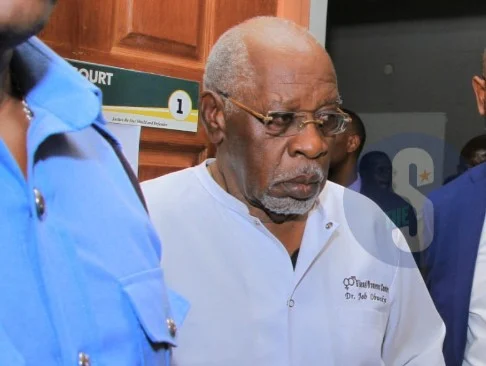
Dr Job Masakhue Lukuru Obwaka was one of Kenya’s most distinguished and longest-serving medical professionals a veteran consultant obstetrician and gynaecologist whose career spanning more than five decades touched the lives of thousands of Kenyan women, mothers, and families. As the Chairman of the Board of Directors of The Nairobi Hospital one of East and Central Africa’s most prestigious private medical institutions he was also a figure of significant institutional consequence.
His name became known to millions of Kenyans not just for his medical legacy, but for one of the most dramatic and heartbreaking episodes in Kenya’s recent medical history: his arrest by plain-clothed DCI officers in March 2026, at the age of 83, outside his clinic at the NSSF Building in Nairobi.
The arrest linked to a protracted and bitter governance dispute at The Nairobi Hospital shook the country’s medical fraternity to its core. Six weeks later, on the evening of 1 May 2026, Dr Obwaka passed away at the very institution he had spent a lifetime serving. He was 83 years old.
This is the complete story of his life, his work, his final ordeal, and the enduring legacy he leaves behind.
| Job Masakhue Lukuru Obwaka | |
|---|---|
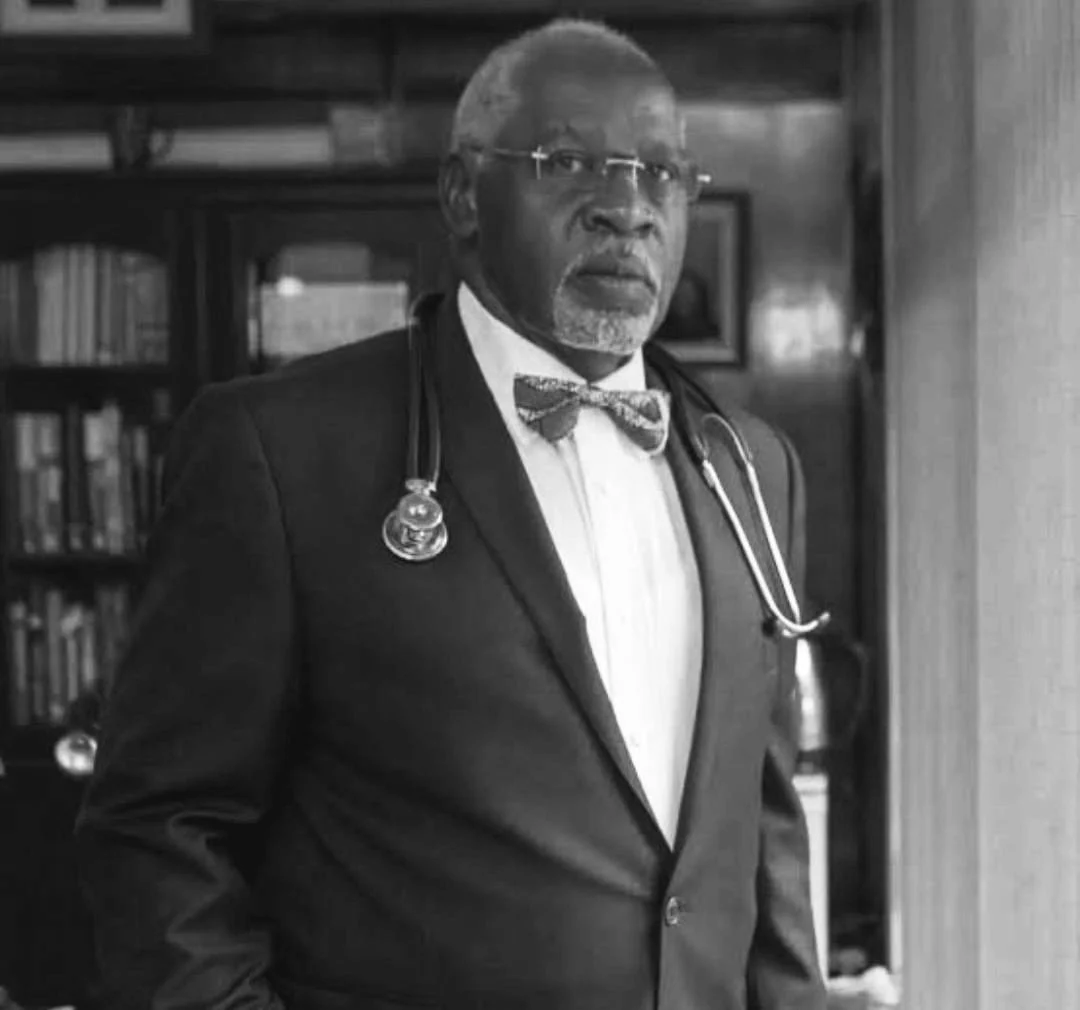 Job Masakhue Lukuru Obwaka: History · Bio · Photo
|
|
| Wiki Facts & About Data | |
| Full Name: | Job Masakhue Lukuru Obwaka |
| Born: | 18 May 1942 |
| Age: | 83 year old |
| Death: | 1 May 2026 (aged 83) |
| Birthplace: | Nairobi, Kenya |
| Nationality: | Kenyan |
| Occupation: | Consultant Obstetrician and Gynaecologist; Hospital Board Chair |
| Spouse: | Everose Obwaka |
| Children: | Including son Chris Obwaka (publicly named) |
| Relationship: | Married |
Early Life
Dr. Job Obwaka was born on 18 May 1942 in Nairobi, Kenya. He grew up in a Kenya that was still under British colonial rule, a period of immense social and political transformation that would give birth to an independent nation in December 1963. The details of his immediate family background his parents and siblings have not been publicly disclosed, and Dr Obwaka himself maintained a largely private family life throughout his long and distinguished career.
From an early age, Obwaka showed the intellectual rigor and discipline that would eventually carry him through one of the most demanding fields in medicine. He came of age in the years of Kenya’s post-independence optimism a time when young Kenyans who excelled academically were encouraged to pursue professions that would build the newly independent nation. Medicine was one of the most prestigious and consequential such paths, and the young Obwaka chose it with purpose. He trained as a medical doctor and became known in Kenya for his work in women’s health and for long service in hospital leadership, building a reputation as a calm and steady clinician who cared for mothers, managed difficult deliveries, and advised hospital boards on clinical standards. His life combined clinical practice, teaching, and governance.
Education
Dr Job Obwaka pursued his entire medical training at the University of Nairobi, Kenya’s foremost public university and home to one of East Africa’s most respected medical schools. He joined the University of Nairobi to pursue a Bachelor of Medicine and Bachelor of Surgery (MBChB) and graduated in 1975. This foundational degree gave him the clinical grounding to begin practicing as a medical doctor across a broad range of disciplines.
Recognizing his passion and aptitude for women’s health, he later enrolled in a postgraduate program at UON, specializing in women’s health. He was awarded an M.Med in Obstetrics and Gynaecology in 1983, equipping him with advanced clinical skills for the management of pregnancy and the full spectrum of gynecological medicine. His specialist qualification earned eight years after his initial degree reflected the depth of commitment and patience that would characterize his entire approach to the profession.
These two qualifications from the University of Nairobi the MBChB and the M.Med formed the academic foundation of a medical career that would go on to span more than five decades of active clinical practice, teaching, mentorship, and institutional leadership.
Career
Clinical Practice in Obstetrics and Gynaecology
After completing his specialist M.Med qualification in 1983, Dr Obwaka established himself as a consultant obstetrician and gynaecologist in Nairobi. He worked with pregnant women, managed deliveries, performed surgeries and provided family planning services. Over time he became known for his technical skill and for offering services that many families relied upon in the capital region.
Dr Obwaka’s long career included direct service to patients as well as a role mentoring younger doctors. Colleagues describe him as methodical in surgery, patient with trainees, and committed to the ethics of medical practice. He performed thousands of obstetric and gynaecological procedures over the course of his career, including complex deliveries, caesarean sections, gynecological surgeries, and family planning services. He also performed thousands of reproductive health procedures during his working life, including many vasectomies and sterilizations that are part of family planning services.
In his later years, Dr Obwaka ran his private clinic Gilead Women’s Centre Limited located in the NSSF Building on Bishops Road in Nairobi. The clinic offers a range of obstetric and gynaecological services, including antenatal care, labour and delivery support, family planning counselling, reproductive health guidance, and the management of common gynaecological conditions. Even in his early eighties, he continued to see patients and attend to women’s health needs a testament to his extraordinary dedication to his profession.
Mentorship and Medical Education
Beyond the consulting room and operating theatre, Dr Obwaka was widely celebrated as a mentor and teacher. From his early training at the University of Nairobi, he contributed to women’s health and to the training and mentorship of generations of doctors. Many of Kenya’s current practitioners in obstetrics and gynaecology trace some part of their clinical development to his guidance, and his influence on the standard of women’s healthcare in Kenya is difficult to overstate.
Hospital Governance: The Nairobi Hospital Board
In addition to clinical duties, he developed a strong interest in hospital management and governance. This interest led to board roles and to an influential position on the leadership of one of the country’s major private healthcare institutions. When he joined the board, his clinical voice carried weight in discussions about quality of care, patient safety, and clinical governance.
Dr Obwaka rose to become the Chairman of the Board of Directors of The Nairobi Hospital, overseeing one of Kenya’s largest and most prestigious private medical institutions. As a hospital board member, he helped shape policies on how the institution runs clinically and financially. The board’s work included oversight of budgets, compliance with legal requirements, strategic planning, and selection of senior managers.
He was also an admitting consultant at The Nairobi Hospital maintaining active clinical responsibilities even as he held its most senior governance position. He was a respected mentor and a vocal critic of what he described as repeated defiance of court rulings by hospital management. His efforts to uphold institutional integrity at The Nairobi Hospital in its final turbulent chapter were recognized by senior doctors at the hospital, who described him as someone fighting for the institution’s soul.
Reactions from the Medical Fraternity
Throughout his career, Dr Obwaka earned the deep respect of Kenya’s broader medical community. He was widely respected for his professionalism, clinical experience and commitment to patient care. KMPDU added that Dr Obwaka held leadership roles in key health institutions, contributing to the growth and development of healthcare in the country, and that his dedication to the medical profession remained consistent throughout his decades of service. Upon his death, Health Cabinet Secretary Aden Duale issued a formal statement of condolence, describing Dr Obwaka as a distinguished medical professional whose lifelong dedication greatly advanced healthcare in the country, saying his work significantly strengthened standards of care and improved outcomes in maternal and reproductive health services across the country.
Awards & Recognition
- Widely recognized by the Kenya Medical Practitioners, Pharmacists and Dentists Union (KMPDU) for distinguished service to the medical profession and to women’s health in Kenya
- Formally mourned and tributed by the Kenya Medical Association (KMA) upon his passing
- Condolence statement from Health Cabinet Secretary Aden Duale on behalf of the Government of Kenya, citing his invaluable contributions to clinical excellence, leadership, and the mentorship of generations of practitioners
- Recognized by senior colleagues at The Nairobi Hospital as a principled defender of institutional governance and clinical standards in the face of alleged mismanagement
- Described by former Law Society of Kenya President Nelson Havi as “a decorated obstetrician and a leader at the Nairobi Hospital” and a man of exemplary service
- Left behind a five-decade legacy of delivering thousands of babies and training generations of doctors
Personal Life
Dr Job Obwaka was a married man. His wife, Everose Obwaka, was the one who confirmed his passing to the media on the evening of 1 May 2026. She had also been among the first to raise alarm when he was dramatically arrested in March 2026 describing to journalists how he had been whisked away by plain-clothed officers before he could even park his car, and how the family was left in a state of panic for hours before learning he had been taken to Muthaiga Police Station. Their son, Chris Obwaka, was actively present throughout the ordeal, accompanying his father to the Milimani Law Courts and later to the hospital when he collapsed.
Outside of medicine, Dr Obwaka was known for his calm and steady disposition methodical in surgery, patient with trainees, and committed to the ethics of medical practice. He was by all accounts a man who led a life defined by service, discipline, and professional integrity. His deep commitment to his patients evidenced by his continued practice into his eighties spoke to a vocation that went far beyond a career. According to former LSK President Nelson Havi, Dr Obwaka had been in frail health for several years, having undergone open surgery some years before the 2026 events, which had left him physically weakened.
The 2026 Arrest, Collapse and Death
The final chapter of Dr Job Obwaka’s life was defined by a governance dispute that would ultimately prove fatal. The background was a protracted and bitterly contested leadership struggle at The Nairobi Hospital Kenya’s largest and most prestigious private medical facility which had for months been plagued by allegations of financial mismanagement, disputed board appointments, missing funds running into billions of shillings, and disagreements between the hospital board and the Kenya Hospital Association (KHA), which owns and governs the institution.
The Arrest 14 March 2026
On the morning of Saturday, 14 March 2026, veteran obstetrician and gynaecologist Dr Job Obwaka, who serves as the Chair of The Nairobi Hospital Board, was unexpectedly arrested by police at his place of work as part of an ongoing investigation into governance and reporting issues at the prestigious private medical institution in Nairobi. The manner of the arrest shocked the nation. He was arrested by officers from the Directorate of Criminal Investigations around 9am while reporting to his office to attend to some patients. According to witnesses, Obwaka was pounced on by officers in a Subaru and was not allowed to park his vehicle and was whisked away; then his mobile phone went off.
For hours, members of the family were thrown into panic in what was described as an abduction before it was discovered that he had been taken to Muthaiga Police Station, where he was detained. His wife told journalists: “He was supposed to see some patients but immediately he entered the compound of his office, he was arrested and whisked away, he was not allowed to even park his car. We have not been informed why he was arrested but we suspect it could be because of the ongoing wrangles at the hospital.” Dr Obwaka was detained for three nights at Muthaiga Police Station.
Dr Obwaka faced up to five charges related to registration of hospital officials. According to the charges listed by the DCI, he was to be arraigned for allegedly procuring registration by false pretences specifically, that between July 1, 2024 and December 4, 2024, he had jointly with others fraudulently procured registration of 334 people to be members of the Kenya Hospital Association. He was also accused of failing to lodge the company’s 2022 and 2023 financial statements with the Registrar as required by law. A group of senior medical doctors at The Nairobi Hospital called for Dr Obwaka to be cleared of wrongdoing, arguing he was not a current member of the Board of Directors and was not a member of the Board at the time of the alleged manipulation of the register of members.
The Kenya Medical Practitioners, Pharmacists, and Dentists Union (KMPDU) raised concerns over the arrest and detention of the senior obstetrician and gynecologist, stating the arrest had shocked the medical fraternity due to Obwaka’s long service, age, and standing in the profession, and calling for clarity on the circumstances surrounding the case and respect for his constitutional rights. Former LSK President Nelson Havi condemned the arrest, saying Obwaka was “a decorated obstetrician and a leader at the Nairobi Hospital” who had been “abducted” by police, and alleging the action was part of a determined effort by senior government officials to grab the land on which the hospital is built.
Collapse in Court 16 March 2026
While in court, Obwaka developed complications and was rushed back to the Nairobi Hospital for treatment, with his son, Chris, by his side. The image of an 83-year-old decorated physician frail, visibly distressed, being helped into an ambulance outside the Milimani Law Courts circulated widely across Kenyan media and social platforms and ignited an outpouring of public sympathy, outrage, and grief. The presiding magistrate Magistrate Teresiah Nyangena noted the advanced age of some accused, including the doctor, and concluded they did not present a flight risk, ordering their release on personal bonds of five million shillings each.
Dr Obwaka had been unwell since mid-March after collapsing at Milimani Law Courts while awaiting arraignment. He was admitted to the Nairobi Hospital’s Intensive Care Unit, where he received medical care for the following weeks. His condition never fully recovered.

Death 1 May 2026
Veteran gynaecologist and director at Nairobi Hospital, Dr Job Obwaka, passed away on Friday evening at 7pm at the same hospital where he served patients for years, his wife Everose Obwaka confirmed. Hospital sources said he was brought in unconscious and was pronounced dead on arrival. The date of his death 1 May 2026 was itself bitterly symbolic: International Workers’ Day, a day on which Kenya and the world celebrate the dignity of labor and service.
Nelson Havi said the strain of the criminal case took a toll on the veteran medic, stating that his condition escalated due to the frustrations linked to attempts to take over the hospital’s management. Another colleague was quoted as saying: “Dr Obwaka’s condition has never been the same since being taken to court, and the frustrations he has undergone until his death.”
His death inside the institution he sought to reform marks a tragic turn in a governance dispute that remains unresolved.
Tributes and Reactions
The death of Dr Job Obwaka triggered a wave of grief and reflection across Kenya’s medical, legal, and civil society communities. Health Cabinet Secretary Adan Duale, on behalf of the Ministry of Health, expressed deep sorrow, describing Dr Obwaka as a distinguished medical professional whose lifelong dedication greatly advanced healthcare in the country.
The Kenya Medical Association (KMA), whose president Dr Simon Kigondu confirmed the death, mourned the loss of one of the country’s most revered medical figures. The KMPDU which had been among the loudest voices condemning his arrest just six weeks earlier issued a formal statement of mourning, with Secretary General Dr Davji Bhimji Atellah saying: “We extend our sincere condolences to his family, his colleagues at The Nairobi Hospital, and the wider medical fraternity.”
His death reignited calls for a full and transparent investigation into the governance crisis at The Nairobi Hospital, the conduct of the DCI in arresting an elderly, ailing doctor, and the broader question of whether Kenya’s criminal justice system adequately accounts for the age, health, and dignity of elderly defendants.
Net Worth
Dr Job Obwaka’s financial standing was that of a senior consultant physician who had practiced privately in Nairobi for several decades. His primary sources of income were his private clinic Gilead Women’s Centre in the NSSF Building on Bishops Road where he continued to see patients actively until his arrest in March 2026, and his professional fees from his role as a consultant at The Nairobi Hospital. As Chairman of The Nairobi Hospital Board, he would also have received board stipends and allowances. His exact net worth was never publicly disclosed; as a private medical professional who shunned the public spotlight, he was not known to have made public declarations of wealth or assets.
FAQs About Dr Job Obwaka
Who was Dr Job Obwaka?
Dr Job Masakhue Lukuru Obwaka was a veteran Kenyan consultant obstetrician and gynaecologist and the Chairman of the Board of Directors of The Nairobi Hospital. He practiced medicine for over five decades, dedicating his career to women’s health, maternity care, and the mentorship of generations of Kenyan doctors.
When was Dr Job Obwaka born?
He was born on 18 May 1942 in Nairobi, Kenya.
When did Dr Job Obwaka die?
Dr Job Obwaka passed away on 1 May 2026 at The Nairobi Hospital, at the age of 83. He was pronounced dead on arrival after being rushed to the hospital unconscious.
Where did Dr Job Obwaka study?
He studied entirely at the University of Nairobi, earning his MBChB in 1975 and his Master of Medicine (M.Med) in Obstetrics and Gynaecology in 1983.
Why was Dr Job Obwaka arrested?
On 14 March 2026, Dr Obwaka was arrested by DCI officers outside his clinic at the NSSF Building in Nairobi as part of an investigation into governance disputes at The Nairobi Hospital. He was charged with, among other things, allegedly procuring the fraudulent registration of 334 members of the Kenya Hospital Association and failing to file the company’s financial statements for 2022 and 2023. He pleaded not guilty to all charges.
What happened to Dr Job Obwaka in court?
On 16 March 2026, while awaiting arraignment at the Milimani Law Courts in Nairobi, Dr Obwaka collapsed and developed acute health complications. He was rushed by ambulance to The Nairobi Hospital’s ICU, where he was treated. His health never fully recovered, and he died six weeks later on 1 May 2026.
Who was Dr Job Obwaka’s wife?
His wife’s name is Everose Obwaka, who confirmed his death to the media. She was also the first to raise public alarm when he was arrested, describing the arrest as terrifying for the family.
What was Dr Job Obwaka’s role at The Nairobi Hospital?
He served as Chairman of the Board of Directors of The Nairobi Hospital and was also an admitting consultant at the facility, meaning he maintained active clinical practice while simultaneously leading its governance structure.
What did the government say after Dr Obwaka’s death?
Health Cabinet Secretary Aden Duale issued a formal statement of condolence on behalf of the Ministry of Health, describing Dr Obwaka as a distinguished medical professional whose work strengthened standards of care and improved outcomes in maternal and reproductive health across Kenya.
What legacy did Dr Job Obwaka leave?
Dr Obwaka left a legacy of over five decades of dedicated service to women’s health, the delivery of thousands of babies, the mentorship of generations of Kenyan doctors, and principled leadership in hospital governance. He is remembered as a man whose life and death raised important questions about institutional accountability, the rights of elderly citizens in the criminal justice system, and the governance of Kenya’s private healthcare sector.
Conclusion
Dr Job Masakhue Lukuru Obwaka lived a life of extraordinary service. For more than fifty years, he dedicated himself to the most intimate and consequential of medical callings bringing lives into the world, guiding women through the dangers of difficult pregnancies, teaching the next generation of healers, and sitting at the governance tables of institutions that shaped Kenya’s healthcare system. He continued to work continued to see patients and attend to women in need well into his eighties, because for him, medicine was not a profession but a vocation.
The manner of his end arrested outside his clinic at the age of 83, dragged through courts while in frail health, collapsing under the weight of proceedings his body could not withstand, and dying at the very institution he had spent his life serving shocked and saddened a nation. His death became not just the passing of a great doctor, but a mirror held up to Kenya’s systems of justice, governance, and institutional accountability. The questions raised by his ordeal about the rights of elderly defendants, the use of criminal law in civil disputes, and the governance of private hospitals remain very much alive and unresolved.
He is survived by his wife, Everose Obwaka, his children, and a medical community that will long remember his methodical hands, his patient mentorship, and his quiet, enduring commitment to the women of Kenya.
Rest in peace, Dr Job Masakhue Lukuru Obwaka 18 May 1942 to 1 May 2026.
Related People








Leave a Reply