
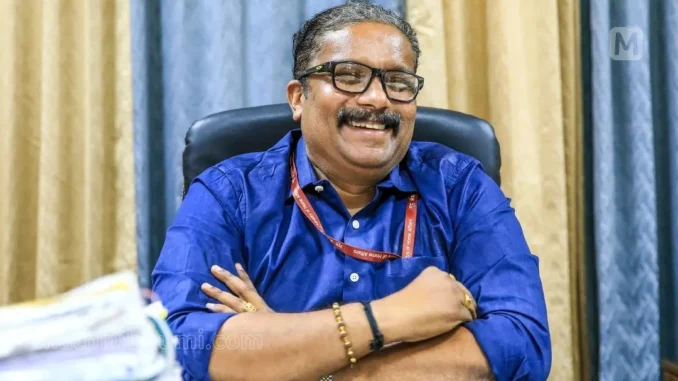
Dr B Ashok IAS is one of the most distinguished and outspoken Indian Administrative Service (IAS) officers in India today. A 1998-batch officer belonging to the Kerala cadre, Dr B Ashok is widely recognized for his intellectual depth, administrative boldness, and fearless willingness to challenge authority regardless of which political party is in power. He is a veterinary scientist by academic training who transformed into one of the most notable bureaucrats in the country, serving in several high-profile positions across the Government of Kerala and the Government of India. His career has been marked equally by significant achievements and significant controversies, making him a compelling figure in Indian public administration.
From serving as the Vice-Chancellor of Kerala Veterinary and Animal Sciences University (KVASU), to heading the Kerala State Electricity Board (KSEB), to serving as Agriculture Secretary and Executive Director of the Jalanidhi water project, Dr B Ashok has held a wide range of powerful governmental positions. He is also a published academic, a public policy columnist, a former faculty member at the Lal Bahadur Shastri National Academy of Administration (LBSNAA) in Mussoorie, and an internationally trained administrator with postgraduate credentials from the University of London, the University of Turin, and Duke University.
In this biography, we explore who Dr B Ashok is, how he rose to national prominence, what his career has looked like from start to finish, the controversies that have defined his public image, and what makes him one of the most talked-about IAS officers in the history of Kerala’s civil service.
| Dr B Ashok | |
|---|---|
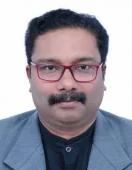 Dr B Ashok: History · Bio · Photo
|
|
| Wiki Facts & About Data | |
| Full Name: | Dr B Ashok |
| Nationality: | Indian |
| Occupation: | Indian Administrative Service (IAS) Officer, Kerala Cadre |
| Net Worth: | Not publicly disclosed |
Early Life
Dr B Ashok was born and raised in Kollam District, a coastal district in the southern part of the state of Kerala, India. Kerala is known for its high literacy rates, strong civic culture, and rich tradition of producing some of India’s finest administrators, academics, and public servants. Growing up in this environment of intellectual stimulation and civic consciousness, Ashok developed a keen interest in science, public affairs, and governance from a young age.
Details about his parents and siblings are not widely available in the public domain, as Dr Ashok has largely kept his family life private throughout his career. However, what is well-documented is that he was an academically exceptional student who pursued a rigorous scientific education before pivoting to public service through the competitive UPSC Civil Services Examination.
Dr Ashok grew up in Kerala during a period of significant political dynamism, where the state alternated between the Left Democratic Front (LDF) and the United Democratic Front (UDF) governments. His exposure to this politically charged atmosphere, combined with his own intellectual disposition, would later inform his straightforward and often outspoken administrative style. His early life in Kollam a district with deep historical roots as a trading port helped shape a worldview that was cosmopolitan, curious, and unafraid of confrontation when principle demanded it.
Education
Dr B Ashok pursued his undergraduate degree in Veterinary Science from the College of Veterinary and Animal Sciences, Mannuthy, Kerala, as part of the 1990 batch. Mannuthy is part of the Kerala Veterinary and Animal Sciences University campus, and graduating from this institution gave Dr Ashok a deep, scientifically grounded understanding of life sciences, agriculture, and animal husbandry knowledge that would prove invaluable throughout his bureaucratic career.
After completing his veterinary degree, Dr Ashok went on to pursue postgraduate research in Biotechnology at the Indian Veterinary Research Institute (IVRI) in Uttar Pradesh. It was during this research training that he successfully cleared the Union Public Service Commission (UPSC) Civil Services Examination in 1998, earning a coveted position in the Indian Administrative Service. This made his transition from a research scientist to an IAS officer particularly remarkable he did not come from a traditional administrative background but instead brought the rigour and discipline of scientific inquiry directly into governance.
Beyond his domestic education, Dr B Ashok has pursued extensive international academic training, making him one of the more globally educated IAS officers in the Kerala cadre. He is an alumnus of the University of London, where he studied Water Management; the University of Turin in Italy, where he studied Political Science; and Duke University in the United States, where he undertook further coursework in relevant areas of public policy and governance. These international programmes not only broadened his intellectual horizons but also equipped him with a comparative perspective on governance, public administration, water resource management, and political economy.
He has also been awarded prestigious fellowships by the Italian Cultural Institute and the University of Maastricht in the Netherlands, further cementing his reputation as a scholar-administrator. He won the Best Policy Paper Award at the 16th Round of the Mid-Career Training Programme Phase-V at the Lal Bahadur Shastri National Academy of Administration (LBSNAA) for a paper titled “Harnessing India’s Agri-Processing and Value Addition Sector,” which examined India’s agricultural processing industry.
In addition to his formal academic qualifications, Dr B Ashok has published numerous papers in peer-reviewed academic journals on subjects ranging from public policy to social exclusion to water governance. He has also served as an occasional lecturer at several prestigious institutions including the Institute of Social Studies in The Hague (Netherlands), the National Forest Academy in Dehradun, the Indian Institute of Public Administration (IIPA) in New Delhi, Maastricht Business School, and the School of Government in Pune.
Career
Dr B Ashok joined the Indian Administrative Service in 1998 as part of the Kerala cadre. From the outset, his career was defined by postings that placed him at the intersection of science, natural resources, and governance a natural fit for a veterinary scientist turned administrator.
In the early years of his career, Dr Ashok served in the Animal Husbandry Department of the Government of Kerala, where he took on roles as Director of the Veterinary and Dairying Department. He also served as a Project Director in a World Bank-funded development project, giving him early exposure to international development finance and multi-stakeholder project management. One of his significant early postings was as District Collector of Pathanamthitta, a key administrative role that gave him ground-level experience in managing a district administration and dealing with complex socio-political challenges.
Dr Ashok also served as Executive Director of Jalanidhi, a World Bank-supported water supply and sanitation programme in Kerala, where he was instrumental in implementing community-based rural water supply projects. This posting established his credentials as a development administrator with a commitment to evidence-based governance and inclusive development.
At the Central level, Dr Ashok served as Private Secretary (Chief of Staff) to the Union Minister for Agriculture and Food, a posting that gave him exposure to national-level policymaking and the functioning of the Central Government. He also served as Deputy Director and Course Director at the Lal Bahadur Shastri National Academy of Administration (LBSNAA) in Mussoorie the premier training institution for India’s civil services where he was responsible for training newly recruited IAS officers and designing curriculum for mid-career training programmes.
One of the most prominent positions Dr B Ashok held was that of Vice-Chancellor of the Kerala Veterinary and Animal Sciences University (KVASU). During his tenure, he invested heavily in the academic infrastructure of the university, overseeing approximately Rs 400 crore in academic and infrastructural investment and establishing collaborations with Western universities. Under his leadership, KVASU received the Chancellor’s Award for the Best Young University in 2016, shortly after his term concluded.
Dr Ashok also served as Secretary to the Power Department and the Water Resources Department of the Government of Kerala, where he oversaw critical infrastructure and utility governance. He was subsequently appointed as Chairman and Managing Director (CMD) of the Kerala State Electricity Board Limited (KSEBL) in July 2021, succeeding N.S. Pillai who retired from service. During his tenure at KSEB, he sought to reform the administrative functioning of the board, but faced significant friction with employee unions, eventually leading to his removal from the position in 2022.
Following his tenure at KSEB, Dr Ashok served as Agriculture Secretary of the Government of Kerala. In this role, he was involved in managing the state’s agricultural sector and overseeing implementation of centrally sponsored schemes. He also led an inquiry into the alleged diversion of World Bank funds earmarked for the Kerala Climate Resilient Agri–Value Chain Modernisation (KERA) project. His report, which suggested the leak of inquiry-related information had originated from the Chief Minister’s Office, created a major political storm and was widely believed to be the trigger for his subsequent transfer.
In 2025, Dr Ashok was transferred twice within a single year first to the Local Self-Government Reforms Commission at the start of 2025, and then to the post of Chairman and Managing Director of the Kerala Transport Development Finance Corporation (KTDFC) in September 2025. He challenged both transfers before the Central Administrative Tribunal (CAT). In the case of the first transfer, CAT ruled in his favour, noting that deputation of IAS officers requires Union government approval and the officer’s consent. The tribunal subsequently stayed the second transfer order as well.
Dr Ashok has served as President of the IAS Association, Kerala chapter a position that underscores the respect he commands among his fellow civil servants even amid his frequent conflicts with the state government.
He has been a columnist in various national publications on public policy matters and continues to be a vocal commentator on issues of governance, administrative reforms, and public policy in India. He has lectured at several national and international academic institutions and is regarded as one of the most academically accomplished IAS officers of his generation.
Awards & Nominations
- Best Indian Social Science Research Paper Award (2009) – Jointly won with Dr Darez Ahmed from the International Development Research Centre (IDRC), Canada, for their study on Social Exclusion in Madurai.
- Chancellor’s Award for Best Young University (2016) – Awarded to Kerala Veterinary and Animal Sciences University (KVASU) under his stewardship as Vice-Chancellor.
- Best Policy Paper Award – Won at the 16th Round of the Mid-Career Training Programme Phase-V at LBSNAA, Mussoorie, for the paper titled “Harnessing India’s Agri-Processing and Value Addition Sector.”
- Fellowship, Italian Cultural Institute – Awarded a prestigious fellowship supporting international academic training in Italy.
- Fellowship, University of Maastricht – Awarded a fellowship from one of the Netherlands’ leading universities.
Social Media
Dr B Ashok has maintained a limited but notable social media presence, primarily through Facebook. During his tenure as CMD of the Kerala State Electricity Board (KSEB), he drew significant public attention when he reportedly posted critical remarks on Facebook regarding the efficiency and administrative functioning of the KSEB. These posts were later deleted, but they generated considerable media coverage and contributed to the friction that ultimately led to his removal from the KSEB chairmanship.
Dr Ashok is also active on the social media platform X (formerly Twitter), where he has occasionally shared his views on governance, administrative issues, and public policy matters. His X handle has been referenced in news reports relating to his appointment as Spices Board-related events and other administrative contexts.
While Dr Ashok does not maintain a large social media following in the conventional celebrity sense, his posts and statements have consistently attracted national media attention due to the significance of his administrative position and the boldness of his public commentary. His willingness to comment publicly on governance failures and policy issues even at personal professional risk has made him a unique figure in India’s bureaucratic landscape, where most civil servants avoid public controversy.
Personal Life
Dr B Ashok hails from Kollam District in Kerala, and has maintained a largely private personal life despite being a prominent public figure. Information about his spouse, children, and immediate family members is not available in the public domain, as he has consistently chosen to keep his family out of the media spotlight a common practice among senior IAS officers who prefer that scrutiny be directed at their professional conduct rather than their private lives.
What is clear from his public statements and career trajectory is that Dr Ashok is a man of strong personal convictions who is willing to accept professional consequences in defence of what he considers to be right. His famous remark “An officer should only be worried if the career has been a smooth sail through the backwaters” captures his philosophical approach to public service: that friction and conflict are often signs that an officer is doing their job honestly, rather than simply accommodating political pressure.
Over the course of his career, Dr Ashok has been at the centre of multiple high-profile controversies:
The Modi Article Controversy (2013): While serving as Vice-Chancellor of KVASU, Dr Ashok wrote an article in the Kerala Kaumudi daily newspaper titled “What if Modi Comes to Sivagiri?” in which he backed the proposed visit of then-Gujarat Chief Minister Narendra Modi to the Sivagiri Mutt, a revered spiritual institution in Kerala. The Congress-led UDF government at the time took serious objection to a serving IAS officer publicly expressing support for a rival political figure and ordered a disciplinary inquiry. The inquiry panel concluded that Dr Ashok had violated the All India Services (Conduct) Rules, 1968. However, in 2016, the Supreme Court of India stayed the disciplinary proceedings, holding that writing a newspaper article could not, by itself, constitute a breach of conduct rules. The case set an important precedent for the freedom of expression of civil servants.
The KVASU Removal (2011): An earlier confrontation occurred in 2011 under the UDF government of the late Chief Minister Oommen Chandy, when Dr Ashok wrote an article criticising senior IAS officers for holding multiple posts on a charge basis a practice he publicly opposed. He was removed from the post of KVASU Vice-Chancellor shortly afterward. In July 2021, however, the Kerala High Court ruled in his favour and recalled the removal order, vindicating his position.
The KSEB Controversy (2022): During his tenure as Chairman and Managing Director of KSEB, Dr Ashok reportedly clashed repeatedly with employee unions over his efforts to reform the board’s administration. He also posted critical remarks about KSEB’s administrative efficiency on his personal Facebook page, which were subsequently deleted. These conflicts led to his removal from the position in 2022.
The Agriculture Secretary Controversy (2022): In the same year, while serving as Agriculture Secretary, Dr Ashok publicly criticised a draft Bill proposed by the LDF government to remove the Governor as Chancellor of universities. He questioned the absence of substantive reasoning in the Bill, drawing sharp political reactions from the ruling establishment.
The KERA Project Inquiry and 2025 Transfers: The most recent and most consequential controversy in Dr Ashok’s career emerged from his role in investigating the alleged diversion of World Bank funds meant for the KERA project. His report suggesting the leak of inquiry information had come from the Chief Minister’s Office put him in direct conflict with the state’s highest executive authority. This was followed by two transfers in 2025, both of which he successfully challenged before the Central Administrative Tribunal.
Net Worth
The precise net worth of Dr B Ashok is not publicly available, as he has not disclosed his personal financial details beyond mandatory government disclosures. As a senior IAS officer of 1998 batch with the rank of Principal Secretary or equivalent, Dr Ashok would earn a salary consistent with the 7th Pay Commission scales applicable to senior civil servants in India, along with applicable allowances and benefits.
His primary source of income is his salary as an IAS officer. He has not been publicly associated with any business ventures or commercial interests. His additional income streams may include honoraria from academic lectures, publications, and fellowships at various Indian and international institutions, though these would be modest in comparison to his government salary.
It should be noted that Dr Ashok is not a public figure known for wealth accumulation; he is known instead for his professional integrity, academic achievements, and the courage of his administrative convictions. His legacy is measured not in financial terms but in the impact of his work across multiple government departments and institutions.
Publications & Academic Contributions
Dr B Ashok has a strong record of academic publication and intellectual contribution, which distinguishes him significantly from most IAS officers of his generation. He has published several papers in peer-reviewed journals on topics including public policy, water governance, social exclusion, and agri-processing.
- Joint author of the award-winning social science research paper on Social Exclusion in Madurai (2009), co-authored with Dr Darez Ahmed.
- Author of the policy paper “Harnessing India’s Agri-Processing and Value Addition Sector,” which won the Best Policy Paper Award at LBSNAA’s Mid-Career Training Programme Phase-V.
- Regular columnist in national publications on public policy, governance, and administrative reform.
- Guest lecturer at the Institute of Social Studies, The Hague; National Forest Academy, Dehradun; Indian Institute of Public Administration, New Delhi; Maastricht Business School; and School of Government, Pune.
Frequently Asked Questions (FAQs)
Who is Dr B Ashok IAS?
Dr B Ashok is a 1998-batch Indian Administrative Service (IAS) officer belonging to the Kerala cadre. He is a veterinary scientist by training who cleared the UPSC Civil Services Examination while conducting research at IVRI, Uttar Pradesh. He has served in numerous high-profile positions in the Government of Kerala and the Government of India, including as Vice-Chancellor of KVASU, CMD of KSEB, Agriculture Secretary, and others.
What is Dr B Ashok known for?
Dr B Ashok is known for his intellectual boldness, his willingness to take on successive state governments through legal battles, his strong academic credentials, and his outspoken approach to governance and public policy. He is also known for winning the Best Indian Social Science Research Paper Award in 2009 and for his controversial but principled career in the Kerala IAS cadre.
Which batch does Dr B Ashok belong to?
Dr B Ashok belongs to the 1998 batch of the Indian Administrative Service, Kerala cadre.
What colleges did Dr B Ashok attend?
Dr B Ashok graduated from the College of Veterinary and Animal Sciences, Mannuthy, Kerala (1990 batch), and pursued postgraduate research at the Indian Veterinary Research Institute (IVRI) in Uttar Pradesh. He is also an alumnus of the University of London, the University of Turin, and Duke University, where he completed various postgraduate programmes. He has also received fellowships from the Italian Cultural Institute and the University of Maastricht.
What controversies has Dr B Ashok been involved in?
Dr B Ashok has been involved in multiple high-profile controversies throughout his career, including the 2013 article supporting Narendra Modi’s visit to Sivagiri Mutt (for which the Supreme Court stayed disciplinary proceedings against him), his removal from KVASU in 2011 (reversed by the Kerala High Court in 2021), his removal from KSEB in 2022 following clashes with employee unions, his public criticism of a state government Bill to remove the Governor as Chancellor of universities, and two contested transfers in 2025 both of which the Central Administrative Tribunal stayed in his favour.
Is Dr B Ashok still in service?
As of the time of writing, Dr B Ashok continues to be an active member of the 1998 batch Kerala cadre of the Indian Administrative Service. He has been the subject of multiple transfer orders in 2025, which he has challenged and successfully stayed through the Central Administrative Tribunal.
What award did Dr B Ashok win in 2009?
In 2009, Dr B Ashok jointly won the Best Indian Social Science Research Paper Award from the International Development Research Centre (IDRC), Canada, for a research paper on Social Exclusion in Madurai, co-authored with Dr Darez Ahmed.
What is Dr B Ashok’s educational background in veterinary science?
Dr B Ashok completed his Bachelor of Veterinary Science from the College of Veterinary and Animal Sciences, Mannuthy, as part of the 1990 academic batch. He subsequently pursued advanced research in Biotechnology at the Indian Veterinary Research Institute (IVRI) in Uttar Pradesh before joining the IAS in 1998.
Conclusion
Dr B Ashok IAS stands out as one of the most intellectually formidable, administratively courageous, and controversy-prone civil servants that the state of Kerala has produced in recent decades. His career spans nearly three decades of active service across some of the most significant positions in the Kerala and Central government administrative hierarchy. From his beginnings as a veterinary scientist to his postgraduate studies at some of the world’s leading universities, from his hands-on development work in rural water supply to his leadership of critical state institutions like KVASU and KSEB, Dr B Ashok has consistently demonstrated that he is more than a conventional bureaucrat.
What makes Dr B Ashok truly remarkable is not just the breadth of his professional accomplishments but the consistency with which he has chosen principle over comfort. In a system where civil servants often navigate political pressures by keeping their heads low, Dr Ashok has repeatedly chosen to speak up whether in a newspaper column, in a legal petition, or in an administrative report even when the personal professional costs were steep. His multiple run-ins with both the LDF and the UDF governments in Kerala are not signs of recklessness but of an officer who regards the integrity of the civil service as a value worth defending.
His academic achievements internationally educated, award-winning researcher, published policy analyst, and trainer of IAS officers add yet another dimension to a career that defies easy categorisation. Dr B Ashok is, in the truest sense, a scholar-administrator: a rare combination in India’s civil services, and one whose contributions to public policy, academic discourse, and institutional governance will be debated and studied long after his retirement from active service.
Whether one agrees or disagrees with every stance he has taken, it is impossible to question his commitment to the ideals of honest, evidence-based, and fearless public administration. In an era when institutional courage is at a premium, Dr B Ashok IAS represents something genuinely rare an officer who has never stopped asking the difficult questions that governance demands.
Related People




Leave a Reply