
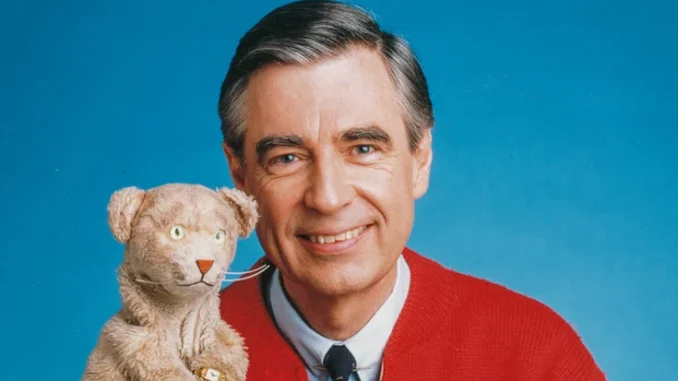
Fred McFeely Rogers, beloved to generations of American children and adults simply as Mister Rogers, was an American television host, author, producer, songwriter, puppeteer, and ordained Presbyterian minister whose programme Mister Rogers’ Neighborhood ran on PBS for 33 years and produced 895 episodes that changed the way America thought about children’s television, early childhood development, and the inner emotional lives of the young.
Armed with a Bachelor’s degree in music composition, a seminary education, and a deeply held conviction that “feelings are mentionable and manageable,” Fred Rogers became arguably the most morally influential television personality in American history, a man whose gentleness was not weakness but a deliberate, disciplined act of radical kindness in service of the children who needed it most.
| Fred McFeely Rogers | |
|---|---|
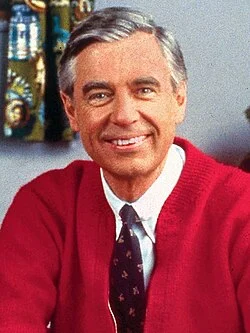 Fred McFeely Rogers: History · Bio · Photo
|
|
| Wiki Facts & About Data | |
| Full Name: | Fred McFeely Rogers |
| Born: | March 20, 1928 |
| Age: | 98 years old |
| Death: | February 27, 2003 (aged 74) |
| Birthplace: | Latrobe, Pennsylvania, USA |
| Nationality: | American |
| Occupation: | Television Host, Author, Songwriter, Puppeteer, Presbyterian Minister |
| Parents: | James Hillis Rogers (father); Nancy McFeely Rogers (mother) |
| Spouse: | Joanne Byrd Rogers (married 1952; died January 14, 2021) |
| Children: | 2 sons (James B. Rogers Jr.; John Rogers) |
Early Life
Fred McFeely Rogers was born on March 20, 1928, in Latrobe, Pennsylvania, a small western Pennsylvania town shaped by its Rogers family heritage, hard-working culture, and deep Christian faith. He was the only child of James Hillis Rogers and Nancy McFeely Rogers.
His parents were wealthy by the standards of Latrobe, his father was a businessman, but Fred’s childhood was nonetheless marked by shyness, loneliness, and frequent illness, including asthma that often confined him to the house.
He was overweight and frequently bullied at school, retreating into music, puppets, and the companionship of his imagination.
His maternal grandfather, Fred McFeely, after whom he was named and who would later be immortalised as Mr. McFeely, the speedy delivery man on his television programme, was a central figure in building his confidence. “He made me feel special,” Rogers recalled. “I think that’s at the root of everything, wanting everyone to feel special, the way Grandfather McFeely made me feel.”
Education
Fred Rogers attended Latrobe High School before enrolling at Dartmouth College briefly, then transferring to Rollins College in Winter Park, Florida, where he earned a Bachelor of Science degree in Music Composition in 1951.
It was at Rollins that Rogers first encountered television, watching it in his family’s living room, and felt an immediate, powerful conviction that this new medium could be used to serve children rather than exploit or demean them.
He enrolled at Pittsburgh Theological Seminary, from which he received his Bachelor of Divinity degree in 1962 and was ordained as a Presbyterian minister. He later studied child development under renowned child psychologist Dr. Margaret McFarland at the University of Pittsburgh, an academic relationship that proved decisive in shaping the emotional and developmental curriculum of his television programme.
Career
Early Television (1951–1963)
After graduation from Rollins College in 1951, Rogers joined NBC in New York City, where he worked as an assistant and floor manager on variety shows, including as a floor manager for The Kate Smith Hour and The Voice of Firestone.
He quickly found that commercial television did not align with his values and moved back to Pittsburgh in 1953 to help found WQED, America’s first community-supported public television station, where he developed, produced, and performed in a children’s programme called The Children’s Corner alongside puppeteer Josie Carey.
He made his first on-camera appearance in 1963 on the Canadian Broadcasting Corporation’s programme Misterogers, produced in Toronto.
Mister Rogers’ Neighborhood (1966–2001)
In 1966, Rogers returned to WQED in Pittsburgh, where his programme was relaunched as Misterogers’ Neighborhood.
By 1968 it was distributed nationally by National Educational Television (NET), and when the Public Broadcasting Service (PBS) succeeded NET in 1970, the programme was renamed Mister Rogers’ Neighborhood, the title under which it became a national institution.
Each episode began identically: Rogers would enter his television house, change from his jacket into one of his famous hand-knitted cardigan sweaters (made by his mother), and sing the programme’s theme song, “Won’t You Be My Neighbor?”
He would then address the episode’s topic, which might be divorce, death, a new sibling, going to the doctor, or racial equality, with a directness, warmth, and respect for children’s intelligence that was unlike anything else on American television.
Rogers served simultaneously as creator, showrunner, host, chief writer, and composer of the programme. He wrote more than 200 songs for Mister Rogers’ Neighborhood, including the theme song.
He personally voiced and operated 14 puppet characters in the programme’s “Neighborhood of Make-Believe” segment, including Daniel Tiger, King Friday XIII, and Lady Elaine Fairchilde. He produced 895 episodes across the programme’s run from 1968 to 2001.
The programme attracted celebrated guests including cellist Yo-Yo Ma and trumpet virtuoso Wynton Marsalis. In 1969, Rogers gave one of the most celebrated testimonies in the history of American public television before a Senate subcommittee that was considering cutting federal funding for public broadcasting.
His quiet, passionate statement, “I feel that if we in public television can only make it clear that feelings are mentionable and manageable, we will have done a great service for mental health”, moved Senator John Pastore to increase PBS’s funding from $9 million to $22 million. The moment has been cited countless times as evidence of the power of authentic, quiet conviction over noise and spectacle.
Rogers was also a champion of racial equality on his programme, famously inviting his Black neighbour Officer Clemmons to share a paddling pool with him in 1969, a pointed and deliberate statement at a time when Black Americans were being refused entry to public swimming pools across the United States.
Legacy and Posthumous Recognition
Mister Rogers’ Neighborhood was the subject of the critically acclaimed documentary Won’t You Be My Neighbor? (2018), directed by Morgan Neville, which became the highest-grossing biographical documentary in American history at the time of its release.
In 2019, Tom Hanks portrayed Rogers in the feature film A Beautiful Day in the Neighborhood, directed by Marielle Heller, for which Hanks received an Academy Award nomination.
In 2012, PBS launched the animated series Daniel Tiger’s Neighborhood, produced by the Fred Rogers Company, which has introduced Rogers’s social and emotional curriculum to a new generation of children.
Awards and Honours
- 4 Daytime Emmy Awards across his career
- 1997 — Lifetime Achievement Award, National Academy of Television Arts and Sciences
- 1999 — Inducted into the Television Academy Hall of Fame
- 1968 — Chairman, White House Forum on Child Development and the Mass Media
- 2002 — Presidential Medal of Freedom (awarded by President George W. Bush)
- More than 40 honorary degrees from colleges and universities across the United States
- One of his red cardigan sweaters preserved in the Smithsonian Institution’s permanent collection of American cultural artefacts
Social Media
Fred Rogers died in 2003, before the era of social media.
His legacy is maintained by the Fred Rogers Company and the Fred Rogers Institute. Official resources are available at misterrogers.org and fredrogersinstitute.org.
Personal Life
Fred Rogers married Joanne Byrd, a pianist he met at Rollins College, in 1952. The couple remained married for over 50 years and had two sons: James B. Rogers Jr. and John Rogers. Joanne often assisted with music for the programme and described their marriage as a true partnership. Joanne Rogers died on January 14, 2021, at the age of 92.
Rogers’s famous cardigan sweaters were hand-knitted by his mother throughout the programme’s run, and they became the most recognisable garment in the history of American children’s television.
He was also a vegetarian and an avid swimmer, reportedly swimming laps every morning and maintaining a weight of exactly 143 pounds, a figure he loved because it takes 1 letter, 4 letters, and 3 letters to spell the words I, love, and you.
Fred Rogers died of stomach cancer on February 27, 2003, at his home in Pittsburgh, Pennsylvania, at the age of 74. He is survived by his sons Jim and John.
Net Worth
No official personal net worth figure was documented during Rogers’s lifetime.
He was by all accounts not motivated by wealth and lived modestly. His estate has continued to generate income through the Fred Rogers Company’s ongoing licensing, production, and educational activities.
Works / Contributions
- Mister Rogers’ Neighborhood (PBS, 1968–2001) — 895 episodes
- More than 200 original songs composed for the programme
- The World According to Mister Rogers (book, 2003)
- Mister Rogers Talks with Parents (book)
- Won’t You Be My Neighbor? (2018) — documentary subject
- A Beautiful Day in the Neighborhood (2019) — film subject, portrayed by Tom Hanks
- Daniel Tiger’s Neighborhood (PBS, 2012–present) — animated sequel series
Conclusion
Fred Rogers spent his career insisting on a single, simple truth: that every child deserves to be told, sincerely and repeatedly, that they are loved and that they matter.
In a media landscape that has often treated children as a market to be exploited, he treated them as people to be respected.
His 895 episodes did not merely entertain, they built emotional resilience, modelled kindness, and gave millions of American children a trusted adult’s voice in the most formative years of their lives.
Mister Rogers was not just a television show. He was, for an entire nation’s childhood, a neighbour. And as he would have reminded us: we are all his neighbours.

Leave a Reply