
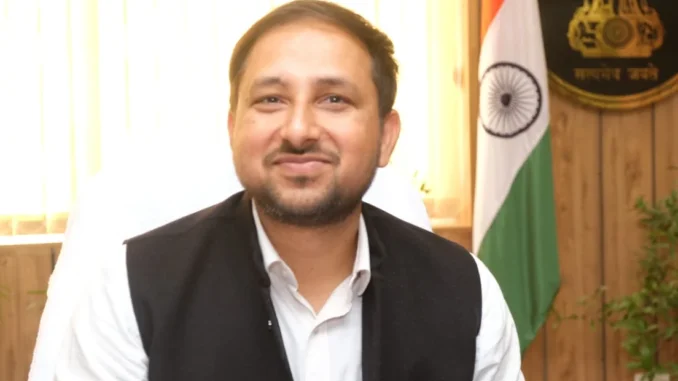
Gaurav Singh Sogarwal IAS is one of the most profoundly inspiring civil servants India has produced in recent memory. His is not simply a story of academic excellence or UPSC preparation strategy it is a story of raw human resilience, of surviving the unsurvivable, of carrying a household on a teenage boy’s shoulders while still daring to dream of becoming an IAS officer, and of ultimately turning that dream into reality through a journey so dramatic, so difficult, and so ultimately triumphant that it reads like the very best kind of fiction except that every word of it is true.
A 2017-batch IAS officer serving under the Uttar Pradesh cadre, Gaurav Singh Sogarwal hails from the rural heartland of Bharatpur district in Rajasthan. He studied in a Hindi medium school. He lost his mother when he was three years old. He lost his father when he was fourteen, in the middle of his Class 10 examinations. He worked in agricultural fields at dawn before going to school. He gave tuitions to children in the evenings to earn money for his family’s survival.
He put himself through an engineering college in Pune while simultaneously supporting the education of his brother and the marriage of his sister. He taught at a prestigious coaching institution in Kota for ₹20 lakhs a year not because it was his dream, but because his family needed it.
He qualified for the UPSC Civil Services Examination twice securing All India Rank 99 in CSE 2015 and All India Rank 46 in CSE 2016 before being inducted into the IAS under the 2017 batch. He cleared the UPSC in Hindi medium, with Sanskrit Literature as his optional subject. And then, as an IAS officer, he launched the landmark Gorakhpur Pahal initiative, created nine online delivery portals during the COVID-19 lockdown so that poor citizens could receive essential supplies at their homes without delivery charges, and built a career defined by citizen-first governance and administrative courage.
| Gaurav Singh Sogarwal | |
|---|---|
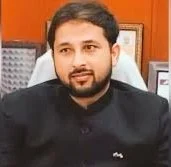 Gaurav Singh Sogarwal: History · Bio · Photo
|
|
| Wiki Facts & About Data | |
| Full Name: | Gaurav Singh Sogarwal |
| Birthplace: | Bharatpur, Rajasthan, India |
| Nationality: | Indian |
| Occupation: | Indian Administrative Service (IAS) Officer |
| Religion: | Hindu |
| Spouse: | Anuj Malik IAS (Uttar Pradesh cadre) |
| Net Worth: | Not Publicly Disclosed |
Early Life
Gaurav Singh Sogarwal was born into a rural agricultural family in Bharatpur district in Rajasthan one of Rajasthan’s historically important districts, situated near the borders of Uttar Pradesh and Haryana and known for the magnificent Keoladeo Bird Sanctuary. His family came from a modest agricultural background, with a small farm that provided subsistence-level income. His father served as a teacher in a local government school a profession that placed the family at the lower rungs of the rural middle class but instilled in the household a deep and unwavering value for education.
The earliest and most defining tragedy of Gaurav’s life came in 1991, when he was just three years old: his mother passed away. The loss of a mother at such a tender age is among the most fundamental wounds a child can carry. He was subsequently raised by his stepmother and his father a schoolteacher who became, in every meaningful sense, the gravitational center of the family and the source of the single most important dream that would define Gaurav’s life for the next two decades. His father’s dream spoken aloud, repeated, nurtured with persistent love was that Gaurav would one day become an IAS officer.
That dream was tested severely by the second defining tragedy of Gaurav’s childhood. In 2002, when Gaurav was fourteen years old and studying in Class 10, his father passed away. The man who had believed most fiercely in Gaurav’s future was gone and with him went the household’s primary source of income, stability, and emotional anchoring. The pension that the government eventually provided took over a year to begin arriving and was, in Gaurav’s own words, a meager amount that was insufficient to sustain the family comfortably.
Overnight, the fourteen-year-old Gaurav Singh Sogarwal became the functional head of a household that included his stepmother, an elder sister, and a younger brother. The agricultural work that had always been a background activity of the family became a daily morning responsibility. He would wake at 5 AM, work in the family’s small farm, and then walk to school arriving as a student in the same classrooms where his peers were navigating the ordinary concerns of adolescence, without any awareness of the extraordinary weight being carried by the quiet, determined boy sitting among them.
To earn additional money for the family’s needs and for his own education expenses, Gaurav began giving private tuitions to younger school children in the evenings a practice he would maintain for years, long after financial necessity had technically diminished. Life was, as he has described it in his own words, full of challenges. The dream of becoming an IAS officer felt impossible. But the memory of his father the sound of his voice saying “tu afsar banega” (you will become an officer) never left him. Whenever he felt discouraged, he would remember his father’s belief, and find in that memory the strength to keep going.
His early life in Bharatpur is the bedrock of everything that followed. It explains his extraordinary persistence through multiple UPSC attempts. It explains his instinctive focus on the needs of common citizens as an IAS officer. And it explains why, when he became one of the most celebrated civil servants in Uttar Pradesh, he brought to his role not just administrative competence but something rarer and more powerful: the experiential wisdom of someone who has genuinely lived the hardships he now works to address.
Education
Hindi Medium Schooling in Bharatpur
Gaurav Singh Sogarwal completed his schooling entirely in the Hindi medium in Bharatpur a detail that would later become one of the most celebrated and significant aspects of his UPSC success story. Studying in Hindi medium in a rural government school environment is often cited as a disadvantage in the competitive landscape of the UPSC Civil Services Examination, which has historically been dominated by English-medium aspirants from urban educational backgrounds. Gaurav Sogarwal’s success in Hindi medium, culminating in an All India Rank of 46 in the CSE 2016 examination, is one of the most powerful refutations of this stereotype in recent UPSC history.
His schooling years were marked not just by academic engagement but by the extraordinary life circumstances that surrounded his studies. Even as he attended school in Bharatpur, he was simultaneously managing agricultural work, giving tuitions, and bearing the emotional weight of having lost both parents before his adult life had properly begun. That he managed to complete his schooling with sufficient academic standing to gain admission to a reputable engineering college is a testament to his extraordinary discipline and intellectual capability.
BE in Electrical Engineering, Bharati Vidyapeeth, Pune
After completing his schooling, Gaurav Singh Sogarwal secured admission to Bharati Vidyapeeth in Pune one of Maharashtra’s well-regarded university-level institutions for a Bachelor of Engineering (BE) degree in Electrical Engineering. Moving from rural Bharatpur in Rajasthan to Pune one of India’s most dynamic and cosmopolitan cities was itself a significant transition, both geographically and culturally.
His engineering college years were anything but conventional. While his classmates explored the social and recreational dimensions of college life in Pune, Gaurav had no space for leisure. His day would begin at 5 in the morning. He gave tuitions to school children in the mornings and evenings to earn money that went toward his own college fees, his brother’s education expenses, his sister’s needs, and the household back in Bharatpur. He would complete his college assignments within campus since he could not afford the time to do them at home between his tuition schedules. He would return to his hostel only by 9:30 PM, gear up for a few hours of sleep, and begin the same cycle again the next morning.
It was during his time in Pune, experiencing the breadth and dynamism of a modern city, that the aspiration to become an IAS officer always there, always his father’s dream began to crystallize into a concrete personal goal. The engineering education gave him a structured, analytical way of thinking that would prove useful in both UPSC preparation and in his subsequent career in district administration. He completed his BE in Electrical Engineering and graduated with the determination to pursue the civil services.
Career
Teaching Career: Narayana IIT Academy, Delhi and ETOOS Coaching, Kota
After completing his engineering degree, Gaurav Singh Sogarwal moved to Delhi motivated both by the desire to begin serious UPSC preparation and by the practical need to find employment that could sustain him. Delhi’s Mukherjee Nagar, the heartland of the UPSC coaching ecosystem in India, became his home base for the years of preparation that lay ahead.
He secured a teaching position at the Narayana IIT Academy in Delhi leveraging his engineering background to teach technical subjects to students preparing for engineering entrance examinations. This dual life teaching by day to earn money and preparing for the UPSC by whatever time remained became his operational rhythm for the early years of his civil services journey.
A major turning point in his financial situation came when he was offered a position as a faculty member at ETOOS Coaching Institute in Kota one of India’s most renowned and competitive coaching hubs for engineering and medical entrance preparation. The offer came with an annual remuneration of Rs. 20 lakhs a package that represented a dramatic leap from the financial insecurity of his childhood and adolescence. He accepted the position and continued there for two years. During this period, he used the financial security his teaching income provided to accomplish two important family milestones: he arranged and funded his elder sister’s marriage, and he enabled his younger brother to complete an MBA degree. These were not small achievements they were the fulfillment of the responsibilities that had been thrust upon him at the age of fourteen, now finally discharged with dignity and care.
Financially secure for the first time in his life, Gaurav Sogarwal made a decision that many would have considered irrational: he quit his high-paying teaching job and returned to Delhi’s Mukherjee Nagar to resume full-time UPSC preparation. His calling was the civil services, and no salary however substantial could silence it.
The BSF Episode: A Twist of Fate
During his UPSC preparation years in Delhi, Gaurav Singh Sogarwal qualified for the Assistant Commandant examination of the Border Security Force (BSF) the paramilitary force responsible for guarding India’s international borders. His selection represented yet another significant achievement in a life already full of against-the-odds accomplishments. However, on the day he was to report to the BSF Academy for training, he arrived one day late due to unforeseen circumstances an error that should have cost him his place entirely.
In a testament to his persuasive conviction and the merit of his case, Gaurav personally approached the Director General of the BSF and requested consideration for his late arrival. After some initial reluctance, the DG agreed, and he was permitted to join the academy. The episode is a small but telling window into Gaurav Sogarwal’s character: the same determination that drove him to overcome childhood tragedies was equally evident in his refusal to accept an administrative setback as a final verdict.
But fate, as it often does in truly extraordinary stories, had a different plan waiting. On Gaurav’s very first day of BSF training at the academy, the news arrived that he had cleared the UPSC Civil Services Examination 2015 with an All India Rank of 99. He had made it into the Indian Police Service. His BSF training, barely begun, was no longer relevant. The IPS awaited.
UPSC CSE 2015: All India Rank 99 IPS Allotment
Gaurav Singh Sogarwal’s All India Rank of 99 in the UPSC Civil Services Examination 2015 placed him in the Indian Police Service a prestigious and powerful central service that represents the pinnacle of achievement for most civil services aspirants. For many candidates, an IPS allotment with AIR 99 would have been the culmination of their journey the dream fulfilled, the story complete.
But for Gaurav Sogarwal, the IPS was not the destination his father’s dream had pointed toward. His father had wanted him to become an IAS officer the administrative service, not the police service. And so, even as he completed the formalities of his IPS allotment, even as he processed the extraordinary achievement of his CSE 2015 rank, Gaurav made the decision to appear for the UPSC Civil Services Examination one more time in 2016 with the explicit goal of improving his rank sufficiently to earn the Indian Administrative Service.
This decision to attempt the UPSC again when he had already secured an IPS rank reflects something fundamental about Gaurav Singh Sogarwal’s character: the uncompromising commitment to a specific goal, undiluted by the temptation of a lesser but still significant achievement. His father had said IAS. He had heard IAS. He would achieve IAS.
UPSC CSE 2016: All India Rank 46 IAS Allotment
In the UPSC Civil Services Examination 2016, Gaurav Singh Sogarwal did not merely improve his rank he transformed it. Moving from AIR 99 to AIR 46 in a single year represented a significant improvement by any standard, and it secured for him precisely what he had always sought: a place in the Indian Administrative Service. He was allotted the Uttar Pradesh cadre and inducted into the IAS under the 2017 batch.
His achievement in the CSE 2016 examination carried a special significance that went beyond the rank itself: he had cleared the UPSC Civil Services Examination in Hindi medium, using Sanskrit Literature as his optional subject. In the context of the Indian UPSC ecosystem where Hindi medium aspirants from rural and semi-rural backgrounds frequently feel disadvantaged relative to their English-medium urban counterparts his AIR 46 in Hindi medium was a powerful and nationally celebrated statement of possibility.
Sanskrit Literature as an optional subject is an unconventional choice one that many coaching institutions and preparation guides might not readily recommend given the relatively specialized nature of the subject. Gaurav Sogarwal’s success with Sanskrit Literature demonstrated that with genuine mastery, interest, and the right preparation approach, unconventional optional subjects can be as competitive as mainstream ones. His success story has since inspired numerous Hindi medium aspirants and those considering Sanskrit Literature as an optional to pursue their preparation with greater confidence.
Foundation Training: LBSNAA, Mussoorie
Upon his formal appointment to the IAS under the 2017 batch, Gaurav Singh Sogarwal completed his Phase-I Foundation Training at the Lal Bahadur Shastri National Academy of Administration (LBSNAA) in Mussoorie. The Foundation Course, which brings together probationers from the IAS, IPS, IFS, and other Group A central services, provided him with a comprehensive introduction to the theory and practice of Indian public administration, constitutional governance, developmental economics, and ethical civil service. He then underwent district-level training before being posted to his first substantive field assignment in Uttar Pradesh.
Joint Magistrate and SDM Sadar, Gorakhpur and the Gorakhpur Pahal Initiative
Gaurav Singh Sogarwal’s first major posting as an IAS officer placed him in Gorakhpur one of Uttar Pradesh’s largest and most politically significant cities, known as the “CM’s City” for its deep association with the incumbent Chief Minister of Uttar Pradesh. Serving simultaneously as Joint Magistrate and Sub-Divisional Magistrate (SDM) Sadar, Gorakhpur, he took charge of one of the most administratively challenging sub-divisional jurisdictions in the state.
His tenure in Gorakhpur was defined by two landmark initiatives that earned him state-wide and national recognition for innovative, citizen-first governance.
The first and most celebrated of these was the Gorakhpur Pahal Initiative a bold, comprehensive anti-encroachment drive that targeted the large-scale illegal occupation of government land across the Gorakhpur Sadar sub-division. Under his leadership, Gorakhpur Pahal succeeded in removing encroachment from approximately 80 acres of government land within the city limits and an additional 350 acres in the rural areas of the sub-division a total of approximately 430 acres of government land reclaimed from illegal occupants in a single sustained administrative effort. This was a significant achievement in a city where encroachment on government land had been a persistent and politically sensitive governance challenge for years. The initiative required both administrative courage given the political implications of anti-encroachment actions in any major UP city and operational precision in planning and execution.
The second initiative for which Gaurav Singh Sogarwal became nationally known came in the context of the COVID-19 pandemic and the nationwide lockdown imposed in March 2020. When the lockdown created an acute crisis for the poor and vulnerable citizens of Gorakhpur who were unable to access essential commodities like ration, vegetables, milk, and medicines because markets and supply chains had been disrupted Gaurav Sogarwal launched nine online delivery portals on his own initiative, through which essential services and supplies could be ordered and delivered directly to citizens’ homes across the sub-division. Critically, he imposed no delivery charges on these services ensuring that the poorest households could access the initiative without financial barriers. The scale, speed, and citizen-sensitivity of this COVID relief initiative drew widespread praise from civil society, media, and the administrative community alike. His work during the lockdown period was specifically appreciated by the Prime Minister’s Office (PMO) a recognition that underscored the national significance of what he had achieved on the ground in Gorakhpur.
His overall tenure in Gorakhpur within just a single year, as noted by observers who documented his work fundamentally changed the visible landscape of the city’s governance and set a new standard for what an energetic, committed junior IAS officer can achieve in a field posting.
Joint Magistrate, Gorakhpur (Further Posting)
Following his remarkable tenure as SDM Sadar, Gaurav Singh Sogarwal continued to serve in Gorakhpur as Joint Magistrate deepening his experience in the district’s administrative machinery and strengthening the governance systems he had helped build during his SDM posting. His extended association with Gorakhpur gave him an unusually comprehensive understanding of one of UP’s most complex urban and peri-urban administrative environments.
Chief Development Officer (CDO), Maharajganj (February 2021 onwards)
In February 2021, Gaurav Singh Sogarwal was transferred from his Joint Magistrate posting in Gorakhpur and appointed as Chief Development Officer (CDO) of Maharajganj a border district of Uttar Pradesh that shares an international boundary with Nepal. As CDO, he assumed comprehensive responsibility for the district’s rural development agenda overseeing the implementation of welfare schemes, coordinating gram panchayat-level governance, supervising agricultural development programs, managing MNREGA employment generation, and driving the overall development agenda of one of UP’s more geographically and socio-economically complex border districts.
His appointment as CDO of Maharajganj represented a significant step up from his sub-divisional and joint magistrate postings placing him for the first time in a district-level senior leadership role with full accountability for an extensive portfolio of rural development responsibilities. His CDO posting in Maharajganj drew attention from local media and administrative observers, who noted the continuity between his citizen-focused governance approach in Gorakhpur and the priorities he brought to his new role in Maharajganj. He was subsequently transferred from Maharajganj back to Gorakhpur as part of routine UP government administrative reshuffles, continuing his career trajectory within the Gorakhpur divisional region of Uttar Pradesh.
UPSC Preparation Strategy Insights from a Hindi Medium Topper
Gaurav Singh Sogarwal has been generous in sharing his UPSC preparation insights with aspirants particularly Hindi medium aspirants who may doubt whether the examination is equally accessible to them. His own journey, from a Hindi medium school in rural Bharatpur to an AIR 46 in the CSE 2016, provides the most powerful evidence of all: it is absolutely possible.
On the choice of medium, he is clear: Hindi medium candidates should not be intimidated by the examination. The syllabus and the questions are the same for all candidates. The key is to master the content and the art of answer writing in the medium of one’s choice, with the same depth and analytical rigor expected of any candidate. He advises Hindi medium aspirants to read The Hindu or The Indian Express regularly but cautions strongly against using Google Translate to convert English articles into Hindi. Translation tools, he notes, frequently alter the meaning and strip away the nuance of the original content, causing more confusion than clarity. Instead, he advises aspirants to gradually develop the ability to read and understand English source material directly.
On optional subject selection, Gaurav Sogarwal’s choice of Sanskrit Literature a subject that many would consider risky or obscure for the UPSC reflects his broader philosophy: choose the subject you genuinely know and can write about with depth and authority. His mastery of Sanskrit Literature was rooted in his educational background and his cultural connection to the classical language through his Hindi medium schooling. He has advised aspirants that what matters most in the optional subject is not the perceived popularity or scoring reputation of the subject, but the candidate’s genuine familiarity, command, and ability to write analytically within its framework.
On the interview (Personality Test), he places particular emphasis on the Detailed Application Form (DAF) the document that serves as the primary basis for interview questions. He advises candidates to fill the DAF with extreme care and attention, and to prepare thoroughly for questions arising from every entry they make in it. He stresses that approximately 70% of interview questions typically revolve around the DAF, making it the single most important document in the interview preparation process. He also strongly recommends attending multiple mock interview sessions which he found personally very valuable in preparing for the real interview experience.
On maintaining study momentum, he emphasizes consistency over intensity. The UPSC Civil Services Examination is a marathon, not a sprint, and the key to success as his own multi-year journey demonstrated is the ability to maintain disciplined preparation across extended periods, recovering from setbacks without losing direction or purpose.
Awards and Recognitions
Gaurav Singh Sogarwal’s career has been marked by professional recognition at multiple levels. His work as SDM Sadar in Gorakhpur particularly the Gorakhpur Pahal anti-encroachment initiative and his COVID-19 lockdown online delivery portal system earned him significant official recognition. His pandemic relief work was specifically appreciated by the Prime Minister’s Office (PMO) of India one of the highest forms of official acknowledgment available to a district-level administrator, and a recognition that brought national attention to the impact of his on-ground governance innovation in Gorakhpur.
His achievement of All India Rank 46 in the UPSC Civil Services Examination 2016 in Hindi medium with Sanskrit Literature as his optional subject was itself recognized across the civil services community and the broader educational ecosystem as a landmark achievement one that has been cited repeatedly in the years since as evidence that the IAS is accessible to candidates from any linguistic background, provided they prepare with the right strategy and the right mindset.
His life story orphaned in childhood, agriculturally employed in adolescence, nationally recognized as an IAS officer by his early thirties has itself become a form of living recognition: it has been featured in multiple national media platforms, civil services preparation websites, and inspirational content channels as one of the most powerful UPSC success stories of the modern era.
Social Media
Gaurav Singh Sogarwal maintains a presence on social media platforms, where his story and administrative work have been widely shared and discussed. His Gorakhpur Pahal initiative and his COVID-19 lockdown delivery portal system generated significant organic social media coverage, with his work being shared extensively across Twitter (now X), Facebook, and WhatsApp communities in Uttar Pradesh and beyond.
He has participated in multiple public video talks and toppers’ strategy sessions that have been widely circulated on YouTube and other platforms including sessions on UPSC Mains preparation strategy for Hindi medium aspirants, topper’s talks on his preparation journey, and interviews where he has shared the personal story of his childhood and his path to the IAS. These resources, freely available online, have been accessed by hundreds of thousands of UPSC aspirants and continue to circulate widely within the civil services preparation community.
His official administrative work in Gorakhpur and Maharajganj has also been covered extensively by regional and national Hindi news publications and digital news platforms, giving him a significant public profile within Uttar Pradesh’s administrative and civic landscape.
Personal Life
Gaurav Singh Sogarwal is married to Anuj Malik, who is herself an IAS officer serving in the Uttar Pradesh cadre. At the time of documented reporting, Anuj Malik IAS was posted as Chief Development Officer (CDO) of Kushinagar district in Uttar Pradesh a significant district-level posting in UP’s Gorakhpur division. Their marriage represents one of the most genuinely resonant IAS couple stories in recent memory two officers who have each built distinguished careers in public service, serving the people of Uttar Pradesh through parallel but complementary administrative roles.
The details of Gaurav Sogarwal’s family beyond his wife include his elder sister, whose marriage he arranged and funded from his teaching income before joining the IAS, and his younger brother, whose MBA degree he similarly supported. Both siblings represent the fulfillment of the familial responsibilities he inherited at fourteen responsibilities he carried faithfully, without complaint, across a decade and more of personal struggle before finally achieving the dream that his late father had entrusted to him.
In terms of personal values, Gaurav Singh Sogarwal has been consistent and transparent in his public communications about what drives him as both a civil servant and a human being. He has spoken movingly about his father’s unfulfilled dream the man who kept saying “tu afsar banega” until he could say it no more and about how the memory of that dream became the motivational anchor of his entire UPSC journey. The father who died before he could see his son become an IAS officer is, in a very real sense, present in every initiative Gaurav Sogarwal has launched as an administrator in Gorakhpur Pahal, in the COVID delivery portals, in the way he consistently prioritizes the needs of the most ordinary, most vulnerable citizens above all other administrative concerns.
There are no known controversies associated with Gaurav Singh Sogarwal. His public profile is one of integrity, innovation, and genuine humanistic commitment qualities that have earned him deep respect from colleagues, subordinates, citizens, and civil services aspirants alike.
Net Worth
Gaurav Singh Sogarwal’s personal net worth has not been publicly disclosed in any official or credible record. As a 2017-batch IAS officer serving under the Uttar Pradesh cadre, his primary source of income is his government salary commensurate with his rank and seniority. IAS officers at his level with approximately seven to eight years of service and likely having crossed into Senior Time Scale by now typically earn a monthly salary in the range of approximately ₹67,700 to ₹1,00,000 or above (as per the 7th Central Pay Commission pay structure), inclusive of government allowances such as Dearness Allowance, House Rent Allowance or government accommodation, and travel allowances.
Prior to joining the IAS, Gaurav Sogarwal had earned a significant income during his two-year tenure at ETOOS Coaching Institute in Kota, where he was paid ₹20 lakhs annually an income he deliberately chose to leave behind in order to pursue his civil services calling. He has no known commercial ventures or business interests beyond his government career. His net worth, while undisclosed, reflects the life of a career civil servant who chose purpose over profit at every significant fork in the road.
Frequently Asked Questions (FAQs)
Who is Gaurav Singh Sogarwal IAS?
Gaurav Singh Sogarwal is a 2017-batch IAS officer serving under the Uttar Pradesh cadre. He secured All India Rank 99 in the UPSC Civil Services Examination 2015 (allotted IPS) and All India Rank 46 in the UPSC Civil Services Examination 2016 (allotted IAS). He prepared for the UPSC in Hindi medium with Sanskrit Literature as his optional subject. He is widely known for his extraordinary personal story losing both parents in childhood, working agricultural fields and giving tuitions to survive, teaching at ETOOS Kota for ₹20 lakhs before quitting to pursue the IAS and for his landmark governance initiatives as SDM Sadar in Gorakhpur, including Gorakhpur Pahal and the COVID-19 lockdown online delivery portals.
What is Gaurav Singh Sogarwal’s UPSC rank?
Gaurav Singh Sogarwal secured All India Rank 99 in the UPSC Civil Services Examination 2015, which led to his allotment to the Indian Police Service (IPS). He then appeared for the examination again in 2016 and secured All India Rank 46, which led to his allotment to the Indian Administrative Service (IAS) under the 2017 batch, Uttar Pradesh cadre.
Did Gaurav Singh Sogarwal clear UPSC in Hindi medium?
Yes. Gaurav Singh Sogarwal cleared the UPSC Civil Services Examination in Hindi medium one of the most celebrated examples in recent memory of a Hindi medium candidate achieving a top rank (AIR 46 in CSE 2016) in the examination. He is widely cited as an inspiration for Hindi medium aspirants across India who aspire to the IAS.
What was Gaurav Singh Sogarwal’s optional subject in UPSC?
Gaurav Singh Sogarwal chose Sanskrit Literature as his optional subject for the UPSC Civil Services Examination an unconventional but highly effective choice that drew on his deep familiarity with the classical language through his Hindi medium educational background. His success with Sanskrit Literature as an optional has inspired aspirants to consider the subject seriously as a potential optional choice.
What is the Gorakhpur Pahal initiative of Gaurav Singh Sogarwal?
Gorakhpur Pahal was a landmark anti-encroachment initiative launched by Gaurav Singh Sogarwal during his tenure as Sub-Divisional Magistrate (SDM) Sadar in Gorakhpur. Under this initiative, encroachment was removed from approximately 80 acres of government land within Gorakhpur city and 350 acres in the rural areas of the sub-division a total of approximately 430 acres of government land reclaimed from illegal occupants. The initiative was completed within a single year of his posting and transformed the governance landscape of Gorakhpur Sadar sub-division.
What did Gaurav Singh Sogarwal do during the COVID-19 lockdown?
During the COVID-19 lockdown imposed in March 2020, Gaurav Singh Sogarwal launched nine online delivery portals on his own initiative, through which essential commodities including ration, vegetables, milk, and medicines could be ordered and delivered directly to citizens’ homes across Gorakhpur Sadar sub-division. Crucially, he imposed no delivery charges on these services, ensuring accessibility for the poorest households. This initiative was specifically appreciated by the Prime Minister’s Office (PMO) of India.
Who is the wife of Gaurav Singh Sogarwal IAS?
Gaurav Singh Sogarwal is married to Anuj Malik, who is also an IAS officer serving under the Uttar Pradesh cadre. She has served in significant district-level roles in Uttar Pradesh, including as Chief Development Officer (CDO) of Kushinagar district. They are one of the most recognized IAS couples associated with the Gorakhpur divisional region of Uttar Pradesh.
What was Gaurav Singh Sogarwal’s salary at ETOOS Kota?
Before joining the IAS, Gaurav Singh Sogarwal served as a faculty member at ETOOS Coaching Institute in Kota one of India’s premier engineering entrance coaching institutions and earned an annual salary of Rs. 20 lakhs. Despite this substantial income, he chose to leave his teaching career and return to UPSC preparation in Delhi’s Mukherjee Nagar, following his calling to public service.
What is the education qualification of Gaurav Singh Sogarwal?
Gaurav Singh Sogarwal completed his schooling in Hindi medium in Bharatpur, Rajasthan, and went on to earn a Bachelor of Engineering (BE) degree in Electrical Engineering from Bharati Vidyapeeth in Pune, Maharashtra. He subsequently cleared the UPSC Civil Services Examination in Hindi medium with Sanskrit Literature as his optional subject.
Where is Gaurav Singh Sogarwal currently posted?
Gaurav Singh Sogarwal has served in multiple postings across the Gorakhpur divisional region of Uttar Pradesh, including as SDM Sadar Gorakhpur, Joint Magistrate Gorakhpur, and Chief Development Officer of Maharajganj (from February 2021). He was subsequently transferred back to Gorakhpur as part of routine UP government administrative reshuffles. For the most current posting information, official UP government administrative records should be consulted.
Conclusion
Gaurav Singh Sogarwal IAS is not simply an IAS success story. He is a monument to the power of parental love specifically, the enduring power of a father’s belief in his son, a belief so strong that it survived the father’s own death and continued to guide his son across decades of hardship, self-reliance, financial struggle, agricultural labor, teaching gigs, a ₹20 lakh job offer, a BSF training academy, two UPSC examination halls, and ultimately, the corridors of some of the most consequential district offices in Uttar Pradesh.
His journey is a lesson in what true resilience looks like not the Instagram version of resilience, which is often indistinguishable from motivation-poster aesthetics, but the real thing: waking at five in the morning to work in a field when you are fourteen years old and then walking to school because your father’s dream was bigger than your grief, and his dream had now become yours. Giving private tuitions from morning to night in a city far from home. Quitting a ₹20 lakh salary because the civil services were calling. Appearing for the UPSC a second time when you had already cleared it once, because a police posting was not what your father had whispered in your ear before he died.
And then, once the IAS was finally his, carrying that same spirit that same instinctive orientation toward the needs of ordinary, struggling people directly into his work as an administrator. Gorakhpur Pahal. Nine COVID delivery portals. Zero delivery charges. PMO recognition. These are not random achievements. They are the administrative expression of a childhood spent understanding what it means to be poor, to be vulnerable, to need help and not know where to find it.
For every UPSC aspirant and especially for every Hindi medium aspirant from a rural, economically limited, Hindi-speaking background who has ever wondered whether the IAS is truly meant for people like them Gaurav Singh Sogarwal’s life gives the clearest, most categorical answer imaginable: yes. It is meant for you. It was always meant for you. And if a boy from Bharatpur who lost both parents before adulthood, worked the fields at dawn, and cracked the examination in Hindi with Sanskrit Literature could reach AIR 46 and build a career of national distinction, then so can you if you are willing to remember, on every difficult day, the dream that first brought you to this path.
Related People







Leave a Reply