
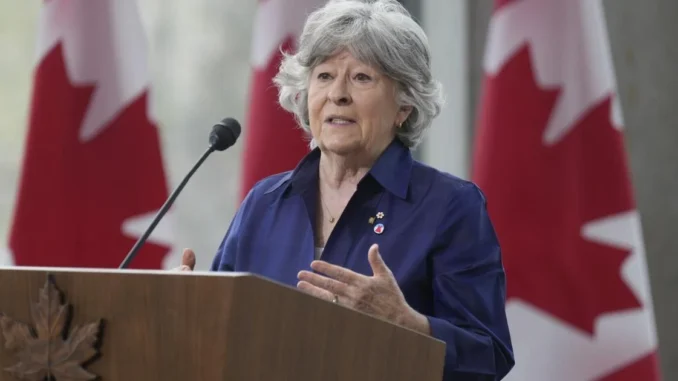
Who is Louise Arbour?
Louise Arbour CC GOQ (born February 10, 1947) is a Canadian lawyer, judge, prosecutor, and diplomat. She is best known internationally as the Chief Prosecutor of the International Criminal Tribunals for the former Yugoslavia (ICTY) and Rwanda (ICTR) from 1996 to 1999, during which tenure she oversaw the first indictment of a sitting head of state Serbian President Slobodan Milošević for war crimes, and secured the first international genocide conviction since the post-World War II Nuremberg trials.
She subsequently served as a Justice of the Supreme Court of Canada (1999–2004), as the United Nations High Commissioner for Human Rights (2004–2008), as President and CEO of the International Crisis Group (2009–2014), and as UN Special Representative for International Migration (2017–2018). She returned to private legal practice before being named Canada’s 31st Governor General in May 2026.
| Louise Arbour | |
|---|---|
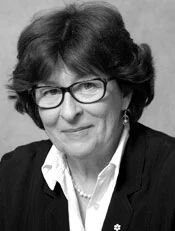 Louise Arbour: History · Bio · Photo
|
|
| Wiki Facts & About Data | |
| Full Name: | Louise Arbour |
| Born: | February 10, 1947 |
| Age: | 79 years old |
| Birthplace: | Montreal, Quebec, Canada |
| Nationality: | Canadian |
| Occupation: | Jurist · Lawyer · Prosecutor · Diplomat · Governor General of Canada (designate) |
| Religion: | Roman Catholic (raised) |
| Parents: | Bernard Arbour (Father) · Rose Ravary (Mother, later Ruth Laberge raised her) |
| Siblings: | Patrick (Brother) |
| Children: | Emilie Taman · Patrick Taman · Catherine Taman |
| Relationship: | Separated (from long-term partner Larry Taman) |
Early Life
Louise Arbour was born on February 10, 1947, in Montreal, Quebec, Canada, the daughter of Bernard Arbour and Rose Ravary.
Her parents, who owned a hotel chain, divorced when Louise was still young an experience that would shape her early years profoundly. Following the divorce, her mother, later known as Ruth Laberge, raised Louise and her brother, Patrick, as a single parent in Montreal’s working-class milieu.
While Louise attended school, her mother ran a store in downtown Montreal to keep the family afloat. It was a childhood defined by modest means, a strong maternal example, and a determination that circumstances of birth need not determine the limits of ambition.
Growing up in francophone Quebec in the 1950s and 1960s, Louise was immersed in the province’s vibrant and politically charged cultural identity. Quebec nationalism was at its height, and the province was in the midst of the Révolution Tranquille the Quiet Revolution a period of rapid social, political, and educational transformation that reshaped Quebec’s relationship with the rest of Canada and with its own traditions. For a young, intellectually curious girl like Louise, this environment was electrifying.
She encountered Quebec nationalism as a student at the Université de Montréal and found it initially appealing though her later investigations into the consequences of ethnic nationalism in former Yugoslavia would cause her to revisit that youthful attraction with far greater critical scrutiny.
She attended the Collège Régina Assumpta a strict, all-girls Roman Catholic convent school in Montreal for ten formative years. The school was demanding, disciplined, and deeply faith-oriented, but it also nurtured in Arbour a spirit of intellectual independence and gentle rebellion.
She served as editor of the school magazine, earning a reputation among her peers for irreverence and sharp wit. She later reflected on the school’s paradoxical influence, observing that it was “designed to get you to be a rebel to a point.” The institution intended to produce obedient, devout young women; what it produced, in Louise Arbour’s case, was one of the most relentlessly questioning and principled legal minds of her generation.
She graduated from Collège Régina Assumpta in 1967, having earned her Bachelor of Arts from the institution. She was fluent only in French at this stage of her life, a fact that would later become one of the defining challenges of her career as she sought to navigate the predominantly English-speaking world of Ontario’s legal profession and, eventually, the multilingual universe of international diplomacy and international law.
Education
Following her graduation from Collège Régina Assumpta in 1967, Louise Arbour enrolled immediately at the Université de Montréal’s Faculty of Law, where she pursued a degree in civil law known in Quebec’s legal tradition as an LL.L. (Licence en droit).
She excelled academically, graduating with distinction in 1970, a mark of exceptional academic performance in one of Canada’s most prestigious French-language law schools. Her time at the Université de Montréal was transformative intellectually, politically, and personally.
She later described an encounter during her time at law school as “one of the most influential events in [her] life,” one that directed her future career orientation, though she did not elaborate on the specifics in public accounts.
After obtaining her law degree, Arbour pursued the Quebec Bar Admission Course and was formally called to the Bar of Quebec in 1971. That same year, she secured a prestigious position as a law clerk to Justice Louis-Philippe Pigeon of the Supreme Court of Canada a remarkable placement for a 24-year-old who was still in the process of completing graduate studies at the Faculty of Law (Civil Section) of the University of Ottawa.
Her year as Pigeon’s law clerk gave her an intimate view of Canada’s highest court and deepened her understanding of constitutional and appellate jurisprudence.
It was also during her time at the University of Ottawa that she met Larry Taman, the man who would become her long-term common-law partner for 27 years. Taman was a fellow legal professional, and their partnership was both personal and intellectual, lasting until the relationship eventually ended in the late 1990s.
Following her clerkship, Arbour worked as a research officer at the Law Reform Commission of Canada from 1972 to 1973, engaging with the theoretical and policy dimensions of law reform. In 1974, she took up a position as a Lecturer at Osgoode Hall Law School, York University in Toronto stepping out of the predominantly French world of her legal education and into the predominantly English world of Ontario’s foremost law school.
In a 2014 interview with the Globe and Mail, Arbour acknowledged that this move from Quebec to Ontario was the “biggest hurdle [she] had to overcome to succeed in [her] career,” given that her entire formal education had been in French. She learned English as a working professional while teaching advanced legal subjects an extraordinary linguistic and cultural achievement.
At Osgoode Hall, she progressed rapidly through the academic ranks: Lecturer (1974), Assistant Professor (1975), Associate Professor (1977), and eventually Associate Professor and Associate Dean (1987) where she served for six months before her appointment to the bench.
She was a prolific scholar during this period, publishing extensively on criminal law, criminal procedure, civil liberties, human rights, and gender issues. She served as an editor for the Criminal Reports, the Canadian Human Rights Reporter, and the Osgoode Hall Law Journal. She was also called to the Bar of the Law Society of Upper Canada (Ontario) in 1977.
Career
Vice-President, Canadian Civil Liberties Association (1985–1987)
Alongside her academic career at Osgoode Hall, Arbour served as Vice-President of the Canadian Civil Liberties Association (CCLA) from 1985 to 1987. In this role, she was an active and vocal advocate for the rights of vulnerable groups within the Canadian legal system. She was particularly active in debates around Canada’s rape shield law legislation designed to protect sexual assault complainants from having their prior sexual history used against them in court. Arbour’s position was nuanced and controversial: she argued that the law, while well intentioned, risked convicting innocent accused persons, and she challenged certain provisions on constitutional grounds. This stance drew criticism from women’s rights advocates but demonstrated her commitment to principled legal consistency over political convenience.
Appointment to the Bench: Supreme Court of Ontario and Ontario Court of Appeal (1987–1996)
In December 1987, at the age of 40, Louise Arbour was appointed as a Justice of the Supreme Court of Ontario (High Court of Justice) one of the most significant judicial appointments a Canadian lawyer could receive. Three years later, in 1990, she was elevated to the Court of Appeal for Ontario, becoming the first Francophone ever appointed to that court a historic milestone in a province where francophone representation in the senior judiciary had long been limited.
On the Court of Appeal, Arbour established herself as a thoughtful, rigorous, and occasionally unconventional jurist. She was one of three judges on a five-member panel that voted to uphold the controversial acquittal of Imre Finta, a former Hungarian gendarmerie captain charged with deporting thousands of Jews to their deaths during World War II. The majority upheld the trial judge’s decision to allow the jury to consider Finta’s defence that he had been following orders a highly contentious ruling that drew sharp criticism from Holocaust survivor organisations and human rights advocates.
The Arbour Commission: Prison for Women Inquiry (1995–1996)
In 1995, while still serving on the Court of Appeal, Arbour was appointed by the federal government as sole Commissioner under the Inquiries Act to investigate and report on a series of deeply disturbing incidents at the Prison for Women (P4W) in Kingston, Ontario. The incidents in question had occurred in April 1994, when male officers from a specially trained Correctional Service Canada riot squad were deployed to conduct a strip search of female inmates in segregation an event that was later broadcast on national television and generated widespread public outrage.
Arbour conducted the inquiry with characteristic thoroughness and moral clarity, and her resulting Arbour Report was a scathing indictment of systemic abuse, institutional failure, and management culture within the federal correctional system. She found that the rule of law had been egregiously violated within the Prison for Women, and she made sweeping recommendations for reform. The report served as a catalyst for significant changes in Canada’s correctional policies and cemented Arbour’s reputation as a fearless investigator willing to challenge powerful institutions and hold them to account.
Chief Prosecutor, ICTY and ICTR (1996–1999): The World Stage
The chapter of Louise Arbour’s career that elevated her to global prominence began in 1996, when former Chief Prosecutor Richard Goldstone recommended her as his replacement at the two international criminal tribunals established by the United Nations Security Council the International Criminal Tribunal for the former Yugoslavia (ICTY) based in The Hague, Netherlands, and the International Criminal Tribunal for Rwanda (ICTR) based in Arusha, Tanzania.
Her appointment was approved by the Security Council on February 29, 1996, though it was not without controversy. Critics pointed to her limited profile in international human rights law and her role in the Finta decision. Additionally, her earlier challenge to Canada’s rape shield law alarmed tribunal activists who worried about her commitment to prosecuting the large number of sexual violence cases expected to come before the tribunals. Ultimately, her appointment was championed by US Ambassador to the UN Madeleine Albright, who favoured a woman with few international political affiliations to reduce the risk of politicisation.
Over the course of her three-year tenure as Chief Prosecutor, Arbour achieved a series of historic legal breakthroughs that fundamentally reshaped international criminal law. In Rwanda, she oversaw the prosecution that resulted in the conviction of former mayor Jean-Paul Akayesu on September 3, 1998 the first conviction for genocide by an international tribunal since the 1948 Genocide Convention and since the post-World War II Nuremberg trials. Crucially, the Akayesu case also established that rape and sexual violence constituted acts of genocide and crimes against humanity under international law a landmark ruling that transformed the global legal framework around sexual violence in conflict.
In the former Yugoslavia, Arbour pursued justice against the architects of the Balkan wars of the 1990s with tenacity, securing arrest warrants and building cases against accused individuals who had long evaded accountability. Her most dramatic achievement came in May 1999, when she oversaw the indictment of Slobodan Milošević the sitting President of the Federal Republic of Yugoslavia alongside four other senior Serbian and Yugoslav officials, for crimes against humanity, murder, deportation, and violations of the laws and customs of war in Kosovo. This was the first time in history that a sitting head of state had been indicted for war crimes by an international tribunal a watershed moment in international law and a powerful statement that no one, regardless of political office, was above accountability for atrocities.
The timing of the indictment was seismic: it was issued on May 27, 1999, in the middle of NATO’s ongoing bombing campaign against Yugoslavia. Arbour declined to investigate potential NATO war crimes during the campaign, a decision that drew criticism from some human rights observers but which she justified on the basis of the information available to her at the time. She was awarded the Medal of Honour by the International Association of Prosecutors in 1999 in recognition of her tenure.
Justice of the Supreme Court of Canada (1999–2004)
On June 10, 1999, Prime Minister Jean Chrétien appointed Louise Arbour to the Supreme Court of Canada just one day before the formal public announcement of the Milošević indictment. Her return to Canada was widely celebrated and seen as a sign of the Supreme Court’s growing significance in the post-Charter era of Canadian jurisprudence.
On the Supreme Court, Arbour demonstrated a progressive and expansive approach to constitutional interpretation, particularly in cases involving the Canadian Charter of Rights and Freedoms. She authored influential judgments in areas of criminal law, sentencing, administrative law, and extradition, and was frequently in the minority in cases where she sought to push the boundaries of Charter rights further than the majority was prepared to go particularly in areas such as decriminalising marijuana and protecting the economically vulnerable.
After just under five years on the bench having served from June 1999 to June 2004 Arbour stepped down from the Supreme Court, the pinnacle of any Canadian lawyer’s judicial ambition, to pursue what she considered an even more pressing calling.
UN High Commissioner for Human Rights (2004–2008)
In July 2004, Louise Arbour became the United Nations High Commissioner for Human Rights the fourth person to hold the position replacing the post left vacant by the death of Sérgio Vieira de Mello, who had been killed in the August 2003 bombing of the UN headquarters in Baghdad. Arbour served in this role until 2008, during which time she became one of the most outspoken and controversial senior UN officials of her era.
She used the platform fearlessly, challenging powerful governments and coalitions with a directness unusual in the world of multilateral diplomacy. In December 2005, she delivered a statement in which she characterised the US-led “war on terror” as a threat to the international prohibition on torture drawing immediate and fierce condemnation from John Bolton, then US Ambassador to the UN, who called her remarks “inappropriate and illegitimate for an international civil servant.” Undeterred, Arbour responded that pursuing security objectives at all costs risked creating a world in which people were “neither safe nor free.”
She also drew controversy in 2008 during the conflict between Israel and Hamas in Gaza, when she criticised what she described as the Israel Defence Forces’ “disproportionate use of force” against civilians, while simultaneously condemning Palestinian rocket attacks on Israeli civilian targets. These remarks prompted then-Canadian Conservative Public Safety Minister Vic Toews to call her a “disgrace.” Arbour’s response was characteristic: she stood by her assessment. When her four-year term ended in 2008, she did not seek renewal.
President and CEO, International Crisis Group (2009–2014)
From 2009 to 2014, Arbour served as President and CEO of the International Crisis Group (ICG) a Brussels-based independent non-governmental organisation devoted to conflict prevention and resolution. In this role, she led a global team of analysts and advocates working to influence policy makers on the world’s most dangerous and intractable crises. Her tenure deepened her understanding of conflict dynamics, peacebuilding, and the intersections of political violence and institutional fragility across Africa, Asia, the Middle East, and Latin America.
Senior Counsel at Borden Ladner Gervais (2014–2026)
After leaving the International Crisis Group, Arbour joined the Montreal office of Borden Ladner Gervais (BLG), one of Canada’s largest and most prestigious law firms, as Senior Counsel. She served in this capacity from 2014 to 2026, advising on governance, international disputes, and complex cross-border legal matters, while mentoring the next generation of Canadian lawyers. She was recognised in the 2025 and 2026 editions of The Best Lawyers in Canada (Corporate and Commercial Litigation) and was named Lawyer of the Year in Corporate and Commercial Litigation in 2026 by Best Lawyers.
UN Special Representative for International Migration (2017–2018)
On March 9, 2017, UN Secretary-General António Guterres appointed Arbour as his Special Representative for International Migration. She served in this capacity until December 2018, overseeing the negotiations and drafting process that led to the adoption of the Global Compact for Safe, Orderly and Regular Migration a landmark framework agreement adopted by the UN General Assembly in December 2018.
Independent Review of the Canadian Armed Forces (2021–2022)
In April 2021, Canadian Minister of National Defence Harjit Sajjan appointed Arbour to lead an Independent External Comprehensive Review into policies, procedures, practices, and culture within the Canadian Armed Forces (CAF) and the Department of National Defence, in response to a surge in reports of sexual harassment and sexual misconduct involving senior military leaders. In May 2022, she delivered her report to Minister of National Defence Anita Anand.
The resulting Arbour Report on the CAF was a devastating assessment of the military’s culture and institutional responses to sexual misconduct. She described the culture as “toxic” and characterised by a “glorification of masculinity.” She delivered 48 recommendations aimed at preventing and addressing sexual harassment and misconduct, improving reporting systems, and transferring the prosecution of these cases from the military justice system to civilian courts. The report was widely praised by advocates and represented one of the most significant interventions in the history of Canada’s defence establishment. Its publication directly influenced legislative changes to Canada’s military justice framework changes that Prime Minister Carney, upon naming her Governor General, vowed to accelerate.
Governor General of Canada: Appointment (May 5, 2026)
On May 5, 2026, Prime Minister Mark Carney announced in Ottawa that King Charles III had approved the appointment of Louise Arbour as Canada’s 31st Governor General the first appointed during the reign of King Charles III and the first to be named by Prime Minister Carney. She is set to replace outgoing Governor General Mary Simon, whose historic five-year term during which she became Canada’s first Indigenous Governor General was due to conclude in July 2026. Arbour’s term is projected to begin in July 2026.
In announcing the appointment, Prime Minister Carney described Arbour as someone who had “held institutions to account” throughout her career and who would represent “the best of Canada to Canadians and to the world.” He praised her record spearheading the first international criminal tribunals since Nuremberg and said she would be an exemplary “steward of our tradition of peace, order and good government” and a “guardian of our constitutional order.” Accepting the appointment with characteristic directness, Arbour said she accepted “with a deep sense of duty,” adding: “The strength of this country resides in stable institutions managed with wisdom and sustained through the desire for the well-being of our country and the planet.”
The appointment was broadly welcomed by Canada’s legal, diplomatic, and civil society communities. Outgoing Governor General Mary Simon offered her warm congratulations. The Assembly of First Nations acknowledged the appointment while honouring Simon’s historic legacy. However, the selection also drew some political pushback conservative commentators and publications argued that Arbour’s long record of progressive public positions made her a partisan choice for a role intended to be above politics. Arbour addressed these concerns directly, stating that she would serve “for all Canadians” and affirming her belief in the constitutional system she was being asked to represent.
Awards and Honours
- Achievement Award Women’s Law Association (1996)
- G. Arthur Martin Award Criminal Lawyers’ Association, Toronto (1998)
- Medal of Honour International Association of Prosecutors (1999)
- Médaille du mérite Institut de recherches cliniques de Montréal (1999)
- Prix de la Fondation Louise Weiss Paris (1999)
- Second Annual Service to Humanity Award Pennsylvania Bar Foundation (2000)
- Franklin and Eleanor Roosevelt Four Freedoms Medal Roosevelt Study Centre, The Netherlands (2000)
- Peace Award World Federalists of Canada (2000)
- Human Rights Award Lord Reading Law Society (2000)
- Women of Distinction Award Toronto Hadassah-Wizo (2000)
- Honorary Member American Society of International Law (2000)
- Wolfgang Friedman Memorial Award Columbia Law School (2001)
- EID-UL-ADHA Award Association of Progressive Muslims of Ontario (2001)
- Médaille du Barreau Quebec Bar (2001)
- National Achievement Award Jewish Women International of Canada (2001)
- Stefan A. Riesenfeld Symposium Award Berkeley Journal of International Law (2002)
- Person of the Year Award McGill Centre for Research and Teaching on Women (2002)
- Justice in the World International Prize International Association of Judges (2002)
- Honorary Fellowship American College of Trial Lawyers (2003)
- Hall of Fame International Women’s Forum (2003)
- Médaille de la Faculté de droit Université de Montréal (2003)
- Thomas J. Dodd Prize in International Justice and Human Rights (2005)
- Companion of the Order of Canada (CC) (2007)
- United Nations Human Rights Prize (2008)
- Honorary Fellow Royal College of Physicians and Surgeons of Canada (2008)
- Grande Officière, Ordre national du Québec (GOQ) (2009)
- Colombian Order of National Merit, Grand Cross class (2010)
- Commander of the French Légion d’honneur (2010)
- North-South Prize Council of Europe (2011, alongside former Brazilian President Lula da Silva)
- Griffin Bell Award for Courageous Advocacy American College of Trial Lawyers (2013)
- Inducted into Canada’s Walk of Fame (2014)
- Commander of the Ordre de Montréal
- Sandra Day O’Connor Justice Prize Arizona State University (2023)
- Lawyer of the Year, Corporate and Commercial Litigation Best Lawyers in Canada (2026)
- More than 40 honorary degrees from universities around the world, including the University of Western Ontario, University of British Columbia, University of Waterloo, University of Alberta, University of Guelph, Simon Fraser University, and Mount Saint Vincent University
Social Media
Louise Arbour maintains a modest social media presence, consistent with the reserved public profile typical of senior jurists and diplomatic figures. She does not have an extensively active personal social media account, and her public communications are most frequently delivered through official channels, press conferences, and institutional announcements. Her Governor General appointment generated enormous engagement across Canadian social media particularly on Twitter/X with major Canadian outlets including CBC, CTV News, Global News, and the Globe and Mail generating hundreds of thousands of interactions around her appointment on May 5, 2026.
Her profile across platforms such as LinkedIn reflects her extensive institutional affiliations, and Canadian legal and diplomatic communities regularly cite and share her public statements, reports, and addresses. The official Governor General of Canada social media channels on X, Facebook, and Instagram will serve as her primary digital presence once she formally assumes the vice-regal office in July 2026.
- Linkedin: @louisearbour
Personal Life
Partner and Children
Louise Arbour met her long-term common-law partner, Larry Taman, during her time at the University of Ottawa in the early 1970s, where she had gone to complete graduate legal studies while clerking for Justice Pigeon. Taman was a legal professional, and the two went on to build a life together over the course of 27 years. Though they were never formally married, their partnership was the central personal relationship of Arbour’s adult life during her most professionally active decades.
Together, Arbour and Taman have three adult children: Emilie Taman, Patrick Taman, and Catherine Taman. Emilie Taman followed her mother into public and political life, running as an NDP candidate in the 2015 Canadian federal election in the electoral district of Ottawa–Vanier. The partnership between Arbour and Taman eventually concluded, and the two separated after their 27-year union. The exact timeline of their separation has not been publicly disclosed by Arbour.
Language and Cultural Identity
Born and raised entirely in French-speaking Quebec, Arbour’s fluency in English is wholly self-acquired learned on the job as she transitioned from the Francophone world of Montreal and the Université de Montréal into the predominantly Anglophone world of Toronto’s Osgoode Hall Law School and later of international legal institutions. This bilingualism has been both a personal achievement and a professional asset, allowing her to operate with equal effectiveness in both of Canada’s official linguistic communities and in international forums where both languages are standard.
Her French-Canadian identity has remained a source of deep pride throughout her career, and her appointment as Governor General a role traditionally occupied by a bilingual Canadian was celebrated in Quebec as a recognition of Francophone achievement at the highest national level. The Bloc Québécois leader Yves-François Blanchet expressed his “utmost respect” for Arbour upon her appointment, a remarkable response from a sovereigntist party leader.
Controversies and Critical Positions
Arbour’s career has not been without controversy. Her challenge to Canada’s rape shield law in the 1980s drew criticism from women’s rights advocates. Her role in the Finta decision on the Ontario Court of Appeal was condemned by Holocaust survivor organisations. Her decision not to investigate potential NATO war crimes during the Kosovo campaign drew criticism from some international law scholars. Her statements as UN High Commissioner regarding US counter-terrorism policies and Israeli military operations in Gaza drew fierce political blowback. Her 2022 CAF report was condemned by parts of the military establishment. And her appointment as Governor General drew criticism from conservative commentators who viewed her progressive public record as incompatible with the non-partisan nature of the vice-regal office.
Throughout all of these controversies, Arbour’s response has been consistent: she has stood by her positions, explained her reasoning, acknowledged complexity, and declined to retreat from principled stances under political pressure. This quality intellectual courage combined with institutional accountability is the thread that connects every chapter of her career.
Biographical Portrayal
Arbour’s remarkable exploits as an international prosecutor during the Balkan wars were dramatised in the award-winning Canadian TV film Hunt for Justice (2005), in which actress Wendy Crewson portrayed Arbour. The film provided millions of Canadians with an accessible dramatisation of her historic work at the ICTY and helped cement her status as a public figure of enduring national significance.
Net Worth
Louise Arbour’s net worth is not publicly disclosed, as is standard for Canadian judicial and quasi-judicial figures.
However, based on her career trajectory across some of the most senior positions in Canadian and international public life, it is reasonable to assess her financial standing as comfortable and professionally earned.
Her income streams over the decades have included her judicial salary during her years on the Ontario bench and the Supreme Court of Canada; her UN compensation packages as Chief Prosecutor of the ICTY/ICTR, High Commissioner for Human Rights, and Special Representative for International Migration; her salary as President and CEO of the International Crisis Group; and, most recently, her compensation as Senior Counsel at Borden Ladner Gervais (BLG) one of Canada’s highest-billing law firms from 2014 to 2026.
As Governor General, she will receive an official salary and will reside at Rideau Hall in Ottawa and at the Citadelle of Quebec in Quebec City both official residences of the Governor General of Canada. Her appointment to this role marks the culmination of a career built entirely on public service and intellectual distinction rather than private wealth accumulation.
FAQs
Who is Louise Arbour?
Louise Arbour CC GOQ is a Canadian lawyer, judge, prosecutor, and diplomat. She is Canada’s Governor General-designate (from May 2026), a former Supreme Court of Canada justice, former UN High Commissioner for Human Rights, and former Chief Prosecutor of the International Criminal Tribunals for the former Yugoslavia and Rwanda.
When was Louise Arbour born?
She was born on February 10, 1947, in Montreal, Quebec, Canada. She is 79 years old as of 2026.
Why is Louise Arbour famous?
She is famous for indicting sitting Serbian President Slobodan Milošević for war crimes in 1999 the first time a serving head of state was charged by an international tribunal and for securing the first international genocide conviction since the 1948 Genocide Convention, during the Rwanda tribunal. She is also known for her tenure as UN High Commissioner for Human Rights and, most recently, for her appointment as Canada’s 31st Governor General in May 2026.
When was Louise Arbour named Governor General of Canada?
Prime Minister Mark Carney announced her appointment on May 5, 2026. King Charles III approved the appointment. She is set to formally assume the role in July 2026, succeeding Mary Simon, Canada’s first Indigenous Governor General.
Who are Louise Arbour’s children?
She has three children with her long-term common-law partner Larry Taman: Emilie Taman, Patrick Taman, and Catherine Taman. Her daughter Emilie ran as an NDP federal election candidate in Ottawa–Vanier in 2015.
What was the Arbour Report?
There are two distinct Arbour Reports. The first (1996) was her inquiry into conditions at the Prison for Women in Kingston, Ontario, which exposed systematic abuse and led to significant correctional policy reforms. The second (2022) was her Independent External Comprehensive Review of the Canadian Armed Forces, which condemned the military’s “toxic” culture of sexual misconduct and delivered 48 recommendations for reform, including moving prosecutions to civilian courts.
What schools did Louise Arbour attend?
She attended Collège Régina Assumpta (Montreal, graduated 1967), then the Université de Montréal Faculty of Law (LL.L. with distinction, 1970), and the University of Ottawa Faculty of Law (Civil Section) for graduate studies in 1971–72.
What is Louise Arbour’s most famous case?
The indictment of Yugoslav President Slobodan Milošević in May 1999 for crimes against humanity the first indictment of a sitting head of state in history is widely regarded as her most historically significant achievement. The case also established that rape and sexual violence could constitute genocide and crimes against humanity under international law.
What awards has Louise Arbour received?
She has received over 40 international medals and awards, including the Companion of the Order of Canada (2007), the United Nations Human Rights Prize (2008), the French Légion d’honneur (2010), the Council of Europe’s North-South Prize (2011), the Sandra Day O’Connor Justice Prize from Arizona State University (2023), and induction into Canada’s Walk of Fame (2014). She also holds more than 40 honorary degrees from universities around the world.
Is Louise Arbour married?
She was never formally married. She lived with her common-law partner Larry Taman for 27 years, with whom she has three children. The relationship has since ended.
Conclusion
Louise Arbour’s life and career constitute one of the most remarkable stories in the history of Canadian and international public service. From a working-class household in Montreal, raised by a single mother in the culturally turbulent atmosphere of mid-20th-century Quebec, she climbed through sheer intelligence, hard work, and moral courage to the very summit of Canada’s judiciary, the corridors of the United Nations, and now the vice-regal office of the Governor General.
She did not merely occupy these positions; she transformed them. As Chief Prosecutor at The Hague and in Arusha, she expanded the boundaries of what international criminal justice could achieve, establishing precedents that will govern international law for generations. As UN High Commissioner for Human Rights, she spoke uncomfortable truths to the world’s most powerful governments when most in her position would have chosen diplomatic silence. As the author of two devastating institutional reports on Canada’s Prison for Women and on the Canadian Armed Forces she held entrenched power accountable with a precision and moral clarity that only the most principled and courageous of investigators could muster.
Now, at 79, she takes on what may be her most symbolic role yet: Canada’s 31st Governor General the King’s representative in a country grappling with questions of national identity, institutional trust, Indigenous reconciliation, and constitutional resilience. As Prime Minister Carney noted in announcing her appointment, Canada needs a “guardian of our constitutional order” and someone who has, throughout a lifetime of service, demonstrated that she understands the meaning of that responsibility. In Louise Arbour, Canada has exactly that and much more.
Related People







Leave a Reply