
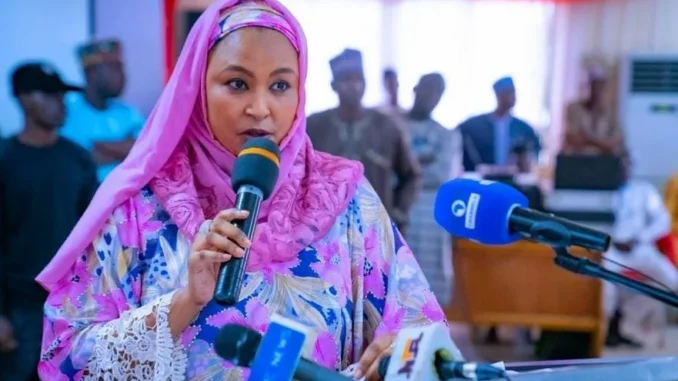
Hajiya Halima Shehu is one of Nigeria’s most prominent female public administrators, a trained banker, seasoned political operator, and social development advocate whose career trajectory carried her from the counter floors of one of Nigeria’s earliest commercial banks to the summit of one of the federal government’s most consequential social welfare agencies.
A woman of firsts in multiple capacities, she was confirmed by the Nigerian Senate in October 2023 as the National Coordinator and Chief Executive Officer of the National Social Investment Programme Agency (NSIPA), making her the first woman to head the agency.
Her story, however is not one of smooth, uninterrupted ascent. Her tenure at NSIPA lasted barely three months before she was suspended by President Bola Tinubu on 2 January 2024, amid allegations of financial malfeasance involving billions of naira, allegations that triggered an Economic and Financial Crimes Commission (EFCC) investigation and generated intense national media coverage.
Her biography is a microcosm of the broader Nigerian experience of public service: the genuine talent and real achievement on one hand, the complex and often treacherous terrain of federal government administration on the other. From Kafin Dagi village in Katsina State to the Senate chamber in Abuja to the custody of the EFCC, her story commands attention, and demands to be told in full.
| Halima Shehu | |
|---|---|
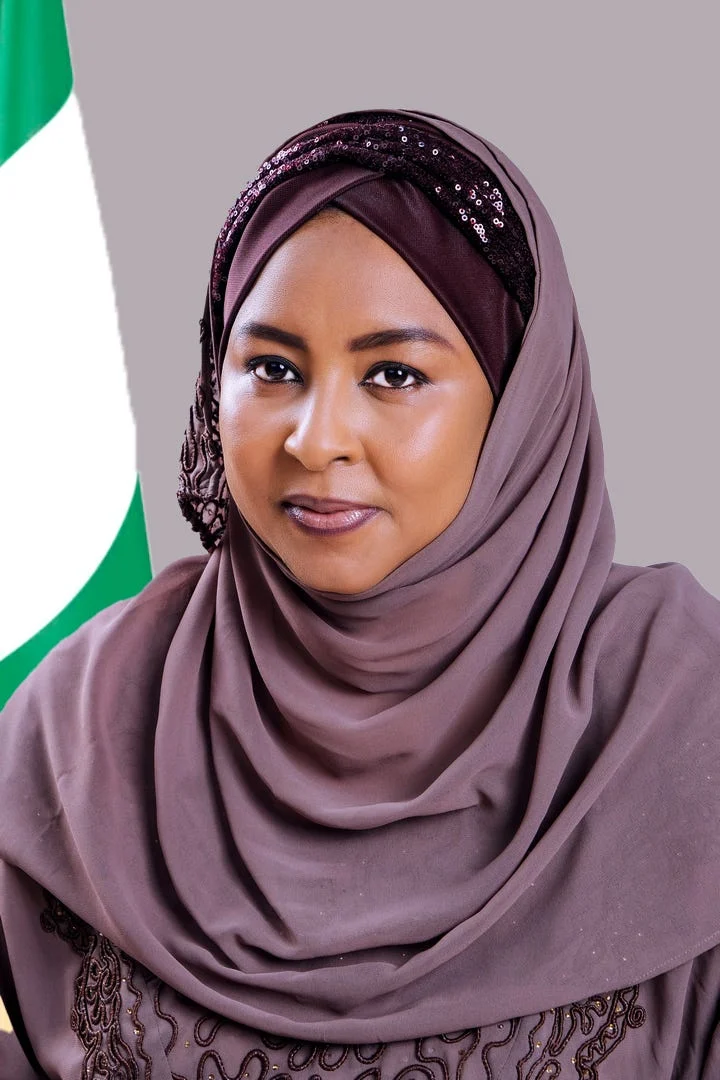 Halima Shehu: History · Bio · Photo
|
|
| Wiki Facts & About Data | |
| Full Name: | Halima Shehu |
| Born: | 12 March 1978 |
| Age: | 48 years old |
| Birthplace: | Kafin Dagi Village, Katsina, Katsina State, Nigeria |
| State of Origin: | Katsina State |
| Nationality: | Nigerian |
| Occupation: | Banker (retired), Politician, Public Administrator |
| Religion: | Islam |
| Parents: | Mr. and Mrs. Shehu (farmers; names not publicly disclosed) |
| Siblings: | Not publicly disclosed; she is the third child and only daughter of her parents |
| Spouse: | Married to a wealthy businessman and philanthropist (name not publicly disclosed); married in 2006 |
| Children: | Four — two sons and two daughters |
| Relationship: | Married |
| Net Worth: | $1 Million – $10 Million USD |
Early Life
Halima Shehu was born on 12 March 1978 in Kafin Dagi, a small, largely agricultural village in Katsina State in northwestern Nigeria. She is the third child and the only daughter of her parents, who were both subsistence farmers. Her family background is rooted in the agrarian traditions of northern Nigeria, where hard work, communal solidarity, and deep Islamic faith form the foundations of social life.
Growing up as the only daughter in a farming family in a small Katsina village was in many respects an unusual platform from which to launch the kind of professional career that Halima Shehu would go on to build, yet it proved to be formative in every meaningful sense.
Details about her parents’ specific names are not publicly disclosed, though multiple sources refer to them as Mr. and Mrs. Shehu in keeping with convention. What is clear from her own public statements and career trajectory is that she was raised in a household that valued education, a value that was far from universal for girls in rural northern Nigeria in the 1980s and 1990s. The fact that her parents supported her progression through primary, secondary, and ultimately tertiary education at one of Nigeria’s most prestigious universities reflects a family commitment to female education that was ahead of its time in its socioeconomic and cultural context.
As the only girl among her siblings, Halima developed a particular combination of independence and resilience that is evident throughout her professional life. She grew up surrounded by a community in which women’s public roles were limited, yet she consistently pushed beyond those limitations, pursuing a banking career, transitioning into politics, and ultimately reaching the highest executive position ever held by a woman in Nigeria’s national social investment administration. Her Katsina roots remain central to her identity, and she has been described by those who know her as a woman who has never forgotten where she came from, even as she navigated the corridors of federal power in Abuja.
Education
Halima Shehu’s educational journey began in Kafin Dagi, where she obtained her First School Leaving Certificate, completing her primary school education before proceeding to the next stage of her academic development. For her secondary education, she attended the Federal Government College in Kaduna State, one of Nigeria’s unity schools, established to foster national integration by bringing together students from across the country’s diverse ethnic and regional backgrounds. She excelled academically, obtaining her West African Senior School Certificate (WASC) and earning a place in a higher institution.
She proceeded to Ahmadu Bello University (ABU) in Zaria, Kaduna State, one of Nigeria’s oldest, largest, and most academically respected universities, founded in 1962 and named after the revered northern Nigerian statesman and first Premier of the Northern Region, Sir Ahmadu Bello. At ABU, she majored in English Language in the Faculty of Arts, earning her Bachelor of Arts degree in 1999. She was recognised as an outstanding graduate student in the Department of English upon her graduation, a distinction that speaks to the academic seriousness she brought to her undergraduate studies.
Following her undergraduate degree, she returned to Ahmadu Bello University to pursue postgraduate studies. She completed a Master of Science degree in International Affairs and Diplomacy, a qualification that broadened her intellectual framework beyond language and literature into the realm of global politics, diplomacy, trade, and international development. This postgraduate training would prove directly relevant to her later roles in social investment administration and her appointment as an election observer by ECOWAS.
Her academic credentials, a BA in English Language and an MSc in International Affairs and Diplomacy, both from ABU Zaria, provided her with a combination of communication skills and policy knowledge that underpinned her effectiveness as both a banking professional and a public administrator. In addition to her formal degrees, she undertook numerous professional training programmes during her banking career, including modules in Modular Training, Banking Operations, New Accounting Systems, New Credit Accord, Service Excellence and Customer Care, Anti-Money Laundering and Compliance, and advanced courses in Audit Command Language using ACL software and E-asi Bank Software Application.
Career
National Youth Service Corps, Afri-Project Consortium, Petroleum Trust Fund (1999–2000)
Following the completion of her undergraduate degree in 1999, Halima Shehu fulfilled her mandatory National Youth Service Corps (NYSC) obligation, a year of compulsory national service required of all Nigerian university graduates under thirty years of age. She was posted to the Afri-Project Consortium, which was a project operating under the Petroleum Trust Fund (PTF), the developmental fund established by the Abacha government in 1994 to channel oil revenues into infrastructure and social development projects across Nigeria. She served in the capacity of Project Officer during her NYSC year, gaining her first experience of project management and development administration.
Banking Career (2004–2014)
After completing her NYSC and subsequently pursuing her postgraduate studies at ABU Zaria, Halima Shehu entered the Nigerian banking sector in 2004, launching what would become a decade-long career across three major Nigerian financial institutions. Her banking career gave her deep expertise in financial operations, internal controls, and customer service management, skills that would later prove invaluable in her transition to public administration, particularly in the management of large-scale financial transfers under the Conditional Cash Transfer Programme.
She began her banking career as a Customer Service Officer at the erstwhile Intercity Bank PLC, one of the Nigerian banks that was later merged into Unity Bank PLC during the Central Bank of Nigeria’s landmark 2006 banking consolidation exercise. At Intercity Bank, she proved herself quickly, rising to the position of Branch Manager by 2007, overseeing a team of 15 employees and taking responsibility for the branch’s budget, accounting, and day-to-day operations. Her rapid progression from Customer Service Officer to Branch Manager in just three years reflected both her professional capability and her personal drive.
Following the consolidation that merged Intercity Bank into Unity Bank PLC, she joined Unity Bank in 2008, taking on the role of Head of the Funds Transfer Department. In this capacity, she was responsible for ensuring the smooth, secure, and compliant transfer of funds between Unity Bank and its clients, as well as between Unity Bank and other financial institutions, including international correspondent banks. She worked directly with the Central Bank of Nigeria (CBN) and the Nigeria Inter-Bank Settlement System (NIBSS) to resolve clearing disputes and settlement issues, earning commendation for her accuracy, speed, and problem-solving ability.
She subsequently joined Access Bank PLC, one of Nigeria’s largest and most systemically important banks, as Head of the Clearing Unit and later rose to become Branch Services Head (Branch Operations Manager). At Access Bank, her responsibilities expanded significantly. She oversaw the entire operations portfolio of her branch, covering cash management, funds transfer, clearing, reconciliation, and coordination, while continuing to liaise with the CBN and NIBSS on settlement matters. Her decade in the banking sector across InterCity/Unity Bank and Access Bank established her as a seasoned financial professional with end-to-end expertise in Nigerian banking operations.
She left the banking sector in 2014, citing a desire to pursue her longstanding passion for politics and public service.
Transition to Politics and the People’s Democratic Party (2014–2015)
After exiting the banking sector in 2014, Halima Shehu joined the People’s Democratic Party (PDP) and threw herself into active politics. In the 2015 general elections, held under a politically supercharged atmosphere as former President Goodluck Jonathan faced a formidable challenge from All Progressives Congress (APC) candidate Muhammadu Buhari, she contested for the House of Representatives seat representing Katsina Central Constituency. She ran on a platform centred on youth empowerment, women’s inclusion, and social development, themes that aligned closely with both her professional background and her personal values. She lost the election to the incumbent, Aminu Ashiru of the APC, who benefited from the wave of opposition support that swept the APC to its historic victory across much of northern Nigeria in 2015. Despite the defeat, her willingness to contest for federal legislative office in a fiercely competitive environment reflected a political courage that would define her subsequent public service career.
Senior Special Assistant to Governor Ibrahim Shema, Katsina State (2011–2016)
Halima Shehu had in fact already made her first formal foray into politics prior to her 2015 House of Representatives contest. In 2010, she entered the political arena for the first time, and in 2011 was appointed as Senior Special Assistant to Ibrahim Shema, the then-Governor of Katsina State, a position she held alongside her banking work. She also served simultaneously as a member of the Katsina State Board of Internal Revenue, giving her early experience in the management of state-level fiscal administration. Her appointment to these roles under Governor Shema reflected her growing reputation as a technically proficient and politically connected professional in Katsina State.
ECOWAS Presidential Election Observer, Cape Verde (2016)
In 2016, Halima Shehu was appointed by the Economic Community of West African States (ECOWAS) as a presidential election observer for the Cape Verde elections. The appointment reflected her growing international profile and the confidence that regional bodies had placed in her professional judgment and integrity. Election observation missions require participants with strong analytical skills, diplomatic sensitivity, and the ability to operate in cross-cultural environments, qualities that her combined banking, governance, and academic background clearly demonstrated. The Cape Verde assignment added an important international dimension to a career that had thus far been predominantly focused on the Nigerian domestic context.
Federal Ministry of Humanitarian Affairs, Disaster Management and Social Development (2017–2022)
In 2017, Halima Shehu joined the Federal Ministry of Humanitarian Affairs, Disaster Management and Social Development, the ministry established by President Muhammadu Buhari’s administration to coordinate Nigeria’s social welfare programmes, disaster response, and humanitarian intervention activities. She was appointed as Director of Planning, Research, and Statistics, a technical role at the heart of the ministry’s policy development and programme design machinery. In this position, she was involved in the planning, monitoring, and evaluation of multiple federal government social investment initiatives, acquiring deep institutional knowledge of how Nigeria’s welfare architecture was designed, funded, and implemented.
In 2019, she was appointed National Coordinator of the Conditional Cash Transfer (CCT) Programme, one of the most significant components of Nigeria’s National Social Investment Programme (NSIP). The CCT programme provides regular cash transfers to Nigeria’s poorest and most vulnerable households, with eligibility determined through a social register that identifies beneficiaries based on poverty indices. The programme was designed to simultaneously alleviate immediate poverty and build human capital through conditions related to health and education.
As National Coordinator of the CCT Programme from 2019 to 2023, Halima Shehu oversaw a programme that, by her own account, reached over 10 million beneficiaries across all 36 states of Nigeria and the Federal Capital Territory. Her most significant contribution during this period was the digitalisation of the CCT programme, a transformation she has consistently described as her proudest professional achievement. She deployed her banking expertise and technology background to digitise the end-to-end payment process for cash transfers, improving efficiency, reducing leakages and ghost beneficiaries, and enhancing the transparency and accountability of disbursements to millions of vulnerable Nigerians. She also applied to the CCT programme several key lessons from her banking years in areas including reconciliation, funds transfer, and internal audit, approaches that many observers credited with a measurable improvement in the programme’s operational integrity.
She simultaneously played a role in the APC’s political machinery during this period, serving as a member of the Logistics Committee of the APC Presidential Campaign Council in February 2019, ahead of the election that returned Buhari to office for his second term. She also attended several World Bank programmes in Nigeria and Kenya and represented Nigeria at the United Nations General Assembly (UNGA) in New York, engagements that further deepened her international exposure and her understanding of global development finance.
National Coordinator and CEO, NSIPA (October 2023 – January 2024)
In September 2023, following the inauguration of President Bola Tinubu’s administration, Halima Shehu was nominated by President Tinubu as the National Coordinator and Chief Executive Officer of the National Social Investment Programme Agency (NSIPA), the newly reconstituted federal agency responsible for overseeing all of Nigeria’s flagship social investment programmes, including the N-Power youth employment scheme, the Conditional Cash Transfer Programme, the Government Enterprise and Empowerment Programme (GEEP), and the Home-Grown School Feeding Programme. On 18 October 2023, the Nigerian Senate confirmed her appointment, confirming her alongside EFCC Chairman Ola Olukoyede and EFCC Secretary Muhammad Hammajoda in the same legislative session. She assumed office on 1 November 2023.
Her confirmation made history. She became the first woman ever to serve as National Coordinator and CEO of NSIPA, a milestone in a federal agency that manages programmes affecting tens of millions of Nigeria’s most vulnerable citizens. She publicly pledged to continue and deepen the digitalisation work she had begun at the CCT Programme, to expand the reach of NSIPA’s social investment programmes, and to bring the standards of transparency and accountability she had worked to establish at the CCT level to the agency as a whole. In the days following her assumption of office, she made several public appearances and was seen engaging with beneficiary communities and delivering empowerment starter packs to citizens in need.
Her tenure, however, was extraordinarily short-lived. On 2 January 2024, barely three months after her Senate confirmation and two months after formally assuming office, President Tinubu approved her immediate suspension with immediate effect, pending investigation of allegations of financial malfeasance. Dr. Akindele Egbuwalo, the National N-Power Programme Manager, was appointed in her place in an acting capacity.
Controversies
Suspension and EFCC Investigation (January 2024)
The circumstances surrounding Halima Shehu’s suspension on 2 January 2024 were dramatic and immediate. On the morning of her suspension, she had been expected to attend and chair an empowerment event at the Local Government Secretariat in New Karu, Nasarawa State, where starter packs were to be distributed to victims of a reported kidney-harvesting incident in the Karu area. The event was called off at the last minute, reportedly following a directive from the Minister of Humanitarian Affairs and Poverty Alleviation. Later that same day, operatives of the Economic and Financial Crimes Commission (EFCC) arrived at the NSIPA offices in the Maitama district of Abuja, where they reportedly found Shehu clearing her desk under the watchful eye of stern-looking Department of State Services (DSS) personnel. The EFCC operatives questioned her for several hours at her office before subsequently arresting and detaining her that evening.
According to reports from multiple credible Nigerian media organisations, the allegations against Halima Shehu centred on the alleged movement of approximately ₦17 billion from NSIPA’s official accounts to unverified and suspicious accounts within a single week. The EFCC had reportedly been tipped off about unusual and unauthorised transactions involving NSIPA funds and had recommended her suspension to the presidency as part of a broader investigation into the agency’s financial management. The Auditor-General of the Federation’s report, which reportedly indicted her, was cited by sources in the presidency as a key document that informed President Tinubu’s decision to suspend her.
Ministry of Humanitarian Affairs sources told The Nation newspaper that the suspension was based on “financial misappropriation worth billions of naira” and that the allegations covered both her brief tenure at NSIPA and her longer period as National Coordinator of the Conditional Cash Transfer Programme under the previous administration. A ministry official stated: “Her suspension is true and it was a presidential directive that had to be effected without delay. She was once the National Programme Coordinator of the National Conditional Cash Transfer Office under the immediate past administration but there have been reports of financial misappropriation.”
The arrest and grilling by the EFCC generated significant national attention. Civil society voices called on President Tinubu to ensure that due process was followed in the investigation, including the Executive Director of the Civil Society Legislative Advocacy Centre (CISLAC), Auwal Ibrahim Musa Rafisanjani, who specifically called on the presidency to observe constitutional procedures applicable to senior officials confirmed by the Senate. Several civil society organisations and individuals noted that Senate-confirmed appointees carry a heightened constitutional status that requires a specific process for removal.
As of the time of publication of this biography, Halima Shehu has not been publicly convicted of any offence. No final judgment from any Nigerian court has been publicly confirmed in connection with the allegations against her. She has not made any extensive public response to the allegations, consistent with the advice she presumably received from legal counsel. The matter remains part of the unresolved landscape of Nigeria’s anti-corruption enforcement under the Tinubu administration.
Broader Context: NSIPA and Social Investment Programme Scrutiny
The controversy surrounding Halima Shehu did not arise in a vacuum. The National Social Investment Programme Agency and its predecessor structures have been a recurring subject of concern in Nigeria’s anti-corruption discourse. Critics of the NSIP framework have long questioned whether the Conditional Cash Transfer Programme’s beneficiary identification processes are sufficiently robust, whether payment verification systems adequately prevent double-dipping and ghost beneficiaries, and whether the management of programme funds at the federal level meets the transparency standards required of a programme funded substantially by World Bank and other international development finance. Shehu’s tenure at the CCT Programme, during which she oversaw the movement of substantial government funds to millions of beneficiaries across all 36 states, was always going to come under scrutiny as part of any broader institutional audit. The question of whether the specific allegations against her reflect genuine financial wrongdoing or are the product of institutional or political factors remains, as of this writing, unresolved.
Social Media
Halima Shehu maintained an active presence on X (formerly Twitter) during her tenure as NSIPA National Coordinator, using the platform to publicise programme activities, share updates on beneficiary outreach events, and engage with the public on social development issues.
Her verified handle, @MrsHalimaShehu, was notably active in the days leading up to her suspension, including a tweet on 1 January 2024, the day before her suspension, in which she shared photographs from a community outreach event in Adadama village and celebrated the empowerment of 2,200 local residents.
She also had a presence on Facebook through the official NSIPA page and the National Cash Transfer Office (NCTO) page, where her work overseeing the CCT Programme was documented.
Following her suspension, her social media activity declined significantly, consistent with the legal advice that accompanies ongoing investigations and disciplinary proceedings in Nigerian public service.
Personal Life
Halima Shehu is a devoted Muslim woman and a committed mother who has described faith and family as the two most important pillars of her personal life. She married a wealthy businessman and philanthropist in 2006, and the couple have four children together, two sons and two daughters. Her husband’s identity is not publicly disclosed, consistent with her broader preference for maintaining a degree of personal privacy around her family life. She has described her husband as supportive of her career and public service ambitions, and has spoken of the importance of having a stable and affirming home environment as the foundation from which she has been able to pursue a demanding public career.
She is widely described by colleagues and those who have worked with her as warm, approachable, and deeply committed to the welfare of ordinary Nigerians, particularly women, girls, and the economically marginalised. During her time as National Coordinator of the CCT Programme, she is said to have made a point of personally visiting beneficiary communities in some of Nigeria’s most remote and underserved areas, giving her a firsthand understanding of the lives of the people whose welfare her programmes were designed to improve.
She is an active participant in organisations and networks that promote education, empowerment, and the wellbeing of women and girls in Nigeria, a commitment that reflects both her own journey as a girl from a farming family in rural Katsina who rose to lead a federal agency, and her belief that Nigeria’s development depends fundamentally on the full and equitable inclusion of its female population. She is a mentor and role model for many young women in Katsina State and beyond.
She also has an academic dimension to her identity that is less commonly highlighted in media coverage. She has been engaged with academic research, including work on English for Specific Purposes (ESP) and English for Science and Technology (EST) in the Nigerian higher education context, interests that connect back to her undergraduate training in English at ABU Zaria and reflect an intellectual curiosity that extends well beyond her administrative roles.
Net Worth
Halima Shehu’s net worth is estimated at approximately $1 million to $10 million USD, based on her accumulated income from over a decade in the Nigerian banking sector, her several years of senior public service remuneration as National Programme Coordinator of the CCT and subsequently as NSIPA National Coordinator and CEO, and her various political appointments. The specific details of her personal financial holdings are not publicly disclosed.
It is important to note that the allegations against her involve public funds belonging to the Nigerian government, specifically, the alleged movement of approximately ₦17 billion from NSIPA accounts. These are allegations of misappropriation of public money, not assertions that her personal wealth is illicit. The resolution of these allegations through the Nigerian justice system, as of the time of this biography, still pending, will be central to any definitive assessment of her financial conduct in public office. Until a court of competent jurisdiction rules on the matter, she is entitled to the presumption of innocence under Nigerian and international law.
Frequently Asked Questions (FAQs)
Who is Halima Shehu?
Halima Shehu is a Nigerian banker, politician, and public administrator from Katsina State. She is best known for her appointment as the National Coordinator and CEO of the National Social Investment Programme Agency (NSIPA) in October 2023, making her the first woman to head the agency, and for her subsequent suspension by President Bola Tinubu in January 2024, amid allegations of financial malfeasance.
When and where was Halima Shehu born?
She was born on 12 March 1978 in Kafin Dagi village, Katsina, Katsina State, Nigeria.
How old is Halima Shehu?
As of 2025, Halima Shehu is 47 years old.
What is Halima Shehu’s educational background?
She holds a Bachelor of Arts degree in English Language and a Master of Science degree in International Affairs and Diplomacy, both from Ahmadu Bello University (ABU) in Zaria, Kaduna State. She attended Federal Government College Kaduna for her secondary education and obtained her First School Leaving Certificate in Kafin Dagi.
Where did Halima Shehu work before joining government?
She had a decade-long banking career (2004–2014) spanning three institutions: Intercity Bank PLC (later merged into Unity Bank), Unity Bank PLC, and Access Bank PLC. She held senior roles including Branch Manager, Head of Funds Transfer, Head of the Clearing Unit, and Branch Services Head (Branch Operations Manager).
Why was Halima Shehu suspended?
On 2 January 2024, President Bola Tinubu suspended her from her position as NSIPA National Coordinator and CEO, pending investigation of allegations of financial malfeasance. Reports indicated that approximately ₦17 billion was alleged to have been moved from NSIPA accounts to suspicious accounts within a single week under her watch. The EFCC subsequently grilled and briefly detained her as part of its investigation.
Is Halima Shehu married?
Yes. She married a wealthy businessman and philanthropist in 2006. Her husband’s identity is not publicly disclosed. Together they have four children, two sons and two daughters.
What was Halima Shehu’s biggest achievement in public service?
She has consistently identified the digitalisation of the Conditional Cash Transfer (CCT) Programme as her greatest professional achievement, a transformation she led using her banking expertise that improved the programme’s efficiency, transparency, and accountability, and extended its coverage to over 10 million beneficiaries across Nigeria’s 36 states and the FCT.
Was Halima Shehu the first woman to head NSIPA?
Yes. Her confirmation by the Nigerian Senate on 18 October 2023 made her the first woman ever to serve as National Coordinator and CEO of the National Social Investment Programme Agency.
What is Halima Shehu’s net worth?
Her net worth is estimated at approximately $1 million to $10 million USD, accumulated through her banking career and years of senior public service. The allegations against her relate to public funds and remain subject to ongoing legal proceedings.
Conclusion
Halima Shehu’s biography is a story of genuine achievement shadowed by serious controversy, a narrative that reflects many of the tensions that characterise public life in Nigeria today.
The daughter of farmers in a small Katsina village, she built herself into a highly competent banking professional, transitioned into politics and public administration with evident commitment and capability, and reached the top of one of Nigeria’s most strategically important social welfare agencies, all while raising four children and maintaining a private family life away from the public eye.
Her record at the Conditional Cash Transfer Programme, particularly her digitalisation work, represents a concrete and meaningful contribution to the welfare of millions of Nigeria’s most vulnerable citizens. The allegations that led to her suspension and EFCC investigation represent the other dimension of her public story, one that will ultimately be adjudicated by the Nigerian justice system.
For the young women of Katsina State and northern Nigeria who grew up in households like hers, with no inherited privilege, no political dynasty, no family connections to power, Halima Shehu’s rise to the national coordinator of a federal agency remains an inspiring example of what education, professional discipline, and personal determination can achieve. The final chapter of her story has not yet been written, and how the allegations against her are ultimately resolved will be as defining to her legacy as the achievements that preceded them.
Related People






Leave a Reply