
Mahmud Sadis Buba Biography
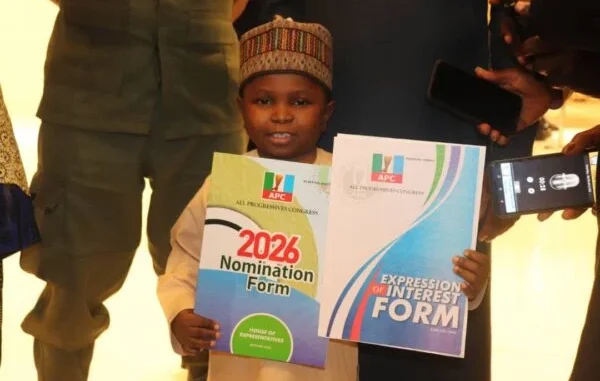
Mahmud Sadis Buba, popularly known as Abin Al-Ajabin Zazzau, is a Nigerian politician, grassroots mobiliser, person living with disability (specifically dwarfism), and APC aspirant for the Sabon Gari Federal Constituency House of Representatives seat ahead of the 2027 general elections.
Born on 2 August 1995 in Sabon Gari, Zaria, Kaduna State, he is the eldest of nine children. Before his entry into active politics, he worked as a driver a career that placed him in daily contact with the economic realities, frustrations, and aspirations of ordinary Nigerians.
He holds a National Examination Council (NECO) certificate. He serves as the Chairman of the “Tinubu – Uba Sani Agenda ’27” support group, aligning himself with the ruling political structure of both the federal and Kaduna State governments.
In May 2026, he obtained his APC nomination and Expression of Interest forms, was cleared at the APC screening exercise, presented his forms to Senate President Godswill Akpabio, and was photographed with President Bola Ahmed Tinubu, Vice President Kashim Shettima, and Kaduna State Governor Uba Sani making him one of the most visible early entrants in the 2027 electoral cycle.
| Mahmud Sadis Buba | |
|---|---|
 Mahmud Sadis Buba: History · Bio · Photo
|
|
| Wiki Facts & About Data | |
| Full Name: | Mahmud Sadis Buba |
| Born: | August 2, 1995 |
| Age: | 30 years old |
| Birthplace: | Sabon Gari, Zaria, Kaduna State, Nigeria |
| State of Origin: | Kaduna State |
| Nationality: | Nigerian |
| Occupation: | Politician · Grassroots Mobiliser · Former Driver |
| Religion: | Islam |
| Siblings: | Eldest of nine children |
Early Life
Mahmud Sadis Buba was born on 2 August 1995 in Sabon Gari a densely populated, ethnically diverse, and commercially active area within the historic city of Zaria in Kaduna State, north-western Nigeria.
Sabon Gari, which translates from Hausa as “new town”, is a distinctive community that has historically served as the primary settlement area for migrants and non-indigenous populations in Zaria a city whose history stretches back to the Hausa kingdoms and the Sokoto Caliphate.
The area is known for its vibrant market activity, religious and ethnic diversity, and a working-class energy that is immediately palpable to anyone who spends time in its streets.
He was born as the eldest of nine children a position that carries significant responsibility in Nigerian families and cultures, where the firstborn is typically expected to lead, set examples, and eventually contribute to the welfare of their younger siblings.
Growing up in a large family in Sabon Gari, surrounded by the economic pressures and social dynamics of one of northern Nigeria’s most diverse urban communities, shaped in him the empathy, practicality, and community orientation that have become the defining features of his public persona.
From birth, Mahmud Sadis Buba has lived with dwarfism a condition that results in significantly shorter than average stature and is recognised as a form of physical disability under Nigerian law and international human rights frameworks.
In a society that frequently struggles with its treatment of people with disabilities, he has navigated this reality with a remarkable combination of personal dignity, pragmatic humour, and the kind of quiet assertiveness that commands respect.
He has not used his condition as a crutch nor has he allowed it to be used against him as a ceiling. Instead, he has placed it in the context of his broader story: one of the many circumstances that make his rise to political visibility both unlikely and meaningful.
He has described himself publicly as someone whose political ambition was ignited not by personal calculation or elite encouragement, but by the direct calls of people within his constituency who wanted him to represent them. “I was called to serve,” he said during his APC screening exercise in May 2026 a formulation that places the initiative not within himself but within the community that has watched him and decided to trust him.
Whether one takes this framing at face value or with political scepticism, the community roots of his candidacy are genuine and documented: his visibility in Sabon Gari predates his formal entry into the 2027 electoral race by several years.
Education
Mahmud Sadis Buba’s formal educational credentials, as documented through his APC screening process and media coverage, include a National Examination Council (NECO) certificate the credential awarded upon completion of the Senior Secondary Certificate Examination in Nigeria.
NECO is one of Nigeria’s two main secondary school examination bodies (alongside WAEC), and its certificate represents the basic minimum educational qualification for most entry-level positions in Nigerian public and private sector employment.
His educational background became a point of public discussion following his APC screening, where panellists questioned his qualifications among other aspects of his candidacy.
The NECO certificate is the sum total of his formal educational record as publicly documented a qualification that some critics and commentators have raised as a concern for someone aspiring to serve in the National Assembly, and that supporters have defended as entirely consistent with the constitutional requirements for membership of the House of Representatives (which does not prescribe a minimum educational standard beyond the possession of a school certificate).
The broader debate his educational background has sparked about whether the National Assembly should require higher educational qualifications of its members, or whether the constitution’s existing minimum standard is appropriate in a country where millions are denied access to higher education is itself a valuable contribution to Nigeria’s ongoing national conversation about governance and representation.
Mahmud Sadis Buba’s candidacy has made that conversation happen in a more visceral and concrete way than most academic papers on the subject.
Career
Career as a Driver
Before his entry into the world of politics, Mahmud Sadis Buba worked as a driver a profession that kept him in daily contact with the rhythms, conversations, and economic realities of ordinary Nigerian life.
Driving whether as a commercial driver, a private hire operator, or an employee driver is one of the most economically accessible forms of employment for young men in Nigerian cities, requiring physical capability, local geographical knowledge, and the interpersonal skills to manage daily interactions with passengers and road users across the full social spectrum.
His time as a driver placed him in close daily contact with the realities of ordinary Nigerian life the traffic, the conversations, the economic anxieties, and the social textures that rarely make it into the speeches of career politicians.
Far from treating this period of his life as something to be minimised or concealed, Buba has placed it at the very centre of his political narrative. “From my beginnings as a driver to this moment, my journey has been built on hard work, resilience, and the belief that every individual no matter their background can rise to serve,” he wrote in his official candidacy announcement.
This positioning honest, unvarnished, and community-embedded has resonated deeply with a Nigerian public that has grown weary of politicians who present sanitised narratives of elite service and inherited entitlement.
Grassroots Political Mobilisation
Buba’s transition from driving to active political engagement did not happen overnight. Over several years, he built his presence in Sabon Gari through grassroots community mobilisation participating in local political discussions, building relationships with community members across Sabon Gari’s diverse population, and establishing himself as a recognisable and trusted presence in the area’s political and social life.
This ground-up approach to political capital building in a country where political visibility is more often purchased through patronage networks or inherited through family connections is one of the most distinctive features of his story.
Sources say that he played an important behind-the-scenes role in TVK’s early rise, especially in youth mobilisation and constituency planning and social media communication. More accurately, within the APC framework, he built his visibility through the kind of door-to-door, face-to-face, c
ommunity meeting organising that is the lifeblood of grassroots political work the kind of work that the political establishment often dismisses but that forms the bedrock of genuine electoral support.
Chairman Tinubu–Uba Sani Agenda ’27 Support Group
The APC aspirant currently serves as chairman of the “Tinubu–Uba Sani Agenda ’27” support group and has steadily gained visibility within Kaduna political circles. This role positions him at the interface between federal-level APC politics the Tinubu presidency and Kaduna State-level APC politics under Governor Uba Sani, connecting him to both layers of the ruling party’s patronage and campaign structure.
The “Agenda ’27” framework is the grassroots mobilisation architecture being built by APC loyalists across Nigeria to campaign for the party’s candidates in the 2027 general elections, and Buba’s chairmanship of the Sabon Gari/Zaria chapter gives him both a formal organisational role and a legitimate platform within APC structures.
Political Career and the 2027 House of Representatives Campaign
Declaration of Candidacy May 2026
In May 2026, Mahmud Sadis Buba made the announcement that would thrust him into the national spotlight: he had obtained his APC nomination and Expression of Interest forms to contest the House of Representatives seat for Sabon Gari Federal Constituency ahead of the 2027 general elections.
The announcement was made through his verified Facebook page a platform he has used consistently for his political communications and quickly spread beyond Kaduna State and into the broader Nigerian social media conversation.
“Today, I humbly announce that I have obtained my nomination form to contest for the House of Representatives, Sabon Gari Federal Constituency.
From my beginnings as a driver to this moment, my journey has been built on hard work, resilience, and the belief that every individual no matter their background can rise to serve. I am stepping forward with a clear vision: to represent the people of Sabon Gari with honesty, dedication, and true leadership,” he wrote.
The announcement generated a wide range of responses. Many Nigerians expressed genuine admiration for his story and the courage it takes to enter political life from a non-elite background. Others raised questions about experience and capacity. But the conversation itself the fact that his declaration was widely discussed, debated, and shared says something important about the appetite in Nigeria for a politics that looks and sounds different from what has come before.
APC Screening May 2026
Following his candidacy declaration and the purchase of his forms, Mahmud Sadis Buba completed the screening exercise of the All Progressives Congress (APC) to contest for the House of Representatives seat for Sabon Gari Federal Constituency in Kaduna state.
A video of the screening exercise showing Buba in traditional attire answering questions from the panel about his age, educational qualifications, and reasons for seeking elective office circulated widely on Nigerian social media and generated considerable national commentary.
Many Nigerians online focused on his youthful looks, with some surprised that he had reached the minimum age of 30 needed to run for the House of Representatives. Buba addressed this directly during the screening, confirming his age and stating clearly that he had met the constitutional requirements.
Responding to questions during the screening, Buba stated that he is 30 years old and the first child in a family of nine. He explained that his decision to seek elective office was driven by calls from people within his constituency who wanted him to represent them at the National Assembly.
His clearance now places him among contenders expected to participate in the party primaries for the ticket to represent Sabon Gari Federal Constituency. The screening clearance was a significant institutional milestone demonstrating that he met the APC’s internal requirements for eligibility and clearing the formal hurdle that many political aspirants at his stage of career fail to cross.
Presentation of Forms to Senate President Akpabio
As part of his consultative efforts, Buba presented his nomination forms to Senate President Godswill Akpabio one of Nigeria’s most powerful and influential political figures. Speaking after meeting Akpabio, the aspirant described his candidacy as a commitment to “purposeful leadership” and effective representation.
He stated: “I had the distinct privilege of presenting my Nomination and Expression of Interest Forms for the House of Representatives, Sabon Gari Federal Constituency, to the President of the Senate of the Federal Republic of Nigeria, Godswill Akpabio. This moment signifies a bold step forward in my commitment to purposeful leadership, effective representation, and the collective progress of our people.”
Meeting with Vice President Kashim Shettima and President Bola Tinubu
He also revealed that Vice President Shettima offered him prayers and encouragement during their meeting, describing the gesture as a major source of motivation.
He has been photographed alongside President Bola Ahmed Tinubu the highest political photograph a Nigerian aspirant can display as well as with Kaduna State Governor Uba Sani, former Kaduna Governor Nasir El-Rufai, Bello El-Rufai (Member, Kaduna North Federal Constituency), and Seyi Tinubu (son of the President). These photographs circulated widely on social media serve both as evidence of his access to the highest levels of APC political architecture and as powerful endorsements of his candidacy’s seriousness.
Shehu Sani’s Endorsement
The most widely circulated public endorsement of Mahmud Sadis Buba’s candidacy came from former Kaduna Central Senator Shehu Sani one of Nigeria’s most vocal and respected political commentators. Shehu Sani described Buba’s ambition as an inspiration for Nigerian youths. “Hon Mahmud Sadis Buba is 30 years old.
He bought his form to vie for the Reps seat in Zaria. A challenge to the youth,” Shehu Sani wrote on X. Sani’s endorsement was brief but powerful framing Buba’s candidacy not just as a personal story but as a challenge to younger Nigerians who are waiting for the right moment or the right conditions to step forward. The tweet was widely shared and amplified the national conversation around Buba’s candidacy.
Campaign Vision and Promises
In his campaign communications, Buba has consistently centred themes of inclusive development, honest representation, and people-oriented governance language that deliberately contrasts with the elite, patronage-driven political discourse that characterises much of Nigerian federal politics. “I am stepping forward with a clear vision: to represent the people of Sabon Gari with honesty, dedication, and true leadership. I ask for your support, your prayers, and your trust as we begin this journey together. Sabon Gari, let’s rise as one,” he wrote in his candidacy announcement.
He has also pledged to prioritise what he describes as “purposeful leadership” a phrase that carries particular resonance in a constituency and state that has seen the fruits of political office concentrated among a very small political and commercial elite.
What His Candidacy Means: Disability, Inclusion, and Nigerian Democracy
The significance of Mahmud Sadis Buba’s candidacy extends well beyond the personal and the political. If he emerges, he will become the shortest man ever to serve in the Nigerian National Assembly.
More broadly, he would become one of the most visible examples of a person living with a disability serving at the federal legislative level in Nigeria a country where persons with disabilities face systemic exclusion from educational opportunity, economic participation, and political representation.
The Discrimination Against Persons with Disabilities (Prohibition) Act 2018 Nigeria’s landmark disability rights legislation mandates the inclusion of persons with disabilities in all spheres of public life, including political participation. Yet the reality of disability inclusion in Nigerian politics at the federal level remains deeply inadequate.
Buba’s candidacy amplified by social media, endorsed by a former senator, photographed with the President of the Republic has done more to advance the conversation about disability inclusion in Nigerian politics than years of advocacy papers and policy recommendations.
This development has further fueled debate over age, competence, and inclusion in Nigeria’s political space as preparations gradually intensify ahead of the 2027 general elections. The debate itself the fact that millions of Nigerians are arguing about whether someone like Mahmud Sadis Buba deserves to serve, and finding that their instinctive answer is yes is a form of democratic progress.
Social Media
Mahmud Sadis Buba maintains an active social media presence through which he has built and communicated his political identity, announced key milestones in his campaign, and engaged with supporters and critics alike.
- Facebook: His verified Facebook page is his primary digital platform where he made his official candidacy announcement, shared photographs with senior political figures, and engaged directly with constituents and supporters. His Facebook presence is the most extensively documented of his social media channels.
- Instagram: @abinalajabi His Instagram handle, reflecting his popular nickname, is used for visual content and personal updates.
- X (Twitter): He maintains a presence on X, where his candidacy has been discussed and shared extensively particularly following Shehu Sani’s endorsement tweet and the viral spread of his APC screening video.
Personal Life
Mahmud Sadis Buba is the eldest of nine children a family responsibility he has shouldered from a young age, and one that has given him both the maturity and the community-minded orientation that characterises his political approach.
He grew up in Sabon Gari, Zaria and his roots in that community are deep, personal, and non-performative. He is a Muslim, consistent with the religious majority of Kaduna State’s northern constituencies, and his public communications reflect the values of faith, community, and service that inform his political identity.
He lives with dwarfism a condition he has addressed with openness and dignity in public discussions about his candidacy, refusing to allow it to define the limits of his ambition or the content of his message. He has not turned his disability into the centrepiece of his campaign it is one aspect of his story, not its entirety.
What he has done is allow its presence to make his candidacy a natural vehicle for broader conversations about disability inclusion that Nigeria urgently needs to have.
Details about his marital status and other personal particulars have not been confirmed in publicly available sources. He has kept his personal romantic life away from his public political narrative.
Net Worth
Mahmud Sadis Buba’s personal financial assets are not documented in publicly available sources. As a former driver and grassroots political mobiliser without prior elected office, he does not have the accumulated income streams of a career politician or a successful private sector professional.
His ability to obtain the APC nomination and Expression of Interest forms which carry a cost in the Nigerian party system reflects either personal savings, support from political allies and well-wishers within the APC structure, or some combination of both.
His net worth is best understood not in financial terms but in the social capital, community trust, and political credibility he has built through years of grassroots engagement in Sabon Gari resources that are, in a real sense, more valuable and more durable than money in the specific terrain of constituency-level Nigerian politics.
FAQs
Who is Mahmud Sadis Buba?
Mahmud Sadis Buba is a 30-year-old Nigerian politician, grassroots mobiliser, and APC aspirant from Sabon Gari, Zaria, Kaduna State. He is contesting the House of Representatives seat for Sabon Gari Federal Constituency in the 2027 general elections. He is also a person living with dwarfism and a former driver whose candidacy has gone viral across Nigerian social media.
What is Mahmud Sadis Buba’s nickname?
He is popularly known as Abin Al-Ajabin Zazzau a Hausa phrase meaning “The Wonder of Zaria.”
When was Mahmud Sadis Buba born?
He was born on August 2, 1995, in Sabon Gari, Zaria, Kaduna State, Nigeria. He is 30 years old as of 2026.
What did Mahmud Sadis Buba do before politics?
He worked as a driver a career he has placed at the centre of his political narrative as evidence of his working-class roots and his understanding of ordinary Nigerian life. He has described his journey “from my beginnings as a driver to this moment” as one “built on hard work, resilience, and the belief that every individual no matter their background can rise to serve.”
What is Mahmud Sadis Buba’s educational background?
He holds a National Examination Council (NECO) certificate his secondary school credential. He does not hold any documented tertiary qualification.
What political party is Mahmud Sadis Buba in?
He is a member of the All Progressives Congress (APC), Nigeria’s ruling party. He also serves as Chairman of the “Tinubu – Uba Sani Agenda ’27” support group, aligning him with both the federal and Kaduna State APC leadership.
What seat is Mahmud Sadis Buba contesting?
He is contesting the House of Representatives seat for Sabon Gari Federal Constituency in Kaduna State in the 2027 general elections.
Did Mahmud Sadis Buba pass the APC screening?
Yes. In May 2026, he successfully scaled the APC screening exercise and was cleared as a contender for the party primaries for the Sabon Gari Federal Constituency House of Representatives seat.
Who has endorsed or supported Mahmud Sadis Buba’s candidacy?
Former Kaduna Central Senator Shehu Sani publicly praised him, describing his candidacy as “a challenge to the youth.” He has been photographed with President Bola Ahmed Tinubu, Vice President Kashim Shettima (who offered him prayers and encouragement), Senate President Godswill Akpabio (to whom he presented his nomination forms), Kaduna Governor Uba Sani, former Governor Nasir El-Rufai, Bello El-Rufai, and Seyi Tinubu.
If elected, what record would Mahmud Sadis Buba set?
If elected in 2027, he would become the shortest person ever elected to serve in the Nigerian National Assembly, and one of the most prominent persons living with disability to hold federal elected office in Nigeria.
Conclusion
Mahmud Sadis Buba is not yet a member of the House of Representatives. He may or may not win his APC primary. He may or may not win the 2027 general election.
These are outcomes that depend on money, organisation, coalition-building, and the complex dynamics of Sabon Gari constituency politics none of which are straightforward for a man whose primary resource is community trust rather than political cash.
But what is already true regardless of the electoral outcome is that his candidacy has mattered. It has forced a national conversation about who belongs in Nigeria’s federal legislature. It has placed a person living with dwarfism, a former driver, a first-generation political aspirant at the centre of the country’s political discourse for several days in May 2026. It has prompted former senators to tweet endorsements, prompted millions of Nigerians to share and debate and argue about inclusion, and prompted at least one former head of state’s son and one Senate President to pose for photographs with a man who used to drive for a living.
Mahmud Sadis Buba Abin Al-Ajabin Zazzau is the wonder of Zaria. And whether Nigeria’s democracy proves worthy of him in 2027 will say something important about the kind of country Nigeria is choosing to become.
Related People

Leave a Reply