
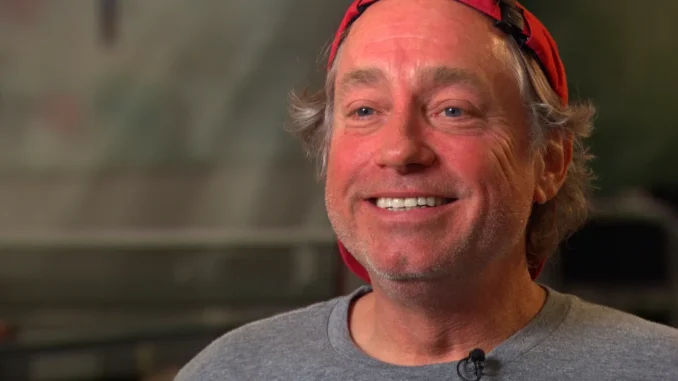
Greg Glassman is one of the most consequential and polarizing figures in the history of the global fitness industry. As the founder and longtime CEO of CrossFit, he built what became the largest gym network in the world, a movement that transformed how millions of people think about exercise, nutrition, and physical preparedness.
Starting from a garage in the San Fernando Valley with nothing but a secondhand barbell set and a doorframe pull-up bar, Glassman developed a fitness philosophy so effective, so community-driven, and so relentlessly unconventional that it disrupted an entire industry, inspired a cult-like following across the globe, and generated hundreds of millions of dollars in revenue.
Yet his story is also one of spectacular self-destruction. At the height of his power presiding over a company valued at an estimated $4 billion with more than 14,000 affiliated gyms in over 150 countries Glassman’s own words undid everything he had built. A single inflammatory tweet in June 2020, made in the wake of the murder of George Floyd, triggered a cascade of mass disaffiliations, corporate sponsorship withdrawals, and public outcry that ended his 20-year reign at CrossFit within days. He resigned as CEO and subsequently sold the company he had poured his life into building.
Since leaving CrossFit, Glassman has channeled his characteristic intensity into a new mission: exposing what he calls “broken science” systemic corruption, failed replication standards, and commercial capture in modern medical and nutritional research. His story is one of extraordinary innovation, massive achievement, stunning controversy, and restless reinvention.
| Greg Glassman | |
|---|---|
 Greg Glassman: History · Bio · Photo
|
|
| Wiki Facts & About Data | |
| Full Name: | Greg Glassman |
| Born: | July 22, 1956 |
| Age: | 69 years old |
| Birthplace: | San Fernando Valley, Los Angeles, California, USA |
| Nationality: | American |
| Occupation: | Entrepreneur, Fitness Coach, Former CEO and Co-Founder of CrossFit, Founder of Broken Science Initiative |
| Parents: | Father – rocket scientist at Hughes Aircraft; Mother – homemaker |
| Siblings: | One younger sister |
| Spouse: | Lauren Jenai (first wife, divorced 2013); Maggie Robinson (second wife) |
| Children: | Four children (two sons, two daughters) with Lauren Jenai |
| Net Worth: | $100 million – $110 million |
Early Life
Gregory Glassman was born on July 22, 1956, in the San Fernando Valley, Los Angeles, California, and grew up in Woodland Hills a suburban community in the western portion of the Valley. He was raised by a father who worked as a rocket scientist at Hughes Aircraft, a leading aerospace and defense company, and a mother who was a homemaker. He also has a younger sister.
From an early age, Glassman was drawn to physical activity, particularly gymnastics. He was a keen gymnast and fitness enthusiast throughout his childhood and teenage years, spending significant time working out not in a gym, but in his parents’ garage using a Sears weight set and a doorframe pull-up bar that would later become almost mythological in CrossFit folklore. It was in that garage that he discovered what would become the foundational insight behind CrossFit.
The breakthrough came when, as a teenager, Glassman performed 21 front squats into overhead presses followed immediately by 21 pull-ups, then 15, then 9 a descending-rep scheme he had improvised. In a later interview, he recalled the aftermath vividly: “In just three minutes, I had that nasty, vomitus feeling you have after a competitive gymnastics routine. I couldn’t get that from bodybuilding. I’ll never forget that lesson.” His realization was as simple as it was revolutionary: basic human movements performed at high intensity produce extraordinary fitness results. That 21-15-9 workout would eventually become the legendary “Fran” one of CrossFit’s most iconic benchmark workouts, and the movement that sparked everything.
Glassman completed his high school education but did not pursue a college degree, dropping out to pursue his passion for fitness and athletic training full-time a decision that set him on a path entirely his own.
Education
Greg Glassman attended local schools in the San Fernando Valley area of Los Angeles and completed his high school education, but did not pursue formal higher education beyond that level. He has spoken openly about choosing to leave academic study behind in favor of practical, hands-on work in the fitness industry a decision shaped by his conviction that real-world experimentation and observation were more valuable teachers than classroom instruction.
His intellectual formation was shaped instead by his father’s scientific background as the son of an aerospace engineer, Glassman grew up exposed to the principles of rigorous testing, observation, and hypothesis. These influences would manifest decades later in his CrossFit Health initiative and, ultimately, in the Broken Science Initiative he co-founded in 2022.
Career
Early Career – Gymnastics Coach and Personal Trainer (1974–1995)
Glassman began his formal career in fitness at the age of 18, working as a gymnastics coach at a YWCA in California. From there, he transitioned into personal training an environment that would prove both formative and limiting in equal measure. Training clients one-on-one throughout Southern California, he developed a reputation for producing exceptional results, working with celebrities, athletes, and law enforcement officers. But he grew increasingly frustrated with the constraints of traditional fitness methodology.
The existing approaches bodybuilding-centric, machine-heavy, focused on isolated muscle groups struck Glassman as fundamentally inadequate for producing what he called “real-world” fitness: the kind of broad, functional physical preparedness that would serve a person in any contingency, not just the narrow movements required by a weight machine or an aerobics class. He began developing his own methodology through the 1970s and 1980s, drawing on gymnastics, weightlifting, and metabolic conditioning, testing his ideas relentlessly on himself and his clients.
Santa Cruz Gym and the Birth of CrossFit (1995–2000)
In 1995, Glassman opened his first gym in Santa Cruz, California a pivotal moment that would set the CrossFit story in motion. That same year, he was contracted to train the Santa Cruz Police Department, an engagement that proved transformative. Working with law enforcement officers, he realized that his combined approach to strength, endurance, flexibility, and functional movement produced results dramatically superior to anything conventional police fitness training had achieved. The Santa Cruz PD would become some of CrossFit’s earliest and most enthusiastic adopters.
As his client base grew and his schedule became overbooked with one-on-one sessions, Glassman recognized an opportunity. Rather than turn away clients, he conceived of a group training model that could deliver individually attentive coaching to multiple people simultaneously. He began combining what he considered the nine fundamental movements of fitness gymnastics, weightlifting, and metabolic conditioning into a constantly varied, high-intensity training protocol. He called the concept “Cross-Fit,” meaning cross-discipline fitness.
In 1996, Glassman and his then-wife Lauren Jenai formally conceived Cross-Fit as a business concept. The company was incorporated in 2000 as CrossFit, Inc. They opened their Santa Cruz gym to the public in 2001 and began posting daily workouts “Workouts of the Day” or WODs on CrossFit.com, making them freely accessible online to anyone in the world. This open-source approach to fitness programming was radically unconventional and proved to be one of the key drivers of CrossFit’s explosive early growth.
CrossFit’s Global Expansion (2002–2015)
The freely posted WODs attracted an almost immediate response from the military, police, firefighting, and athletic communities groups whose real-world physical demands aligned perfectly with CrossFit’s philosophy of broad, functional fitness. Members of the U.S. Special Operations community were among the earliest and most enthusiastic adopters of CrossFit methodology.
In 2002, CrossFit North in Seattle, Washington, became the first officially affiliated “box” (CrossFit’s term for its gyms). The affiliated gym model in which independent gym owners paid an annual licensing fee to carry the CrossFit name and programming proved to be a masterpiece of scalable, low-overhead business design. It allowed CrossFit to expand globally at extraordinary speed with minimal capital outlay by the parent company.
Growth was remarkable in its pace: 13 affiliated gyms in 2005 grew to 1,000 by 2009, 8,000 by 2013, and more than 13,000 by 2016. By 2018, there were approximately 15,500 CrossFit gyms operating in 162 countries, with an estimated global membership of between 2 and 5 million athletes. At its financial peak, CrossFit was generating an estimated $50 million per year in gym licensing fees alone, with total revenues of approximately $100 million annually when Reebok sponsorship, television licensing, merchandise, and certification fees were included.
The CrossFit Games an annual international competition to crown the “Fittest on Earth” launched in 2007 and grew into a globally broadcast sporting spectacle. Glassman partnered with Reebok to fund the Games and secured ESPN television coverage, bringing CrossFit into mainstream sports media in the United States and around the world. The Games became one of the most distinctive sporting events in the fitness industry, featuring extraordinarily challenging and unpredictable events that embodied CrossFit’s ethos of preparing athletes for the “unknown and unknowable.”
In May 2015, Glassman was featured on CBS’s landmark television magazine program 60 Minutes, in a segment titled “The King of CrossFit,” hosted by journalist Sharyn Alfonsi. The segment traced CrossFit’s history and Glassman’s entrepreneurial journey, cementing his status as one of the most influential figures in American fitness history.
CrossFit Health and Anti-Sugar Advocacy
As CrossFit’s reach grew, Glassman increasingly turned his attention from exercise programming to nutrition science specifically, to what he regarded as the corrupting influence of the sugar and processed food industries on public health research and dietary guidelines. CrossFit adopted a low-carbohydrate nutritional prescription as part of its programming, which put the company on a direct collision course with the sugar industry.
This conflict came to a head when a peer-reviewed academic journal published a study claiming CrossFit’s methodology caused injuries a study Glassman maintained was fraudulent. CrossFit sued and won; the study was retracted. A federal judge described it as among the most egregious cases of scientific misconduct and fraud she had encountered. The experience deepened Glassman’s conviction that modern science particularly in nutrition and medicine had been systematically corrupted by commercial interests, and he launched CrossFit Health, mobilizing thousands of physicians who had personally witnessed CrossFit’s impact on chronic disease prevention and reversal.
Divorce from Lauren Jenai (2009–2013)
Glassman’s personal and professional lives became dangerously intertwined when he and Lauren Jenai his co-founder and wife separated and began divorce proceedings in 2009. The divorce was protracted and messy, stretching over four years until its final resolution in 2013. The two had four children together two sons and two daughters.
The financial stakes were enormous. As co-founders, Jenai held a 50% stake in CrossFit, Inc. Following the divorce, she attempted to sell her half of the company to an investment firm a move Glassman blocked. He subsequently purchased her share for an estimated $20 million, financed by a loan from Summit Partners, thereby acquiring 100% ownership of the company. This move gave him complete operational control over CrossFit for the first time.
The 2020 Controversy and Resignation
On June 6, 2020 during a period of intense national grief and social reckoning following the murder of George Floyd by Minneapolis police officer Derek Chauvin Glassman posted a tweet in response to a message from the Institute for Health Metrics and Evaluation at the University of Washington, which had stated that “racism and discrimination are critical public health issues that demand an urgent response.” Glassman’s reply was two words: “It’s FLOYD-19.”
The tweet was widely interpreted as mocking both the Black Lives Matter movement and George Floyd’s death. The reaction was swift and ferocious. Elite CrossFit athletes including Icelandic champion Katrin Davidsdottir publicly condemned the remarks. Hundreds of affiliated gyms around the world announced immediate disaffiliation from the CrossFit brand. Reebok CrossFit’s primary corporate sponsor through a major licensing deal announced it would end its relationship with the company when its contract expired. Rich Froning, arguably CrossFit’s most celebrated competitive athlete, publicly distanced himself from the brand.
The situation was further inflamed when BuzzFeed News reported that, hours before posting the tweet, Glassman had participated in a private Zoom call with CrossFit gym owners in which he reportedly stated “I do not mourn George Floyd” and appeared to suggest Floyd’s murder had been part of an unrelated criminal matter rather than a case of racial injustice. A subsequent New York Times exposé detailed allegations of a broader culture of sexism and sexual harassment within CrossFit under Glassman’s leadership, adding another layer of crisis to an already catastrophic week.
Glassman issued an apology through CrossFit’s official channels, writing: “I, CrossFit HQ, and the CrossFit community will not stand for racism. I made a mistake by the words I chose yesterday. My heart is deeply saddened by the pain it has caused. It was a mistake, not racist but a mistake.” The apology was widely regarded as insufficient.
On June 9, 2020, Glassman resigned as CEO of CrossFit, Inc. In his resignation statement, he wrote: “On Saturday I created a rift in the CrossFit community and unintentionally hurt many of its members. Since I founded CrossFit 20 years ago, it has become the largest network of gyms in the world. I’m stepping down as CEO of CrossFit, Inc. and have decided to retire.” Dave Castro, director of the CrossFit Games, was appointed as interim CEO.
Sale of CrossFit (June 2020)
Two weeks after resigning as CEO, Glassman announced that he was putting CrossFit up for sale. On June 24, 2020, it was announced that he had sold the company to Eric Roza, a former CEO of the data company Datalogix, in partnership with investment firm Berkshire Partners. The sale price was never publicly disclosed, though analysts estimated CrossFit’s value at the time at approximately $4 billion suggesting a sale figure that would have made Glassman’s proceeds substantial, though the precise figure remains unverified.
Post-CrossFit: The Broken Science Initiative and MetFix (2022–Present)
True to his nature, Glassman did not remain idle in retirement. In 2022, he co-founded the Broken Science Initiative (BSI) alongside communications strategist Emily Kaplan, who had previously worked in public relations at CrossFit HQ. The BSI’s mission is to draw attention to what Glassman describes as systemic failures in modern science particularly in medicine, nutrition, and public health research including problems with peer review, data replication failures, and the influence of commercial interests on research outcomes and regulatory policy.
Through the BSI, Glassman has spoken at events at Hillsdale College’s Academy for Science and Freedom and various CrossFit affiliate gyms, participated in medical school grand rounds presentations, and produced educational content aimed at helping individuals critically evaluate the scientific claims they encounter in health and medicine contexts.
In September 2024, the BSI launched MetFix (short for Metabolic Fix) a new fitness and nutrition methodology described as an evolution of Glassman’s original CrossFit programming, sharpened specifically to address the epidemic of chronic disease. MetFix operates as an invite-only affiliate program for gym owners and personal trainers, offering two-day intensive seminars on metabolic health, nutrition science, and exercise programming. It positions itself directly against ultra-processed foods, seed oils, sugar, and sedentary lifestyle as the root causes of the chronic disease crisis. By 2025, Glassman had stepped back from a day-to-day leadership role at MetFix, passing operational control to Kaplan while remaining involved as a speaker and thought leader.
Controversies
The George Floyd Tweet (2020)
The most significant controversy of Glassman’s career was the June 2020 tweet in which he appeared to mock the murder of George Floyd and conflate it with COVID-19. The tweet triggered mass disaffiliations from the CrossFit brand, the loss of the Reebok sponsorship, and ultimately his resignation and sale of the company. Despite his apology, many in the CrossFit community and broader fitness world regard the incident as an irredeemable moment of insensitivity at one of the most charged periods in recent American history.
Sexual Harassment Allegations
Following the Floyd tweet controversy, the New York Times published a detailed report detailing allegations of sexism and sexual harassment within CrossFit under Glassman’s leadership. The article described a corporate culture that multiple former employees described as hostile to women. Glassman denied the most serious characterizations, but the report intensified calls for his departure and contributed to the broader collapse of his reputation in 2020.
CrossFit and Rhabdomyolysis (“Uncle Rhabdo”)
Throughout CrossFit’s history, the company faced criticism for its promotion of “Uncle Rhabdo” a cartoon mascot depicting a clown dying dramatically while connected to a dialysis machine, with kidneys and intestines on the floor. The character was a darkly humorous reference to rhabdomyolysis, a potentially life-threatening condition caused by extreme exercise that releases muscle fiber breakdown products into the bloodstream. Critics argued the mascot was irresponsible; Glassman defended it as honest acknowledgment of the risks inherent in high-intensity training and argued that full disclosure of risk was the ethical approach.
Social Media Provocation and Unorthodox Communication
CrossFit under Glassman was known for its deliberately provocative and unconventional social media presence. The company published articles and tweets on politics, philosophy, poetry, and religion including a 2014 Facebook parody video involving Jesus. In May 2019, CrossFit deleted its Facebook and Instagram accounts with 3.1 million and 2.8 million followers respectively citing concerns about user privacy, intellectual property theft, and the platforms’ alleged collusion with the food and beverage industry. These moves were consistent with Glassman’s anti-establishment ethos but also reflected a pattern of decision-making that prioritized ideological consistency over commercial relationships.
Personal Life
First Marriage – Lauren Jenai
Greg Glassman’s first marriage was to Lauren Jenai one of his personal training clients, who was working as a hairdresser when the two met and fell in love. Jenai co-founded CrossFit alongside Glassman and held an equal 50% ownership stake in the company. The couple had four children together two sons and two daughters before their marriage deteriorated and divorce proceedings began in 2009. The divorce was finalized in 2013 and involved a settlement in which Jenai received an estimated $20 million for her co-founding stake in CrossFit. Glassman purchased her share using a loan from Summit Partners. After the divorce, Jenai married Franklin Tyrone Tucker in June 2020; Tucker was later accused of murder.
Second Marriage – Maggie Robinson
Following his divorce from Jenai, Glassman married Maggie Robinson, described as a businesswoman. The couple is believed to reside in the United States, though Glassman has maintained a relatively private personal profile since his departure from CrossFit.
Interests and Philosophy
Glassman has described himself as an empiricist someone who believes in testing, measurement, and evidence rather than inherited authority. He has spoken at length about his deep suspicion of institutional consensus, his distrust of commercial influence in science and medicine, and his conviction that individual critical thinking is the best defense against bad science. These views animate both his CrossFit Health work and the Broken Science Initiative, and have also drawn him into conflict with mainstream medical and public health establishments on topics from nutrition science to COVID-19 policy.
Net Worth
Greg Glassman’s net worth is estimated by Celebrity Net Worth at approximately $100 million, with other estimates adjusting this figure upward to around $110 million when accounting for inflation and the undisclosed proceeds from the sale of CrossFit to Eric Roza in June 2020.
His wealth was accumulated primarily through the following sources:
- CrossFit gym licensing fees: At peak, CrossFit earned approximately $50 million per year from annual fees paid by affiliated gym owners worldwide for the right to carry the CrossFit name and use its programming.
- CrossFit certifications: The CrossFit Level 1 and Level 2 trainer certification programs generated substantial ongoing revenue as the global community of coaches sought official credentials.
- Reebok sponsorship: A decade-long sponsorship agreement with Reebok as the exclusive apparel licensee of CrossFit merchandise contributed significantly to total annual revenues, estimated at $100 million across all income streams at peak.
- ESPN television licensing: Broadcast rights for the CrossFit Games provided additional recurring revenue.
- Sale of CrossFit, Inc.: The 2020 sale to Eric Roza and Berkshire Partners, though the price was never publicly disclosed, is widely believed to have been a major wealth event for Glassman. CrossFit’s value was estimated at approximately $4 billion at the time of sale.
- Real estate investments: Glassman has reportedly made investments in real estate that have contributed to his overall financial position.
Filmography / Media Appearances
| Year | Title | Type / Role |
| 2009 | Every Second Counts: The Story of the 2008 CrossFit Games | Documentary – Executive Producer and Subject |
| 2015 | CBS 60 Minutes – “The King of CrossFit” | Television – Featured Subject (hosted by Sharyn Alfonsi) |
| 2016 | CNBC iConic Conference | Keynote Speaker and Interview Subject |
| 2022–present | Broken Science Initiative Talks and Events | Speaker and Co-Founder – various venues including Hillsdale College |
Frequently Asked Questions (FAQs)
Who is Greg Glassman?
Greg Glassman is an American entrepreneur and fitness coach who founded CrossFit the largest gym network in the world alongside his former wife Lauren Jenai in 2000. He served as CEO of CrossFit, Inc. for twenty years before resigning in June 2020 following controversial comments related to the murder of George Floyd.
When and where was Greg Glassman born?
He was born on July 22, 1956, in the San Fernando Valley area of Los Angeles, California, and grew up in Woodland Hills, a suburb in the western portion of the valley.
How did Greg Glassman create CrossFit?
Glassman developed his fitness philosophy over many years as a gymnast and personal trainer, building on the insight that basic human movements performed at high intensity combining gymnastics, weightlifting, and metabolic conditioning produce superior fitness results. He formally founded CrossFit with Lauren Jenai in 2000, opened a gym in Santa Cruz, California in 2001, and built the brand through a freely available online workout posting model that attracted a global following from the military, law enforcement, and athletic communities.
Why did Greg Glassman resign from CrossFit?
Glassman resigned as CEO on June 9, 2020, following a tweet in which he appeared to mock the murder of George Floyd by posting “It’s FLOYD-19” in response to a public health organization’s call to address racism. The tweet triggered a wave of CrossFit gym disaffiliations, the loss of the Reebok sponsorship, and widespread condemnation across the fitness community. A subsequent New York Times report on allegations of sexism and sexual harassment within CrossFit compounded the crisis.
Who did Greg Glassman sell CrossFit to?
He sold CrossFit to Eric Roza, a former CEO of the data company Datalogix, in partnership with investment firm Berkshire Partners. The sale was announced on June 24, 2020. The sale price was never publicly disclosed.
What is Greg Glassman doing now?
Since selling CrossFit, Glassman co-founded the Broken Science Initiative (BSI) with Emily Kaplan in 2022 an educational organization focused on exposing systemic failures in modern scientific research. In 2024, the BSI launched MetFix, a metabolic health and fitness methodology that builds on Glassman’s CrossFit programming and targets the epidemic of chronic disease. By 2025, Glassman had stepped back from day-to-day operations, handing leadership to Kaplan while continuing to participate in events and speaking engagements.
How many children does Greg Glassman have?
Greg Glassman has four children two sons and two daughters from his first marriage to Lauren Jenai.
What is Greg Glassman’s net worth?
His net worth is estimated at between $100 million and $110 million, built primarily through the global success of CrossFit and the proceeds from its eventual sale in 2020.
Conclusion
Greg Glassman’s legacy is defined by two equally powerful forces: extraordinary creation and catastrophic self-sabotage. He built CrossFit from nothing from a garage, a doorframe pull-up bar, and a conviction that the fitness industry was deeply wrong about almost everything into one of the most influential movements in the history of human physical culture. His model of functional, high-intensity, community-driven fitness transformed how millions of people train, think about their bodies, and relate to physical challenge. His insight that exercise and nutrition must be considered together, and his willingness to fight the sugar and processed food industries long before it was fashionable, placed him years ahead of the mainstream health conversation.
And yet he walked away from all of it in the span of a few days brought down not by a competitor or a market force, but by his own words, spoken at the worst possible moment. The CrossFit empire he spent two decades building survived his departure; the brand recovered, the gyms kept operating, and the community endured. But Glassman himself was gone forced out of the institution he created, in circumstances that permanently complicated an otherwise remarkable entrepreneurial story.
What he has done since the Broken Science Initiative, the MetFix program, the ongoing effort to bring rigorous critical thinking to questions of health, nutrition, and scientific integrity suggests that the same restless, contrarian energy that built CrossFit is still very much alive. Whether his post-CrossFit chapter will prove as consequential as his first remains to be seen. But Greg Glassman has never been a man content to stand still and whatever he does next, he is unlikely to do it quietly.
Related People







Leave a Reply