
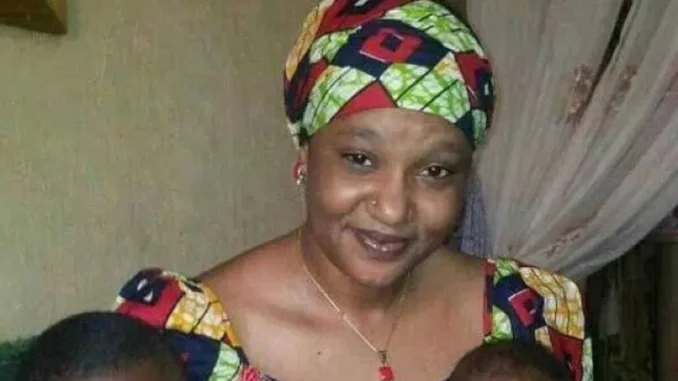
Maryam Hiyana is one of the most iconic and most talked-about figures in the history of Kannywood, Nigeria’s Hausa-language film industry based in Kano.
Known simply by the nickname “Hiyana,” derived from the title of her most celebrated film, she was among the brightest stars of northern Nigerian cinema during the early 2000s, admired across the region for her grace, screen presence, and emotional performances.
Her career came to an abrupt end in 2007 when a private intimate video was leaked on the internet an incident that not only ended her professional life but triggered one of the most significant political and cultural crises in Kannywood’s history, fundamentally reshaping how the industry operated for years afterward.
Today, Maryam Hiyana is remembered as a cautionary symbol, a champion of privacy rights in the eyes of many young Nigerians, and an indelible part of the story of Kannywood’s evolution.
| Maryam Usman Waziri | |
|---|---|
 Maryam Usman Waziri: History · Bio · Photo
|
|
| Wiki Facts & About Data | |
| Full Name: | Maryam Usman Waziri |
| Stage Name: | Maryam Hiyana |
| Born: | March 10, 1985 |
| Age: | 41 years old |
| Birthplace: | Kano State, Nigeria (some sources also cite Bauchi State) |
| State of Origin: | Kano State, Nigeria |
| Nationality: | Nigerian |
| Occupation: | Former Actress, Model, Philanthropist |
| Religion: | Islam |
| Spouse: | Alhaji Ado Ahmed Dan-Gulla (married November 2007) |
| Children: | At least 3 (two boys and one girl; first child born August 2008) |
| Relationship: | Married (as second wife) |
Early Life
Maryam Hiyana was born on March 10, 1985, in northern Nigeria. Though several sources associate her birthplace with Kano State the city where she built her career some accounts describe her as originally from Bauchi State, suggesting her family may have relocated to Kano during her early years.
Regardless of the precise birthplace, it is well established that she was raised and educated in Kano, one of Nigeria’s most historically significant cities and the heartland of Hausa culture, commerce, and arts.
She grew up in a conservative northern Nigerian Muslim household, in the cultural environment typical of Hausa-Fulani society one where gender roles, modesty expectations, and community honour occupied a central place in everyday life.
Despite this conservatism, the Kannywood film industry, which had grown rapidly since the early 1990s drawing heavy inspiration from the Indian Bollywood film tradition, provided an unusual space for young northern Nigerian women to build careers in entertainment while navigating the social boundaries of their community.
From a young age, Maryam showed an interest in performance and storytelling. Her beauty, natural charisma, and ability to convey emotion on camera drew the attention of Kannywood insiders early on, and she was eventually introduced to the industry by legendary actor Ali Nuhu one of the most respected figures in Kannywood’s history and a kingmaker who helped launch the careers of several major stars.
Education
Maryam Hiyana received her basic and secondary school education in Kano State, where she is reported to have attended Central Secondary School, Kano, and obtained her West African Senior School Certificate (WASSCE).
She later enrolled at Bayero University Kano (BUK) one of Nigeria’s leading institutions of higher learning, located in Kano where she studied Business Administration.
Her time at the university coincided with the early phase of her acting career, making her one of the few Kannywood actresses of her era who balanced formal university education with a professional film career.
Career
Introduction to Kannywood (2002)
Maryam Hiyana made her acting debut in 2002, when she was introduced into the Kannywood industry by the celebrated actor and filmmaker Ali Nuhu popularly known in Kannywood circles as “Sarkin Wasan Kwaikwayo” (the King of Acting).
Her debut film was Hiyana a Hausa-language production that featured her alongside top Kannywood stars Ali Nuhu, Adam A. Zango, and the late Ahmad S. Nuhu. The film was a significant production in its time, dealing with themes of betrayal, love, and moral complexity that resonated deeply with northern Nigerian audiences.
Her performance in the title role was so compelling that she became permanently associated with the character audiences began calling her “Hiyana” rather than her birth name, and the nickname stuck for the entirety of her public life.
Rise to Stardom (2002–2007)
Following her celebrated debut, Maryam Hiyana became one of Kannywood’s most sought-after and beloved actresses throughout the mid-2000s.
She was active in the industry from 2002 until 2007 a five-year span during which she appeared in numerous Hausa-language productions and established herself as one of the industry’s genuine stars.
She frequently starred alongside Kannywood’s biggest male names, including Ali Nuhu, Adam A. Zango, and Sani Danja, and her on-screen chemistry with these actors particularly Ali Nuhu, in the romantic drama Wasila became the subject of widespread fan admiration.
Her known filmography includes prominent titles such as Hiyana (her debut), Wasila, Tutar So, Taurari, Taron Dangi, Tubali, Hausa Bakwai, and Amanar Kauna, among several others.
She was particularly admired for her ability to portray graceful, emotionally layered female characters a quality that stood out in an industry whose female roles were often constrained by social and religious expectations.
Contemporary accounts describe her as one of the most “decent” actresses in the industry during her active years, a reputation that made the events of 2007 all the more shocking to her fans and peers.
By the mid-2000s, Maryam Hiyana had also attracted commercial opportunities. She received recognition through the City People Entertainment Awards, including accolades recognizing her as a Best Prominent Actress an acknowledgment of the significant fan following and cultural influence she had built across northern Nigeria and among Hausa-speaking communities in the diaspora.
The 2007 Controversy and Its Aftermath
In August 2007, Maryam Hiyana became the centre of one of the most explosive scandals in Nigerian entertainment history an incident whose repercussions extended far beyond her personal life and permanently altered the institutional and regulatory landscape of Kannywood.
The scandal originated in a deeply invasive manner. A man had taken his mobile phone for repairs at a phone technician’s shop in Kano.
While working on the phone, the technician discovered a private, consensually recorded intimate video of Maryam and her Lagos-based boyfriend, Usman Bobo. Recognizing the commercial potential of the discovery, the technician began copying and selling the video.
Within days, the clip had spread across Kano via Bluetooth and infrared transfer technologies, reaching hundreds of thousands of handsets across the city and beyond. It was the first time a private intimate video of a Kannywood star had circulated publicly, and the conservative religious community of Kano a Shari’a-implementing state reacted with outrage.
The Kano State government, under Governor Ibrahim Shekarau, treated the incident as a moral emergency. The Kano State Film Censors Board (KSCB), led by its executive secretary Abubakar Rabo Abdulkareem, responded with a series of draconian measures aimed at “sanitising” the Kannywood industry.
Filmmaking of all types was banned in Kano for six months from August 2007. The ban paralysed an industry that employed thousands of people, from actors and directors to makeup artists, tailors, and music composers. Dozens of people associated with the industry were arrested, fined, or jailed during this period. In one of the most widely noted examples, hip-hop singer Adam Zango was imprisoned as an example simply for releasing a music video during the production ban.
The KSCB also introduced sweeping new regulations for the industry that included requirements for all scripts to be vetted before filming, approval of shooting schedules and locations, and most controversially a requirement that all female actors must have a designated male guardian (mahram) present on set, who would bear legal responsibility for the actress’s behaviour.
Married women were for a time banned from acting altogether. These new rules reflected a wider effort by the Kano State government to push Kannywood toward an ultra-conservative vision that critics argued was incompatible with the industry’s creative survival.
Maryam Hiyana herself was banned from acting. She and 23 other actors known to have associated with her in the past were suspended from the profession.
She received death threats and was compelled to go into hiding, reportedly spending time out of public view in the months following the scandal.
No formal criminal charges were ever brought against her or Usman Bobo the video had been recorded privately and consensually yet she bore the full weight of public moral condemnation in a society that applied drastically different standards to women and men.
A notable and important dimension of the public reaction was that many young Nigerians particularly young people in Kano and across the north did not share the government’s and religious establishment’s indignation.
According to Al Jazeera reporting and academic research by Nigeria scholar Carmen McCain, Maryam Hiyana became an unexpected champion and sympathetic figure among young people who felt she was being victimized rather than treated with justice.
The question of why the government and the Kannywood authority had not punished those who copied and sold the video the actual privacy violators was largely left unanswered.
Marriage and Family Life
In November 2007, just three months after the scandal erupted, Maryam Hiyana married Alhaji Ado Ahmed Dan-Gulla in a ceremony held at the house of Sule Mai Maganin Gargajiya in the ‘Yan Lemo Quarters of Kano.
The event was well attended by Hausa entertainers and community members. Alhaji Dan-Gulla, who hails from Katsina State and conducts his business at the famous Kantin-Kwari Market in Kano, is also the Chairman of A.A. Dangulla Fashion Design.
He married Maryam as his second wife, having been reportedly captivated by her beauty and talent after watching her in one of her films, reportedly having expressed his intention to marry her as far back as three years before the marriage was eventually contracted. The bride price was set at N40,000.
The marriage attracted a broad range of public comment from those who expressed relief that she was settling into a respectable domestic life to others who urged community members to pray for her forgiveness and wellbeing.
Veteran Kannywood actor Nura Hussaini, who acted as a mediator and intermediary between the couple, was credited with helping broker the union.
In August 2008, Maryam gave birth to her first child a baby boy at a private hospital in Kano. The child was reported to have been named Usman Jr. by some accounts. Subsequent reports indicate that her marriage to Alhaji Dan-Gulla has been blessed with at least three children two boys and one girl.
Since her marriage, Maryam Hiyana has lived an entirely private life, completely withdrawing from the public sphere, the entertainment industry, and media appearances. By all accounts, her marriage has been stable and her domestic life peaceful.
Awards & Recognition
| Award | Category | Result |
| City People Entertainment Awards | Best Prominent Actress | Won |
| City People Entertainment Awards | Actress Recognition Award | Won / Recognized |
Note: A comprehensive official record of all awards and nominations during her active career (2002–2007) has not been fully documented in the public domain. The above reflects the awards that have been confirmed through multiple credible sources.
Personal Life
Since her marriage in November 2007, Maryam Hiyana has maintained a nearly total absence from the public eye.
She has not returned to acting, has not given media interviews, and has not made public appearances at industry events.
Her husband, Alhaji Ado Ahmed Dan-Gulla, is equally private about their family life, having famously refused interview requests from multiple media organisations in 2007 and stating that he married her “for the sake of God” and wished the matter left alone.
The couple’s decision to shield their family life from media scrutiny is widely respected, and Maryam’s withdrawal from the industry appears to have been genuine and permanent.
Reports from those who have seen her in recent years describe a woman who appears healthy, content, and at peace a stark contrast to the frightening ordeal she endured in 2007 when she was receiving death threats and was compelled to live in exile.
From a humanitarian perspective, Maryam has also been identified as a philanthropist in some accounts, suggesting that despite her private lifestyle she has found ways to give back to her community. The specifics of her philanthropic activities have not been extensively documented publicly.
Legacy and Impact on Kannywood
Maryam Hiyana’s career and the events of 2007 left an indelible mark on Kannywood that continues to be discussed by industry practitioners, scholars, and fans to this day.
Her story sits at the intersection of privacy rights, gender inequality, religious conservatism, and the politics of cultural censorship and it resurfaced as a reference point every subsequent time a Kannywood actress faced controversy, including the cases of Rahama Sadau (suspended in 2016 for appearing in a romantic music video) and Maryam Booth (whose own video scandal emerged in 2020).
The six-month production ban triggered by the Hiyana scandal nearly destroyed Kannywood as a functioning industry. Thousands of workers lost income. Filmmakers fled Kano to continue their work elsewhere. The new censorship regulations introduced in the ban’s wake remained in place for years, creating a more restrictive and politically policed environment for creative expression.
Academic researcher Carmen McCain, who has extensively studied Hausa films and the Kano crisis, has documented in scholarly work how the crisis drove filmmakers out of the state and how the public did not entirely share the government’s moral indignation pointing to a gap between official conservatism and the lived realities of young northern Nigerians.
Yet Kannywood survived. In the years following the ban, the industry gradually rebuilt itself, eventually growing into a multi-billion-naira sector with stars commanding major endorsement deals with companies like Glo and MTN. The Hiyana era is now recalled as a painful but formative chapter one that tested the industry’s resilience and contributed, in a deeply ironic way, to the regulatory conversations that eventually led to more structured governance of Kannywood.
For many younger Nigerians and Kannywood observers, Maryam Hiyana’s story is also a story of injustice: a woman whose private life was exposed without her consent, who was punished while those responsible for the exposure faced few consequences, and who was used as a symbol for a moral crackdown that had as much to do with political control of the entertainment industry as it did with genuine community values. In this reading, she is not a cautionary tale but a figure deserving of empathy, and her dignified post-scandal life a stable marriage, a healthy family, and a quiet existence represents a hard-won personal victory.
Filmography
| Year | Title | Notes |
| 2002 | Hiyana | Debut film; starred alongside Ali Nuhu, Adam A. Zango, and Late Ahmad S. Nuhu; the film from which she received her nickname |
| 2002–2007 | Wasila | Romantic drama opposite Ali Nuhu; filmed in Kano and Kaduna; praised for cinematography and on-screen chemistry |
| 2002–2007 | Amanar Kauna | Notable film featuring alongside Ali Nuhu and Adam A. Zango |
| 2002–2007 | Tutar So | One of her popular roles |
| 2002–2007 | Taurari | Notable Kannywood production |
| 2002–2007 | Taron Dangi | Notable film role |
| 2002–2007 | Tubali | Notable film role |
| 2002–2007 | Hausa Bakwai | Notable film role |
Frequently Asked Questions (FAQs)
Who is Maryam Hiyana?
Maryam Hiyana (full name Maryam Usman Waziri, also known as Maryam Usman Hiyana) is a former Kannywood actress who was one of northern Nigeria’s most popular Hausa-language film stars from 2002 to 2007. She is nicknamed “Hiyana” after the debut film that launched her career. She is now retired from acting and lives privately with her husband and children in Kano.
What is Maryam Hiyana’s real name?
Her real full name is Maryam Usman Waziri, though she is widely identified in biographical sources as Maryam Usman Hiyana. The name “Hiyana” is a nickname derived from the title of her most famous film.
When was Maryam Hiyana born?
She was born on March 10, 1985, making her 40 years old as of 2025.
What ended Maryam Hiyana’s career?
In August 2007, a private intimate video recorded by her boyfriend was leaked by a phone technician who discovered it while repairing the phone. The video went viral across Kano via Bluetooth transfer. The scandal triggered her ban from acting, and she subsequently married and permanently retired from the entertainment industry.
Who is Maryam Hiyana’s husband?
She is married to Alhaji Ado Ahmed Dan-Gulla, a prominent Kano-based businessman originally from Katsina State who runs commercial operations at Kantin-Kwari Market and is Chairman of A.A. Dangulla Fashion Design. She married him in November 2007 as his second wife.
How many children does Maryam Hiyana have?
She has at least three children with Alhaji Dan-Gulla two boys and one girl. Her first child, a baby boy, was born in August 2008 at a private hospital in Kano.
What impact did the Hiyana scandal have on Kannywood?
The scandal triggered a six-month ban on all film production in Kano by the state government under Governor Ibrahim Shekarau. New censorship regulations were introduced, including requirements for female actors to have male guardians on set. The ban paralysed the industry, jailed several practitioners, and drove many filmmakers out of Kano. It remains the most significant institutional crisis in Kannywood’s history.
What films did Maryam Hiyana appear in?
Her most celebrated films include Hiyana (2002), Wasila, Amanar Kauna, Tutar So, Taurari, Taron Dangi, Tubali, and Hausa Bakwai. She was particularly well known for her on-screen chemistry with Ali Nuhu and Adam A. Zango.
Is Maryam Hiyana still alive?
Yes. Maryam Hiyana is alive and living privately with her husband and children. She has completely withdrawn from public life and media appearances since her marriage in 2007.
Conclusion
Maryam Hiyana’s story is one of the most complex and emotionally significant narratives in the history of Nigerian popular culture. She was a gifted actress who rose to genuine stardom in one of Africa’s most culturally distinctive film industries, only to have her career and her life as she had known it destroyed not by her own choices but by a profound violation of her privacy. The 2007 scandal that bore her name was, at its core, a story about a woman’s body being weaponised against her in a society where the consequences of such violations fell entirely and unfairly on the victim.
Yet from the ashes of that public catastrophe, Maryam Hiyana built a private life of evident dignity and stability. She found a husband who chose her deliberately and respectfully, raised a family, and stepped away from the pressures and contradictions of public life with grace. For Kannywood, the Hiyana era left behind a fundamentally changed industry one that had been through its own reckoning with censorship, gender inequality, and state power, and emerged from it shaped by those confrontations.
As one of the pioneering women of Kannywood’s early golden age, Maryam Hiyana deserves to be remembered not primarily as a controversy but as a talented actress who contributed meaningfully to the birth and growth of northern Nigeria’s film industry and who, when the worst happened, found the strength to rebuild her life on her own terms.
Related People






Leave a Reply