
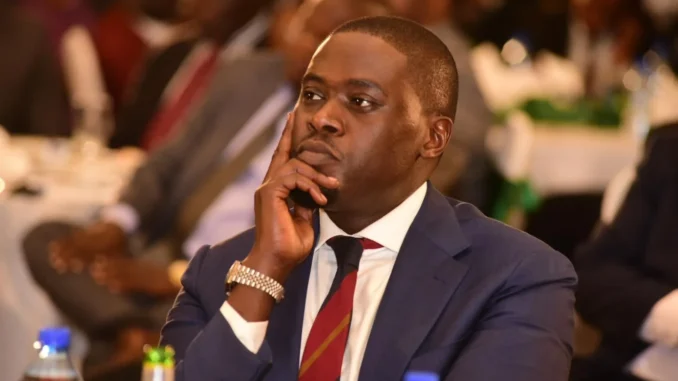
Johnson Arthur Sakaja is one of Kenya’s most compelling and polarising political figures of his generation a man whose ascent from campus politics to the governorship of Africa’s fourth-largest city has been as dramatic as it has been controversial.
Born in Nairobi’s Parklands area in 1985, Sakaja lost his mother at the age of nine and grew up in modest circumstances, yet rose through sheer charisma, political acumen, and relentless networking to become one of the most recognised faces in Kenyan public life by his early twenties.
As the Governor of Nairobi City County since August 2022, he governs a metropolis of over five million people carrying the burden of enormous expectations while navigating governance challenges, academic qualification controversies, impeachment threats, and the perennial complexity of Nairobi politics.
| Johnson Arthur Koskei Sakaja | |
|---|---|
 Johnson Arthur Koskei Sakaja: History · Bio · Photo
|
|
| Wiki Facts & About Data | |
| Full Name: | Johnson Arthur Koskei Sakaja |
| Born: | February 2, 1985 |
| Age: | 41 years old |
| Birthplace: | Parklands, Nairobi, Kenya |
| Nationality: | Kenyan |
| Occupation: | Politician, Businessman, Philanthropist |
| Religion: | Christian |
| Parents: | Mzee John G. Sakaja (father), Mama Emily Ayoti Kubasu (late mother) |
| Spouse: | Beatrice Sakaja |
| Children: | Three |
Early Life
Johnson Arthur Koskei Sakaja was born on February 2, 1985, in the Parklands area of Nairobi, Kenya, where his father Mzee John G. Sakaja worked in government service and the family lived in government quarters. He is the lastborn in a family of three children.
His mother, Mama Emily Ayoti Kubasu, passed away when he was just nine years old a loss he has described as deeply formative, instilling in him a resilience and sense of responsibility that would define his character well into adulthood.
Sakaja hails from the Sabaot sub-tribe of the Kalenjin community one of Kenya’s major ethnic groupings, predominantly based in the Mt. Elgon and Trans Nzoia region of western Kenya. Despite his Kalenjin heritage, he was born and raised in Nairobi, making him a true son of the city he now governs.
He has described himself as a Nairobian to the core, and his political identity has always been rooted in the capital’s cosmopolitan, multiethnic character rather than in ethnic or regional identity.
Growing up, Sakaja displayed an early gift for public speaking and leadership. Friends and schoolmates recall him as articulate, confident, and socially magnetic from a young age.
He was also deeply passionate about music he played guitar and was once part of a gospel music group a creative side that balanced his intellectual and political ambitions and endeared him to ordinary Nairobians in ways that purely technocratic politicians rarely achieve.
Education
Johnson Sakaja began his primary education at Agoro Sare Primary School in Kisii, before returning to Nairobi where he completed his primary schooling at the Aga Khan Academy.
He later enrolled at Lenana School one of Kenya’s most prestigious national secondary schools in 1999, where his leadership qualities became unmistakable.
He served as prefects’ coordinator and vice chairman of the law society, and distinguished himself in co-curricular activities, including winning at public speaking at the National Music Festival with a piece titled “My Country Kenya.” He also played guitar in a school gospel band, developing the musical talent he would maintain throughout his adult life.
After high school, Sakaja enrolled at the University of Nairobi (UoN) to pursue a degree in Actuarial Science.
He served as vice chairperson of the Actuarial Students Association and later became a highly visible figure in student politics.
However, Sakaja’s academic completion at UoN became a subject of intense public and legal controversy ahead of the 2022 elections. The University of Nairobi stated in an official letter that he had not graduated from the institution, directly contradicting his earlier claims of holding a UoN degree.
Sakaja subsequently claimed to hold a Bachelor of Science in Management degree from Team University in Uganda.
However, on June 29, 2022, the Kenyan Commission for University Education (CUE) declared that his Team University degree had been revoked, citing irregularities.
Despite this, he was cleared by the Independent Electoral and Boundaries Commission (IEBC) to contest the 2022 gubernatorial election, and in July 2022, the High Court dismissed a petition challenging his academic qualifications due to lack of sufficient evidence.
The question of his academic credentials remains a lingering controversy and has been cited by critics as indicative of governance integrity concerns. Close associates have suggested he holds no tertiary education certificates beyond Lenana School’s KCSE certificate.
Career
Business and Early Professional Life
Even before his formal political career began, Sakaja demonstrated entrepreneurial instincts. During his fourth year at the University of Nairobi, he founded Arthur Johnson Consultants, a financial and business consultancy firm that continues to operate to this day and remains one of his key business interests. He also serves as the CEO of Arthur Johnson Consultancy in a broader capacity.
He started his professional career at PricewaterhouseCoopers (PWC) at the age of 19, though he lost the job after a year. During the difficult period that followed, he worked in his aunt’s cyber café while nurturing his political ambitions and experimenting with music writing several rap songs, though he never commercially recorded them.
He also ran a small outdoor advertising business in Nairobi that became relevant in his later political clashes with then-Governor Mike Sonko.
Student Politics and Entry into National Affairs (2005–2010)
Sakaja’s formal entry into public life began through student politics at the University of Nairobi. He was elected Chairman of the Student Organisation of Nairobi University (SONU) one of the most powerful student leadership positions in Kenya giving him a direct platform for national political engagement.
In 2005, he used his SONU platform to mobilise students during the constitutional referendum campaign, aligning himself with the Kibaki government’s position.
In the build-up to the 2007 General Elections, Sakaja joined President Mwai Kibaki’s re-election campaign as the Director of the Vijana na Kibaki lobby group, organising and energising youth voters for the Party of National Unity.
Following the 2007–2008 post-election crisis, the 22-year-old Sakaja addressed President Kibaki’s Cabinet in a bid to contribute to reconciliation efforts a remarkable feat for someone so young and a moment that cemented his reputation as a youth leader of national standing. It was during this period that he first met Uhuru Kenyatta, then Minister of Local Government, beginning a political relationship that would shape the next decade of his career.
Sakaja also contributed to the formulation of the landmark 2010 Constitution of Kenya, making submissions on the definition of constituency boundaries as part of the national consultative process.
Chairman of The National Alliance (TNA) (2011–2016)
At the age of just 26, Sakaja co-founded and became the National Chairman of The National Alliance (TNA) the political party built around Uhuru Kenyatta’s 2013 presidential ambitions.
His youth, energy, and grassroots mobilisation skills were central to TNA’s successful campaign strategy. Kenyatta won the 2013 presidential election riding the TNA ticket as part of the broader Jubilee Coalition, with Sakaja playing a critical behind-the-scenes and frontline organisational role.
Sakaja served as TNA Chairman until September 9, 2016, when TNA and 12 other parties merged to form the Jubilee Party.
Nominated Member of Parliament (2013–2017)
Following the 2013 elections, Sakaja was nominated to the National Assembly by TNA as part of the Jubilee Coalition’s nominated MPs. In Parliament, he served on the House Business Committee, the Joint Committee on National Cohesion and Equal Opportunity, and the Departmental Committee on Finance, Planning and Trade.
He also chaired the Kenya Young Parliamentarians Association (KYPA) a caucus of MPs under 35, dedicated to youth empowerment legislation and mentorship.
During his tenure as nominated MP, Sakaja sponsored two landmark pieces of legislation that received presidential assent. The Public Procurement and Asset Disposal Act (2015) instituted the “30% Procurement Reservation Criteria” reserving 30 percent of all government procurement opportunities for youth, women, and persons with disabilities.
The National Youth Employment Authority Bill created the National Employment Authority, designed to actively connect jobseekers with opportunities both locally and internationally. He also co-authored a book on Representation and Fiscal Decentralization with the Kenya Section of the International Commission of Jurists.
Senator for Nairobi County (2017–2022)
In the August 8, 2017 General Elections, Sakaja won the Nairobi County Senate seat on a Jubilee Party ticket, succeeding Mike Sonko Mbuvi who had advanced to the gubernatorial position.
As Senator, Sakaja served as Chairperson of the Senate Committee on Labour and Social Welfare, pushing hard for youth empowerment, devolution support, and improved working conditions.
He also served on the Committee on Security and Foreign Relations and was chairperson of the Kenya Young Parliamentarians Association. His bipartisan approach engaging constructively with both ruling party and opposition legislators earned him considerable respect across the political divide.
During his senatorial tenure, Sakaja frequently clashed with then-Governor Mike Sonko over the dysfunction of Nairobi’s county government, openly criticising Sonko’s governance style and management of the county.
The two had a notably hostile relationship, with activist Boniface Mwangi alleging that Sakaja’s outdoor advertising business in Nairobi was vandalized after he dared criticise Sonko an allegation that illustrated the high-stakes personal and business dimensions of Nairobi politics.
Governor of Nairobi City County (2022–Present)
In November 2021, Sakaja declared his intention to run for the Nairobi governorship in the 2022 elections. He was cleared by the IEBC on June 7, 2022 despite the ongoing controversy about his academic qualifications and ran on the United Democratic Alliance (UDA) ticket, aligning himself with then-presidential candidate William Ruto.
In the August 9, 2022 elections, Sakaja won the governorship with 699,392 votes, defeating Jubilee’s Polycarp Igathe who received 573,516 votes.
He was sworn in on August 25, 2022 at the Kenyatta International Convention Centre (KICC), with President William Ruto among the dignitaries in attendance.
His deputy is James Njoroge Muchiri, former Chief Operating Officer of Absa Bank Kenya. Upon assuming office, Sakaja adopted the ambitious motto “Lazima iWork” (“It Must Work”) and promised to transform Nairobi into a “Green City in the Sun.”
Key achievements during his gubernatorial term include collecting over one million tonnes of waste, forming a 3,500-member Green Army for city sanitation, rehabilitating over 110 kilometres of roads, installing approximately 10,000 street lights, opening an ICU unit at Mama Lucy Hospital, issuing over 5,000 title deeds, and boosting county own-source revenue to a record KSh 12.8 billion in the 2023/24 financial year the highest since devolution began in 2013. He has also advanced Nairobi’s position as a C40 Cities steering committee member, with a 2020–2050 Climate Action Plan targeting net-zero emissions.
Awards and Honours
- Chief of the Burning Spear (CBS) a Kenyan state honour awarded for distinguished public service
- African Achievers Award – Change-maker of the Year (2016)
- Jacob Well Award – “Men Impacting Differently”
- Apolitical Top 100 Future Leaders in Government (2018) one of the global top 100 future government leaders
- Best County Stand Award at the 2025 Nairobi International Trade Fair awarded by President William Ruto
Personal Life
Johnson Sakaja is married to Beatrice Sakaja, a prominent advocate for women’s rights and human rights who has been particularly vocal against harmful cultural practices such as Female Genital Mutilation (FGM).
Beatrice has publicly shared her personal story of narrowly escaping FGM during her youth, using her platform as the governor’s wife to campaign for education and community support in eradicating the practice.
The couple have three children together and are known for their warm family life. Sakaja once shared a widely circulated video of himself rapping with his sons about COVID-19 precautions a moment that captured both his musical side and his approachable, unconventional public persona.
Away from politics, Sakaja maintains a deep passion for music. He is a skilled guitarist who once played in a gospel band, and has continued to engage with music informally throughout his career.
He is also deeply committed to youth mentorship, frequently encouraging young Kenyans to pursue leadership and entrepreneurship. His relatability especially with Nairobi’s youth has been one of his most consistent political assets, and his ability to communicate in both formal and street-level registers has given him a broad cross-class appeal.
Controversies
Academic Qualifications Scandal (2022)
The most persistent controversy of Sakaja’s career surrounds his academic qualifications. Ahead of the 2022 gubernatorial election, questions arose about whether he had obtained a legitimate university degree a constitutional requirement for gubernatorial candidates.
The University of Nairobi issued an official letter stating that Sakaja had not graduated from the institution, contradicting his claims of holding a UoN degree. Sakaja then presented a degree from Team University in Uganda, but on June 29, 2022, Kenya’s Commission for University Education (CUE) revoked this degree, citing concerns about its validity.
Despite these setbacks, the IEBC cleared him to run, and the High Court dismissed a legal petition against his candidacy. The matter cast a long shadow over his election victory and remains a source of public scepticism about his credentials.
KEMSA Scandal (2020)
In December 2020, Sakaja was implicated in the Kenya Medical Supplies Agency (KEMSA) scandal a massive procurement scandal involving the alleged irregular purchase of KSh 7.8 billion worth of COVID-19 supplies.
He was accused of influencing procurement decisions and receiving kickbacks. The allegations were never conclusively proven in court, but they formed part of the early erosion of his previously untarnished public image.
Gubernatorial Governance Failures and Impeachment Threat (2025)
By 2025, Sakaja’s once golden reputation as Nairobi’s “cool kid” had significantly tarnished. An Infotrak survey in February 2025 ranked him 37th out of 47 governors nationally in terms of performance one of the worst ratings for any Nairobi governor. The same survey found that 57 percent of Nairobi residents believed the county was on the wrong track, citing corruption, persistent flooding, deteriorating roads, and worsening traffic congestion.
By September 2025, Nairobi Members of the County Assembly (MCAs) had drafted over 20 charges against Sakaja and his deputy James Muchiri, with over 70 MCAs well above the required threshold signing an impeachment motion in a rare bipartisan effort involving both ODM and UDA ward representatives.
The move was significant: it represented both ruling-party and opposition MCAs united in their dissatisfaction with Sakaja’s governance. President William Ruto and ODM’s Raila Odinga intervened to forestall the impeachment, with Raila summoning Nairobi politicians for tense talks in a bid to preserve political stability ahead of the 2027 elections. Sakaja narrowly survived the impeachment bid.
Senate Contempt and Police Manhunt (March 2026)
In March 2026, Sakaja found himself at the centre of a fresh crisis when the Senate’s Public Accounts Committee, chaired by Senator Moses Kajwang’, summoned him to answer audit queries raised in the Auditor General’s 2024/2025 report.
The report flagged undocumented financial withdrawals and raised serious concerns about fiscal discipline in Nairobi County’s management of public resources. Sakaja failed to appear before the committee on March 25, 2026, skipping his scheduled appearance at the last minute. The committee imposed the maximum fine of KSh 500,000 for contempt and directed the Inspector General of Police to produce Sakaja before the Senate by March 30.
By March 30, 2026, police had camped outside City Hall in Nairobi’s Central Business District in an effort to arrest the governor on contempt of Parliament charges.
Reports indicated Sakaja had caught wind of his impending arrest and left the building before police arrived, triggering a brief but dramatic police manhunt that dominated Kenya’s news cycle.
Senators were also stunned to learn that Sakaja had employed seven personal advisors, each earning an average of KSh 203,000 per month a total of KSh 9.7 million annually in advisory salaries fuelling accusations of profligacy and financial mismanagement.
Flood Deaths and Infrastructure Controversy (2025–2026)
Sakaja’s administration also faced intense public criticism following severe flooding across Nairobi that left 69 people dead and hundreds displaced. Critics blamed the county government’s failure to maintain drainage infrastructure and enforce riparian land restrictions.
He additionally came under fire over a KSh 80 billion cooperation agreement with the national government aimed at improving Nairobi’s infrastructure and services, which critics alleged lacked adequate public participation and risked compromising the county’s devolved autonomy.
Net Worth
Johnson Sakaja has not publicly disclosed his personal net worth. However, his business interests including Arthur Johnson Consultancy, his outdoor advertising business, and various investment stakes are believed to be substantial.
During the vetting of his County Executive Committee (CEC) nominees in December 2022, it was revealed that the combined net worth of his 10-member cabinet was approximately KSh 1.758 billion, reflecting the financial standing of his inner circle.
Sakaja also has reported interests in Carbacid Investments and other portfolio companies, although detailed disclosures have not been made publicly.
Social Media
Johnson Sakaja maintains an active and highly engaged social media presence across multiple platforms, using digital media as a primary tool for political communication and public engagement.
- Twitter/X: @SakajaJohnson his most active platform, used for policy announcements, public responses, and political commentary
- Facebook: Active page under “Johnson Sakaja” used for official county announcements and personal engagement
- Instagram: Active presence sharing personal, lifestyle, and official gubernatorial content
His social media presence is characterised by directness, wit, and a relatively informal communication style elements that have consistently won him significant followings among younger Kenyans and Nairobi’s urban middle class.
FAQs
Who is Johnson Sakaja?
Johnson Arthur Sakaja is a Kenyan politician serving as the Governor of Nairobi City County since August 2022. He previously served as Nairobi Senator (2017–2022) and as a Nominated MP (2013–2017). He is also the founder of Arthur Johnson Consultancy and a former National Chairman of The National Alliance (TNA) party.
How old is Johnson Sakaja?
Johnson Sakaja was born on February 2, 1985, making him 40 years old as of 2025.
What tribe is Johnson Sakaja?
Sakaja belongs to the Sabaot sub-tribe of the Kalenjin ethnic community in Kenya. Despite his Kalenjin heritage, he was born and raised in Nairobi and identifies strongly with the city.
Who is Johnson Sakaja’s wife?
Sakaja is married to Beatrice Sakaja, a women’s rights advocate known especially for her campaigns against Female Genital Mutilation (FGM). The couple have three children.
What is the controversy about Sakaja’s education?
The University of Nairobi stated Sakaja had not graduated from the institution. His subsequent degree from Team University in Uganda was revoked by Kenya’s Commission for University Education in June 2022. Despite this, he was cleared to contest the 2022 gubernatorial election, and a court petition challenging his qualifications was dismissed.
What has Sakaja achieved as Nairobi Governor?
Key achievements include collecting over 1 million tonnes of waste, forming the 3,500-member Green Army, rehabilitating over 110km of roads, installing ~10,000 street lights, opening an ICU at Mama Lucy Hospital, issuing 5,000 title deeds, and boosting county revenue to a record KSh 12.8 billion.
Was Johnson Sakaja impeached?
As of 2025, Sakaja narrowly escaped impeachment. Over 70 Nairobi MCAs had signed an impeachment motion with over 20 charges against him. Intervention by President William Ruto and Raila Odinga helped forestall the motion, though the underlying governance concerns remained unresolved.
What happened with Sakaja and the Senate in 2026?
In March 2026, Sakaja failed to appear before the Senate Public Accounts Committee investigating Nairobi County’s audit queries. He was fined KSh 500,000 for contempt of Parliament, and police were directed to arrest him. Reports indicated he fled City Hall before police arrived, sparking a brief manhunt.
What awards has Johnson Sakaja received?
He has received the Chief of the Burning Spear (CBS) state honour, the African Achievers Award (Change-maker of the Year, 2016), the Jacob Well Award for “Men Impacting Differently,” and was listed among Apolitical’s Top 100 Future Leaders in Government (2018).
What are Sakaja’s 2027 election plans?
As of early 2025, there is growing speculation that Sakaja may defect from UDA to ODM ahead of the 2027 elections to boost his re-election chances. Raila Odinga has reportedly endorsed him for a second term as governor, and Sakaja has been increasingly seen at ODM events.
Conclusion
Johnson Sakaja’s story is one of extraordinary ambition, political brilliance, and the weight of unmet potential. He rose faster and further than almost any Kenyan politician of his generation becoming a party chairman at 26, a nominated MP at 27, a senator at 32, and the governor of Africa’s fourth-largest city at 37.
His legislative record on youth empowerment and procurement reform is genuinely significant. His energy, communication skills, and ability to connect with ordinary Nairobians remain undeniable assets.
And yet, his tenure as Nairobi’s governor has been marked by governance disappointments that have eroded the goodwill he inherited. Persistent flooding deaths, an audit scandal, a near-impeachment, a police manhunt, and a controversial record on county finances have collectively turned him from the city’s golden boy into one of its most embattled leaders. Whether he can reclaim his earlier reputation ahead of the 2027 elections and whether he chooses to do so under UDA, ODM, or as an independent force remains the most compelling open question in Nairobi’s political landscape. At only 40 years old, Sakaja’s story, for better or worse, is far from over.
Related People






Leave a Reply