
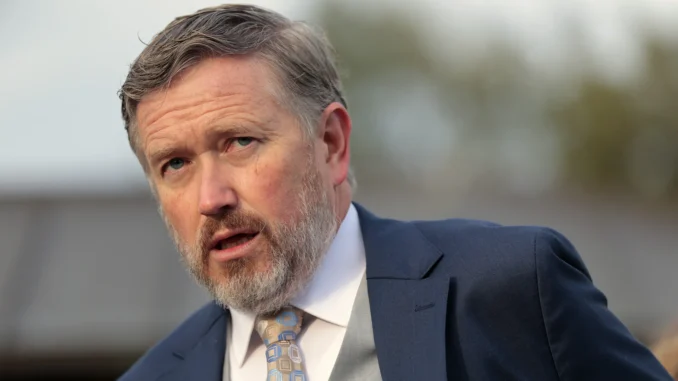
Thomas Harold Massie is one of the most singular and polarising figures in modern American politics a man who defies almost every category the political establishment uses to contain its members.
He is a Republican who votes like a libertarian, a Trump supporter who openly defied the president on his signature legislation, a MIT-trained engineer who lives entirely off-grid on a cattle farm in rural Kentucky, and a congressman who once described himself as having “no Fs to give” in the face of presidential fury.
For thirteen years from his stunning November 2012 special election win to his historic and closely watched primary loss to Trump-endorsed challenger Ed Gallrein on May 19, 2026 Thomas Massie represented Kentucky’s 4th Congressional District with a brand of principled, stubborn, constitutionalist independence that made him beloved by libertarians, despised by party leaders, and endlessly fascinating to the American public.
His career was marked by brilliant legislative advocacy for civil liberties and fiscal conservatism, personal tragedy with the loss of his beloved wife Rhonda in June 2024, and a final crusade for transparency over the Jeffrey Epstein files that ultimately cost him his seat.
| Thomas Harold Massie | |
|---|---|
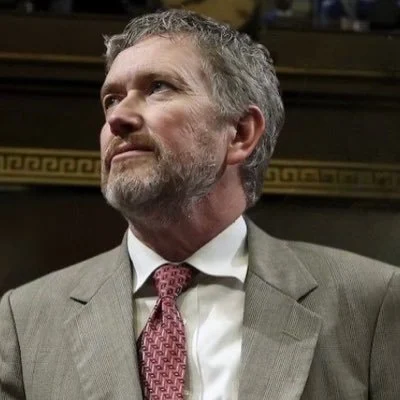 Thomas Harold Massie: History · Bio · Photo
|
|
| Wiki Facts & About Data | |
| Full Name: | Thomas Harold Massie |
| Born: | January 13, 1971 |
| Age: | 55 years old |
| Birthplace: | Huntington, Cabell County, West Virginia, USA |
| Nationality: | American |
| Occupation: | Politician, Engineer, Inventor, Farmer, Entrepreneur |
| Religion: | Christian |
| Spouse: | Rhonda Kay Howard Massie (died June 27, 2024) |
| Children: | Four (three daughters and one son) |
| Net Worth: | $2–3 million USD |
Early Life
Thomas Harold Massie was born on January 13, 1971, in Huntington, Cabell County, West Virginia a town nestled in the Appalachian hills near the Kentucky and Ohio borders.
He was raised in the deeply rural and culturally Appalachian town of Vanceburg, Kentucky, where his father worked as a beer distributor.
Growing up in Vanceburg in Lewis County gave Massie an intimate understanding of rural American life of self-sufficiency, hard work, small-town community, and a healthy distrust of distant federal authority values that would become the bedrock of both his personal philosophy and his political identity.
From an early age, Massie showed a prodigious gift for engineering and invention. He was the kind of child who took things apart to understand how they worked and then figured out how to make them work better.
He attended Lewis County High School in Vanceburg, where he met the woman who would become his wife, partner, and co-inventor: Rhonda Kay Howard. Rhonda was the valedictorian of their high school class accepted at both MIT and Harvard and their prom date in 1989 marked the beginning of a love story that would span more than three decades. Massie has described her as “the love of my life” and “the smartest, kindest woman I ever knew.”
They both went on to attend MIT, beginning a remarkable parallel intellectual journey that would define the next chapter of their lives.
Education
Thomas Massie enrolled at the Massachusetts Institute of Technology (MIT) in Cambridge, Massachusetts one of the world’s most prestigious scientific and engineering universities.
He earned a Bachelor of Science in Electrical Engineering in 1993 and went on to complete a Master of Science in Mechanical Engineering in 1996, with a master’s thesis titled “Initial Haptic Explorations with the Phantom: Virtual Touch Through Point Interaction” a pioneering work in what would become the field of haptic (touch-based) virtual reality technology.
During his time at MIT, Massie was not merely an academic achiever he was also a hands-on innovator and competitor.
In 1990, he participated in the MIT Solar Electric Vehicle Team, helping design and build the team’s solar car, Galaxy. He served as the driver for Galaxy in the 1990 GM Sunrayce a 10-day solar car race finishing at Churchill Downs, Kentucky where the team finished sixth.
In 1992, he won MIT’s prestigious 2.70 Design Competition (now called 2.007, Introduction to Design and Manufacturing), an annual event in which students design and build machines to compete in a specific challenge the MIT equivalent of a gladiatorial arena for engineers.
Rhonda Massie graduated from MIT with a degree in Mechanical Engineering, and the two returned to Kentucky together, carrying with them the intellectual firepower of one of the world’s top engineering schools.
Career
Engineering and Entrepreneurship (1993–2011)
Massie’s professional career began not in politics but in the high-tech corridor of Massachusetts. In 1993, he and Rhonda co-founded SensAble Devices later renamed SensAble Technologies a Cambridge-based startup that pioneered haptic interface technology: devices that allow users to physically feel digital objects on a screen.
Their flagship product was the PHANTOM haptic device, which enabled users to touch and manipulate three-dimensional virtual objects revolutionary technology with applications in surgical simulation, dental training, industrial design, and computer-aided manufacturing.
Massie registered dozens of patents through the company and established himself as a genuine innovator in the field of virtual reality and human-computer interaction.
SensAble Technologies attracted venture capital, grew to a substantial size, and was eventually sold to Geomagic a 3D scanning and digital manufacturing company. The sale gave Massie the financial independence to pivot away from engineering and pursue a different kind of calling.
In 2003, the Massie family left Massachusetts and moved back to Lewis County, Kentucky, where they built an off-grid homestead in Garrison a sprawling property powered by solar panels and Tesla vehicles, where they raised cattle, grew their own food, and homeschooled their four children with hands-on STEM lessons.
This off-grid life was not a retreat from modernity it was a deliberate embodiment of his political philosophy: minimal government dependency, personal self-sufficiency, and freedom from institutional control.
Lewis County Judge-Executive (2010–2012)
Massie’s entry into formal politics came through local government. In 2010, he ran for and won the position of Judge-Executive of Lewis County, Kentucky the county’s chief executive officer, responsible for administering county government, managing the budget, and overseeing public services.
Backed by the Tea Party movement, which was then at its peak of influence in American conservatism, Massie quickly established a reputation for fiscal discipline and constitutional governance at the local level. He served until mid-2012, resigning effective July 1, 2012 to focus on his congressional campaign.
U.S. Representative for Kentucky’s 4th Congressional District (2012–2027)
Massie’s path to Congress came through an extraordinary set of circumstances. In July 2012, Congressman Geoff Davis abruptly resigned his seat, citing a family health issue. The Republican Party committee for Kentucky’s 4th District unanimously endorsed Massie as the party nominee.
On November 6, 2012, Massie ran simultaneously in two separate elections: a special election to fill the final two months of Davis’s unexpired term, and a regular election for a full two-year term. He won both, entering Congress as a double winner on the same day.
From his very first days in Congress, Massie made clear he was not going to be a party-line vote. He was immediately described as a libertarian Republican someone who believed passionately in the original text and intent of the U.S. Constitution, fiercely opposed federal overreach, and was willing to vote against his own party when he believed its legislation violated constitutional principles or fiscal responsibility.
He quickly earned the nickname “Mr. No” having cast some of the most statistically contrarian votes in the entire Congress across his eight terms.
Key legislative positions and votes during his congressional tenure include:
- Civil Liberties and Surveillance: One of the most consistent opponents of warrantless government surveillance, co-sponsoring the Surveillance Accountability Act and repeatedly leading debates against warrantless spying on Americans. As recently as April 30, 2026, he led a floor debate on the issue and introduced the Surveillance Accountability Act (H.R. 8470) in April 2026.
- Second Amendment: A staunch defender of gun rights, arguing that “weapons bans and gun-free zones are unconstitutional” and consistently opposing federal gun control legislation.
- Fiscal Conservatism: Opposed deficit spending regardless of which party proposed it. He voted against Trump’s One Big Beautiful Bill Act in 2025, arguing it was insufficiently fiscally conservative, and against the Full-Year Continuing Appropriations and Extensions Act of 2025 for the same reason votes that would ultimately prove politically fatal.
- Foreign Policy: A vocal non-interventionist who opposed U.S. financial support for foreign wars, including in the Middle East. He was a fierce critic of the U.S. war in Iran and challenged political money flowing to Israel positions that infuriated pro-Israel lobbying groups and drew enormous spending against him in his final primary.
- Agriculture: Introduced the No Capital Gains Tax on Family Farms Act (H.R. 8591) in April 2026 and the Interstate Milk Freedom Act of 2026, reflecting his deep personal connection to farming and rural economy.
- Patent Reform: Authored the Restoring America’s Leadership in Innovation Act of 2025, drawing on his own experience as an inventor and patent holder.
- Transparency: Co-authored the Foreign Agents Registration Act amendment in May 2026 to strengthen transparency in lobbying on behalf of foreign interests.
He served on the House Judiciary Committee, the House Committee on Transportation and Infrastructure, and the House Committee on Rules during various Congresses.
In the 119th Congress (2025–2027), his committee assignments were the Judiciary Committee (including the subcommittees on Courts, Intellectual Property, Artificial Intelligence, and the Internet; and the Constitution and Limited Government) and the Transportation and Infrastructure Committee.
The Epstein Files Crusade (2025–2026)
The defining final chapter of Massie’s congressional career was his relentless campaign to force the full public release of government files related to convicted sex offender and financier Jeffrey Epstein files that implicated networks of powerful individuals in potential criminal activity.
Massie introduced the Epstein Files Transparency Act and led a sustained, high-profile public effort from November 2025 onwards to force disclosure of the files, which the Trump administration had attempted to block.
On February 9, 2026, Massie conducted a dramatic press conference outside the Department of Justice in Washington, D.C., after reviewing unredacted portions of the Epstein files, calling for full public release and describing what he had seen as evidence of a “criminal enterprise” involving “rich and powerful and political donors to the establishment.” He declared that the Epstein files represented the most important transparency issue of his career.
The crusade put him definitively “on the wrong side of the president for quite a while,” as Massie himself acknowledged and it galvanised both his supporters and his enemies in ways that made his 2026 primary a national referendum on political independence.
Personal Life
Life with Rhonda Massie
The emotional centre of Thomas Massie’s personal life was always his wife, Rhonda Kay Howard Massie, born March 20, 1973. The two met as teenagers at Lewis County High School in Vanceburg, went to prom together in 1989, and attended MIT together where Rhonda earned her Mechanical Engineering degree and Thomas his BS and MS.
They married in 1993 and co-founded SensAble Devices together that same year. Rhonda was a brilliant engineer and intellectual equal in every respect, described by her husband as “the smartest, kindest woman I ever knew” and by friends as “one of the kindest, warmest folks you could ever meet.”
On their rural homestead in Garrison, Kentucky, Rhonda homeschooled their four children with a rigorous STEM-based curriculum, collaborated on farm infrastructure projects including irrigation system design, and was an active presence in the broader Lewis County community.
She was also a gifted singer, with rare recordings of her singing circulated by Massie after her death with evident love and tenderness. Together with Thomas, she built a life that was self-sufficient, principled, and deeply connected to the land and community of rural Kentucky.
Death of Rhonda Massie
On June 27, 2024, Rhonda Massie passed away suddenly at the age of 51, just days after she and Thomas had toured Mount Rainier with their grandson a trip Massie described in heartbreaking detail.
The cause of her death was not publicly disclosed. In a deeply emotional announcement on X (formerly Twitter) on June 28, 2024, Massie wrote: “Yesterday my high school sweetheart, the love of my life for over 35 years, the loving mother of our 4 children, the smartest kindest woman I ever knew, my beautiful and wise queen forever, Rhonda went to Heaven. Thank you for your prayers for our family in this difficult time.”
The announcement was met with an extraordinary outpouring of condolences from across the political spectrum from fellow Kentucky Republicans, to Democratic colleagues, to the general public. Kentucky House Speaker David Osborne described Rhonda as “a beloved wife, mother, and grandmother, as well as a successful businesswoman and proud Kentuckian.”
Rep. Andy Barr praised her “warmth, kindness, and dedication to her family and community.” The loss of Rhonda, whom Massie credited as the steady foundation of everything he had built, was widely seen as a profoundly humanising moment for a congressman whose public image had always been more contrarian than personal. He leaves behind four children three daughters and one son and at least one grandchild.
Off-Grid Life and Farming
Beyond politics and grief, Massie is defined by his life as an off-grid farmer and homesteader on his property in Garrison, Lewis County, Kentucky. He raises cattle, produces his own food, and powers his home entirely with solar panels and electric vehicles.
This lifestyle is entirely genuine not a political prop and mirrors his libertarian conviction that personal freedom is indivisible from economic self-sufficiency. He is a practising farmer, and his agricultural legislation in Congress has always reflected lived, not theoretical, experience of rural life.
Controversies
COVID-19 Voting Controversy (2020)
In March 2020, Massie triggered national fury when he attempted to force a quorum call vote on the $2.2 trillion CARES Act the emergency COVID-19 economic relief package rather than allow it to pass by voice vote. Massie argued that a bill of such fiscal magnitude deserved a formal recorded vote and full deliberation.
President Trump then an ally called him a “third rate grandstander” and said he should be “thrown out of the Republican Party.” Former President Obama called him a “Massie” who was putting lives at risk. The incident made national headlines but did not succeed in forcing a roll call vote, and Massie received enormous backlash while maintaining that he was merely upholding constitutional process.
Anti-Lynching Bill Vote (2022)
In 2022, Massie was the sole Member of Congress to vote against the Emmett Till Antilynching Act, which made lynching a federal hate crime. Massie argued that the bill expanded hate crime laws and that “a crime is a crime, and all victims deserve equal justice” reasoning that adding enhanced penalties for “hate” endangered other liberties such as free speech. While his legal reasoning was consistent with his broader philosophy on hate crime legislation, the vote was widely condemned as morally indefensible and generated significant negative press coverage.
Trump vs. Massie (2025–2026)
The final and most dramatic controversy of Massie’s congressional career was his open break with President Donald Trump during Trump’s second administration. The rupture began when Massie voted against Trump’s signature One Big Beautiful Bill Act and the Full-Year Continuing Appropriations Act of 2025, arguing both were fiscally irresponsible. Trump responded by announcing he would actively fund a primary challenger against Massie.
The tension exploded further when Massie championed the release of the Epstein files over Trump’s objections, and publicly criticised U.S. financial support for Israel and the Iran war.
Trump called Massie a “pathetic LOSER”, a “lightweight”, and a “sick Wacko”. On March 11, 2026, Trump personally visited Verst Logistics in Hebron, Kentucky within Massie’s district to campaign for primary challenger Ed Gallrein, a former Navy SEAL and fifth-generation dairy farmer. In an extraordinary and controversial move, Trump also dispatched Defense Secretary Pete Hegseth to campaign for Gallrein an unusual deployment of a Cabinet secretary into a congressional primary. The race became the most expensive House primary in American history, with over $32 million in advertising spending, dominated largely by pro-Israel and Trump-aligned groups funding negative ads against Massie.
2026 Primary Loss Breaking News
On Tuesday, May 19, 2026 the day of this biography’s writing Thomas Massie lost the Republican primary for his Kentucky 4th Congressional District seat to Trump-endorsed challenger Ed Gallrein. The Associated Press called the race on Tuesday evening. The result marks the end of Massie’s 13-year congressional career and represents one of the most significant victories of President Trump’s campaign to reshape the Republican Party in his own image.
Ed Gallrein Biography: Religion, Family, Wife, Age & Net Worth, Children, Politics
Massie had described this primary as “by far the most challenging” of his career, while refusing to back down. To the very end, he touted his rift with Trump as a badge of honour and a selling point for his constituents, telling supporters on the eve of the election: “They’ve tried to turn me into a villain. The more they try to punish me, the more powerful I get.”
He lost, nonetheless a casualty of the Trump-aligned rural MAGA vote cutting against him in ways that had not occurred in prior election cycles. House Speaker Mike Johnson, walking a diplomatic tightrope, had effectively stayed out of the race, noting that “it would be helpful to have a more reliable vote for our agenda” while declining to formally endorse Gallrein.
His congressional term will end in January 2027, when Gallrein, assuming he wins the general election in November 2026, will be sworn in. Massie has made no announcement about future plans.
Net Worth
Thomas Massie’s estimated net worth is approximately $2 to $3 million USD, derived primarily from the sale of SensAble Technologies (the haptic virtual reality company he co-founded with Rhonda), ongoing income from his cattle farming and homestead operations in Lewis County, and his congressional salary of $174,000 per year.
His lifestyle off-grid and self-sufficient reflects a deliberate avoidance of extravagance rather than financial limitation. He holds dozens of patents from his engineering career that have historically contributed licensing income, though specific figures are not publicly disclosed.
Social Media
Thomas Massie is notably active on social media for a sitting U.S. congressman, using his platforms to share his political positions, farm life, engineering projects, and libertarian commentary with considerable wit and directness.
- Twitter/X: @RepThomasMassie his most active platform, used for legislative commentary, farm updates, and political debate; he has a large and engaged following
- Facebook: Active page for constituency updates and political commentary
- YouTube: Used for congressional statements, floor speeches, and occasional viral moments
His social media personality has been a key part of his political brand candid, technically literate, self-deprecating about farm life, and brutally direct about political positions.
His posts often go viral, particularly when he is challenging the political establishment or sharing the kind of contrarian insight that endears him to libertarian and antiestablishment communities online.
FAQs
Who is Thomas Massie?
Thomas Harold Massie is an American politician, engineer, inventor, and farmer who represented Kentucky’s 4th Congressional District as a Republican from November 2012 until January 2027.
He is known for his libertarian-leaning conservatism, his MIT engineering background, his off-grid farm lifestyle, and his principled independence from party leadership including President Trump.
Did Thomas Massie win his 2026 primary?
No. On May 19, 2026, Thomas Massie lost the Republican primary for his Kentucky 4th Congressional District seat to Trump-endorsed challenger Ed Gallrein, a former Navy SEAL and fifth-generation farmer. The race was the most expensive House primary in U.S. history, with over $32 million in advertising.
Where did Thomas Massie go to school?
He attended Lewis County High School in Vanceburg, Kentucky, and then the Massachusetts Institute of Technology (MIT), where he earned a BS in Electrical Engineering (1993) and an MS in Mechanical Engineering (1996).
What is Thomas Massie known for in Congress?
Massie is best known for his libertarian-constitutionalist positions, including fierce opposition to warrantless surveillance, staunch defence of the Second Amendment, fiscal conservatism (including voting against Trump’s One Big Beautiful Bill), opposition to foreign interventionism, and his crusade to release the Jeffrey Epstein government files.
What happened to Thomas Massie’s wife?
Rhonda Kay Howard Massie, Thomas’s high school sweetheart and wife of over 31 years, passed away suddenly on June 27, 2024, at the age of 51. She was a mechanical engineering graduate of MIT, co-founder of SensAble Technologies, mother of their four children, and described by Massie as “the love of my life.” Her cause of death was not publicly disclosed.
What company did Thomas Massie found?
In 1993, Massie and his wife Rhonda co-founded SensAble Devices (later SensAble Technologies) in Massachusetts a pioneer in haptic virtual reality technology. The company’s flagship PHANTOM device allowed users to physically feel digital objects. It was later sold to Geomagic.
Why did Trump oppose Thomas Massie?
Trump opposed Massie primarily because Massie voted against the One Big Beautiful Bill Act and the Full-Year Continuing Appropriations Act of 2025, which Trump considered insufficiently fiscally conservative. Their relationship further deteriorated when Massie led the push to release the Epstein files against Trump’s wishes, and when Massie criticised U.S. financial support for Israel and the Iran war.
What is Thomas Massie’s net worth?
His estimated net worth is approximately $2–3 million USD, derived from the sale of his tech startup SensAble Technologies, farming income, patent royalties, and his congressional salary.
Does Thomas Massie really live off-grid?
Yes. Massie and his family genuinely live off the grid on a cattle farm in Garrison, Lewis County, Kentucky, powered by solar panels and electric vehicles. This is not a political gimmick but a genuine expression of his libertarian philosophy of self-reliance and minimal government dependency.
What was Thomas Massie’s role in the Epstein files controversy?
Massie was the leading congressional champion of the Epstein Files Transparency Act, demanding the full public release of government files related to Jeffrey Epstein. On February 9, 2026, he held a press conference outside DOJ after reviewing unredacted files, calling for full disclosure and describing the files as evidence of a “criminal enterprise.” His push to release the files over Trump’s objections was a central cause of Trump’s campaign to defeat him in the 2026 primary.
Conclusion
Thomas Massie’s story is, ultimately, a story about what it costs to stand on principle in a political system that rewards loyalty above all else. For thirteen years, he was the most independently minded member of the United States House of Representatives a man who voted his conscience on virtually every bill, regardless of which president, which speaker, or which donor it offended. He was called names by Trump. He was denounced by Obama. He was isolated by his own leadership. He voted alone on bills that passed 434 to 1. And through all of it, he remained unbowed a stubborn, brilliant, occasionally infuriating embodiment of a politics rooted in constitutional principle rather than partisan calculation.
His personal life was no less remarkable. He married his high school sweetheart, built a company at MIT, sold it, moved home to Kentucky, built a solar-powered farm, raised four children, and loved one woman for over three decades only to lose her suddenly in June 2024, leaving a wound that no political campaign could ever fully account for. That his final year in Congress was also his most courageous championing Epstein file transparency and fiscal responsibility against the full force of presidential fury says everything about the kind of man Thomas Massie is. He lost his primary on May 19, 2026. But the conviction with which he fought, and the questions he refused to stop asking, will outlast the seat he no longer holds.
Related People



Leave a Reply