
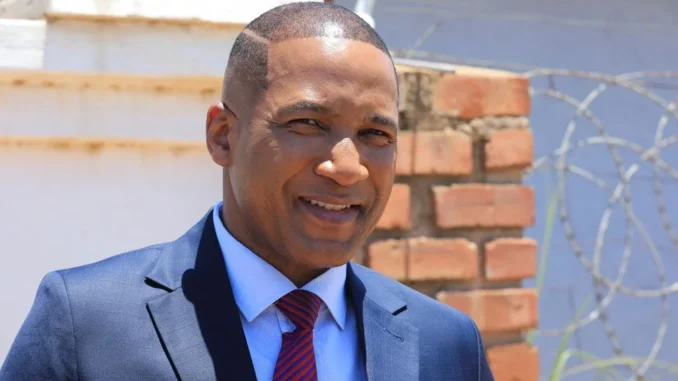
Duma Gideon Boko is the 6th President of the Republic of Botswana a human rights lawyer, constitutional scholar, academic, and politician whose stunning electoral victory in October 2024 ended nearly 60 years of uninterrupted rule by the Botswana Democratic Party (BDP), making him one of the most consequential political figures in Botswana’s modern history.
Born on December 31, 1969, in Mahalapye a modest town in central Botswana roughly 200 kilometres from the capital Gaborone Boko rose from humble origins through the discipline of legal education, the tenacity of sustained political opposition, and the patient, strategic work of coalition-building to achieve a historic democratic transition that surprised the world and inspired a continent.
A man who declared his intention to become president a decade before achieving it, Duma Boko embodies the quiet, stubborn power of conviction and his story, from Mahalapye to State House, is one of the most compelling political biographies on the African continent.
| Duma Gideon Boko | |
|---|---|
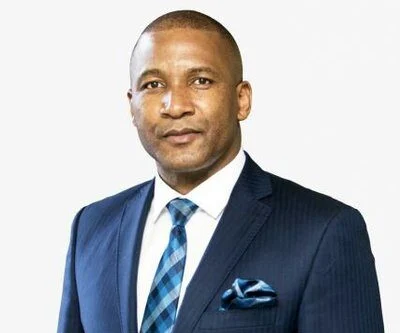 Duma Gideon Boko: History · Bio · Photo
|
|
| Wiki Facts & About Data | |
| Full Name: | Duma Gideon Boko |
| Born: | December 31, 1969 |
| Age: | 56 years old |
| Birthplace: | Mahalapye, Central District, Botswana |
| Nationality: | Motswana (citizen of Botswana) |
| Occupation: | Politician, Lawyer, Academic |
| Religion: | Christianity |
| Spouse: | Kaone Tumalano Boko (née Mokganedi) – married 2015; First Lady of Botswana; Lawyer |
| Children: | Multiple (including son Moono Boko, born 2015 with Kaone) |
| Net Worth: | Estimated $2 million – $2.6 million |
Early Life
Duma Gideon Boko was born on December 31, 1969 the last day of a decade that had seen Botswana itself just recently born: the country achieved independence from Britain on September 30, 1966, making Boko a child of the young republic, born just three years into its national life.
His birthplace, Mahalapye, is a town in Botswana’s Central District, situated approximately 200 kilometres northeast of Gaborone along the main road and rail corridor that links the capital to the north of the country. It is not a glamorous setting Mahalapye is a working town, a railway junction historically associated with commerce, agriculture, and modest expectations. But it is a place that has produced more than its share of ambitious people, and Duma Boko is the most prominent of them.
He was raised in a modest family environment. The specific identities and occupations of his parents have not been widely published, consistent with the private nature that Boko has maintained around his personal life throughout his public career.
What is well established is that he grew up in conditions that gave him a direct, unmediated experience of the socio-economic realities facing ordinary Batswana the gap between the prosperity generated by Botswana’s diamond wealth and the persistent poverty, unemployment, and inequality experienced by large portions of the population. That gap, observed and felt from childhood, became the animating concern of his entire political career.
His grandfather’s influence has been cited as formative. Like many young Batswana of his generation, he came of age during the period when the BDP Botswana’s founding party was delivering genuine improvements in health, education, and infrastructure through the revenues of the diamond industry.
But the limits of that model its failure to diversify the economy, its tendencies toward entrenchment and complacency, the growing unemployment and inequality were already becoming visible by the time Boko reached adulthood, and they only deepened over the subsequent decades.
As a young man, Boko is described as intellectually sharp, intensely ambitious, and deeply conscious of the responsibilities that education creates.
He was drawn to law a field that offered both intellectual challenge and the capacity to advocate for those without power. He joined the Botswana National Front at a young age, attracted by its social democratic philosophy and its tradition of principled opposition to the BDP, and has never left.
Education
Duma Boko’s educational biography is one of the most impressive of any current African head of state. He pursued his undergraduate legal education at the University of Botswana, the country’s primary public university in Gaborone, graduating in 1993 with a Bachelor of Laws (LLB) degree. His academic performance was strong enough to earn him a place at one of the world’s most elite law schools.
He proceeded to Harvard Law School in Cambridge, Massachusetts consistently ranked among the top two law schools in the world where he completed a Master of Laws (LLM) degree in 1995. The Harvard LLM is a postgraduate legal qualification that attracts lawyers from across the world who seek advanced specialisation in international law, human rights, constitutional law, and comparative legal systems.
For a young Motswana lawyer from Mahalapye to complete an LLM at Harvard in the mid-1990s was a remarkable achievement that opened international doors and gave Boko both the intellectual tools and the global network that would serve his career across the subsequent three decades.
On returning to Botswana, Boko joined the academic staff of the University of Botswana’s law faculty, where he lectured from 1993 to 2003 a decade of teaching that ran parallel to his early legal practice and his growing involvement in political and civic life. He was known as a demanding and intellectually rigorous teacher, committed to developing the next generation of Botswana’s legal professionals.
In 2008, having built his reputation as both an academic and a practising attorney, Boko opened his own law firm a full-service legal practice focusing on human rights, constitutional law, and commercial litigation, among other areas.
The firm became one of the respected legal practices in Gaborone and provided the financial platform from which he pursued his increasingly intensive political activities.
Career
Legal Career and Human Rights Advocacy
Duma Boko’s legal career has been defined by a commitment to human rights and public interest litigation that distinguishes him from most lawyers who enter politics. The most celebrated of his legal advocacy efforts was his role in a landmark case fought between 2004 and 2006 on behalf of the Basarwa (San) people Botswana’s indigenous hunter-gatherer communities who had been evicted from their ancestral homeland in the Central Kalahari Game Reserve (CKGR) by the Botswana government.
The case attracted international attention and scrutiny, and Boko’s involvement on the side of the Basarwa fighting against the government of the very state he would later lead demonstrated both his legal courage and the seriousness of his human rights convictions.
The High Court of Botswana ultimately ruled in 2006 that the eviction of the Basarwa from the CKGR had been unlawful and unconstitutional a historic judgment that was partly shaped by the legal arguments Boko and his colleagues had made. The case remains one of the most significant human rights legal victories in Botswana’s post-independence history and is central to Boko’s reputation as a principled constitutional advocate.
He was also actively involved with the Botswana Network on Ethics, Law and HIV/AIDS (BONELA), serving two terms as chair of its board work that addressed the intersection of public health, human rights, and the specific vulnerabilities created by the HIV/AIDS epidemic that devastated Botswana’s population in the late 1990s and 2000s.
Botswana had one of the highest HIV prevalence rates in the world at its peak, and the civil society work of organisations like BONELA and the lawyers and advocates who supported it played a significant role in shaping the country’s ultimately effective public health response.
Political Career
Botswana National Front (2003–2010)
Boko joined the Botswana National Front (BNF) the country’s principal left-leaning opposition party, founded in 1965 as a young man. In 2003, when some BNF members left to form a new splinter party, Boko was involved in those early factional dynamics before eventually returning to the BNF fold. His commitment to the party and his growing profile as a lawyer and civic activist positioned him as a credible future leader.
In 2010, Duma Boko was elected President of the Botswana National Front the party’s highest internal position succeeding the retiring party leadership and assuming control of what was, at the time, a divided and depleted opposition movement.
His election as BNF president was itself a significant moment: it placed a Harvard-educated human rights lawyer with a distinguished legal reputation at the head of Botswana’s most important opposition party, and signalled a new era of serious, intellectually credible opposition politics.
Building the Umbrella for Democratic Change (2012)
Boko’s most consequential pre-presidential political achievement was the creation in 2012 of the Umbrella for Democratic Change (UDC) a coalition of Botswana’s principal opposition parties designed to pool their electoral strength and present a unified alternative to the BDP.
The founding coalition brought together the Botswana National Front, the Botswana Movement for Democracy, and the Botswana People’s Party under a single banner, with Boko elected as the coalition’s president. The formation of the UDC was a masterpiece of political architecture recognising that no single opposition party could defeat the BDP alone, and that only by combining forces could the opposition achieve the parliamentary majority required for a democratic transition of power.
Opposition Leadership and National Assembly (2014–2019)
In the 2014 general election, Boko led the UDC for the first time as a unified coalition. The results were encouraging but insufficient: the UDC won 17 seats in the National Assembly, giving Boko the position of Leader of the Opposition a role he held from October 25, 2014 to August 28, 2019.
It was his first formal government position, and it gave him a platform in parliament to challenge the BDP government daily on matters of economic policy, governance, transparency, and constitutional integrity.
In the 2019 general election, Boko ran again as the UDC’s presidential candidate. The election took place in a complex political environment partly defined by a dramatic public split between the outgoing President Ian Khama and his chosen successor Mokgweetsi Masisi, with Khama actively campaigning against the BDP he had previously led.
Despite this unusual fracture within the ruling party, the BDP retained power with 38 seats. The UDC won 15 seats a disappointing result that once again left Boko in opposition. Many observers wondered whether he would continue. He did.
The 2024 Election A Historic Victory
By 2024, the context had shifted dramatically. Botswana’s economy was struggling the IMF projected GDP growth of just 1% in 2024, down from 5.5% just two years earlier, as global demand for diamonds the foundation of Botswana’s prosperity declined significantly. Unemployment had risen to almost 28%, and poverty affected approximately 38% of the population.
The BDP government, after nearly 60 years in power, was seen by a growing majority of Batswana as exhausted, unresponsive, and out of touch with the daily struggles of ordinary citizens.
Boko ran his most focused and effective campaign, built around a platform of economic diversification, doubling the minimum wage, reducing unemployment, providing universal health coverage, and restoring trust in democratic institutions.
He resonated particularly strongly with Botswana’s large and frustrated youth population, who felt shut out of economic opportunity and increasingly disillusioned with the BDP’s promises.
On October 30, 2024, Botswana held its general election. The results stunned the region and the world. The UDC won 36 seats in the 61-seat National Assembly an outright majority while the BDP collapsed from 38 seats to just 4.
The ruling party’s president, Mokgweetsi Masisi, conceded defeat with dignity. It was the first democratic transfer of power in Botswana’s nearly 60 years of independence and one of the most dramatic electoral results anywhere in Africa in 2024. On November 1, 2024, Duma Gideon Boko was sworn in as the 6th President of the Republic of Botswana at a ceremony in Gaborone, with Ndaba Gaolathe as his Vice President.
Presidency (2024–Present)
President Duma Boko’s administration has focused from the outset on delivering the structural changes he promised during the campaign.
His economic priorities centre on diversifying Botswana’s dangerously diamond-dependent economy addressing the vulnerability that the 2023–2024 global diamond slowdown exposed so dramatically while simultaneously addressing the unemployment and poverty that affect a large proportion of the population.
His social policy agenda includes strengthening universal healthcare, expanding access to quality education, and empowering youth and women through targeted programmes and institutional reform.
His foreign policy approach has emphasised regional integration within the Southern African Development Community (SADC), strengthening bilateral relationships with Botswana’s neighbours, and positioning the country as a responsible global actor committed to democratic values and the rule of law.
In 2025, President Boko was named to Time Magazine’s 100 Most Influential People a recognition that reflected both the historic significance of his electoral victory and his growing profile as a model of democratic leadership on the African continent.
He has also been invited to speak at global forums on democracy, governance, and sustainable development cementing Botswana’s reputation, after a period of concern about democratic backsliding under his predecessors, as a country genuinely committed to the constitutional values enshrined in its founding documents.
Awards & Recognition
- 6th President of the Republic of Botswana – sworn in November 1, 2024 (historic first democratic transfer of power in Botswana)
- Named to Time Magazine’s 100 Most Influential People – 2025
- President, Botswana National Front (BNF) – 2010–present
- President, Umbrella for Democratic Change (UDC) – 2012–present
- Leader of the Opposition, Botswana National Assembly – 2014–2019
- Harvard Law School LLM – 1995 (one of very few Botswana heads of state with a Harvard postgraduate qualification)
- Successful lead counsel in landmark Basarwa (San) people CKGR eviction case (2004–2006) court ruled government evictions unlawful and unconstitutional
- Two terms as Chair of the Board, Botswana Network on Ethics, Law and HIV/AIDS (BONELA)
- Invited speaker at international forums on democracy, governance, and rule of law
Social Media
President Duma Boko maintains an active social media presence, particularly on Facebook, where his official page as President of Botswana has accumulated over 1.4 million likes and nearly 570,000 people actively engaging with his content significant reach for the leader of a country of 2.5 million people.
He uses social media to communicate directly with Batswana citizens about government policies, national events, and his vision for the country’s future.
His social media presence grew dramatically following his 2024 election victory, as both Batswana and international observers sought to learn more about the man who had ended the BDP’s nearly six-decade rule.
- Facebook: @DumaBokoUDC
- X (Twitter): @DumaBokoUDC
Personal Life
Duma Boko is married to Kaone Tumalano Boko (née Mokganedi), a lawyer who became Botswana’s First Lady on November 1, 2024.
Born on February 20, 1988, in Moshupa in the Southern District of Botswana, Kaone is approximately 19 years younger than her husband. She graduated from the University of Botswana with a law degree and built her professional reputation in commercial litigation and governance working at Duma’s law firm before her role as First Lady made that professional association no longer appropriate.
Duma and Kaone married in 2015, the same year their son Moono Boko was born. The name Moono carries deliberate symbolic weight it is drawn from a popular slogan within the Botswana National Front, reflecting the family’s deep alignment with the political values and identity of the party that has defined Duma’s life in public service.
As First Lady, Kaone has participated in official state engagements, represented Botswana at international events, and been involved in charitable and humanitarian initiatives focused on women’s welfare, children’s health, and community development.
Beyond his marriage to Kaone and their son Moono, reports from multiple sources indicate that Boko has children from other relationships prior to his current marriage. One interview cited him as having nine children in total, though the specific details of his family history have not been publicly confirmed in detail, consistent with Boko’s consistent practice of guarding his personal life carefully.
He has been described in interviews as a dedicated and family-oriented father who makes time for his children despite the extraordinary demands of political leadership.
Boko is a Christian. He is described in multiple assessments by those who know him professionally as possessing an unusual combination of personal qualities: intellectually formidable, constitutionally principled, passionately ambitious, quietly humble in private settings, and capable of the kind of methodical patience running for president three times over a decade before succeeding that distinguishes genuinely transformative political leaders from mere opportunists.
His former economic adviser Keith Jefferis, quoted by AFP at the time of his 2024 victory, described him as “a smart guy with a strange mixture of humility and arrogance” a characterisation that, delivered with evident admiration, captures the particular blend of qualities that sustained him through years of losing and ultimately carried him to victory.
Net Worth
Duma Boko’s estimated net worth as of 2026 is approximately $2 million to $2.6 million.
His wealth was accumulated over three decades of professional activity ten years as a university lecturer, concurrent practice as a lawyer, and from 2008, the operation of his own law firm specialising in human rights, constitutional, and commercial law.
As a senior and well-regarded attorney practising in Botswana’s small but active legal market, he would have generated substantial professional income across his career, supplemented by his political salary as Leader of the Opposition and subsequently as President.
It is worth noting that Botswana has a relatively transparent and well-regulated public sector compensation framework, and presidential salaries are structured in line with the country’s fiscal position and governance standards. As President, Boko’s compensation is publicly determined and modest by the standards of larger or wealthier African nations.
His net worth primarily reflects the legal career built before his presidency, rather than the extraction of public resources a point worth emphasising given the governance values of transparency and accountability that have been central to his political platform.
FAQs
Who is Duma Boko?
Duma Gideon Boko is the 6th President of the Republic of Botswana, a human rights lawyer, academic, and politician. He was born on December 31, 1969, in Mahalapye, Botswana, and was sworn in as president on November 1, 2024, after leading the Umbrella for Democratic Change coalition to a historic victory that ended nearly 60 years of Botswana Democratic Party rule.
How old is Duma Boko?
Duma Boko was born on December 31, 1969, making him 56 years old as of 2026.
Where did Duma Boko study?
He earned a Bachelor of Laws (LLB) from the University of Botswana in 1993 and a Master of Laws (LLM) from Harvard Law School in 1995. He also lectured at the University of Botswana’s law faculty from 1993 to 2003.
Who is Duma Boko’s wife?
Duma Boko is married to Kaone Tumalano Boko (née Mokganedi), a lawyer born on February 20, 1988, in Moshupa, Botswana. They married in 2015 and have a son named Moono Boko. Kaone became Botswana’s First Lady on November 1, 2024.
What is the Umbrella for Democratic Change?
The Umbrella for Democratic Change (UDC) is a Botswana opposition coalition founded in 2012 by Duma Boko, bringing together the Botswana National Front, the Botswana Movement for Democracy, and the Botswana People’s Party. The coalition won the October 2024 general election with 36 seats, achieving the first ever democratic transfer of power in Botswana’s independent history.
What did Duma Boko campaign on in 2024?
Boko campaigned on doubling the minimum wage, reducing unemployment (which stood at nearly 28%), providing universal health coverage, diversifying the economy beyond diamonds, and restoring transparent and accountable democratic governance.
Why is Duma Boko’s 2024 election win historic?
Boko’s 2024 electoral victory is historic because it ended the Botswana Democratic Party’s nearly 60-year unbroken rule since independence in 1966 and represented the first ever peaceful democratic transfer of power in Botswana’s history. The UDC’s 36-seat majority against the BDP’s collapse to just 4 seats was one of the most dramatic electoral results in Africa in 2024.
What is Duma Boko’s net worth?
Duma Boko’s estimated net worth is approximately $2 million to $2.6 million, built primarily through his legal career and the law firm he opened in 2008.
What is Duma Boko known for legally?
He is best known legally for his role in the landmark Basarwa (San) people case (2004–2006), in which he helped argue that the Botswana government’s eviction of indigenous San people from the Central Kalahari Game Reserve was unlawful and unconstitutional. The High Court agreed a historic ruling for indigenous rights in Botswana and Africa.
What is Duma Boko’s political ideology?
Duma Boko is a social democrat and constitutionalist. He believes in democratic governance, the rule of law, human rights, social equity, economic diversification, and the empowerment of Botswana’s poorer citizens through targeted policy reform.
Conclusion
Duma Gideon Boko’s journey to the presidency of Botswana is a story that rewards patience as a virtue, legal rigor as a political foundation, and the conviction that democratic change, however long it takes is always possible. He ran for president three times. He lost twice. He kept building, kept arguing, kept organising, kept believing that a majority of his fellow Batswana would eventually reach the same conclusion he had reached years before: that 60 years of the same party, however historically well-intentioned, was long enough.
In October 2024, they did. And the Harvard-educated human rights lawyer from Mahalapye the young man who had fought for the rights of the Basarwa, who had taught law at the University of Botswana, who had built a coalition from scratch and twice watched it fall short stood at the podium in Gaborone and became the sixth President of Botswana. It was a moment for his country, for southern Africa, and for every democrat on a continent where democratic transitions remain precious, fragile, and deeply contested. As he navigates the enormous challenges of economic diversification, youth unemployment, and democratic consolidation, the world will be watching. And from everything the record suggests, Duma Boko has spent his entire life preparing for exactly this moment.
Related People





Leave a Reply