
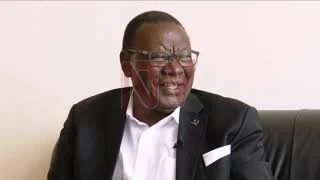
Chris Rwakasisi is one of the most extraordinary and complex figures in Uganda’s post-independence political history.
Once one of the most feared and powerful men in the country as Minister of Security under President Milton Obote’s second government, he went from commanding presidential-like motorcades to spending 24 years on death row in Luzira Prison, accused of crimes he has consistently denied committing.
His story does not end there, however. After his release, he underwent a profound spiritual transformation and emerged as an unlikely symbol of forgiveness, second chances, and redemption.
Today he serves as a Senior Presidential Adviser to President Yoweri Museveni the very man whose National Resistance Army (NRA) he once fought against, in what many Ugandans regard as one of the most remarkable political reconciliation stories on the African continent.
| Chris Rwakasisi | |
|---|---|
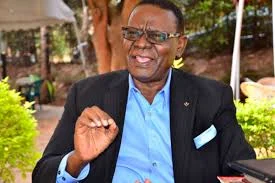 Chris Rwakasisi: History · Bio · Photo
|
|
| Wiki Facts & About Data | |
| Full Name: | Chris Rwakasisi |
| Birthplace: | Ankole Region, Uganda (born in rural Ankole, southwestern Uganda) |
| Nationality: | Ugandan |
| Occupation: | Former Politician, Former Security Minister, Senior Presidential Adviser, Preacher |
| Religion: | Christianity (born-again Christian) |
Early Life
Chris Rwakasisi was born in the Ankole region of southwestern Uganda. He grew up in a region with a deep cultural identity among the Banyankole people, and from a young age demonstrated an appetite for politics and public affairs.
He became active in political circles as a young man and rose through the ranks of the Uganda People’s Congress (UPC), the political party founded by Milton Obote that dominated Uganda’s early post-independence politics.
His sharp intellect and political acumen caught the attention of Milton Obote himself, even before Obote became Prime Minister.
In 1961, Rwakasisi encountered Obote during political rallies in the Mbarara District ahead of Uganda’s independence elections.
At the time, Rwakasisi was serving as the head of the UPC youth league in Ankole , a position that placed him at the forefront of grassroots political mobilisation. This early connection to Obote would define the entire trajectory of his life.
Education
Chris Rwakasisi received formal education and went on to study in the Soviet Union (Russia) as part of Uganda’s Cold War-era program of training intelligence and security personnel.
He trained as an intelligence information gatherer, a background that would later shape his role as the head of Uganda’s feared National Security Agency (NASA).
His Russian training gave him skills in intelligence gathering, political analysis, and security operations that made him an invaluable asset to the Obote government.
Career
Chris Rwakasisi’s political career began in earnest when he joined the President’s Office as head of the legal and political affairs desk in 1969, during Obote’s first government. It was in this capacity that a young Yoweri Museveni , then a student and political activist, came to work under him as a research assistant in 1970. Few could have imagined then that those two men would later end up on opposite sides of one of Uganda’s most violent conflicts.
In 1971, when Idi Amin seized power in a military coup, Rwakasisi was arrested and imprisoned at Makindye Military Police Barracks for six months along with other Obote loyalists. He survived Amin’s brutal regime and eventually went into exile, keeping the flame of Obote’s political movement alive.
When Obote returned to power in 1980 following the elections that ended Amin’s era, Rwakasisi was elevated to one of the most powerful positions in the country, Minister of Security, overseeing the National Security Agency (NASA).
In this role, he wielded immense power and influence over Uganda’s internal security apparatus during a period of intense civil conflict. The government was fighting a brutal bush war against Yoweri Museveni’s NRA in the Luwero Triangle, and Rwakasisi’s critics have alleged that under his watch, numerous atrocities were committed, including extrajudicial killings, abductions, and mass violence against civilians suspected of supporting the rebels. Rwakasisi has consistently maintained his innocence, insisting that he was operating within the chain of command during a time of genuine armed insurgency.
In July 1985, Obote’s government was overthrown by the military junta of Tito Okello Lutwa. Rwakasisi was immediately arrested.
When Museveni’s NRA took over power in January 1986, they found him already in prison. He was subsequently tried and sentenced to death in 1988, along with former NASA agent Elias Wanyama, on charges related to the atrocities of the Obote II era. He was transferred to death row at Luzira Maximum Security Prison, where he would spend the next 24 years in one of the most dramatic acts of political incarceration in Ugandan history.
During his years on death row, Rwakasisi underwent a profound spiritual transformation. He became a born-again Christian, turned to preaching, and found what he described as genuine peace and purpose within the prison walls.
He became known as a preacher and spiritual counsellor within Luzira, transforming from a feared intelligence operative into what many inmates and prison staff described as a man of God. His sentence was commuted from death to life imprisonment, and he was eventually released.
After his release, in what many Ugandans found both surprising and deeply symbolic, President Yoweri Museveni appointed Rwakasisi as a Senior Presidential Adviser, a gesture of national reconciliation and forgiveness that drew considerable commentary across Uganda. Rwakasisi himself has publicly credited Museveni for saving his life and has spoken movingly at various public events about the power of forgiveness and God’s grace.
Social Media
Chris Rwakasisi does not maintain prominent personal social media accounts.
He makes occasional public appearances at national events, church functions, and political forums where he shares his extraordinary testimony of power, downfall, and redemption.
His story has been covered extensively by Ugandan media including New Vision, the Daily Monitor, NBS Television, and Watchdog Uganda.
Personal Life
Details of Chris Rwakasisi’s personal and family life are largely private. He was close to his political mentor Milton Obote throughout his life.
One of his oldest friends is Ugandan business mogul Sir Gordon Wavamunno, with whom he was detained at Makindye barracks during Amin’s era , a friendship built in one of the most trying circumstances imaginable and one that has endured for decades.
He has spoken publicly about the isolation and psychological torment of death row, describing how his former power and prestige were stripped away overnight, and how his faith in God became his anchor during those 24 years.
Conclusion
The story of Chris Rwakasisi is one that defies easy categorisation. He was a man at the very centre of power in one of East Africa’s most turbulent political periods, implicated in grave accusations, subjected to nearly a quarter century on death row, and yet ultimately emerged as a preacher of forgiveness and a presidential adviser to his former political adversary.
Whatever one’s view of his past actions, his story raises profound questions about justice, redemption, political transition, and the human capacity for change.
In a continent where political history is often written in extremes, Chris Rwakasisi stands as one of Uganda’s most complex and thought-provoking historical figures.
Related People

Leave a Reply