
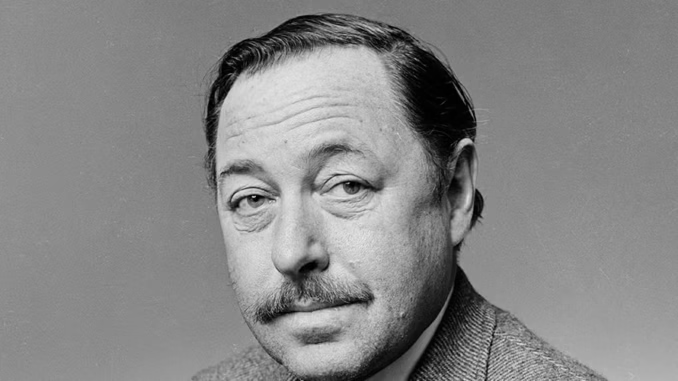
Tennessee Williams, born Thomas Lanier Williams III, is widely regarded as one of the greatest playwrights in the history of American theatre.
The author of A Streetcar Named Desire, The Glass Menagerie, Cat on a Hot Tin Roof, and more than 30 full-length plays, he transformed the American stage by infusing it with lyrical language, psychological depth, and a compassion for life’s outcasts and wounded souls that had never before been seen in mainstream drama.
A two-time Pulitzer Prize winner, Williams drew relentlessly and courageously from his own turbulent life, his fractured family, his sexuality, his mental anguish, and his consuming loneliness, to create works that remain as urgent and alive today as the moment they were first performed.
| Thomas Lanier Williams III | |
|---|---|
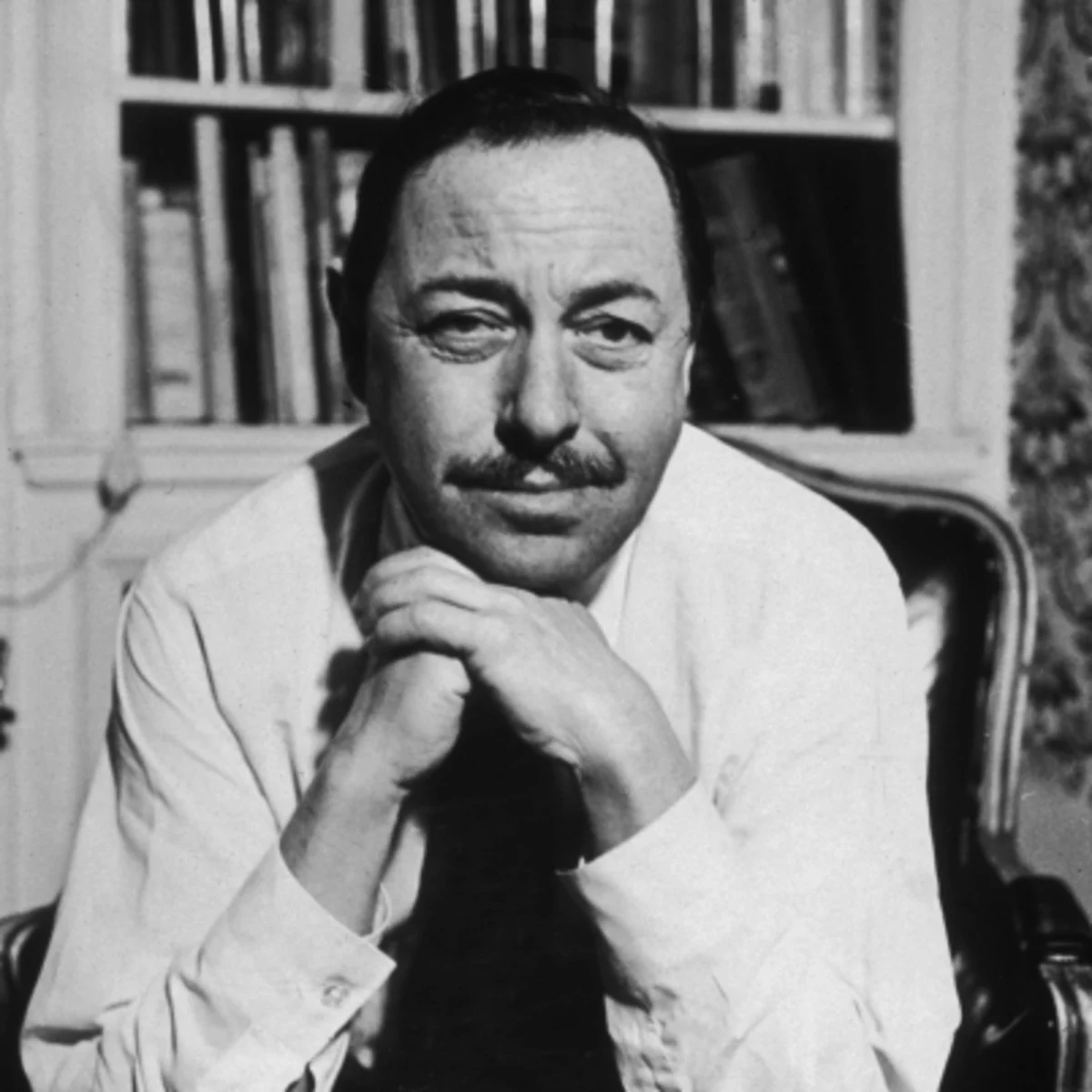 Thomas Lanier Williams III: History · Bio · Photo
|
|
| Wiki Facts & About Data | |
| Full Name: | Thomas Lanier Williams III |
| Stage Name: | Tennessee Williams |
| Born: | March 26, 1911 |
| Age: | 115 years old |
| Death: | February 25, 1983 (aged 71) |
| Birthplace: | Columbus, Mississippi, USA |
| Nationality: | American |
| Occupation: | Playwright, Screenwriter, Poet, Fiction Writer |
| Parents: | Cornelius Coffin Williams (father); Edwina Dakin Williams (mother) |
| Siblings: | Rose Isabel Williams (sister, institutionalised); Dakin Williams (brother) |
| Spouse: | Frank Merlo (1947–1963, until Merlo's death) |
Early Life
Thomas Lanier Williams was born on March 26, 1911, in Columbus, Mississippi, the second of three children of Cornelius Coffin Williams, a traveling shoe salesman with a volatile temperament, and Edwina Dakin Williams, an overprotective Southern woman of genteel pretensions.
He had an elder sister, Rose Isabel Williams, and a younger brother, Dakin Williams. Because his father was frequently away on business, Williams spent the first ten years of his life primarily in the care of his maternal grandparents in the Episcopal rectories of Mississippi and Tennessee. This early childhood was, by his own description, pleasant and happy.
Life changed drastically when the family relocated to St. Louis, Missouri, in 1918, following his father’s promotion to a desk job. The cramped urban apartment life was a traumatic rupture from the spacious Southern world of his childhood.
His father’s alcoholism and violent temper intensified, his sister Rose began showing signs of mental illness, and Williams himself, bookish, sensitive, and slight, became a target of bullying. He contracted diphtheria as a child that left him physically debilitated for a period. To escape his home life, he retreated into writing, beginning at the age of eleven.
Education
Williams attended the Eugene Field School and Soldan High School in St. Louis before enrolling at the University of Missouri, Columbia, in 1929.
Financial strain caused by the Great Depression forced him to leave in 1932, after which his father placed him in a clerical job at the International Shoe Company, a period he came to despise and which eventually contributed to a nervous breakdown.
After recuperating in Memphis, he enrolled at Washington University in St. Louis in 1936, where he connected with poets and writers who nurtured his talent.
He ultimately graduated from the University of Iowa in 1938 with a Bachelor of Arts degree, by which time his playwriting ambitions were firmly defined.
Career
Early Career and Name Change (1938–1944)
After graduating, Williams moved to New Orleans, a city whose heat, languor, and sexual freedom would prove transformative. It was here that he changed his name to Tennessee, honouring the state where his paternal ancestors had lived, and began writing the plays and stories that would define his voice. He applied for and received a Rockefeller Foundation grant in 1940, supporting his early work.
His play Battle of Angels (1940) was an early failure, closing during its out-of-town tryout in Boston, but it established the thematic obsessions, desire, repression, the fragility of beauty, that he would explore for the rest of his career.
He worked briefly in Hollywood for MGM, an experience he largely loathed, before returning to playwriting full-time.
Breakthrough and Peak (1944–1961)
The Glass Menagerie, opening in Chicago in December 1944 and on Broadway on March 31, 1945, was Williams’s first major success.
A semi-autobiographical memory play depicting a Southern family, a domineering mother, a fragile daughter, and a restless son, it won the New York Drama Critics’ Circle Award and established Williams as a major playwright. Two years later, A Streetcar Named Desire (1947), directed by Elia Kazan and starring Marlon Brando as Stanley Kowalski, was a sensation. It won Williams his first Pulitzer Prize for Drama, the New York Drama Critics’ Circle Award, and the Donaldson Award, and was subsequently adapted into a landmark film directed by Kazan in 1951. His play Summer and Smoke (1948), while initially less successful, was later revived to critical acclaim. The Rose Tattoo (1951) won the Tony Award for Best Play. Camino Real (1953) was a commercial failure but a critical curiosity. Cat on a Hot Tin Roof (1955), set in the household of a dying Mississippi cotton magnate, won Williams his second Pulitzer Prize and was filmed successfully with Paul Newman and Elizabeth Taylor in 1958. Suddenly Last Summer (1958) and Sweet Bird of Youth (1959) further cemented his reputation. The Night of the Iguana (1961), the story of a defrocked minister in a Mexican hotel, was his final major critical and commercial success of this period.
Later Career and Decline (1962–1983)
Following the death of his partner Frank Merlo from lung cancer in 1963, Williams entered a prolonged period of depression, substance abuse, and creative difficulty. He became dependent on prescription drugs and alcohol and spent much of the late 1960s in psychiatric care, including a harrowing period of confinement that he later described in memoirs. His subsequent plays, including The Two-Character Play, In the Bar of a Tokyo Hotel, and Vieux Carré, received mixed or hostile critical receptions, and he was widely written off as a spent force. Nevertheless, he continued to write prolifically until his death, and several of his later works have since been reassessed as underappreciated. He published his Memoirs in 1975, offering a candid and at times shocking account of his sexual life and inner struggles.
Awards and Nominations
- 1945 — New York Drama Critics’ Circle Award — Best American Play — Win (The Glass Menagerie)
- 1948 — Pulitzer Prize for Drama — Win (A Streetcar Named Desire)
- 1948 — New York Drama Critics’ Circle Award — Best American Play — Win (A Streetcar Named Desire)
- 1951 — Tony Award — Best Play — Win (The Rose Tattoo)
- 1956 — Pulitzer Prize for Drama — Win (Cat on a Hot Tin Roof)
- 1962 — Tony Award — Best Play — Nomination (The Night of the Iguana)
- 1969 — National Institute of Arts and Letters Gold Medal for Drama
- 1980 — Presidential Medal of Freedom
- 1980 — Common Wealth Award of Distinguished Service in Dramatic Arts
Personal Life
Tennessee Williams was gay, a fact he kept hidden during his early career but was more open about in his later years and in his Memoirs. His most significant relationship was with Frank Merlo, a Sicilian-American man he met in 1947 and with whom he shared 16 years. Merlo’s death from lung cancer in 1963 was the most devastating personal event of Williams’s adult life. His relationship with his sister Rose, whose paranoid schizophrenia led to a lobotomy performed in 1943 without his knowledge or consent, an act that haunted him for the rest of his life, profoundly shaped his compassion for the mentally ill and the outcast. The characters of Laura Wingfield in The Glass Menagerie and Blanche DuBois in A Streetcar Named Desire are both widely understood as expressions of his grief and love for Rose.
Williams died on February 25, 1983, in his suite at the Hotel Elysée in New York City. The cause of death was ruled asphyxiation after he choked on a bottle cap, with the coroner noting the contributing effects of barbiturate sedatives. He was 71 years old. He is buried in St. Louis, Missouri.
Net Worth
No independently verified net worth figure for Tennessee Williams is documented in the public record.
His estate has continued to generate substantial royalty income through the ongoing performance and adaptation of his plays worldwide.
The licensing and royalty income from productions of A Streetcar Named Desire and The Glass Menagerie alone represents a significant ongoing revenue stream managed by the University of the South (Sewanee), which administers his literary estate.
Major Works
- Battle of Angels (1940)
- The Glass Menagerie (1944)
- A Streetcar Named Desire (1947) — Pulitzer Prize
- Summer and Smoke (1948)
- The Rose Tattoo (1951) — Tony Award
- Camino Real (1953)
- Cat on a Hot Tin Roof (1955) — Pulitzer Prize
- Orpheus Descending (1957)
- Suddenly Last Summer (1958)
- Sweet Bird of Youth (1959)
- The Night of the Iguana (1961)
- The Two-Character Play (1967)
- Vieux Carré (1977)
- A Lovely Sunday for Creve Coeur (1979)
- Memoirs (autobiography, 1975)
Conclusion
Tennessee Williams was not merely a playwright: he was a chronicler of human ache, a poet of desire and disillusionment, and one of the most generous spirits American literature has ever produced.
He took the most private pain, a fractured family, a broken sister, a love that dared not speak its name, and transmuted it into art that millions of people around the world have recognised as their own.
His characters endure because they are real; his language endures because it is true. In the history of the American stage, no one has written with greater emotional courage or more devastating beauty.
Related People








Leave a Reply