

Nelle Harper Lee was an American novelist whose debut, and for decades only, work of fiction, To Kill a Mockingbird (1960), became one of the most widely read, most taught, and most beloved novels in the history of American literature.
A Pulitzer Prize winner, a Presidential Medal of Freedom recipient, and the author of a book that has sold tens of millions of copies and been translated into more than forty languages, Harper Lee drew from the poverty, prejudice, and moral complexity of her childhood in Monroeville, Alabama, to create a story whose central argument, that the measure of a person is how they treat those with no power over them, has resonated with readers across eight decades and counting.
Famously private and deeply reluctant about fame, she spent most of her adult life avoiding the spotlight her work had created.
| Nelle Harper Lee | |
|---|---|
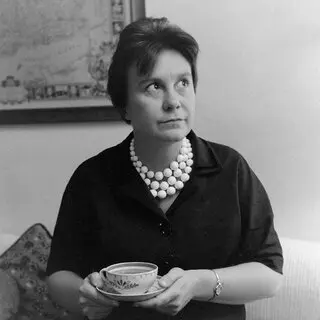 Nelle Harper Lee: History · Bio · Photo
|
|
| Wiki Facts & About Data | |
| Full Name: | Nelle Harper Lee |
| Born: | April 28, 1926 |
| Age: | (aged 89) |
| Death: | February 19, 2016 (aged 89) |
| Birthplace: | Monroeville, Alabama, USA |
| Nationality: | American |
| Occupation: | Novelist, Author |
| Parents: | Amasa Coleman Lee (father, lawyer and state legislator); Frances Cunningham Finch Lee (mother, homemaker) |
| Siblings: | Edwin Lee (brother); Alice Lee (sister); Louise Lee (sister) |
| Relationship: | Never married |
Early Life
Nelle Harper Lee was born on April 28, 1926, in Monroeville, Alabama, a small town in the Deep South whose rhythms, racial tensions, and moral contradictions would become the raw material of her fiction.
She was the youngest of four children of Amasa Coleman Lee, a descendant of Confederate General Robert E. Lee, who worked as a lawyer, newspaper editor, and Alabama state legislator for over a decade, and Frances Cunningham Finch Lee, a homemaker who rarely left the house, a circumstance now widely attributed to untreated bipolar disorder.
Her father’s legal practice, including cases in which he defended Black men charged with capital crimes, directly inspired the central story of To Kill a Mockingbird. Her mother’s fragility left a quieter but equally significant imprint on a sensitive, bookish child who found her safest world in stories.
From 1928 to 1933, Harper Lee’s next-door neighbour was the young Truman Capote, the child who would grow up to write Breakfast at Tiffany’s and In Cold Blood. The two became inseparable childhood companions; Capote became the model for the character of Dill in To Kill a Mockingbird, and Lee in turn became the model for the character of Idabel in Capote’s Other Voices, Other Rooms.
The friendship endured throughout their lives. Growing up in the 1930s, Lee described her childhood as one spent largely in the imagination, “We didn’t have much money. We didn’t have toys, nothing was done for us, so the result was that we lived in our imagination most of the time.”
Education
Harper Lee attended the public grammar school and high school in Monroeville. She then enrolled at Huntingdon College in Montgomery, Alabama, a private women’s college, in 1944, before transferring to the University of Alabama, where she studied law from 1945 to 1949.
She spent a year as an exchange student at Oxford University in England before returning to the University of Alabama. Six months before completing her law degree, she made the momentous decision to abandon her studies and move to New York City to pursue her ambition of becoming a writer. She would later describe this choice as the pivotal act of her life.
Career
Early New York Years (1949–1957)
Lee arrived in New York City in 1949 and worked as a reservations clerk for Eastern Air Lines and British Overseas Airways (BOAC) while writing essays and short stories in her spare time. None of these early works were published.
Her fortunes changed dramatically at Christmas 1956, when her close friends Michael and Joy Brown gifted her with a year’s worth of financial support, enough time to leave her airline job and write full-time. “You have one year off from your job to write whatever you please,” they told her. “Merry Christmas.” The resulting manuscript was submitted to the publisher J.B. Lippincott Company in 1957.
Her editor, Tay Hohoff, recognised its potential but asked for significant revisions, requesting that Lee recast the adult narrator as a child, a restructuring that took approximately two and a half years of intensive rewriting.
To Kill a Mockingbird (1960)
To Kill a Mockingbird was published on July 11, 1960, to immediate critical and commercial acclaim. A coming-of-age story narrated by six-year-old Scout Finch during the Great Depression in the fictional Alabama town of Maycomb, the novel follows the trial of Tom Robinson, a Black man falsely accused of raping a white woman, as defended by Scout’s father, the lawyer Atticus Finch. The novel sold more than 500,000 copies in its first year.
In 1961, it won the Pulitzer Prize for Fiction. In 1962, it was adapted into a landmark film by director Robert Mulligan, with Gregory Peck winning the Academy Award for Best Actor for his portrayal of Atticus Finch. The film’s screenplay was written by Horton Foote and won the Academy Award for Best Adapted Screenplay.
Lee personally wanted Spencer Tracy for the role of Atticus; Peck proved an equally inspired choice and the two became lifelong friends. By the 1970s, To Kill a Mockingbird had become a staple of school curricula across the United States and internationally, and its annual sales remain in the millions to this day.
In 1959, before the book’s publication, Lee accompanied Truman Capote to Holcomb, Kansas, to help him research the Clutter family murders, work that became the foundation of his 1966 masterpiece In Cold Blood. Capote dedicated that book to Lee and his partner Jack Dunphy. Lee was named to President Lyndon Johnson’s National Council of Arts in 1966.
She published three articles in prominent American magazines in the early 1960s but never published another novel during the next five decades, famously retreating from public life. She divided her time between New York City and Monroeville, where her sister Alice practised law.
Go Set a Watchman (2015)
In 2015, Lee’s lawyer Tonja Carter discovered in a safe deposit box in Monroeville the original manuscript that Lee had submitted in 1957, the draft from which To Kill a Mockingbird had been developed. HarperCollins published Go Set a Watchman in July 2015 as a standalone novel.
The book, which depicts an adult Scout returning to Maycomb and discovering a more complex and less idealized version of Atticus, was a global publishing event but met with deeply mixed critical responses.
Questions were raised about whether the then-89-year-old Lee, who had suffered a stroke in 2007 and had significant health challenges, had given genuine, uncoerced consent to its publication. The controversy was never definitively resolved.
Awards and Honours
- 1961 — Pulitzer Prize for Fiction — Win (To Kill a Mockingbird)
- 1962 — Best Sellers’ Paperback of the Year Award — Win
- 1966 — Appointed to the National Council of Arts by President Lyndon Johnson
- 2007 — Presidential Medal of Freedom
- Multiple honorary doctorates including from the University of Alabama and Spring Hill College
Personal Life
Harper Lee never married and had no children. She was an intensely private person who gave very few interviews after the early 1960s, declining virtually all media requests and rarely appearing at public events. She described herself as “a private person who wants to remain private.”
She suffered a stroke in 2007 and spent her final years in an assisted-living facility in Monroeville, Alabama, close to her sister Alice, who practised law until the age of 100. Harper Lee died on February 19, 2016, in Monroeville, at the age of 89.
Net Worth
No official estate value for Harper Lee has been publicly confirmed.
Her estate, including the royalty rights to To Kill a Mockingbird, which continues to sell hundreds of thousands of copies annually, is administered through her estate and is estimated to generate millions of dollars in royalty income each year.
Various sources have estimated her estate’s value at between $35 million and $50 million at the time of her death, though no authoritative figure has been confirmed.
Works
- To Kill a Mockingbird (1960) — novel; Pulitzer Prize winner
- Go Set a Watchman (2015) — novel
- “Love — In Other Words” (Vogue, 1961) — essay
- “Christmas to Me” (McCall’s, 1961) — essay
- “When Children Discover America” (McCall’s, 1965) — essay
Conclusion
Harper Lee wrote one great novel and spent the rest of her life being defined by it, a fate she accepted with a mixture of grace and exasperation. To Kill a Mockingbird did not merely entertain; it educated generations of readers in the United States and around the world about the human cost of prejudice and the dignity required to resist it.
That a woman from a small Alabama town, writing in a rented New York apartment, financed by the generosity of friends, could produce a work of such moral clarity and enduring power is one of American literature’s most improbable and most treasured stories. Harper Lee was not merely an author. She was, as the Pulitzer committee recognised in 1961, a conscience.
Related People






Leave a Reply