
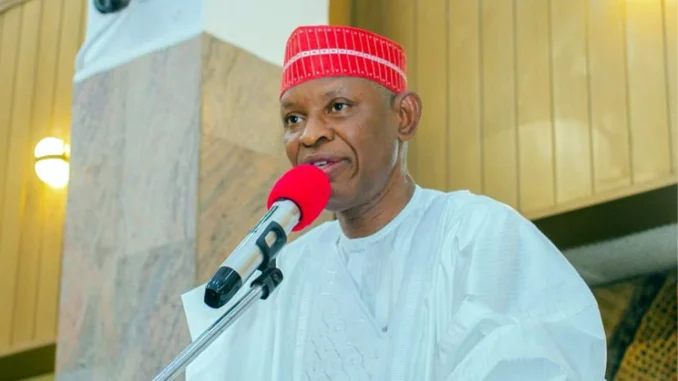
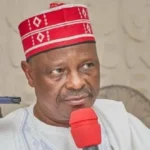
Abba Kabir Yusuf popularly nicknamed “Abba Gida Gida” is a Nigerian civil engineer turned politician who has served as the Executive Governor of Kano State since May 29, 2023.
He is one of the most consequential political figures in contemporary northern Nigerian politics: a protégé and son-in-law of former Kano Governor and NNPP presidential candidate Rabiu Musa Kwankwaso, a man who lost a governorship race in 2019 before prevailing in 2023 after a dramatic judicial battle that reached the Supreme Court of Nigeria, and a governor whose administration has been defined by ambitious social development programmes, a nationally explosive emirate succession crisis involving the reinstatement of Emir Muhammadu Sanusi II, and most recently a seismic political defection from the NNPP to the APC in 2026 that broke his alliance with Kwankwaso and realigned the dynamics of Kano’s complex political landscape.
| Abba Kabir Yusuf | |
|---|---|
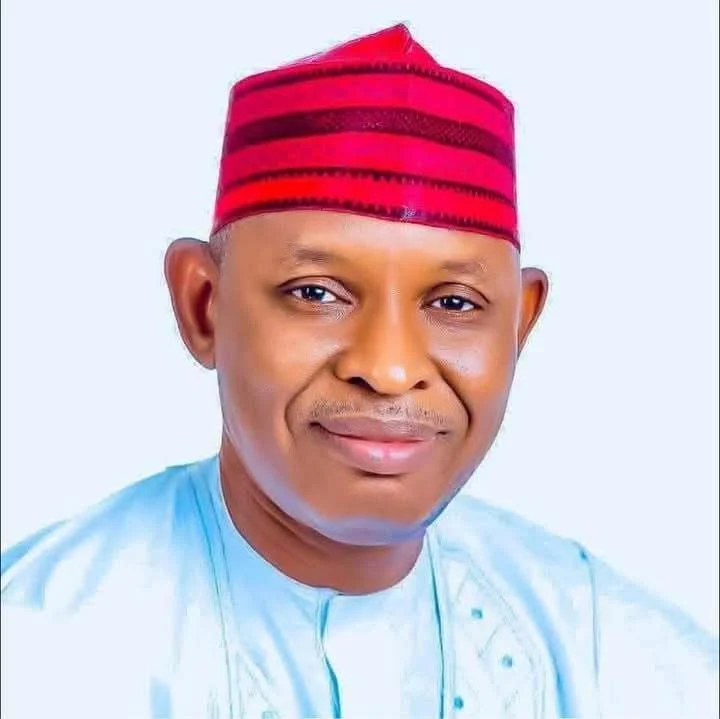 Abba Kabir Yusuf: History · Bio · Photo
|
|
| Wiki Facts & About Data | |
| Full Name: | Abba Kabir Yusuf |
| Stage Name: | Abba Gida Gida |
| Born: | January 5, 1963 |
| Age: | 63 years old |
| Birthplace: | Gaya Local Government Area, Kano State, Nigeria |
| State of Origin: | Kano State, Nigeria |
| Nationality: | Nigerian |
| Occupation: | Politician, Civil Engineer, Governor of Kano State |
| Religion: | Islam |
| Parents: | Malam Kabiru Yusuf (Father); Malama Khadijatul-Naja'atu (Mother) |
| Spouse: | Hajiya Maryam Rabiu Musa Kwankwaso (daughter of former Governor Rabiu Kwankwaso) |
| Children: | 4 — including Muhammad Kabiru Abba Yusuf, Fatima Abba Yusuf, and Aisha Abba Yusuf |
| Relationship: | Married |
| Net Worth: | $500,000 – $650,000 |
Early Life
Abba Kabir Yusuf was born on January 5, 1963, in Gaya Local Government Area of Kano State a historically significant LGA at the southern fringes of the ancient Kano emirate, named after the Gaya district which predates the establishment of modern Nigeria by centuries.
He was born into the Sullubawa Fulani clan the aristocratic and historically ruling class of the Kano Emirate a heritage that positioned him, from birth, within the most influential social stratum of one of northern Nigeria’s most important traditional polities.
His birth name was Abubakar, but he was nicknamed Abba by family and friends from childhood, and the nickname eventually became his official name.
His father, Malam Kabiru Yusuf, and his mother, Malama Khadijatul-Naja’atu, raised him in a household steeped in Islamic culture and traditional Kano values. His maternal grandfather the late Alhaji Yusuf Bashari, known as Danmakwayon Kano was the District Head of Gaya LGA.
He was a grandson of Galadiman Kano Yusuf and great-grandson of Sarkin Kano Abdullahi Maje Karofi one of the greatest emirs in the history of the Kano Emirate. This ancient royal lineage, tracing the governor’s ancestry directly to one of the Kano Emirate’s most celebrated rulers, places Abba Gida Gida in a line of hereditary authority and traditional prestige that has long conferred social distinction in northern Nigeria.
His early Islamic education began under the personal guidance of his grandfather Alhaji Yusuf Bashari a traditional Quranic education that laid a spiritual and intellectual foundation consistent with the cultural expectations of the ruling class of the Kano Emirate.
This early religious grounding complemented the secular education that followed and has remained visible in his public life as governor in his public addresses, his administration’s religious engagements, and his approach to governance in one of Nigeria’s most devoutly Muslim states.
Education
Abba Kabir Yusuf began his formal Western-style education at Sumaila Primary School, which he attended from 1968 to 1975 a seven-year span covering the entire primary school curriculum.
He then proceeded to Government Secondary School, Dawakin Tofa one of the public secondary schools in Kano State before transferring to Government Secondary School, Lautai, in Gumel (located in what is now Jigawa State), where he completed his secondary education in 1980.
For his tertiary education, Yusuf gained admission to the Federal Polytechnic, Mubi, in the then-Gongola State (now Adamawa State), where he studied Civil Engineering.
He graduated with a National Diploma (ND) in Civil Engineering in 1985. He then proceeded to the prestigious Kaduna Polytechnic one of Nigeria’s oldest and most well-regarded polytechnic institutions where he earned a Higher National Diploma (HND) in Civil Engineering, specialising in Water Resources and Environmental Engineering, in 1989.
This specialisation in water resources was both technically significant and politically formative water infrastructure would later become a cornerstone of his career as a state government official and of his identity as a governor committed to practical development.
Following the completion of his mandatory NYSC service in 1990, Yusuf later enrolled at Bayero University Kano (BUK) the state’s premier university where he pursued postgraduate studies in Business Administration, obtaining both a Postgraduate Diploma and a Master of Business Administration (MBA) degree.
His MBA from BUK built on top of his civil engineering qualifications gave him a dual competence in technical and managerial fields that would characterise his approach to both his engineering career and his eventual political leadership.
Career
National Youth Service Corps (1989–1990)
Following his graduation from Kaduna Polytechnic with his HND in 1989, Abba Kabir Yusuf served his mandatory one-year NYSC posting at the Kaduna Environmental Protection Agency (KEPA) from 1989 to 1990.
The posting was consistent with his specialisation in Environmental Engineering and gave him his first formal exposure to environmental governance and regulatory work in the public sector.
Engineering Career WRECA (1990s)
After completing his NYSC service, Yusuf joined the Kano State Water Resources Engineering and Construction Agency (WRECA) a state government agency responsible for water supply and hydraulic infrastructure in Kano State.
He held various positions at WRECA, rising through the technical and administrative ranks and later transferring to the Kano State Ministry of Water Resources, where he continued to serve in various capacities.
His engineering career was not a brief prelude to politics but a substantive professional period that gave him first-hand knowledge of Nigeria’s infrastructure challenges, state government operations, and the technical dimensions of public sector project management.
Personal Assistant to Governor Kwankwaso (1999–2003)
The most transformative turning point in Abba Kabir Yusuf’s career came in 1999 when Rabiu Musa Kwankwaso the politician who would become both his political patron and his father-in-law was elected Governor of Kano State for his first term.
Yusuf was appointed Personal Assistant (PA) to Governor Kwankwaso, a role that placed him at the immediate centre of Kano State governance, giving him an unparalleled apprenticeship in political administration, intergovernmental relations, and the mechanics of state-level power in Nigeria.
When Kwankwaso’s first term as governor ended in 2003 and he was appointed Federal Minister of Defence under President Olusegun Obasanjo, Yusuf followed serving as Kwankwaso’s Personal Assistant in his capacity as Minister of Defence from 2003 to 2006.
He was subsequently appointed Special Assistant to the Special Adviser to the President of the Federal Republic of Nigeria on the Darfur/Somalia peace process a brief but significant federal-level appointment that exposed him to Nigeria’s foreign policy engagements in the context of the African Union peacekeeping mission in Darfur.
Board Appointment NIEPA (2009–2011)
In 2009, President Umaru Musa Yar’Adua appointed Abba Kabir Yusuf as Chairman of the Governing Board of the National Institute for Educational Planning and Administration (NIEPA) in Ondo State a federal parastatal focused on capacity building for educational administrators across Nigeria.
He held this appointment until 2011, gaining valuable experience in national educational governance and institutional administration.
Commissioner for Works, Housing and Transport (2011–2015)
When Rabiu Musa Kwankwaso returned for a second term as Kano State Governor in 2011, Yusuf was appointed First Principal Private Secretary (PPS) to the Governor.
He was subsequently elevated to serve as Commissioner for Works, Housing and Transport one of the most consequential portfolios in the Kano State Executive Council, responsible for overseeing the massive infrastructure drive that defined Kwankwaso’s second administration. Roads, bridges, public buildings, housing estates, and transport infrastructure all fell under his ministerial oversight.
The position gave him direct executive experience in managing large public sector budgets, supervising engineering projects, and navigating the political economy of state infrastructure delivery experience that would prove invaluable when he assumed the governorship himself in 2023.
The 2019 Governorship Race First Attempt
In 2018, Kwankwaso endorsed Yusuf by then his son-in-law as the Peoples Democratic Party (PDP) candidate for the Kano State governorship election.
The 2019 Kano governorship election became one of the most fiercely contested and nationally watched elections in the country, pitting Yusuf against the incumbent Governor Dr. Abdullahi Umar Ganduje of the APC.
The election was declared inconclusive by the Independent National Electoral Commission (INEC) after irregularities were recorded in several polling units, and a supplementary election (rerun) was ordered. Ganduje won the rerun. Yusuf challenged the result in court, claiming he was the true winner, but the court dismissed his case.
The defeat, while painful, consolidated his profile as one of the leading political figures in northern Nigeria and set the stage for a rematch in 2023.
The 2023 Governorship Victory and Judicial Battle
By 2022, Yusuf had transitioned from the PDP to the New Nigeria Peoples Party (NNPP) Kwankwaso’s new political platform carrying with him the loyalty of the Kwankwasiyya movement’s enormous social and political machinery in Kano State.
In the March 18, 2023 gubernatorial election, Yusuf defeated APC candidate Nasir Gawuna, winning approximately 534,000 votes against Gawuna’s approximately 467,000. He was declared governor-elect on March 20, 2023, issued a certificate of return on March 29, and inaugurated alongside his running mate, Deputy Governor Aminu Abdussalam Gwarzo, on May 29, 2023.
However, his victory was immediately challenged. The APC filed a petition at the Governorship Election Petition Tribunal. On September 20, 2023, the tribunal declared Nasir Gawuna the winner and sacked Yusuf. Yusuf appealed to the Court of Appeal in Abuja, which in December 2023 upheld the tribunal’s decision.
Undeterred, Yusuf escalated to the Supreme Court Nigeria’s highest court which, on January 12, 2024, overruled both lower courts and affirmed him as the duly elected Governor of Kano State, ending one of the longest and most dramatic electoral judicial battles in recent Nigerian political history. He became the second water engineer to serve as Governor of Kano State in the Fourth Republic.
Governance and Key Achievements
Since assuming office in May 2023 and surviving the judicial challenges that threatened to end his administration before it could begin, Abba Kabir Yusuf has pursued an ambitious governance agenda focused on education, infrastructure, health, and social investment reflecting both the development philosophy of the Kwankwasiyya movement that produced him and his own vision as an engineer with first-hand understanding of Kano’s infrastructure deficits.
In education long a hallmark of the Kwankwasiyya tradition his administration revived the foreign scholarship programme, sponsoring 1,001 postgraduate students to study abroad in various countries.
He employed 6,000 additional teachers and deployed them to schools to address a critical teacher-to-student ratio gap. He reopened all-girls boarding schools that had been shut down by the previous administration, resulting in a significant increase in female school enrollment across Kano State.
He introduced free school bus services for girls to facilitate access to education across the state. These education initiatives earned him the Nigeria Union of Teachers (NUT) Golden Award for Transformative Efforts in the Education Sector and the Leadership Newspaper Governor of the Year Award for 2024.
In healthcare, his administration commissioned the Hasiya Bayero Paediatric Hospital a specialist children’s medical facility that represents one of the most significant healthcare investments in Kano State in recent years.
In infrastructure, he continued and expanded road construction, drainage improvement, and water supply projects consistent with his engineering background and the legacy of the Kwankwasiyya infrastructure philosophy.
The Emir of Kano Crisis
One of the most consequential and nationally watched acts of Abba Kabir Yusuf’s governorship was his decision to reinstate Muhammadu Sanusi II as the Emir of Kano a decision that reversed one of the most controversial moves of the Ganduje administration and plunged Kano into a royal succession crisis of unprecedented complexity.
In 2020, Governor Ganduje had deposed Emir Sanusi who had served since 2014 on grounds of alleged financial misconduct and insubordination, replacing him with Aminu Ado Bayero and simultaneously splitting the previously unified Kano Emirate into five separate emirate councils: Kano, Bichi, Rano, Gaya, and Karaye.
The restructuring was widely seen as a political vendetta against Sanusi, who had been a critic of the Buhari administration’s economic policies during his time as CBN Governor and whose restoration was championed by the Kwankwasiyya political network.
On May 23, 2024, Governor Yusuf following the passage of the Kano State Emirates Councils (Repeal) Law 2024 by the state House of Assembly, which abolished the five-emirate structure and restored the single-emirate system reinstated Sanusi as the Emir of Kano.
The reinstatement triggered an immediate court battle, with a Federal High Court in Kano granting an ex-parte order temporarily staying the reinstatement on application by opponents led by Sarkin Dawaki Babba Aminu Baba Dan Agundi. Aminu Ado Bayero the deposed emir refused to vacate the Nassarawa mini-palace, creating an unprecedented “two emirs” situation that persisted for months. A state court of appeal ultimately ruled in favour of Sanusi’s reinstatement in January 2025, while the Supreme Court postponed its own hearing on the matter until 2027.
The emirate crisis deepened further after Yusuf’s 2026 defection to the APC raised fresh questions about whether the political realignment would affect Sanusi’s position. Yusuf has consistently maintained that Sanusi’s reinstatement is legally grounded and will not be reversed.
APC Defection (2026)
In one of the most significant political developments in Kano State politics in 2026, Governor Abba Kabir Yusuf defected from the New Nigeria Peoples Party (NNPP) the party on whose platform he was elected to the All Progressives Congress (APC), the ruling party at the federal level. He cited the need for unity and delivering development to the people of Kano as his reasons for the move.
The defection represented a dramatic rupture with his former political godfather and father-in-law, Rabiu Musa Kwankwaso, who remained with the NNPP. The development also aligned Yusuf, paradoxically, with former Governor Abdullahi Umar Ganduje the man he defeated in 2023 and whose administration’s decisions on the Kano Emirate he had spent two years reversing both of them now under the APC umbrella.
The defection fundamentally altered the political calculus of the Kano 2027 gubernatorial race and raised immediate questions about the future of both the emirate crisis and the governor’s legislative relationship with the Kano State House of Assembly.
Awards and Recognition
| Year | Award | Awarding Body |
| 2024 | Governor of the Year Award | Leadership Newspaper, Nigeria |
| 2024 | NUT Golden Award for Transformative Efforts in Education | Nigeria Union of Teachers (NUT) |
Social Media
Governor Abba Kabir Yusuf maintains an active and well-managed social media presence, using his platforms to communicate governance updates, policy announcements, and engage with citizens across Kano State and the broader Nigerian public.
- Twitter/X: @Kyusufabba — His official Twitter/X handle, described as “A Public Servant, who is passionate about Good Governance and Collective Prosperity.” He regularly shares state government achievements, official engagements, and policy communications.
- Facebook: Active on Facebook, where his official page serves as a platform for government communication with Kano citizens and national audiences.
- Official Website: kanostate.gov.ng — The Kano State Government’s official portal, which documents the administration’s activities, programmes, and achievements.
Personal Life
Abba Kabir Yusuf is married to Hajiya Maryam Rabiu Musa Kwankwaso the daughter of his long-time political patron and former Kano State Governor Rabiu Musa Kwankwaso.
The marriage made Yusuf Kwankwaso’s son-in-law, intertwining the political and the personal in the way common to northern Nigerian political dynasties built on patronage, family networks, and mutual loyalty. The union predates his political career and has remained a stable anchor through decades of political turbulence.
The couple has four children together, among them Muhammad Kabiru Abba Yusuf, Fatima Abba Yusuf, and Aisha Abba Yusuf. Upon assuming the governorship, Yusuf made a point of declaring publicly that no members of his family would be involved in the running of the state a commitment intended to signal a clean break from the nepotism that has historically characterised Nigerian state governance.
His 2026 defection from the NNPP to the APC created an uncomfortable personal dimension the political rupture with Kwankwaso also, by extension, created a political estrangement from his father-in-law.
The personal and political consequences of this realignment, and its implications for his family relationships, remain a subject of public speculation in Kano’s highly charged political environment.
Governor Yusuf has maintained a consistent public posture of Islamic piety and community service, conducting himself in the tradition of the northern Nigerian Muslim leadership class to which his Sullubawa Fulani heritage connects him.
He has declared that he will be his own man in governance, independent of Kwankwaso’s direction a declaration that proved accurate long before the formal party defection, when his administration on multiple occasions took positions that diverged from Kwankwaso’s apparent preferences.
Net Worth
Abba Kabir Yusuf’s estimated net worth is reported to be in the range of $500,000 to $650,000, based on assessments available from the period of his 2023 election campaign.
His wealth reflects a career primarily in public service as an engineering officer in the Kano State civil service, as a personal assistant and political official under Kwankwaso, and as a Commissioner and subsequently Governor rather than in private business.
He is generally regarded as a public servant of modest personal wealth relative to many of his peers among Nigerian state governors. His major income source is his gubernatorial salary and allowances, supplemented by whatever investments and assets he accumulated over his career in public service.
Frequently Asked Questions (FAQs)
Who is Abba Kabir Yusuf?
Abba Kabir Yusuf, popularly known as Abba Gida Gida, is a Nigerian civil engineer and politician who has served as the Executive Governor of Kano State since May 29, 2023. He is a former Commissioner for Works, Housing and Transport, a protégé of former Governor Rabiu Musa Kwankwaso, and Kwankwaso’s son-in-law. In 2026, he defected from the NNPP to the APC.
When was Abba Kabir Yusuf born?
He was born on January 5, 1963, in Gaya Local Government Area, Kano State. He is 62 years old as of 2025.
Who is Abba Kabir Yusuf’s wife?
He is married to Hajiya Maryam Rabiu Musa Kwankwaso the daughter of former Kano State Governor and NNPP presidential candidate Rabiu Musa Kwankwaso. This makes Yusuf Kwankwaso’s son-in-law. They have four children together.
What is Abba Kabir Yusuf’s educational background?
He attended Sumaila Primary School and Government Secondary Schools in Dawakin Tofa and Lautai (Gumel). He earned a National Diploma (ND) in Civil Engineering from Federal Polytechnic Mubi in 1985, and a Higher National Diploma (HND) in Civil Engineering (Water Resources and Environmental Engineering specialisation) from Kaduna Polytechnic in 1989. He later obtained a Postgraduate Diploma and an MBA from Bayero University Kano (BUK).
How did Abba Kabir Yusuf become Kano Governor?
He won the March 18, 2023 gubernatorial election on the NNPP platform, defeating APC candidate Nasir Gawuna. His victory was challenged at the tribunal and Court of Appeal, both of which nullified his election. However, on January 12, 2024, the Supreme Court of Nigeria overruled both courts and affirmed him as the duly elected governor.
Why did Abba Kabir Yusuf defect to the APC?
In 2026, he defected from the NNPP to the APC, citing the need for unity and delivering development to the people of Kano. The defection ruptured his political alliance with his father-in-law Rabiu Kwankwaso, who remained with the NNPP.
What was the Emir of Kano reinstatement controversy?
In May 2024, Governor Yusuf reinstated Muhammadu Sanusi II as the Emir of Kano, reversing the 2020 deposition by Governor Ganduje and dissolving the five emirate councils created by Ganduje. The reinstatement was contested in court, leading to a prolonged “two emirs” crisis, with Sanusi operating from Gidan Rumfa and deposed Emir Aminu Ado Bayero refusing to vacate the Nassarawa mini-palace. A state court of appeal upheld Sanusi’s reinstatement in January 2025.
What awards has Abba Kabir Yusuf received?
He received the Leadership Newspaper Governor of the Year Award for 2024 and the Nigeria Union of Teachers (NUT) Golden Award for Transformative Efforts in Education, both in recognition of his administration’s significant investments in Kano State’s education sector.
What is Abba Kabir Yusuf’s net worth?
His estimated net worth is between $500,000 and $650,000 reflecting a career primarily in public service rather than private business.
Conclusion
Abba Kabir Yusuf’s biography is a story of patient, methodical ascent through one of Nigeria’s most complex political systems.
Born into the aristocratic Sullubawa Fulani clan of the Kano Emirate, educated as a civil engineer, apprenticed in governance under Rabiu Kwankwaso for nearly two decades, twice a contestant for the governorship and ultimately confirmed by Nigeria’s Supreme Court as its rightful occupant his path to Government House, Kano, was longer, harder, and more judicial than almost any other sitting governor in Nigeria.
His administration has been marked by genuine development ambitions in education, health, infrastructure, and social investment that have earned him national recognition and a loyal following. It has also been marked by the most complex emirate succession crisis in Kano’s recent history, a crisis he ignited with the reinstatement of Sanusi II and which, as of 2026, remains far from fully resolved.
His 2026 defection to the APC abandoning the party and the political patron that made him is the most consequential and most politically daring act of his gubernatorial career. It rewrites the terms of his political survival, his relationship with the Kano political landscape, and the legacy he is building for the remainder of his first term and whatever comes after. Whether it proves to be a masterstroke of political pragmatism or a miscalculation that costs him his political base will depend on how the next chapter of Kano’s turbulent political story unfolds.
Related People

Leave a Reply