
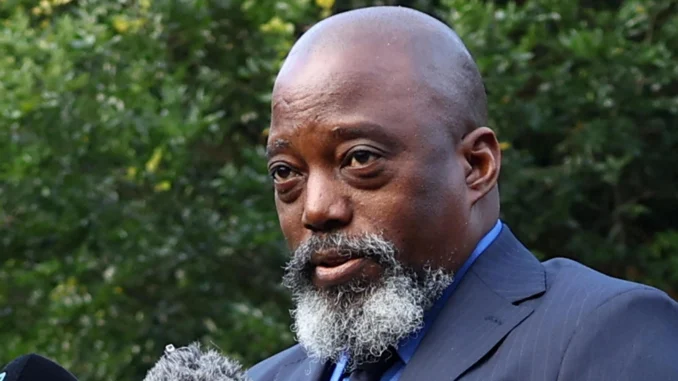
In the turbulent, complex, and profoundly consequential history of the Democratic Republic of the Congo (DRC), few figures loom as large, or as controversially, as Joseph Kabila Kabange.
The fourth president of Africa’s second-largest country by landmass, Kabila came to power under the most extraordinary of circumstances: at just 29 years old, he assumed the presidency within days of the assassination of his own father, inheriting a nation shattered by years of civil war, foreign invasion, and economic collapse.
What followed was an 18-year grip on power that defined an era of Congolese history, marked in equal measure by genuine steps toward peace and democracy, and by deeply entrenched allegations of corruption, human rights abuses, and the brazen accumulation of personal wealth at the expense of one of the world’s poorest populations.
Joseph Kabila is a man of paradoxes. He is simultaneously credited with ending the devastating Second Congo War, overseeing the DRC’s first multiparty elections in over four decades, and engineering the country’s first peaceful transfer of power since independence, and condemned for clinging to power past his constitutional mandate, allegedly pillaging the country’s immense mineral wealth, and, most dramatically, being sentenced to death in absentia by a Congolese military tribunal in September 2025 for treason and war crimes.
| Joseph Kabila Kabange | |
|---|---|
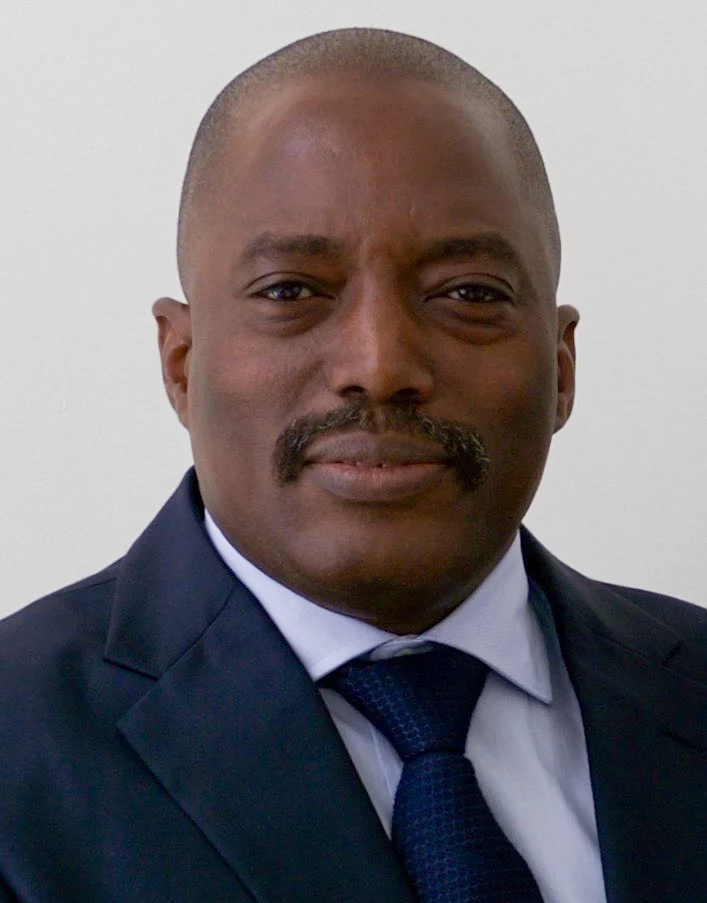 Joseph Kabila Kabange: History · Bio · Photo
|
|
| Wiki Facts & About Data | |
| Full Name: | Joseph Kabila Kabange |
| Born: | June 4, 1971 |
| Age: | 55 years old |
| Birthplace: | Hewa Bora II, Fizi, South Kivu Province, DR Congo |
| Nationality: | Congolese |
| Occupation: | Politician, Former Military Officer, Former President, Senator-for-Life |
| Religion: | Anglican Protestant (Christian) |
| Parents: | Laurent-Désiré Kabila (father, deceased), Sifa Mahanya (mother) |
| Siblings: | Jaynet Kabila (twin sister), Zoé Kabila (brother), and approximately seven other siblings |
| Spouse: | Olive Lembe di Sita (married June 1, 2006) |
| Children: | Sifa Kabila (daughter, born 2001), Laurent-Désiré Jr. (son, born 2008) |
| Net Worth: | Estimated $500 million – $2 billion (various sources) |
Early Life
Joseph Kabila Kabange was born on June 4, 1971, in Hewa Bora II, a remote village in the Maquis of Fizi, in what is today the South Kivu Province of the eastern Democratic Republic of the Congo.
He was born alongside his twin sister, Jaynet Kabila, and was among the ten children of Laurent-Désiré Kabila, a fiery, ideologically charged rebel leader and Marxist pan-Africanist, and his wife Sifa Mahanya, a member of the Bangubangu tribe from the Maniema Province. Joseph’s father was a member of the Luba people, with deep roots in the Katanga Province.
Joseph Kabila’s origins have been the subject of persistent controversy and political weaponization throughout his career. His critics, particularly political opponents, have long alleged that he was born not in the DRC but in neighboring Tanzania, which would have made him a foreign national and therefore constitutionally ineligible for the Congolese presidency.
Others have even disputed whether he was genuinely the biological son of Laurent-Désiré Kabila, though no credible evidence has ever been presented to support either claim. These allegations, while unproven, dogged his entire political career and were exploited by opponents eager to question his legitimacy as a Congolese leader.
What is not in dispute is that Joseph’s early childhood was anything but ordinary. His father Laurent Kabila had taken part in the Simba rebellion of the 1960s, the same rebellion that briefly drew the attention of the Argentine revolutionary Che Guevara when he visited the Congo in 1965, and continued for decades afterward as the leader of a rebel quasi-state in South Kivu, waging low-level armed resistance against the kleptocratic dictatorship of Mobutu Sese Seko. Growing up in this environment meant that Joseph’s formative years were defined not by the routines of ordinary childhood but by the rhythms of insurgency, displacement, secrecy, and the constant reality of political violence.
Because of his father’s exile and isolation, Joseph spent much of his youth across the border in Tanzania, where the Congolese exile community had established a presence. In Tanzania he attended primary and secondary schools that followed the British educational system, where he learned to speak English fluently at a young age, a linguistic asset that would later serve him well on the international stage. He also became fluent in Swahili and studied French, though notably he never became fluent in Lingala, the dominant language of Kinshasa and the western Congo, a gap that would later be used against him politically as evidence that he was an outsider in his own country.
His father’s ideological orientation, Marxist, pan-Africanist, and deeply anti-imperialist, cast a long shadow over Joseph’s upbringing, surrounding him with debates about Lumumba’s vision for Congolese sovereignty, the legacy of Belgian colonialism, and the failures of post-independence African governance. It was an education no classroom could replicate: an immersion in the brutal realities of African politics at the highest and most dangerous level, conducted in hidden camps and exile communities across East Africa.
Education
Joseph Kabila’s formal education was constantly interrupted and reshaped by the political circumstances of his extraordinary family life. After completing his primary and secondary schooling in Tanzania’s British-system schools, he enrolled at Makerere University in Kampala, Uganda in 1996, where he had begun studies in law. However, his academic career was almost immediately derailed when his father launched the First Congo War later that year, the rebel campaign to overthrow Mobutu Sese Seko, and called his son back to join the fight.
Joseph’s formal military education continued through training at various institutions across the region. He received basic military training in Rwanda in 1995, worked alongside Rwandan and Ugandan officers during the First Congo War, and was subsequently sent by his father to the PLA National Defense University in China for advanced military training. His studies in China were cut short by the outbreak of the Second Congo War in August 1998, which forced his immediate return to the DRC.
Despite these interruptions, Kabila demonstrated a quiet commitment to continuing his education even after assuming the presidency. In July 2021, more than two years after leaving office, he completed a Master’s degree in Political Science and International Relations through distance learning from the University of Johannesburg in South Africa, a personal achievement that spoke to a lifelong desire for formal intellectual grounding to complement his practical political and military experience.
Career
Joseph Kabila’s career is one of the most dramatic in modern African political history, spanning military command in a continent-wide conflict, an unexpected and unprepared assumption of national leadership, nearly two decades in the most powerful office in Central Africa, and an extraordinary post-presidency defined by exile, legal jeopardy, and political intrigue.
Military Career: From Rebel Fighter to Army Chief
Joseph Kabila’s military career began in earnest when he joined his father’s rebel movement, the Alliance of Democratic Forces for the Liberation of Congo-Zaire (AFDL), in 1996. The AFDL, backed by Rwanda and Uganda, launched a sweeping military campaign against the aging dictatorship of Mobutu Sese Seko, and Joseph fought in the conflict alongside battle-hardened Rwandan officers, most notably James Kabarebe, who served as the AFDL’s chief military planner.
Under Kabarebe’s mentorship, Joseph developed rapidly as a military officer. When the AFDL’s campaign succeeded in May 1997, forcing Mobutu into exile and allowing Laurent Kabila to seize power and rename the country from Zaire to the Democratic Republic of the Congo, Joseph was rewarded with swift promotion. He was sent to China for further training at the PLA National Defense University, and upon his return was promoted to the rank of Major-General and appointed as the Chief of Staff of the Congolese Armed Forces (FAC).
In July 1998, when Kabarebe was dismissed from his post and Rwanda launched a new invasion of the DRC, triggering the Second Congo War, Joseph Kabila, then commanding the armed forces, was thrust into one of the most complex and brutal military conflicts in post-independence African history. The war involved the armed forces of at least six African nations and dozens of rebel movements across the vast Congolese territory. Joseph played a central role in organizing the defense of Kinshasa and coordinating with allied forces from Zimbabwe and Angola that helped repel the Rwandan-backed assault on the capital. By 2000, he had risen to become the Chief of Staff of the Land Forces.
Assuming the Presidency: January 2001
On January 16, 2001, President Laurent-Désiré Kabila was assassinated in his presidential palace in Kinshasa by one of his own bodyguards, Rashidi Muzele (also reported as Rashisi Kassereka), who was shot dead on the spot immediately after the killing. The assassination threw the DRC into immediate political crisis. The country was still engulfed in the Second Congo War, foreign troops from multiple nations occupied significant portions of its territory, and the political system was fragile and fractured.
Within days of his father’s death, Joseph Kabila was designated as the new president of the Democratic Republic of the Congo. He was inaugurated on January 26, 2001, at just 29 years old, making him one of the youngest heads of state in the world at that time. The selection was widely understood to have been made because Joseph, as the army chief, represented the least controversial option at a moment of extreme fragility, he did not belong to any of the rival political factions competing for power, and his control of the military gave him a degree of authority that political figures lacked.
To many Congolese, and to international observers, Joseph Kabila was an almost completely unknown quantity. He was young, had no political experience, spoke no Lingala, and had spent much of his life outside the country. There were genuine fears that he would be either a puppet of the armed factions around him or, worse, as corrupt and authoritarian as his father had become. These fears, while understandable, were not, at least in the early years of his presidency, fully realized.
The Peace Process and the 2002 Agreements
One of the most significant achievements of Kabila’s early presidency was his decisive role in ending the Second Congo War. Within months of taking office, he reversed several of his father’s most counterproductive diplomatic positions, reaching out to international partners, reopening dialogue with neighboring countries, and engaging the United Nations in earnest. In 2002, a series of peace agreements were concluded, most notably the Pretoria Accord between the DRC and Rwanda, and the Luanda Agreement with Uganda, which led to the withdrawal of foreign forces from Congolese territory.
The peace agreements also established a transitional government, which included representatives from the main rebel movements, civil society, and the political opposition. Under the terms of the transition, Kabila was permitted to remain as president of this power-sharing government, which governed the DRC until the country could hold democratic elections. This political architecture was unprecedented in Congolese history and represented a genuine, if fragile, step toward civilian democratic governance.
The 2006 Elections: First Democratic Victory
In 2006, the DRC held its first multiparty elections in over four decades. The elections were made possible by a new constitution promulgated in 2006, which established a framework for democratic governance, term limits, and the protection of civil liberties. Kabila founded the People’s Party for Reconstruction and Democracy (PPRD) to contest the elections and ran on a platform he called Cinq Chantiers (Five Construction Sites), a development strategy focused on infrastructure, job creation, education, water and electricity, and healthcare.
The first round of voting in July 2006 failed to produce an outright winner. Kabila failed to secure the required majority, and a runoff was held in October 2006 between Kabila and his main challenger, Jean-Pierre Bemba of the Movement for the Liberation of Congo. The campaign was tense, and the immediate aftermath of the runoff was marked by violent clashes between the private militias of the two candidates in Kinshasa. When the votes were counted, Kabila won decisively, securing 58.05% of the vote to Bemba’s 41.95%, a victory certified by the Supreme Court and broadly accepted by international observers, though disputed by Bemba’s camp.
Second Term: The 2011 Election and Growing Tensions
In 2011, Kabila stood for re-election facing ten challengers, including the veteran opposition leader Étienne Tshisekedi. In a significant constitutional change, a January 2011 amendment eliminated the requirement for a two-round vote, meaning the candidate with the most votes in a single round would win. This change, introduced by a Kabila-aligned parliament, advantaged an incumbent with a broad if dispersed support base. Kabila was declared the winner of the November 2011 election, but the results were widely disputed, with international observers and opposition figures raising serious concerns about electoral fraud and irregularities. Étienne Tshisekedi declared himself the rightful winner and refused to recognize the result, but Kabila was inaugurated for a second term in December 2011.
The 2011 election deepened political divisions in the DRC and damaged Kabila’s international credibility. Throughout his second term, the country continued to grapple with armed conflict in the eastern regions, particularly the resurgence of the M23 rebel movement in North Kivu in 2012–2013, which captured the city of Goma before being defeated by a combination of the Congolese army and a United Nations intervention brigade. Human rights abuses, including extrajudicial killings, sexual violence, and the recruitment of child soldiers, were documented extensively across the conflict zones of the eastern DRC during this period.
The Constitutional Crisis and the 2018 Transition
The DRC’s 2006 constitution imposed a strict limit of two five-year presidential terms. Joseph Kabila’s second term was therefore due to expire on December 20, 2016. As the deadline approached, his government repeatedly postponed the electoral calendar, citing logistical and financial challenges. Opposition leaders and civil society groups accused Kabila of deliberately delaying elections to extend his stay in power. Protests erupted across the country, and the security forces’ response, including the killing of demonstrators, drew international condemnation.
After complex negotiations mediated by the influential Catholic Church hierarchy in the DRC, a political agreement, the Saint-Sylvestre Accord, was reached on December 31, 2016, which committed Kabila to not seeking a third term and to holding elections no later than December 2017. That deadline was also missed, and elections were ultimately held in December 2018. In August 2018, Kabila announced that he would not seek a third term and would instead support the candidacy of Emmanuel Ramazani Shadary, his close ally, in the presidential race.
Shadary lost the election to Félix Tshisekedi, the son of the late opposition veteran Étienne Tshisekedi. In January 2019, Tshisekedi was inaugurated as the new president of the DRC, marking the country’s first peaceful transfer of power since independence from Belgium in 1960. Whatever his many failings, Kabila’s decision to step down rather than cling to power through military force or constitutional manipulation was widely acknowledged as a historically significant moment for the DRC and for democratic governance in Africa more broadly.
Post-Presidency: Senator, Kingmaker, and Exile
Under the terms of the DRC’s constitution, former presidents receive a lifetime appointment to the Senate. Kabila therefore remained a senator after leaving office, retaining political immunity and a platform for continued influence. His political alliance, the Common Front for Congo (FCC), held the majority of seats in parliament and most of the country’s provincial governorships following the 2018 elections. This gave him enormous leverage over the Tshisekedi government and allowed him to function as a de facto political kingmaker for the first years of his successor’s presidency.
However, the political partnership between Kabila and Tshisekedi broke down decisively in December 2020, when Tshisekedi terminated their coalition government and formed a new political alliance, the Sacred Union of the Nation, without Kabila’s participation. By early 2021, Tshisekedi had removed all of Kabila’s remaining allies from the government, and the relationship between the two men had deteriorated into open hostility.
In December 2023, as pressure mounted and investigations into alleged corruption and misappropriation of public funds were launched, Kabila went into self-imposed exile, initially travelling to South Africa. From exile, he became increasingly vocal, publicly criticizing Tshisekedi’s government for mishandling the security crisis in the eastern DRC, where the Rwandan-backed M23 rebel movement had dramatically resurfaced, and calling for a national dialogue and an inclusive peace process.
The Treason Trial and Death Sentence: 2025
In February 2025, at the Munich Security Conference, President Tshisekedi publicly accused Kabila of supporting the M23 rebels, an accusation Kabila denied emphatically. In April 2025, Kabila returned to the DRC for the first time since his exile, visiting the M23-controlled city of Goma, where he was photographed meeting with religious leaders. The visit was presented by his representatives as an effort to participate in peace efforts, but by the Tshisekedi government as further evidence of collaboration with the enemy.
The government moved swiftly. It suspended Kabila’s PPRD party, citing what it described as his “overt” support for rebel activities, and announced it would seize his assets. In May 2025, the Senate voted to lift Kabila’s parliamentary immunity from prosecution, a decision Kabila denounced as dictatorial. The government also banned media coverage of Kabila and his party in June. Kabila was subsequently charged with a series of serious crimes: treason, crimes against humanity, murder, sexual assault, torture, conspiracy, and organizing an insurrection, all in connection with his alleged collaboration with the M23 and the Congo River Alliance (AFC), a rebel umbrella organization.
His trial before the High Military Court in Kinshasa began on July 25, 2025. Kabila did not attend the proceedings. On September 30, 2025, the court delivered its verdict: Kabila was found guilty on all major charges and sentenced to death. The court also ordered him to pay $29 billion in damages to the DRC, as well as $2 billion each to the provinces of North Kivu and South Kivu. His whereabouts at the time of sentencing were unknown, as he had not been seen publicly in the M23-controlled areas of the DRC since May 2025.
The verdict was immediately condemned by Kabila’s allies. The head of his PPRD party, Emmanuel Ramazani Shadary, called it “a political, unfair decision” and accused the Tshisekedi government of attempting to eliminate a major political rival through the courts. Human Rights Watch noted that while Kabila’s government had indeed been responsible for serious human rights abuses, the trial as conducted violated international human rights standards and bore the hallmarks of a politically motivated show trial. The verdict was also criticized by the Catholic bishops’ conference in the DRC.
In October 2025, Kabila appeared publicly at an event in Nairobi, Kenya, alongside other Congolese opposition politicians, his first confirmed public appearance since the sentence was handed down. In April 2026, the United States government added further pressure by imposing sanctions on Kabila over his alleged support for rebel groups in the eastern DRC.
Awards and Political Recognitions
Joseph Kabila’s legacy in terms of formal recognitions is complex and contested, reflecting the deeply polarized assessments of his presidency.
- Credited with ending the Second Congo War (2002–2003): Kabila’s peace diplomacy, which produced the Pretoria Accord and the Luanda Agreement, brought the formal end of a conflict that had killed an estimated 5.4 million people, making it the deadliest conflict since World War II. This achievement represents his most significant and internationally recognized contribution to the DRC and the African continent.
- The Sun City Agreement (2002): The Inter-Congolese Dialogue that produced the transitional government framework was one of Africa’s most complex and successful peace processes, and Kabila’s participation was central to its success.
- First Peaceful Transfer of Power in DRC History (2019): Kabila’s decision not to seek a third term and to step down following the 2018 election was acknowledged internationally as a landmark moment in Congolese democratic development, the country’s first peaceful transition of power since independence in 1960.
- Re-elected as DRC President (2006 and 2011): Won the country’s first multiparty elections in over 40 years in 2006, becoming the DRC’s first democratically elected president in the modern era, and was re-elected in 2011.
- Senator-for-Life of the Democratic Republic of the Congo: As a former president, he holds a lifetime appointment to the Congolese Senate under the terms of the 2006 constitution, a designation that has since become legally contested following the lifting of his parliamentary immunity.
Personal Life
Joseph Kabila has been, throughout his public life, one of the most deliberately private and reclusive heads of state in the world. He has rarely granted media interviews, particularly to Western outlets, and has consistently maintained a low profile even during his years in the presidency, spending much of his time at his farm estate rather than in the political buzz of Kinshasa. He has been described by those who know him as quiet, reserved, and introspective, a personality at odds with the theatrical self-promotion that characterizes so many political leaders of his era.
He married Olive Lembe di Sita on June 1, 2006, with the wedding ceremonies taking place on June 17, 2006, during the presidential election season. The wedding was notably ecumenical, as Kabila is an Anglican Protestant and his wife is Catholic, the ceremony was officiated jointly by the Catholic Archbishop of Kinshasa, Cardinal Frédéric Etsou Bamungwabi, and Pierre Marini Bodho, the presiding bishop of the Church of Christ in Congo. Olive played a quiet but significant role during the election campaign, travelling to the western DRC, where Kabila’s support was weakest, to campaign on his behalf and help build the connections he lacked due to his limited Lingala proficiency.
Together, Joseph and Olive have two children: a daughter named Sifa (born 2001, named after Kabila’s mother) and a son named Laurent-Désiré Jr. (born 2008, named after his assassinated grandfather). Kabila has kept both children firmly out of public life.
His hobbies reflect his rural, solitary nature. He is known to enjoy watching NBA basketball, reading, playing PlayStation 4, and driving motorcycles. He is a dedicated farmer and cattle breeder, and his primary residence since leaving the presidency has been the Kingakati farm, a vast estate located approximately 50 kilometres east of Kinshasa that served as his second home even during his presidency. He is also said to have a passion for wildlife and keeps numerous animals on his various properties.
His twin sister, Jaynet Kabila, has been a prominent and controversial figure in Congolese business and politics in her own right, serving as a parliamentarian and building an extensive network of mining and commercial enterprises. His brother Zoé Kabila is similarly a parliamentarian who has built substantial business interests in the DRC’s extractive industries.
Net Worth
Joseph Kabila’s net worth is one of the most discussed and disputed financial questions in contemporary African political life. He has never disclosed his personal finances publicly, but a combination of investigative journalism, leaked banking records, and analysis of corporate documents has produced a picture of extraordinary, and deeply controversial, personal enrichment during and after his nearly two decades in power.
Credible estimates of his net worth in 2025 and 2026 range from $500 million to $2 billion, making him one of the wealthiest individuals in central Africa. The sources of this wealth are multiple and complex.
A landmark investigation by Bloomberg News, supported by the Pulitzer Center on Crisis Reporting and based on hundreds of thousands of pages of corporate documents, found that the Kabila family, including Kabila himself, his wife Olive, his two children, and eight of his siblings, controls more than 80 companies and businesses in the DRC and abroad, invested in nearly every sector of the Congolese economy. The family holds more than 120 permits to dig gold, diamonds, copper, cobalt and other minerals across the country. Two of the family’s businesses alone own diamond permits stretching more than 450 miles along the DRC’s southwestern border with Angola.
Kabila’s personal landholdings include more than 71,000 hectares of farmland outside of Kinshasa, held directly and through a company he owns with his children. His twin sister Jaynet holds a stake in the DRC’s largest mobile phone network. His brother Zoé’s companies have made millions of dollars from mining joint ventures and subcontracts, including from the Sicomines venture, part of a $6.2 billion minerals-for-infrastructure deal with China. A Bloomberg investigation further alleged that Kabila family members received tens of millions of dollars in illicit payments from Chinese firms connected to the Sicomines mining venture, based on leaked banking records.
In November 2021, judicial authorities in Kinshasa launched a formal investigation into Kabila and his associates following allegations of the misappropriation of US$138 million in public funds. His 2025 death sentence also included an order to pay $33 billion in total damages to the DRC and its eastern provinces, a figure that, while almost certainly unpayable in full, reflects the scale of the losses prosecutors attributed to his alleged actions.
His primary income streams include dividends from his extensive business holdings across mining, agriculture, real estate, and telecommunications; returns from the Kingakati farm estate and his cattle breeding operations; and his assets and investments abroad.
Frequently Asked Questions (FAQs)
Who is Joseph Kabila?
Joseph Kabila Kabange is a Congolese politician and former military officer who served as the fourth President of the Democratic Republic of the Congo from January 2001 to January 2019. He came to power following the assassination of his father, President Laurent-Désiré Kabila, and went on to be elected democratically in 2006 and re-elected in 2011. He is the country’s second-longest-serving president and is currently a senator-for-life, though his immunity has been stripped and he faces a death sentence from a Congolese military court.
How did Joseph Kabila become president?
Kabila became president at age 29 following the assassination of his father, President Laurent-Désiré Kabila, on January 16, 2001. As the army chief of staff and the least politically divisive figure available at a moment of national crisis, he was designated as the new president within days of his father’s death and was inaugurated on January 26, 2001.
How long was Joseph Kabila president?
Joseph Kabila served as president of the DRC for approximately 18 years, from January 26, 2001, to January 24, 2019, making him the country’s second-longest serving president after the dictator Mobutu Sese Seko.
Why was Joseph Kabila sentenced to death?
On September 30, 2025, the High Military Court in Kinshasa convicted Kabila in absentia of treason, war crimes, crimes against humanity, murder, sexual assault, torture, conspiracy, and insurrection, in connection with his alleged collaboration with the Rwandan-backed M23 rebel movement and the Congo River Alliance. He was sentenced to death and ordered to pay $33 billion in damages to the DRC. The trial was conducted in his absence, as his whereabouts were unknown. Kabila’s allies condemned the verdict as politically motivated.
Where is Joseph Kabila now?
Following his self-imposed exile in December 2023, Kabila has been based primarily outside the DRC. He was last seen publicly in Goma (M23-controlled territory) in May 2025, and appeared at an event in Nairobi, Kenya, in October 2025. His precise whereabouts as of 2026 are not publicly confirmed. The DRC government has ordered his arrest.
Who is Joseph Kabila’s wife?
Joseph Kabila married Olive Lembe di Sita on June 1, 2006. Olive was born on July 29, 1975, in Kailo, Maniema Province, DRC. She was active in social advocacy during Kabila’s presidency and has remained a public figure since his departure from office.
Does Joseph Kabila have children?
Yes. Joseph Kabila has two children with his wife Olive: a daughter named Sifa (born 2001, named after her paternal grandmother) and a son named Laurent-Désiré Jr. (born 2008, named after his assassinated grandfather). He also reportedly has an older daughter, Josephine, from an earlier relationship with a woman named Olive prior to his marriage.
What is Joseph Kabila’s net worth?
Kabila’s net worth is estimated at between $500 million and $2 billion, accumulated through a vast network of family-owned businesses spanning mining, agriculture, real estate, and telecommunications across the DRC and abroad. Investigative reports have documented that the Kabila family fully or partially owns more than 80 companies and controls over 120 mineral extraction permits in the DRC.
What is the People’s Party for Reconstruction and Democracy (PPRD)?
The PPRD is the political party founded by Joseph Kabila in the lead-up to the 2006 Congolese elections. It served as his primary political vehicle during both his elected terms. In 2025, the Congolese government suspended the PPRD following allegations of Kabila’s collaboration with rebel forces, citing his “overt activism” against the Tshisekedi administration.
What was Kabila’s main achievement as president?
Kabila’s most widely recognized achievement is his role in ending the Second Congo War through the 2002 Pretoria and Luanda peace agreements. He also oversaw the DRC’s first multiparty elections in over 40 years in 2006, and in 2019 presided over the country’s first peaceful transfer of presidential power since independence in 1960.
Conclusion
Joseph Kabila is one of the most consequential, contradictory, and controversial political figures in the modern history of Africa. He arrived in power as an untested young soldier thrust into the presidency by the force of tragic circumstance, and he leaves it, or rather, was forced from it, as a man tried and condemned to death in absentia by the very country he once led, wanted for treason and war crimes by a successor he himself helped elect.
The full reckoning with Kabila’s legacy is extraordinarily complex. He ended a war that killed millions and gave the DRC its first democratic elections in living memory. He oversaw the country’s first peaceful transfer of power since independence, a moment that, in the context of Central African political history, was genuinely historic. These achievements are real and significant, and they should not be erased by the weight of the controversies that surround him.
But those controversies are equally real: the alleged pillaging of the country’s mineral wealth through a labyrinthine network of family companies; the human rights abuses documented across the eastern DRC throughout his tenure; the unconstitutional clinging to power beyond his mandate; and now, the extraordinary and deeply troubling allegations of collaboration with rebel groups responsible for atrocities against Congolese civilians.
Whether the 2025 death sentence represents genuine justice, political persecution, or some complicated combination of both, the trial of Joseph Kabila has opened, or perhaps merely widened, a wound in Congolese political life that will take decades to heal. The DRC remains one of the world’s most resource-rich and simultaneously impoverished nations. Joseph Kabila’s biography is, in many ways, a mirror of that tragic paradox, a story of immense power, immense potential, and immense failure in the stewardship of both.
History’s final verdict on Joseph Kabila Kabange is yet to be written. But the writing has unmistakably, and irrevocably, begun.
Related People

Leave a Reply