
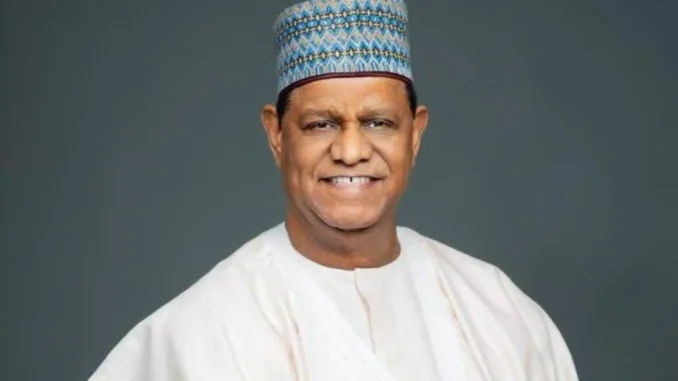
Who is Mohammed Hayatudeen?
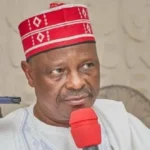
Mohammed Hayatu-Deen OON is a Nigerian banker, economist, project finance executive, corporate leader, and elder statesman. He was born on 15 September 1953 in Borno State, north-eastern Nigeria.
He is the Chairman of the Renaissance Development Forum, founder of the Alpine Group, former Pioneer Managing Director and CEO of FSB International Bank Plc, former Group Managing Director and CEO of the New Nigeria Development Company (NNDC), and a two-term former Chairman of the Nigerian Economic Summit Group (NESG).
He was awarded the Officer of the Order of the Niger (OON) in 2000. He is widely regarded as one of the most intellectually rigorous and policy-capable private sector figures Nigeria has produced and, since 2022, one of its most credible technocrat-politicians.
| Mohammed Hayatu-Deen | |
|---|---|
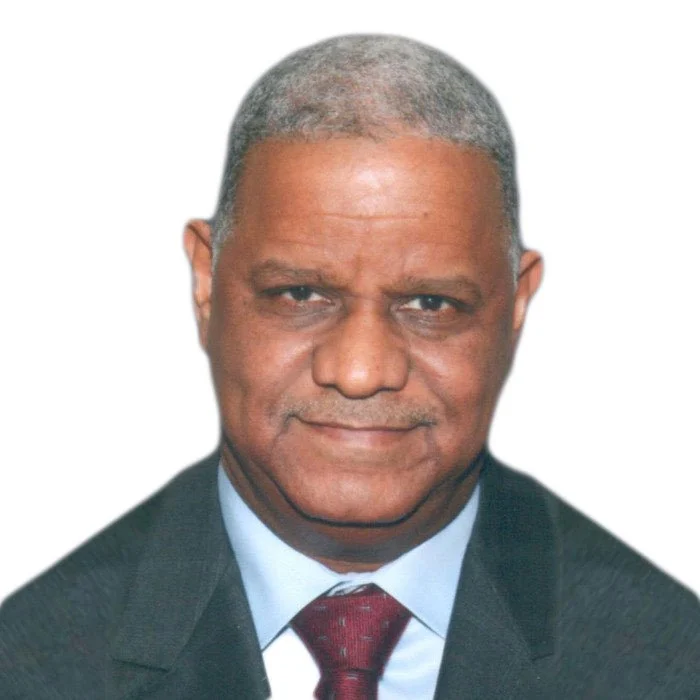 Mohammed Hayatu-Deen: History · Bio · Photo
|
|
| Wiki Facts & About Data | |
| Full Name: | Mohammed Hayatu-Deen |
| Born: | September 15, 1953 |
| Age: | 72 years old |
| Birthplace: | Borno State, Nigeria |
| State of Origin: | Borno State |
| Nationality: | Nigerian |
| Occupation: | Banker · Economist · Project Finance Executive · Corporate Leader · Elder Statesman · Politician |
| Religion: | Islam |
Early Life
Mohammed Hayatu-Deen was born on 15 September 1953 in Borno State the north-eastern Nigerian state that sits at the confluence of Nigeria, Cameroon, Chad, and Niger, and which has historically been one of the most important centres of Islamic scholarship, trans-Saharan trade, and administrative tradition in West Africa.
The Kanuri people, who are the dominant ethnic group of the Lake Chad basin and the historical heartland of the Kanem-Bornu Empire, form a significant part of Borno State’s cultural fabric and the region’s long tradition of learning, governance, and institutional organisation provides the cultural backdrop against which Hayatu-Deen’s own career values of intellectual rigour, institutional discipline, and public service took shape.
He received his primary school education at Kofan Doka a community in the Borno region where he demonstrated the academic aptitude that would later carry him to the University of Nigeria’s most demanding economics programme.
Details about his parents’ names and occupations have not been documented in publicly available sources, but the emphasis on education and professional achievement that characterises his career trajectory suggests a household that valued learning and public service deeply.
His formative years in Borno State in the 1950s and 1960s exposed him to the enormous economic potential and the profound governance challenges of northern Nigeria a region blessed with agricultural land, mineral resources, and human capital but chronically underserved by both colonial and post-colonial administrations.
These early experiences of institutional inadequacy and unfulfilled potential planted in him the seeds of the economic development philosophy that would later guide both his private sector work and his public advocacy.
Education
Ahmadu Bello University, Zaria BSc Economics (1976)
Mohammed Hayatu-Deen pursued his undergraduate education at Ahmadu Bello University (ABU), Zaria the largest university in Nigeria by land area and one of the country’s most prestigious public research universities, founded in 1962 and named after the Sardauna of Sokoto, Nigeria’s first Premier of the Northern Region.
He completed his Basic Studies programme at ABU before proceeding to read Economics, from which he graduated in 1976 with a Bachelor of Science (BSc) degree. His economics degree provided him with the theoretical and analytical foundation that would underpin a career spanning corporate finance, development economics, banking, and public economic policy.
ABU Zaria was during this era one of the intellectual powerhouses of northern Nigeria producing a cohort of economists, engineers, lawyers, and administrators who went on to lead Nigeria’s most important public and private institutions across the final decades of the twentieth century. Hayatu-Deen was among the most distinguished members of this generation of ABU-educated technocrats, and he has remained a committed alumnus throughout his career.
Harvard Business School Advanced Management Programme
To complement his economics foundation with advanced management and leadership capabilities, Hayatu-Deen completed the Advanced Management Programme (AMP) at Harvard Business School in Boston, Massachusetts, USA earning an Advanced Leadership and Management Certificate. Harvard’s AMP is one of the most prestigious executive education programmes in the world, designed for senior executives who are moving into the highest levels of corporate and institutional leadership.
Its participants are drawn from among the world’s most accomplished business and government leaders, and its curriculum challenges them to deepen their strategic thinking, broaden their global perspective, and sharpen their capacity for high-stakes decision making. The AMP equipped Hayatu-Deen with the global business management competencies and international networks that he brought to bear throughout his subsequent career.
Career
New Nigeria Development Company (NNDC) Career Beginnings and GMD Appointment (1976–1988)
Mohammed Hayatu-Deen began his professional career immediately after graduating from ABU Zaria in 1976, joining the Northern Nigeria Development Corporation (NNDC) subsequently renamed the New Nigeria Development Company in the department of principal investments and project finance.
The NNDC was, at the time, arguably Nigeria’s most important institutional vehicle for northern economic development, established to channel investment and managerial expertise into the northern states’ industrial, agricultural, and commercial sectors.
Hayatu-Deen’s analytical abilities, financial acumen, and leadership potential were apparent from early in his tenure, and he rose rapidly through the organisation. In 1983, he was appointed Group Managing Director and Chief Executive Officer of the New Nigeria Development Company an extraordinary achievement for a man who was thirty years old at the time and had been with the organisation for just seven years.
At the helm of the NNDC, he was responsible for providing leadership, direction, and oversight to a portfolio of 140 subsidiary and associate companies making the NNDC the single largest diversified holding company in Nigeria at the time.
The sheer scale and complexity of this mandate spanning industries including manufacturing, agriculture, construction, hospitality, and commerce across all the northern states gave Hayatu-Deen an unparalleled breadth of corporate governance experience that few Nigerian executives of his generation could claim.
He led the NNDC through a period of enormous economic volatility in Nigeria, including the collapse of oil prices in the mid-1980s, the Structural Adjustment Programme (SAP) introduced by the Babangida administration, and the consequent shock to the Nigerian corporate sector.
His management of the group through this challenging period demonstrated the crisis leadership capabilities that would later define his approach to banking turnaround.
FSB International Bank Pioneer MD/CEO and Turnaround Master (1990–2004)
The chapter of Mohammed Hayatu-Deen’s career most frequently cited as his greatest institutional achievement began in 1990, when he was appointed Pioneer Managing Director and Chief Executive Officer of FSB International Bank Plc formerly known as the Federal Savings Bank, a government-owned savings institution that had fallen into a state of near-total dysfunction, financial distress, and institutional decay.
At the time of his appointment, the bank was essentially moribund carrying a culture of non-performance, a balance sheet riddled with non-performing assets, and a workforce demoralised by years of mismanagement.
Hayatu-Deen’s mandate was among the most challenging that any banker in Nigeria had faced at the time: to transform a distressed, government-owned savings institution into a viable and profitable commercial bank capable of competing in an increasingly liberalised and competitive Nigerian banking market. He executed that mandate with spectacular success.
Over more than a decade of stewardship first as Pioneer MD/CEO from 1990 to 2001, and then as Chairman/CEO from 2001 to 2004 he fundamentally transformed FSB International Bank. He rebuilt its balance sheet, revamped its human resources, restructured its product offering, deepened its commercial banking capabilities, and restored both profitability and institutional pride to an organisation that had been written off.
The transformation of FSB International Bank under his leadership is widely regarded in Nigerian banking circles as arguably the best case of turnaround management and privatisation in Nigeria’s banking history.
It remains, to this day, a case study in the power of visionary, disciplined, and principled corporate leadership to rebuild damaged institutions a lesson that Hayatu-Deen has repeatedly applied to his broader analysis of Nigeria’s national governance challenges. He served at the bank until 2004, leaving it a fundamentally different and infinitely stronger institution than the one he had inherited.
Alpine Group Entrepreneurship and Investment (2005–present)
Following the conclusion of his tenure at FSB International Bank, Hayatu–Deen channelled his decades of corporate leadership and investment experience into his own entrepreneurial venture.
In 2005, he founded the Alpine Group (operating as Alpine Investment Services) a project development company focused on intervening in high-growth sectors of the Nigerian economy through direct investments. The Alpine Group has pursued investment opportunities across sectors including energy, real estate, and infrastructure aligning with the development priorities that Hayatu-Deen has consistently articulated in his public advocacy for a diversified, productivity-driven Nigerian economy.
Nigerian Economic Summit Group (NESG) Two-Term Chairman (2003–2007)
Perhaps the role that most directly shaped Mohammed Hayatu-Deen’s public policy profile and his reputation as Nigeria’s foremost private sector economic strategist was his tenure as Chairman of the Nigerian Economic Summit Group (NESG) Nigeria’s leading economic policy think-tank, which brings together business leaders, government officials, academics, and civil society actors in an annual summit and ongoing policy dialogue platform designed to shape Nigeria’s economic development strategy.
Hayatu-Deen served as NESG Chairman for two terms, from 2003 to 2007 a period that encompassed President Olusegun Obasanjo’s second term in office and the critical early years of Nigeria’s debt relief negotiations with the Paris Club (concluded in 2005), the privatisation and deregulation programmes, and the foundational work of what became the National Economic Empowerment and Development Strategy (NEEDS).
Under his leadership, the NESG significantly deepened its engagement with federal and state governments on economic reform, infrastructure investment, and private sector development. He used the platform to consistently advocate for policies of economic diversification, institutional strengthening, and investment in human capital positions he has maintained throughout his public career.
Board Memberships and National Assignments
Across his career, Mohammed Hayatu-Deen has served as Chairman or Director of some of Nigeria’s most significant corporations and institutions. These include the Nigerian Stock Exchange (NSE) as a Council Member; Northern Nigeria Investments Limited; Nigeria Hotels Limited; Kaduna Textiles Limited; New Nigeria Construction Company; Benue Cement Company; Sokoto Cement Company; Virgin Nigeria Limited (the Nigerian airline); Seven-Up Bottling Company; PZ Cussons Nigeria; Inlaks Computers Limited; and others.
His national advisory roles have been equally extensive. He served as a member of the Institute of Directors, Director of the Nigerian American Chamber of Commerce, Director of the Nigerian German Business Council, Member of the World Economic Forum, Member of the Africa Business Round Table, Member of the West Africa Business Association, Member of the National Council of Vision 2010, Member of the National Council on Privatisation and Chairman of its Technical Committee, and Member of the Presidential Advisory Council.
Under the Buhari administration, he was appointed as a member of President Muhammadu Buhari’s Transition Committee and Chairman of the Transition Committee on Economy one of the most consequential advisory roles in the lead-up to the Buhari government’s economic policy formulation in 2015.
Renaissance Development Forum
Hayatu-Deen serves as the Chairman of the Renaissance Development Forum a platform he has established to advance his vision of a comprehensive national development framework for Nigeria, built on the principles of economic diversification, institutional reform, security sector transformation, and inclusive growth. The Forum has served as a vehicle for his continued public policy advocacy and as the intellectual home of his eventual presidential ambitions.
Political Career
Entry into Politics: 2022 PDP Presidential Aspirancy
Mohammed Hayatu-Deen’s entry into active electoral politics came in March 2022, when he formally declared his intention to contest the presidency of Nigeria on the platform of the Peoples Democratic Party (PDP).
In his declaration statement, he described himself as someone who had been a “keen observer of Nigerian politics for many decades” but had not previously participated directly in party politics due to his engagements in managing critical public and private institutions.
He cited the “rapid deterioration of all aspects of our national life” characterised by increasing poverty, religious intolerance, banditry and kidnapping, oil theft, corruption, mismanagement of national assets, and the near-collapse of public services as the moral imperative that had compelled him to enter the political arena.
His candidacy was widely welcomed in economic and business circles as a rare infusion of genuine technocratic competence into Nigeria’s frequently personality-driven and patronage-oriented presidential race.
He set out a comprehensive policy vision centred on ending insurgency through robust intelligence and community engagement; halting public university closures through structural reform of labour relations in education; economic diversification away from oil dependency; and the creation of a governance system characterised by accountability, meritocracy, and long-term planning.
Withdrawal from PDP Presidential Race (May 2022)
Despite the initial warmth with which his candidacy was received, Hayatu-Deen withdrew from the PDP presidential race in May 2022 barely three months after declaring his intention.
In a detailed withdrawal statement that became widely circulated, he explained that the contest had become “obscenely monetised” that the process of securing convention delegates had degenerated into a cash-driven exercise in which votes were openly purchased, rendering any genuine contest on the basis of ideas, vision, and character effectively impossible. “I joined the contest as a democrat, with an open mind to keenly contest and accept the result of a process that is fair, credible and transparent,” he stated. “My decision to withdraw from the contest is based on personal principles.”
His withdrawal was applauded by good governance advocates and lamented by Nigerians who had hoped that his entry signalled a new chapter in the country’s political culture. It also served as an articulate and damning indictment of the PDP’s internal democratic processes a critique that resonated beyond his own individual case.
Defection to ADC (April 2026)
Having stayed within the PDP for more than three years without finding a path to meaningful participation in its presidential processes, Mohammed Hayatu-Deen formally defected from the PDP to the African Democratic Congress (ADC) in April 2026.
In his defection statement, he cited worsening insecurity, the rising cost of living, increasing unemployment, and what he described as a shrinking democratic space under the Tinubu administration as the driving forces behind his search for a more credible and mission-oriented political vehicle. He stated: “Like many of you, I want a safer, more prosperous future for Nigeria, but the nation faces fundamental problems that are being ignored.”
He recalled that his initial entry into politics in 2022 had been motivated by a desire to contribute to national development in what he had described as a “wide-open democratic space” an expectation that had since been met with “bitter disappointment.”
He pledged to deploy his decades of experience in business, economic reform, and public administration in the ADC’s platform ahead of the 2027 general elections, campaigning actively to help deliver a safer and more prosperous future.
2027 ADC Presidential Nomination Form (May 2026)
Just weeks after his defection, Mohammed Hayatu-Deen took the decisive next step in his political journey: in May 2026, he became the first aspirant to obtain the ADC’s presidential nomination form for the 2027 elections.
Speaking after the exercise at ADC national headquarters in Abuja, he outlined a three-pillar policy platform centred on security and community stabilisation, economic recovery and diversification, and job creation at scale. He declared: “This election cannot be about politics as usual. It must be about how to secure our communities, rebuild confidence in the economy, create jobs at scale, and make life more affordable for millions of Nigerians.”
The ADC’s National Organising Secretary, Chinedu Idigo, received him at the party’s national secretariat and pledged to provide a level playing field for all aspirants. As of May 2026, Hayatu-Deen is widely regarded as one of the most credible and substantive presidential aspirants outside the APC-PDP duopoly and the first aspirant in the race with a formal ADC nomination form.
National Honour
In recognition of his numerous and distinguished contributions to the Nigerian economy and corporate sector, Mohammed Hayatu-Deen was bestowed the national honour of Officer of the Order of the Niger (OON) by the Federal Republic of Nigeria in 2000.
The Order of the Niger is one of Nigeria’s highest state honours, awarded to individuals in recognition of distinguished and meritorious service to the nation and to humanity.
Social Media
Mohammed Hayatu-Deen maintains an active presence on Facebook at @Mohammedhayatud, where he shares political statements, economic policy commentary, and updates on his public activities.
The page has been the primary platform through which he has made major public announcements including his withdrawal from the PDP presidential race in 2022 and updates on his 2027 ADC presidential campaign.
His communications style on the platform reflects his broader public persona: substantive, intellectually grounded, and primarily focused on policy rather than personality.
Personal Life
Mohammed Hayatu-Deen is a deeply private individual in matters relating to his personal life. Details about his wife, children, and family background have not been documented in publicly available sources reflecting a long-standing personal preference to keep his family out of the public sphere that has characterised his approach to personal privacy across decades of public life.
He is a practising Muslim, and his public communications reflect the moral seriousness and sense of communal responsibility that inform his worldview and his service ethos.
He has described himself as driven by a conviction that those who have been blessed with the knowledge, experience, and platform to contribute to national development have a moral obligation to do so a belief that ultimately brought him out of the comfortable world of the private sector and into the arena of electoral politics in 2022 and again in 2026.
Colleagues and associates who have worked with him across his career consistently describe a man of unusual personal integrity, intellectual rigour, and institutional commitment someone who operates by the same standards of accountability and transparency in his private professional life that he demands of public institutions in his policy advocacy.
His withdrawal from the PDP race on the grounds that its primary process had been monetised at considerable personal cost to his political ambitions was widely cited as a demonstration of the kind of principled leadership that he had always preached.
Net Worth
Mohammed Hayatu-Deen’s net worth is not publicly documented or declared. As a senior figure who has led major Nigerian corporations, served as the chief executive of one of Nigeria’s banking institutions for nearly fifteen years, and founded his own investment company (Alpine Group), he is presumed to be among Nigeria’s high-net-worth individuals.
However, in the absence of any formal declaration or credible third-party assessment, no specific figure can be reliably attributed to his personal wealth.
He has not featured prominently in any published rankings of Nigerian billionaires or high-net-worth individuals, suggesting that his wealth while considerable is characteristically maintained with discretion and does not approach the stratospheric levels associated with Nigeria’s most prominent business oligarchs.
Awards and Recognition
- Officer of the Order of the Niger (OON) 2000: Awarded by the Federal Republic of Nigeria for distinguished and meritorious service to the nation
- Advanced Leadership and Management Certificate Harvard Business School Advanced Management Programme
- BSc Economics (Honours) Ahmadu Bello University, Zaria (1976)
- Two-Term Chairman, Nigerian Economic Summit Group (2003–2007): Led Nigeria’s foremost economic policy think-tank across two consecutive terms
- Chairman, Presidential Transition Committee on Economy (2015): Led the economic transition committee for President Muhammadu Buhari’s transition into office
- First aspirant to obtain ADC 2027 Presidential Nomination Form (May 2026): A historic milestone in his political journey
FAQs
Who is Mohammed Hayatudeen?
Mohammed Hayatu-Deen OON is a Nigerian banker, economist, project finance executive, corporate leader, and elder statesman from Borno State. He is the founder of the Alpine Group, former Pioneer MD/CEO and Chairman/CEO of FSB International Bank, former Group MD/CEO of the New Nigeria Development Company, and two-term former Chairman of the Nigerian Economic Summit Group. He is also a 2023 former PDP presidential aspirant and a 2027 ADC presidential aspirant.
When was Mohammed Hayatudeen born?
He was born on September 15, 1953, in Borno State, Nigeria. He is 72 years old as of 2026.
What state is Mohammed Hayatudeen from?
He is from Borno State in north-eastern Nigeria.
What university did Mohammed Hayatudeen attend?
He attended Ahmadu Bello University (ABU), Zaria, graduating with a BSc in Economics in 1976. He later completed the Advanced Management Programme at Harvard Business School, earning an Advanced Leadership and Management Certificate.
What is Mohammed Hayatudeen most known for professionally?
He is most known for his extraordinary turnaround of FSB International Bank transforming a distressed, moribund government savings institution into a viable commercial bank over a 14-year tenure as Pioneer MD/CEO and Chairman/CEO (1990–2004), a feat widely described as the best case of turnaround management and privatisation in Nigerian banking history. He is also known for leading the NESG for two terms and for heading the 140-company New Nigeria Development Company.
Why did Mohammed Hayatudeen withdraw from the 2023 presidential race?
He withdrew from the PDP presidential race in May 2022, citing the “obscene monetisation” of the party primary process stating that the process had become a cash-driven exercise in which votes were openly purchased, making a genuine contest based on ideas and merit impossible. He described his withdrawal as motivated by personal principles.
What party is Mohammed Hayatudeen in as of 2026?
As of April 2026, he is a member of the African Democratic Congress (ADC), having defected from the PDP. He was the first aspirant to obtain the ADC’s 2027 presidential nomination form in May 2026.
What is the Alpine Group?
The Alpine Group (Alpine Investment Services) is a project development and investment company founded by Hayatu-Deen in 2005, focused on intervening in high-growth sectors of the Nigerian economy through direct investments, including energy, real estate, and infrastructure.
What is the Nigerian Economic Summit Group (NESG)?
The NESG is Nigeria’s leading economic policy think-tank, which convenes an annual summit of business leaders, government officials, academics, and civil society organisations to shape the country’s economic development strategy. Hayatu-Deen served as its Chairman for two consecutive terms from 2003 to 2007.
What national honour did Mohammed Hayatudeen receive?
He was awarded the Officer of the Order of the Niger (OON) by the Federal Republic of Nigeria in 2000, in recognition of his distinguished contributions to the Nigerian economy and corporate sector.
Conclusion
Mohammed Hayatu-Deen’s life and career represent the best of what Nigeria’s educated, disciplined, and principled private sector has produced since independence. A young economics graduate from Ahmadu Bello University who rose through the ranks of Nigeria’s largest holding company to become its Group Managing Director at thirty, who then transformed a dying government bank into a thriving commercial institution over fourteen years, who led Nigeria’s foremost economic think-tank across two terms, who served his country’s presidential transition at the highest level and who then, in the final chapter of his career, entered electoral politics not for personal ambition but out of an honest and anguished conviction that a country he had served all his life was heading for collapse and that someone had to try to stop it.
His entry into and withdrawal from the PDP presidential race in 2022 on the principled grounds that its process had been monetised beyond redemption told Nigerians more about his character than any manifesto could. His April 2026 defection to the ADC and his May 2026 status as the first aspirant to formally launch a 2027 presidential campaign through that party signal that he has not abandoned his mission only changed the vehicle through which he intends to pursue it.
Whether Mohammed Hayatu-Deen ultimately wins Nigeria’s presidency in 2027 a long and difficult road in a political landscape still heavily shaped by ethnic patronage networks and financial firepower or not, his contribution to Nigeria’s public policy discourse, institutional development, and the articulation of what evidence-based, principled economic governance could look like in practice remains invaluable. He is, in the truest sense, one of Nigeria’s genuine elder statesmen and his country needs him now more than ever.
Related People





Leave a Reply