
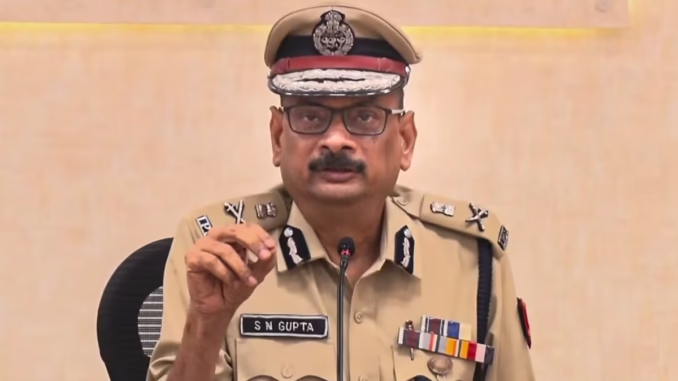
In the annals of the Indian Police Service, few career trajectories are as inspiring, as quietly determined, or as richly instructive as that of Siddhnath Gupta IPS.
From the narrow lanes of Bindki a small, unremarkable town in Fatehpur district in the heartland of Uttar Pradesh to the highest law enforcement command of one of India’s most populous, politically volatile, and institutionally complex states, Siddhnath Gupta’s journey is a living testament to what disciplined intellect, sustained perseverance, and patient institutional service can achieve in the Indian bureaucratic system.
He is a man who first cleared India’s most competitive examination the Union Public Service Commission (UPSC) Civil Services Examination and entered the Indian Revenue Service (IRS), only to sit the examination again the following year and this time secure the coveted Indian Police Service (IPS), choosing the demands of active public service over the relative comfort of revenue administration. This singular act of deliberate self-reinvention tells you almost everything you need to know about the character of the man who would, three decades later, be entrusted with the security of one of India’s most historically significant and electorally critical states at arguably its most critical democratic moment.
On March 16, 2026, the Election Commission of India appointed Siddh Nath Gupta as the Director General of Police (DGP) and Inspector General of Police (IGP) of West Bengal the top law enforcement post in the state just weeks before the state’s critically watched Assembly elections.
When his retirement date of April 30, 2026, approached, the central government granted him a six-month extension in the public interest, underscoring the irreplaceable value of his steady hand at a moment of extraordinary institutional sensitivity.
This is the full, detailed, and thoroughly researched biography of Siddhnath Gupta IPS engineer, civil servant, police officer, investigator, intelligence chief, and the Director General who rose from the dust of a small UP town to lead West Bengal’s 80,000-strong police force at its most consequential hour.
| Siddh Nath Gupta | |
|---|---|
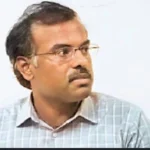
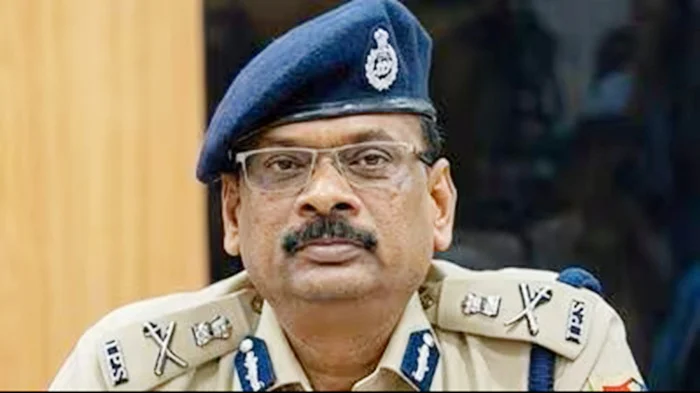 Siddh Nath Gupta: History · Bio · Photo
|
|
| Wiki Facts & About Data | |
| Full Name: | Siddh Nath Gupta |
| Born: | 1965–1966 (exact date not publicly disclosed) |
| Age: | 59–60 years old |
| Birthplace: | Bindki, Fatehpur District, Uttar Pradesh, India |
| Nationality: | Indian |
| Occupation: | Indian Police Service (IPS) Officer; Director General of Police (DGP), West Bengal |
| Religion: | Hinduism |
| Net Worth: | Not publicly disclosed (government officer assets subject to statutory disclosure norms) |
Early Life
Siddhnath Gupta was born in Bindki, a small town located in the Fatehpur district of Uttar Pradesh a state that has historically produced a disproportionate share of India’s civil servants, particularly its IAS and IPS officers, drawn by the fierce competitive culture and the deeply ingrained social value placed on government service in the Hindi heartland. Fatehpur is situated in the Gangetic plains of central Uttar Pradesh, an agricultural region where economic opportunity is limited, educational institutions are modest by urban standards, and the aspiration to crack the UPSC and enter the All India Services carries a weight that is difficult to overstate. For families in towns like Bindki, a son or daughter who enters the IAS or IPS does not merely secure their own future they transform the social and economic standing of their entire family, often for generations.
Gupta grew up in a modest environment, the product of a community where ambition was shaped by constraint and where every educational achievement was hard-won rather than taken for granted. The specific details of his family background the names of his parents, the composition of his household, the nature of his upbringing have not been publicly disclosed, in keeping with the institutional culture of the Indian Police Service, where senior officers typically maintain a strong separation between their personal and professional lives. What is well established, however, is that his early education took place in the local schools of Bindki and the broader Fatehpur district, and that from a young age he demonstrated the kind of sustained intellectual aptitude and disciplined study habits that would eventually carry him to one of India’s premier technical institutions.
The social context of Gupta’s upbringing is important for understanding the magnitude of what he subsequently achieved. Bindki is not a city of obvious opportunity. It does not have the elite coaching institutes of Allahabad or Lucknow, the professional networks of Delhi, or the institutional infrastructure that smooths the paths of ambitious young people in larger urban centers. What it has and what clearly shaped Siddhnath Gupta is a culture of hard work, a recognition that education is the only reliable vehicle of upward mobility, and a quiet but fierce pride in those who make it. When news broke in March 2026 that Gupta had been appointed as the Director General of Police of West Bengal, the streets of Bindki and the broader Fatehpur district are reported to have erupted in celebration. For a community that sees little reflected glory from the corridors of national power, the rise of one of its own to the top of a major state’s police force was a moment of profound and genuine collective pride.
Education
Siddhnath Gupta’s educational achievements represent the defining foundation of both his intellectual identity and his professional success. In a career that has been characterized by analytical precision, systematic thinking, and an evidence-based approach to law enforcement and intelligence, the roots of these qualities are traceable directly to the rigorous technical education he received at one of India’s most prestigious academic institutions.
After completing his schooling in Fatehpur district, Gupta secured admission to the Indian Institute of Technology Kanpur (IIT Kanpur) one of the five original IITs established in independent India and consistently ranked among the country’s top two or three universities for science and technology education. Admission to IIT is notoriously difficult, requiring candidates to place in the top fraction of a percentage of the hundreds of thousands of students who sit the Joint Entrance Examination (JEE) each year. For a student from a modest background in a small UP town, securing an IIT seat was itself an achievement of the highest order one that signaled, unmistakably, that Siddhnath Gupta was not merely an above-average student but someone operating at the very top of India’s intellectual distribution.
At IIT Kanpur, Gupta completed his Bachelor of Technology (BTech) degree in 1988, followed by a Master of Technology (MTech) degree in 1990. The specific engineering disciplines in which he completed these degrees have not been publicly confirmed. What is certain is that his six years of intensive technical education at IIT Kanpur gave him a set of cognitive tools analytical reasoning, systematic problem decomposition, evidence evaluation, and structured decision-making that would prove directly applicable to the demands of police intelligence work, criminal investigation, and security administration at the highest levels.
His technical and educational background set him apart from many of his IPS contemporaries, the majority of whom came from humanities or social sciences educational backgrounds. In a service that was historically more oriented toward law, politics, and administrative management than toward quantitative analysis and technical systems thinking, Gupta’s engineering formation gave him a distinctive intellectual profile one that would later express itself in his particular emphasis on the digitization of crime records, the modernization of policing data systems, and the deployment of systematic intelligence-gathering frameworks during his long career in West Bengal.
Career
Siddhnath Gupta’s career is a story of continuous upward progression through one of India’s most demanding institutional environments the West Bengal Police, operating in a state whose political complexity, communal sensitivities, and historical volatility have tested even the most experienced and capable officers. His three decades of service trace an arc from district-level field policing in the early 1990s to the very apex of the state’s law enforcement hierarchy in 2026, encompassing virtually every major dimension of police work along the way.
Chapter One: The UPSC Journey and the Choice Between IRS and IPS
Siddhnath Gupta’s path to the Indian Police Service was not a straight line. After completing his MTech from IIT Kanpur in 1990, he prepared for and appeared in the Union Public Service Commission (UPSC) Civil Services Examination India’s most competitive examination, which selects candidates for the IAS, IPS, IFS, IRS, and other central government services through a multi-stage process combining a preliminary screening test, a main written examination, and a personality test interview. In 1991, he cleared the UPSC examination for the first time and was allocated to the Indian Revenue Service (IRS) a prestigious central government service concerned primarily with taxation and financial administration under the Ministry of Finance.
For most candidates, allocation to the IRS would have been the fulfillment of years of preparation and a cause for celebration. For Siddhnath Gupta, it was insufficient. He had a higher ambition and that ambition was the Indian Police Service. The IPS, unlike the IRS, demands active engagement with society at its most raw and difficult: law enforcement, crime investigation, public order management, and the daily negotiation between institutional authority and individual rights. It is a more physically demanding, more publicly exposed, and more operationally intensive service than the IRS. It is also, in many parts of India, significantly more influential in shaping the daily lived experience of ordinary citizens. Gupta’s decision to leave the IRS and appear again in the UPSC examination in 1992 this time successfully securing the Indian Police Service with the West Bengal cadre speaks volumes about the nature of his motivation. He was not driven primarily by career security or prestige. He was driven by a genuine desire to do a specific kind of public work hands-on, impactful, and directly connected to the lives of the people he served.
Chapter Two: Field Policing in West Bengal The Foundational Years
Upon joining the IPS in 1992 as a probationer assigned to the West Bengal cadre, Gupta underwent the standard induction training at the Sardar Vallabhbhai Patel National Police Academy (SVPNPA) in Hyderabad, which provides all IPS probationers with their foundational professional training in law, policing procedures, physical fitness, and leadership development. He subsequently moved to West Bengal for his district training a period in which new IPS officers are embedded in field policing environments to learn the practical realities of law enforcement from the ground up.
Like all IPS officers beginning their careers, Gupta served as a Superintendent of Police (SP) and later as a Senior Superintendent of Police (SSP) in districts across West Bengal. These postings placed him at the operational front line of policing: managing law and order situations, supervising investigations, responding to crimes and emergencies, interacting with the public and local government, and building the foundational understanding of West Bengali society, politics, and culture that would inform every subsequent posting in his career. West Bengal is one of India’s most politically engaged and institutionally complex states a state with a long history of political mobilization, trade union activism, communal tensions in border areas, and the persistent challenge of left-wing extremism in some of its western districts. Learning to police this state from the bottom up was an education that no academy curriculum could fully replicate.
His colleagues and subordinates from this period consistently recall a young officer who combined intellectual seriousness with operational calm someone who approached field policing not as a test of machismo or personal authority, but as a professional challenge requiring careful observation, evidence gathering, community engagement, and measured response. These qualities firmness calibrated by fairness, decisiveness tempered by patience became the hallmarks of his professional reputation across three decades of service.
Chapter Three: Rise Through Senior Ranks IG, ADG and Specialized Commands
With experience and demonstrated capability came steady progression through the senior ranks of the IPS. After his foundational years at the SP and SSP level, Gupta moved into the senior-tier grades of the service, taking on roles as Inspector General of Police (IGP) and subsequently Additional Director General of Police (ADG/ADGP) positions that carried broad supervisory responsibility across entire ranges of districts or over specific functional wings of the West Bengal Police.
Among the specialized commands he held at the ADG level was the role of Additional Director General, Counter Insurgency Force (CIF) one of the more operationally sensitive postings within the West Bengal Police, responsible for coordinating the state’s response to Maoist and left-wing extremist activity in the western districts of the state, particularly in the Jangalmahal region. This posting required a sophisticated understanding of the social and political roots of insurgency, the ability to coordinate multi-agency operations, and the capacity to maintain a calibrated security response that did not aggravate underlying grievances while effectively neutralizing organized violence.
He also served as Commissioner of Police of the Asansol-Durgapur Police Commissionerate, taking command of this critical urban police jurisdiction which covers one of West Bengal’s largest industrial and commercial zones, with complex law and order challenges arising from labor disputes, communal tensions, and organized crime in November 2015. The Asansol-Durgapur Commissionerate is one of the most operationally demanding police jurisdictions in West Bengal outside of Kolkata, and his appointment there reflected his senior colleagues’ confidence in his ability to manage complex urban policing environments.
He subsequently served as Additional Director General, South Bengal a territorial command covering the southern range of districts in the state, including the districts surrounding Kolkata before being transferred from this post in January 2024 as part of a broader reshuffle of the West Bengal Police’s senior leadership.
Chapter Four: The Intelligence and Investigation Years
One of the defining streams of Siddhnath Gupta’s career has been his deep and sustained engagement with intelligence work, criminal investigation, and the specialized information-gathering functions of the West Bengal Police. This dimension of his career reflects both his IIT Kanpur analytical training and a personal orientation toward the systematic, evidence-based work that intelligence and investigation demand.
In December 2019, following a major reshuffle of the IPS cadre in West Bengal, Gupta was appointed as the Chief of the Criminal Investigation Department (CID) of West Bengal one of the most consequential investigative appointments in the state’s law enforcement architecture. The CID is responsible for investigating complex, serious, and politically sensitive criminal cases across the state, operating with a degree of independence from district and range police structures. As CID Chief, Gupta was responsible for overseeing major investigations, building the department’s technical and forensic capabilities, managing a large team of investigators, and providing strategic direction to the state’s most high-profile criminal inquiries. His appointment to this role followed his tenure as ADG, Counter Insurgency Force, and was preceded by the posting of the high-profile officer Rajeev Kumar who had been the previous CID Chief to the role of Principal Secretary of the IT Department.
Subsequently, he served as the Director General of the State Crime Records Bureau (SCRB) a data-intensive role focused on the systematic collection, analysis, and dissemination of crime statistics and law enforcement data. In this capacity, Gupta brought his technical background directly to bear on the state’s crime data infrastructure, working toward greater digitization, more rigorous data quality, and improved analytical capability within West Bengal’s crime recording systems. His work at the SCRB reflected a philosophy that effective modern policing is inseparable from effective data management that decisions about resource deployment, investigative priorities, and crime prevention strategies must be grounded in accurate, timely, and granular information.
He also served as the Director General of the Intelligence Branch of West Bengal Police the state’s primary internal intelligence gathering apparatus, responsible for monitoring potential security threats, tracking criminal networks, managing informant systems, and advising the government on sensitive internal security matters. The Intelligence Branch is one of the most politically sensitive and institutionally consequential wings of any state police force, requiring its leader to exercise exceptional discretion, political awareness, and professional judgment. The fact that Gupta was trusted with this role speaks directly to the reputation he had built over three decades as an officer of sober judgment, institutional loyalty, and professional integrity.
Chapter Five: Appointment as DGP, West Bengal March 2026
The most dramatic and consequential appointment of Siddhnath Gupta’s career came in the most charged possible political context. On March 15, 2026 just weeks before the West Bengal Assembly elections were scheduled to begin the Election Commission of India took the extraordinary step of directing the removal of the incumbent Director General of Police, Peeyush Pandey, from his post, citing concerns about the state’s law enforcement apparatus ahead of the election. The Election Commission, which assumes direct authority over all administrative and security arrangements during election periods, exercises this power rarely but decisively when it concludes that the existing police leadership cannot be relied upon to maintain electoral neutrality and public order.
In Pandey’s place, the Election Commission directed the appointment of Siddhnath Gupta as the new Director General and Inspector General of Police (DG & IGP) of West Bengal, effective March 16, 2026. The choice was deliberate and carefully considered. Gupta was selected for a combination of qualities that the Election Commission evidently considered essential for the specific challenge at hand: more than three decades of operational experience in West Bengal across virtually every dimension of policing; deep expertise in intelligence and criminal investigation; a professional reputation for impartiality and institutional integrity; and crucially the calm, measured leadership style that the management of a sensitive electoral process demands.
His appointment was greeted with widespread positive assessment among police observers and political commentators. The selection of a seasoned intelligence and investigative officer with no recent political baggage, who had spent the previous years in roles that were operationally demanding but politically lower-profile, was seen as a calculated and intelligent choice by the Election Commission. Former colleagues described him as someone who “takes measured decisions, even in tense situations” and whose working style focuses on “discipline, transparency, and professionalism” precisely the qualities needed to command public confidence in an election where the integrity of the security apparatus was under intense scrutiny.
The West Bengal Assembly elections proceeded with the first phase of voting on April 23, 2026, and the second and final phase on April 29, 2026, with results declared on May 4, 2026. Under Gupta’s command, the West Bengal Police managed the security arrangements for this massive democratic exercise involving tens of millions of voters across the state.
Chapter Six: Six-Month Service Extension April 2026
With his scheduled retirement date of April 30, 2026 approaching while the West Bengal election process was still in its final stages, the Government of India took the step of formally extending Gupta’s service. The Appointments Committee of the Cabinet approved the proposal of the Ministry of Home Affairs to grant Gupta a six-month extension in service beyond April 30, 2026, “in relaxation of Rule 16(1) of AIS (DCRB) Rules, 1958, in public interest.” The official government order stated plainly that the extension was being granted in the public interest a recognition that the continuity of his leadership at such a critical juncture was deemed more important than the standard operation of retirement rules.
The extension was immediately welcomed by administrative observers as a pragmatic and appropriate decision. Changing the top leadership of a state police force in the middle of an active election process would have been an unnecessary disruption. The government’s willingness to invoke the public interest exception to standard retirement rules reflected the depth of institutional confidence in Gupta’s leadership and the clear-eyed assessment that he was not merely the best available option but genuinely the right person for this specific moment.
Awards and Professional Recognition
Siddhnath Gupta has not publicly discussed formal awards received during his career in the manner common to entertainment or sports personalities, and the specific commendations, medals, and service honors he may have received have not been comprehensively reported in the public domain. However, the following represent the formal and substantive recognitions that his career has earned:
- Appointment as Director General of Police (DGP) and Inspector General of Police (IGP), West Bengal (March 2026): The appointment to the highest police command in West Bengal, made by the Election Commission of India at a moment of extraordinary institutional sensitivity and public importance, represents the most significant professional recognition of his entire career. It is an endorsement not merely of his seniority but of his specific qualifications his reputation for impartiality, his operational experience, and his personal qualities as a leader.
- Six-Month Central Government Service Extension (April 2026): The Appointments Committee of the Cabinet’s decision to extend his service beyond the standard retirement age, in explicit recognition of the public interest value of his continued leadership, is a formal acknowledgment at the highest level of the national government of his professional indispensability at a critical juncture.
- Three Decades of Continuous, Consequential Service in the IPS: His career trajectory across the CID, the SCRB, the Intelligence Branch, the CIF, multiple field posting at SP and SSP level, and two major city and range commands represents a body of service work that is in itself a form of institutional recognition the consistent assignment of progressively more consequential responsibilities by superiors who trusted his judgment and capability at every level.
- Pride of Fatehpur Community Recognition (2026): When news of his DGP appointment broke in March 2026, celebrations erupted in his hometown of Bindki and across the Fatehpur district. While not a formal award, the spontaneous outpouring of community pride represents a form of social recognition that is, for many officers, among the most meaningful acknowledgments of a career well lived in public service.
Social Media
Siddhnath Gupta does not maintain a personal social media presence in the way that entertainers, politicians, or even many younger government officials do. As a senior IPS officer who has spent the bulk of his career in intelligence, investigation, and security-sensitive command roles, he has understandably maintained a deliberately low digital profile consistent with the institutional norms of the Indian Police Service, which generally discourages senior officers from operating personal social media accounts that could compromise operational security or create political vulnerability.
His public communications are conducted exclusively through official West Bengal Police channels, including the West Bengal Police’s official website (wbpolice.gov.in) and its official social media accounts on platforms including Facebook and Twitter/X. Announcements of his appointments, postings, and official activities are made through these institutional channels and through official government press releases rather than through personal accounts.
Coverage of his appointment as DGP and his service extension has appeared across major Indian news platforms including The Tribune, Millennium Post, Indian Masterminds, Yugantar Pravah, and numerous other national and regional publications, generating significant public attention particularly in his home state of Uttar Pradesh, where his story has been widely celebrated as an inspiring example of the transformative power of education and civil service aspiration for young people from modest backgrounds in India’s smaller towns.
Personal Life
Siddhnath Gupta has maintained a very deliberate and consistent separation between his professional public life and his personal private life throughout his career. The details of his personal circumstances his marital status, the names and identities of his family members, his domestic arrangements, his personal interests and hobbies have not been disclosed publicly, and no credible media source has published detailed information about his private life. This reticence is characteristic of senior IPS officers who have spent significant portions of their careers in intelligence and investigative roles, where the security imperatives of operational discretion extend beyond the workplace and into private life.
What can be observed from his public conduct and from the accounts of colleagues who have worked with him is that he is a man of quiet discipline and understated character. He is consistently described in professional contexts as calm, composed, and measured qualities that suggest a person who has cultivated inner resources of stability and perspective that are not easily rattled by the inevitable pressures, provocations, and setbacks of a career spanning three decades in one of India’s most challenging policing environments. Colleagues emphasize that he combines intellectual seriousness with personal warmth, and that his professional authority rests not on intimidation or theatrical displays of power but on the accumulated credibility of decades of consistently sound judgment.
His decision to leave the IRS and re-sit the UPSC examination for the IPS is perhaps the most personally revealing detail of his biographical record a decision that required genuine courage, clarity of purpose, and the willingness to delay the material rewards of government service in pursuit of a vocation that he felt more accurately represented who he was and what he wanted to contribute. That clarity of purpose, apparent in that single early career choice, appears to have been the guiding thread of every subsequent chapter of his public life.
He is currently based in Kolkata, where the Director General of Police of West Bengal is headquartered, and he has spent the substantial majority of his professional life in West Bengal a state he chose when he secured the WB cadre in 1992 and to which he has given three decades of focused, dedicated service.
Net Worth
Siddhnath Gupta is a career government servant who has spent his entire professional life in the Indian Police Service. Like all officers of the All India Services (AIS), he is subject to the statutory requirement to file annual property and asset declarations as part of the government’s anti-corruption and transparency framework. These declarations are submitted to the appropriate government authority but are not routinely published in the public domain unless specifically required under information access provisions.
His primary sources of income throughout his career have been his IPS salary and service allowances, which are determined by the Pay Commission-revised pay scales applicable to IPS officers at each grade level. At the grade of Director General of Police the equivalent of DGP rank his salary under the current pay commission recommendations represents the apex of the IPS pay scale for field officers. Additionally, as a government officer, he is entitled to official accommodation, official vehicle, and other service perquisites in accordance with his grade and the standard entitlements of DGP-rank officers.
As is standard for IPS officers at his level, he will also be entitled to a full government pension upon his eventual retirement, calculated on the basis of his years of service and last drawn salary. The total financial profile of a senior IPS officer of his standing is consistent with comfortable but not extravagant material circumstances a profile typical of career civil servants who have not supplemented their government income through business or commercial activities.
No credible source has published a specific net worth figure for Siddhnath Gupta, and any figure cited without reference to his official asset declarations would be speculative. What is appropriate to note is that his professional decisions throughout his career including the decision to abandon the IRS for the IPS suggest a man whose primary motivation in public service has consistently been vocation rather than material compensation.
Frequently Asked Questions (FAQs)
Who is Siddhnath Gupta IPS?
Siddhnath Gupta is a 1992-batch IPS officer of the West Bengal cadre who currently serves as the Director General of Police (DGP) and Inspector General of Police (IGP) of West Bengal the highest law enforcement post in the state. He is a graduate of IIT Kanpur (BTech 1988, MTech 1990), hails from Bindki in Fatehpur district, Uttar Pradesh, and has served in West Bengal for over three decades in a wide range of field, investigative, intelligence, and command roles. He was appointed DGP by the Election Commission of India on March 16, 2026, ahead of the West Bengal Assembly elections.
Where is Siddhnath Gupta from?
Siddhnath Gupta hails from Bindki, a small town in Fatehpur district, Uttar Pradesh, in the Hindi heartland of northern India. His rise from this modest small-town background to the top of West Bengal’s police force has made him a figure of pride and celebration in his home district.
What is Siddhnath Gupta’s educational qualification?
Siddhnath Gupta holds a BTech (1988) and an MTech (1990) from the Indian Institute of Technology Kanpur (IIT Kanpur) one of India’s most prestigious technical universities. His engineering background from IIT Kanpur is one of the most distinctive aspects of his profile within the IPS and has directly informed his analytical and data-driven approach to policing and intelligence work throughout his career.
How did Siddhnath Gupta enter the IPS?
Siddhnath Gupta entered the IPS through a remarkable two-step process. He first cleared the UPSC Civil Services Examination in 1991, initially securing allocation to the Indian Revenue Service (IRS). Rather than accepting this posting, he chose to appear again in the UPSC examination in 1992, this time securing the Indian Police Service with the West Bengal cadre a decision that reflected his deep personal motivation to serve in an operationally active public safety role rather than in revenue administration.
Why was Siddhnath Gupta appointed as DGP of West Bengal in 2026?
Siddhnath Gupta was appointed as DGP of West Bengal on March 16, 2026, by the Election Commission of India, which directed the removal of the incumbent DGP Peeyush Pandey from his post ahead of the state’s Assembly elections. The Election Commission selected Gupta on the basis of his extensive operational experience across all dimensions of West Bengal policing, his deep expertise in intelligence and investigation, and his professional reputation for impartiality, integrity, and calm leadership. His appointment was widely seen as a signal of institutional confidence in his ability to manage the security environment during a politically sensitive electoral period.
Was Siddhnath Gupta given a service extension?
Yes. With his scheduled retirement date of April 30, 2026 approaching while the West Bengal election process was still ongoing, the Appointments Committee of the Cabinet approved the Ministry of Home Affairs’ proposal to grant him a six-month extension in service beyond April 30, 2026, in relaxation of the standard All India Services retirement rules. The extension was granted explicitly “in public interest,” reflecting the government’s assessment that the continuity of his leadership at a critical election juncture was of greater national importance than the standard application of retirement provisions.
What were Siddhnath Gupta’s key postings before becoming DGP?
Siddhnath Gupta’s career included a remarkable breadth of postings across West Bengal policing. Key roles included Superintendent of Police (SP) and Senior Superintendent of Police (SSP) at the field level; Commissioner of Police, Asansol-Durgapur (from November 2015); ADG, Counter Insurgency Force (CIF); Chief of the Criminal Investigation Department (CID), West Bengal (from December 2019); Director General, State Crime Records Bureau (SCRB); Director General, Intelligence Branch, West Bengal Police; and ADG, South Bengal, before his appointment to the top post.
What is Siddhnath Gupta known for professionally?
Siddhnath Gupta is professionally known for three defining qualities: his deep expertise in criminal investigation and intelligence, accumulated over decades of service in the CID and Intelligence Branch; his emphasis on data-driven, technology-assisted policing, reflecting his IIT Kanpur engineering background and particularly evident in his work at the State Crime Records Bureau; and his reputation for calm, impartial, and measured leadership in complex and politically sensitive environments. Colleagues consistently describe him as someone who exercises authority through professional credibility and sound judgment rather than through hierarchical assertion or political maneuvering.
What is the significance of Siddhnath Gupta’s IIT Kanpur background for his policing career?
Siddhnath Gupta’s engineering education at IIT Kanpur gave him a distinctive intellectual toolkit that set him apart from many IPS colleagues. His technical and analytical training contributed directly to his emphasis on evidence-based investigation, his focus on the digitization and improvement of crime data systems during his tenure as Director General of the SCRB, and his capacity for systematic, structured intelligence analysis during his years at the head of West Bengal’s Intelligence Branch. In an era when modern policing increasingly depends on data analytics, digital forensics, and systematic information management, his technical formation proved to be a professional asset of the first order.
Conclusion
The biography of Siddhnath Gupta IPS is, at one level, the biography of a man who started with very little no urban privilege, no elite social connections, no obvious institutional advantages and built, through the force of exceptional intelligence, sustained discipline, and an unwavering clarity of purpose, one of the most consequential careers in the history of the West Bengal Police. From the IIT Kanpur campus to the corridors of Writers’ Building and Nabanna; from the field postings of a young SP in West Bengal’s districts to the intelligence briefings of a DGP responsible for the security of one of India’s most complex states the trajectory is remarkable in its completeness and in the coherence of the values it expresses.
But at a deeper level, the biography of Siddhnath Gupta is a biography of a particular kind of public service the kind that is not performed for the applause of crowds or the gaze of television cameras or the accumulation of personal advantage, but for its own sake, in the conviction that the institutions of the state, when led with integrity and competence, are the most powerful instruments available for protecting ordinary people and enabling democratic life. His decision to leave the IRS for the IPS in 1992 was his first statement of that conviction. His appointment as DGP at perhaps the most critical electoral moment in West Bengal’s recent history was its fullest vindication.
The story of a boy from Bindki, Fatehpur armed with an IIT degree and a determination to serve on the front lines of Indian democracy who became the top police officer of West Bengal at a moment when the state needed exactly that kind of steady, experienced, unflappable leadership, is the kind of story that the Indian civil services exist to make possible. It is also the kind of story that, in a country of a billion aspirations, reminds us that the distance between a small town and the top of a major institution is never so great that discipline, intelligence, and purpose cannot bridge it.
Siddhnath Gupta IPS has bridged that distance and in doing so, he has served not only West Bengal, but the larger idea that Indian public administration, at its best, still rewards merit, still trusts experience, and still knows how to put the right person in the right place at the right moment.
Related People






Leave a Reply