
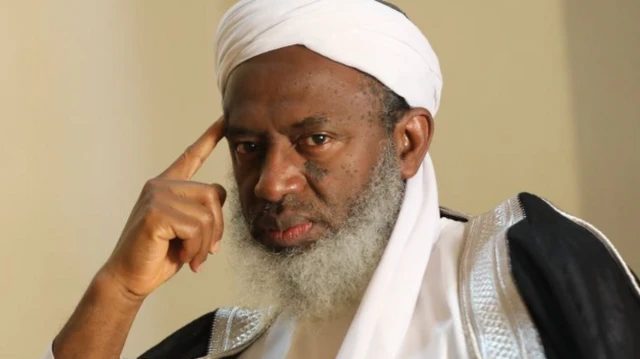
Sheikh Ahmad Abubakar Gumi widely known simply as “Sheikh Gumi” is one of the most remarkable and most debated figures in contemporary Nigerian public life.
A certified medical doctor, a retired Nigerian Army captain, a PhD-holding Islamic scholar, and an audacious peace negotiator who has literally walked into bandit forests to negotiate with armed kidnappers, he is a man who defies the conventions of what a religious leader is supposed to be.
Heir to one of the most revered legacies in the history of northern Nigerian Islam that of his late father, Sheikh Abubakar Mahmud Gumi, the first Grand Khadi of the old Northern Region Ahmad Gumi has built an identity both within and beyond that inheritance, positioning himself at the volatile intersection of religion, security, and Nigerian statecraft.
He is simultaneously praised as a courageous peacemaker who goes where soldiers and politicians dare not, and condemned as an apologist whose controversial statements about bandits have caused national outrage.
| Sheikh Dr. Ahmad Abubakar Mahmud Gumi | |
|---|---|
 Sheikh Dr. Ahmad Abubakar Mahmud Gumi: History · Bio · Photo
|
|
| Wiki Facts & About Data | |
| Full Name: | Sheikh Dr. Ahmad Abubakar Mahmud Gumi |
| Born: | October 1, 1960 |
| Age: | 65 years old |
| Birthplace: | Kano State, Nigeria |
| State of Origin: | Zamfara State (ancestral roots in Gummi, Zamfara) |
| Nationality: | Nigerian |
| Occupation: | Islamic Scholar (Mufti and Mufassir), Medical Doctor, Former Military Officer, Peace Mediator |
| Religion: | Islam (Sunni; Maliki School of Jurisprudence) |
| Parents: | Late Sheikh Abubakar Mahmud Gumi (1924–1992) |
| Spouse: | Married (name not publicly disclosed) |
| Children: | Multiple (names and number not publicly disclosed) |
| Relationship: | Married |
| Net Worth: | $1 million – $3.1 million |
Early Life
Ahmad Abubakar Gumi was born on October 1, 1960, in Kano State, Nigeria. Though born in Kano, his ancestral roots lie in Gummi, Zamfara State the same village from which his father’s family originated.
He is the eldest son of Sheikh Abubakar Mahmud Gumi and grew up entirely within the extraordinary world his father had constructed: a household where Islamic scholarship was not merely a profession but the governing principle of daily life, where the most important religious and political figures of northern Nigeria were regular visitors, and where the expectation of carrying forward a distinguished religious lineage was embedded in everyday reality from childhood.
Growing up in the 1960s and 1970s in Kano and Kaduna, Ahmad Gumi was steeped in the scholarship and debates that surrounded his father’s work.
He witnessed first-hand the political engagements of the elder Gumi, including his debates with Sufi brotherhood leaders which were broadcast on television and his work at the Sultan Bello Mosque in Kaduna, which served as both the elder Gumi’s primary pulpit and a centre of Islamic intellectual life in the north.
This immersive environment shaped Ahmad’s deep commitment to Islamic knowledge while simultaneously developing in him an awareness of the political dimensions of religious leadership that would prove formative in his later career.
Education
Ahmad Gumi received his secondary school education at Sardauna Memorial College (SMC) in Kaduna one of northern Nigeria’s most prestigious secondary institutions, named after Sir Ahmadu Bello, the Sardauna of Sokoto.
The college is known for producing some of the north’s finest academic and professional graduates, and its emphasis on structured, rigorous education provided Gumi with a strong intellectual foundation.
He subsequently gained admission to Ahmadu Bello University (ABU), Zaria the premier university of northern Nigeria, also named after Sir Ahmadu Bello where he studied Medicine.
He graduated as a certified medical doctor, a qualification that placed him in the relatively small category of Islamic scholars in Nigeria who also hold formal scientific and medical credentials.
Following his graduation from ABU and his subsequent military service, Gumi travelled to Saudi Arabia to pursue advanced studies in Islamic jurisprudence and Quranic interpretation.
He enrolled at Umm al-Qura University in Makkah one of the most respected Islamic universities in the world where he studied Usul al-Fiqh (Islamic Jurisprudence) and Tafsir (Quranic Exegesis).
He earned a Doctor of Philosophy (PhD) in Islamic Jurisprudence from the institution, completing the transformation from medical doctor and military officer to fully credentialed Islamic scholar. Among his contemporaries at Umm al-Qura were renowned global Islamic scholars including Abdur-Rahman As-Sudais and Saud Al-Shuraim.
The combination of a medical degree from ABU, military training from the Nigerian Defence Academy, and a PhD from one of Islam’s most respected universities makes Ahmad Gumi one of the most formally qualified religious figures in Nigerian history.
Career
Military Career
Following his graduation from Ahmadu Bello University with a medical degree, Ahmad Gumi was enlisted into the Nigerian Defence Academy (NDA). He served in the Nigerian Army Medical Corps (NAMC) as a military medical officer, providing healthcare services to military personnel and their dependents.
He rose to the rank of Captain a commissioned officer rank before eventually resigning from military service to pursue his calling as an Islamic scholar.
His military experience gave him discipline, strategic thinking, and a familiarity with the culture and structure of security institutions that would later prove invaluable when navigating sensitive security terrain in his peace mediation work with bandits.
Islamic Scholarship and the Sultan Bello Mosque
Upon returning to Nigeria after completing his PhD at Umm al-Qura University, Ahmad Gumi assumed the position that had been occupied by his father: the role of presiding scholar at the Sultan Bello Mosque in Kaduna the Kaduna Central Mosque and one of the largest and most historically significant mosques in northern Nigeria.
He serves as its Mufti (an Islamic scholar qualified to issue legal opinions, or fatawa, on religious matters) and Mufassir (an expert in Quranic exegesis, responsible for interpreting the meaning of the Quran). In this role, he is the direct spiritual and scholarly successor to his father’s legacy at the most important Islamic pulpit in Kaduna.
His annual Ramadan Tafsir sessions at the Sultan Bello Mosque are among the most attended and widely followed religious events in northern Nigeria drawing thousands of worshippers to the mosque and many more through radio broadcasts and live streaming.
His scholarly approach follows the Maliki school of jurisprudence and emphasises a return to the orthodox teachings of the Quran and Sunnah, broadly consistent with the reformist IZALA tradition founded by his father.
He draws on classical Islamic scholars including Malik ibn Anas and contemporary reformist influences, communicating in Hausa and Arabic to reach both scholarly and lay audiences.
His use of radio, social media, and public platforms to amplify his religious messages has extended his influence far beyond Kaduna into the wider Hausa-speaking world.
Bandit Mediation and National Security Role (2021–Present)
From February 2021 onwards, Sheikh Ahmad Gumi became the most publicly visible and politically consequential figure in Nigeria’s debate on how to respond to the escalating wave of banditry, mass kidnappings, and armed violence across the country’s northwest and north-central states.
His approach was radical and unprecedented: where the Nigerian government and military deployed soldiers and conducted airstrikes, Gumi drove often alone or with small delegations into remote forests and bush hideouts to sit face-to-face with bandit commanders in Zamfara, Katsina, Kaduna, and Niger States.
His mediation work began with a peace mission to Zamfara State, where he engaged directly with armed bandit groups. He argued his mandate was rooted in Islamic obligation that a Muslim scholar has a duty to mediate conflict and bring people back from the path of destruction.
His visits to bandit camps involved reading Quranic verses, distributing Islamic books, engaging the fighters in theological conversations about the impermissibility of kidnapping and murder in Islam, and urging them to lay down arms in exchange for a government amnesty programme.
He claimed to act with the knowledge and tacit approval of security agencies, though the Nigerian government’s public stance on his activities was often ambiguous.
His mediation efforts have been credited with facilitating the release of several groups of kidnapped hostages, including students and travellers held by various bandit factions. He has also publicly intervened in cases involving Kagara students in Niger State and other high-profile abductions.
Supporters of his approach argue that purely military responses to banditry have failed for over a decade and that faith-based dialogue offers the only realistic pathway to sustainable peace in communities where the state has minimal presence and trust.
Controversies
Sheikh Ahmad Gumi’s peace mediation work has made him simultaneously celebrated and deeply controversial, and several of his public statements have triggered national outrage.
His most inflammatory remark came in 2021 when he stated publicly: “Kidnapping children from school is a lesser evil because, in the end, you can negotiate, and now bandits are very careful about human lives. Before, the mission of bandits was to go into a town, ransack it, and kill people.”
The statement drew widespread condemnation from Nigerians who saw it as minimising the trauma of mass kidnappings and effectively defending criminals. Many politicians, civil society leaders, and security experts called for his arrest. Gumi defended the statement as a comparative observation about the evolution of bandit behaviour and the tactical value of negotiation not as a moral endorsement of kidnapping.
He has also strongly and repeatedly opposed the Federal Government’s designation of bandits as “terrorists,” warning that such a label would radicalize them further, push them into formal alliance with Boko Haram and ISWAP, and permanently close the door to negotiation. “If you are nice to him [the bandit], if you are ready to listen to him, if you try to understand his problem… he will listen to you,” he has argued. Critics counter that his refusal to support the terrorist designation has provided political cover for violent criminals and undermined the moral authority of the Nigerian state.
In June 2021, the Department of State Services (DSS) summoned Gumi for interrogation over his engagements with bandits. He was questioned about the nature of his interactions with armed groups, the extent of information he may have shared with them about government strategies, and whether his activities were officially sanctioned.
No formal charges were filed following the interrogation, and he subsequently resumed his mediation activities. The incident nonetheless raised legitimate questions about the boundaries between faith-based mediation and potential material support for criminal groups.
He has also been a vocal critic of successive Nigerian governments. In 2019, he called for President Muhammadu Buhari’s resignation, citing the administration’s failure to address the worsening security situation in the north.
When the Buhari government banned Twitter (now X) in Nigeria in 2021, Gumi criticised the move, stating that “The Federal Government should act with more maturity; they are powerless against the media.” He argued that democratic governments must be able to absorb criticism from their citizens.
His critics have further pointed to what they see as a pattern of ethnic sympathy in his public statements specifically an apparent tendency to frame the bandit crisis in terms that emphasise the grievances of Fulani herder communities (from whom many bandits are recruited) while showing less explicit empathy for the predominantly agrarian communities that have been the primary victims of bandit violence.
Gumi denies that his mediation is ethnically motivated, arguing that his engagement with bandit groups is purely driven by the Islamic imperative to prevent bloodshed and restore peace.
Awards and Recognition
| Award / Recognition | Details |
| King Faisal International Prize for Service to Islam (1987) | Awarded to his father, Sheikh Abubakar Mahmud Gumi the most prestigious Islamic prize globally; testament to the elder Gumi’s transformative contribution to Islamic scholarship in Africa |
| Commander of the Order of the Federal Republic (CFR) | National honour awarded to Sheikh Ahmad Gumi by the Federal Government of Nigeria in recognition of his contributions to Islamic scholarship and community service |
| National recognition as a prominent peace mediator | Acknowledged by multiple Nigerian governments and security agencies for facilitating the release of kidnapping victims and opening dialogue channels with armed groups |
Social Media
Sheikh Ahmad Gumi is active on social media platforms, using them to extend the reach of his religious teachings, deliver commentary on national affairs, and communicate directly with his followers across Nigeria and the wider Hausa-speaking world.
- Facebook: Dr. Ahmad Abubakar Gumi
- Twitter/X: @Ahmad_Gumi
Personal Life
Sheikh Ahmad Gumi is a deeply private individual with respect to his personal and family life. He is married and has children, but he has consistently declined to make details of his domestic life public a deliberate policy that he describes as a focus on his religious duties rather than personal publicity.
His wife’s name has not been disclosed publicly. The number of his children has not been officially confirmed, though he is known to have multiple offspring who are being raised within the tradition of Islamic scholarship that has defined the Gumi family for generations.
He is based in Kaduna, where he lives modestly and continues his duties at the Sultan Bello Mosque. His lifestyle is described by those who know him as restrained and focused consistent with the scholarly tradition he inherited from his father.
He has spoken about finding spiritual and practical justification for his bandit mediation work in classical Islamic texts on conflict resolution and the responsibility of the learned to prevent harm within the community.
His continued strong connections to Saudi Arabia where he studied and built scholarly relationships reflect both his academic ties and his alignment with the Salafi-influenced reformist tradition represented by the IZALA movement.
He is widely regarded within reformist Sunni Islamic circles as one of Nigeria’s most credible and learned religious voices, even as his security-related activities make him a figure of controversy in broader public discourse.
Net Worth
Various estimates place Sheikh Ahmad Gumi’s net worth between $1 million and $3.1 million, though no official public declaration has been made.
His income and wealth are drawn from multiple sources: his role as Mufti and Mufassir at the Sultan Bello Mosque, which carries institutional support; his career as a certified medical doctor (ABU-trained); his decades of military service, from which he receives a pension; speaking engagements, religious consultations, and tafsir sessions; possible support from Gulf-based Islamic charitable networks common to scholars within the Salafi tradition; and proceeds from any published works or audio-visual religious materials.
He is known for a modest lifestyle that prioritises religious duties over material accumulation, and his stated focus has consistently been on community service rather than personal enrichment.
Frequently Asked Questions (FAQs)
Who is Sheikh Gumi?
Sheikh Gumi, whose full name is Sheikh Dr. Ahmad Abubakar Mahmud Gumi, is a prominent Nigerian Islamic scholar, certified medical doctor, and former Nigerian Army captain. He is the current Mufti and Mufassir of the Sultan Bello Central Mosque in Kaduna, and the eldest son of the legendary late Sheikh Abubakar Mahmud Gumi the first Grand Khadi of the old Northern Region of Nigeria. He is best known nationally for his controversial peace mediation missions to bandit camps in northwest Nigeria.
How old is Sheikh Gumi?
He was born on October 1, 1960, and is 64 years old as of 2025.
Who was Sheikh Gumi’s father?
His father was the late Sheikh Abubakar Mahmud Gumi (1924–1992), one of the most influential Islamic scholars in the history of northern Nigeria. The elder Gumi served as the first Grand Khadi of the old Northern Region, was a close associate of Sir Ahmadu Bello, co-founded the IZALA reformist Islamic movement, translated the Quran into Hausa, and received the King Faisal International Prize for Service to Islam in 1987.
What is Sheikh Gumi’s educational background?
He attended Sardauna Memorial College (SMC) in Kaduna for his secondary education. He then earned a medical degree (MBBS) from Ahmadu Bello University, Zaria. After his military service, he studied at Umm al-Qura University in Makkah, Saudi Arabia, where he earned a PhD in Islamic Jurisprudence (Usul al-Fiqh) and Tafsir.
Why does Sheikh Gumi negotiate with bandits?
Gumi argues that purely military approaches to Nigeria’s banditry crisis have failed for over a decade and that dialogue is the only viable path to sustainable peace. He frames his mediation as an Islamic obligation the duty of a scholar to prevent bloodshed and guide people back to righteousness. He also advocates for the Nigerian government to grant amnesty to bandits who surrender, drawing a parallel with amnesties previously offered to Niger Delta militants and coup plotters under military rule.
What controversy did Sheikh Gumi cause with his statement on kidnapping?
In 2021, he stated publicly that “kidnapping children from school is a lesser evil” than killing, because kidnapping victims can be negotiated for and returned. The statement caused national outrage and calls for his arrest. He defended it as a comparative observation about the evolution of bandit tactics rather than a moral endorsement of kidnapping.
Was Sheikh Gumi arrested?
He was not arrested but was summoned for interrogation by the Department of State Services (DSS) in June 2021 over his engagements with bandit groups. No charges were filed following the interrogation, and he resumed his mediation activities.
What is Sheikh Gumi’s net worth?
Various sources estimate his net worth between $1 million and $3.1 million, derived from his roles as an Islamic scholar, medical doctor, former army officer, and possible support from Gulf-based Islamic networks. He is known for a modest personal lifestyle.
What mosque does Sheikh Gumi lead?
He is the Mufti and Mufassir of the Sultan Bello Central Mosque (also called the Kaduna Central Mosque) in Kaduna the same institution where his father preached for decades before him. He is well known for his annual Ramadan Tafsir sessions, which attract thousands of worshippers.
Conclusion
Sheikh Ahmad Abubakar Gumi is a figure who cannot be understood in simple terms. He is simultaneously a scholar and a soldier, a healer and a provocateur, a guardian of orthodoxy and a disruptor of conventional security thinking.
The Gumi name in Nigerian Islam carries the weight of a dynasty and Ahmad has both honoured that weight and added his own controversial chapters to it.
His willingness to enter Nigerian forests to sit with armed criminals and urge them toward peace is, depending on one’s perspective, either an act of extraordinary Islamic courage or a dangerously naïve exercise that provides diplomatic cover for violent men.
His public statements particularly his characterisation of school kidnappings as “a lesser evil” have caused genuine pain to families who have experienced the horror of watching their children abducted at gunpoint. These critiques are real and cannot be dismissed.
Yet the structural reality he is responding to a security crisis in which the Nigerian military has repeatedly failed to protect communities, in which thousands of civilians have been killed and kidnapped with impunity is equally real.
What is beyond dispute is that Sheikh Gumi has forced Nigeria to have conversations about security, negotiation, amnesty, and the limits of military force that politicians and generals have been unwilling to initiate.
For a nation grappling with multiple overlapping insurgencies, banditry, and the deep structural inequalities that fuel them, that conversation however uncomfortable may prove to be one of the most important of the generation. Sheikh Ahmad Gumi will remain at its centre.
Related People







Leave a Reply