

John Steinbeck is widely regarded as one of the greatest American writers of the 20th century, a literary giant whose works gave voice to the struggles of the poor, the marginalized, and the disillusioned during one of America’s most turbulent eras.
From the sun-baked fields of California to the dust-covered roads of the Great Depression, Steinbeck’s fiction explored the depths of the human condition with empathy, precision, and an unflinching moral clarity.
The author of such enduring masterpieces as The Grapes of Wrath, Of Mice and Men, and East of Eden, Steinbeck’s work earned him the Nobel Prize in Literature in 1962 and a permanent place in the canon of world literature. This biography examines his life, education, career, personal life, and immortal literary legacy.
| John Ernst Steinbeck III | |
|---|---|
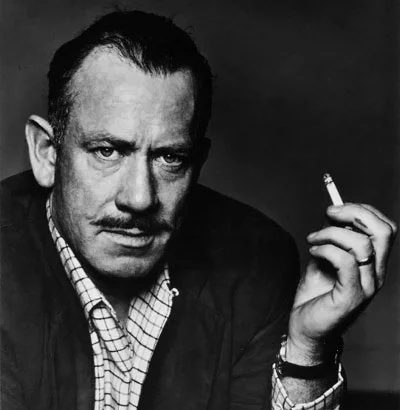 John Ernst Steinbeck III: History · Bio · Photo
|
|
| Wiki Facts & About Data | |
| Full Name: | John Ernst Steinbeck III |
| Born: | February 27, 1902 |
| Age: | aged 66 |
| Death: | December 20, 1968 (aged 66) |
| Birthplace: | Salinas, California, United States |
| Nationality: | American |
| Occupation: | Novelist, Short Story Writer, War Correspondent |
| Spouse: | Carol Henning (m. 1930–1943), Gwyndolyn Conger (m. 1943–1948), Elaine Anderson Scott (m. 1950–1968) |
| Children: | Thomas Steinbeck, John Ernst Steinbeck IV |
Early Life
John Ernst Steinbeck III was born on February 27, 1902, in Salinas, California, a small agricultural city in the fertile Salinas Valley, which would become the setting for some of his most celebrated works.
He was born into a family of moderate means whose ancestors had emigrated to the United States from Germany, England, and Ireland a few generations earlier. His father, John Ernst Steinbeck Sr., held various jobs, including serving as the treasurer of Monterey County. His mother, Olive Hamilton Steinbeck, was a former schoolteacher who cultivated in her son a deep love for books, reading, and storytelling.
Young John began writing at the age of fourteen, scribbling stories on whatever paper he could find, already demonstrating the literary ambition that would define his life.
He grew up in the Salinas Valley, surrounded by the agricultural laborers, ranch hands, and migrant workers whose lives and struggles he would later immortalize in his fiction. The landscape of central California, its valleys, farms, and seas, became the imaginative geography of his greatest works.
As a teenager, he worked summers in farm fields alongside laborers, an experience that gave him deep firsthand knowledge of working-class life and would later lend his fiction its distinctive authenticity and moral weight.
Education
John Steinbeck attended Salinas High School before enrolling at Stanford University in 1919 to study English literature. However, his time at Stanford was intermittent and unconventional.
He attended classes on and off between 1919 and 1925, working during breaks and summers in the farm fields that cultivated sugar beets and other crops. He took the courses that interested him, particularly literature and writing, and neglected those that did not.
He ultimately left Stanford in 1925 without completing his degree, choosing instead to pursue his ambitions as a writer in New York City. His years at Stanford, though incomplete in academic terms, exposed him to literature, ideas, and the intellectual environment that nurtured his developing voice as a writer.
Career
After leaving Stanford, Steinbeck traveled to New York City in 1925, determined to establish himself as a writer. He worked as a journalist and manual laborer while attempting to break into the literary world, but his early efforts met with repeated rejection.
After several difficult years, he returned to California in 1928, where he worked as a caretaker at Lake Tahoe while writing his first novels. His early works, Cup of Gold (1929), The Pastures of Heaven (1932), and To a God Unknown (1933), received modest attention.
It was Tortilla Flat (1935), a humorous novel about the paisano community in the Monterey region, that finally brought him popular success and financial stability. From that point, Steinbeck’s career accelerated dramatically. He followed Tortilla Flat with In Dubious Battle (1936), a powerful novel about a California fruit pickers’ strike, and the short novel Of Mice and Men (1937), the heartbreaking tale of two displaced ranch workers, George and Lennie, dreaming of a better life. Of Mice and Men was an enormous success, adapted for the stage and later for film, and established Steinbeck as one of America’s most important voices.
His masterwork arrived in 1939 with the publication of The Grapes of Wrath, a searing, monumental novel that followed the Joad family’s desperate migration from the Dust Bowl of Oklahoma to the promised land of California. The novel captured the suffering of Depression-era America with devastating power and emotional clarity. It was an immediate bestseller and won both the Pulitzer Prize for Fiction (1940) and the National Book Award, and became the defining literary statement of the Great Depression era. A celebrated film adaptation directed by John Ford appeared in 1940.
During World War II, Steinbeck served as a war correspondent for the New York Herald Tribune, reporting from the European theater. He continued to write prolifically after the war, producing Cannery Row (1945), The Pearl (1947), East of Eden (1952), his sweeping epic of good versus evil set in the Salinas Valley, and The Winter of Our Discontent (1961). In 1962, his reflective travelogue Travels with Charley: In Search of America recounted a cross-country road trip with his standard poodle, exploring the changing face of American life.
That same year, he was awarded the Nobel Prize in Literature “for his realistic and imaginative writings, combining as they do sympathetic humour and keen social perception.” He also received the United States Medal of Freedom from President Lyndon B. Johnson in 1964. Steinbeck died of heart disease on December 20, 1968, at his home in New York City. He was 66 years old.
Awards and Honors
John Steinbeck’s literary achievements were recognized with some of the highest honors in world literature.
His awards include the Pulitzer Prize for Fiction (1940) for The Grapes of Wrath, the National Book Award, the Nobel Prize in Literature (1962), and the United States Medal of Freedom (1964). He is also a recipient of the New York Drama Critics Circle Award for the stage adaptation of Of Mice and Men.
Personal Life
John Steinbeck was married three times. His first wife was Carol Henning, whom he married in 1930. Carol was a vital creative and practical partner during some of his most productive years, and the couple divorced in 1943.
He married his second wife, singer and songwriter Gwyndolyn Conger, in 1943. Together, they had two sons: Thomas (born 1944) and John Ernst Steinbeck IV (born 1946). The couple divorced in 1948.
In 1950, Steinbeck married his third wife, Elaine Anderson Scott, and the couple remained together until his death in 1968. Despite his literary fame, Steinbeck remained deeply connected to ordinary people, working-class struggles, and the California landscape that shaped his imagination throughout his life.
Bibliography (Selected Works)
John Steinbeck authored 33 books over the course of his career. Major works include: Cup of Gold (1929), The Pastures of Heaven (1932), To a God Unknown (1933), Tortilla Flat (1935), In Dubious Battle (1936), Of Mice and Men (1937), The Long Valley (1938), The Grapes of Wrath (1939, Pulitzer Prize winner), Sea of Cortez (1941), Cannery Row (1945), The Pearl (1947), East of Eden (1952), The Winter of Our Discontent (1961), and Travels with Charley: In Search of America (1962).
Conclusion
John Steinbeck remains, more than five decades after his death, one of the most widely read and deeply loved writers in the English language.
His ability to find the profound in the ordinary, to illuminate the struggles of the dispossessed with compassion and power, and to hold a mirror to the contradictions of the American dream has made his work timeless. The Grapes of Wrath is still assigned in schools across the world. Of Mice and Men still moves readers to tears. East of Eden still rewards those brave enough to take its long journey. John Steinbeck’s legacy is not simply a shelf of great books, it is a permanent conversation with the moral conscience of America and of humanity itself.
Related People







Leave a Reply