
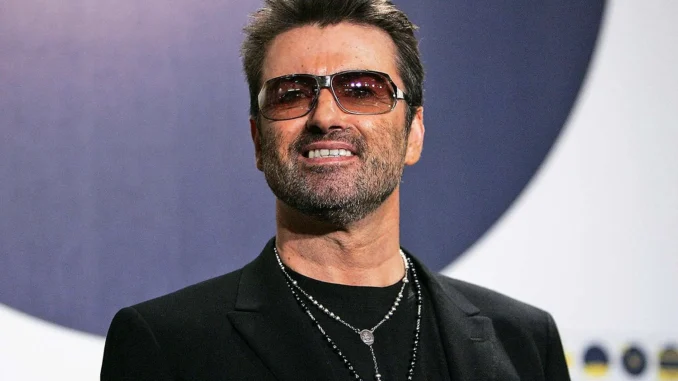
Georgios Kyriacos Panayiotou, known to the world as George Michael, was one of the greatest and most commercially successful pop artists of the twentieth century, a singer, songwriter, and record producer whose career arc from teenage pop star in Wham! to deeply personal and socially committed solo artist traced one of the most dramatic and humanly compelling journeys in the history of popular music.
With over 100 million records sold worldwide, a string of number one singles across two decades, a landmark legal battle against Sony Records, a coming-out story inseparable from both tragedy and liberation, and a private philanthropic legacy that stunned even those who knew him, George Michael left behind a body of work, and a story, that continues to resonate years after his death on Christmas Day 2016.
| Georgios Kyriacos Panayiotou | |
|---|---|
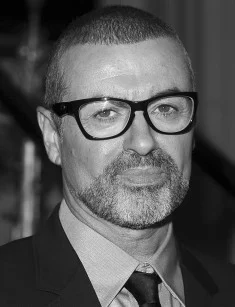 Georgios Kyriacos Panayiotou: History · Bio · Photo
|
|
| Wiki Facts & About Data | |
| Full Name: | Georgios Kyriacos Panayiotou |
| Stage Name: | George Michael |
| Born: | June 25, 1963 |
| Age: | (aged 53) |
| Death: | December 25, 2016 (aged 53) |
| Birthplace: | East Finchley, London, England |
| Nationality: | British (Greek-Cypriot and English heritage) |
| Occupation: | Singer, Songwriter, Record Producer |
| Parents: | Kyriacos "Jack" Panayiotou (father, Cypriot restaurateur); Lesley Angold Harrison (mother) |
| Siblings: | Yioda; Melanie |
Early Life
George Michael was born on June 25, 1963, in East Finchley in north London. He was the son of Kyriacos “Jack” Panayiotou, a Greek-Cypriot immigrant who had come to Britain in the 1950s and built a successful restaurant business, and Lesley Angold Harrison, who was of English heritage with distant Jewish ancestry. He had two older sisters: Yioda and Melanie. He grew up in a comfortable, aspirational family environment in north London.
From childhood, he displayed extraordinary musical sensitivity and a natural, instinctive gift for melody. He began wearing glasses at age seven but secretly discarded them before any important social event, evidence of the self-consciousness about his appearance that would later manifest in his reluctance to perform and his carefully managed public image.
He met his future Wham! bandmate Andrew Ridgeley at Bushey Meads School in Hertfordshire, where the two became inseparable friends.
Education
George Michael attended Kingsbury High School in north London before transferring to Bushey Meads School in Hertfordshire, where his friendship with Andrew Ridgeley formed the creative partnership that would become Wham!. He did not pursue higher education, choosing to pursue music full-time from the age of 17.
Career
Wham! and Global Pop Stardom (1981–1986)
George Michael and Andrew Ridgeley formed the duo Wham! in 1981 after leaving their respective schools.
Their debut album Fantastic (1983) reached number one in the UK and included the top-three hit “Bad Boys” and the number one “Club Tropicana.”
Their second album Make It Big (1984) broke them globally, with “Wake Me Up Before You Go-Go,” “Careless Whisper,” and “Everything She Wants” all reaching number one in the United States.
“Careless Whisper”, written by Michael at the age of 17 while on a bus to work, became one of the most globally recognised pop songs of the decade and sold over six million copies. In 1984, Michael performed with Band Aid on “Do They Know It’s Christmas?” In July 1985, Wham! performed at Live Aid in front of an audience estimated at 72,000 at Wembley Stadium.
In April 1985, the duo became the first Western pop group to perform in China, playing two landmark concerts. In 1985, Michael won the Ivor Novello Award for Songwriter of the Year, at just 21, the youngest recipient ever. Wham! disbanded in 1986 with a farewell concert at Wembley Stadium attended by 72,000 fans.
Solo Career Peak (1987–1998)
George Michael launched his solo career with Faith (1987), an album that sold over 20 million copies worldwide, generated four US number one singles (“I Want Your Sex,” “Faith,” “Father Figure,” and “One More Try”), and won the Grammy Award for Album of the Year in 1989.
The album’s accompanying music videos, particularly the leather-jacketed, motorcycle-riding imagery of the “Faith” video, established him as one of the defining male sex symbols of the late 1980s.
In 1990, he released Listen Without Prejudice Vol. 1, a more personal, critically acclaimed album that reached number one in the UK and produced the anthemic “Freedom! ’90,” whose video famously featured five of the world’s most celebrated supermodels, including Naomi Campbell and Cindy Crawford, lip-syncing while Michael refused to appear.
The album’s success was complicated by his refusal to undertake conventional promotional activities, a stance that led to his decision to sue Sony Music in 1992, claiming he was locked into a restrictive and unfair contract he described as “professional slavery.”
He lost the case in 1994, and the judgment, which went against him, was widely seen as a setback both professionally and personally devastating. He was eventually released from his Sony contract after Sony sold his contract to Virgin Records and DreamWorks.
His 1996 album Older, written partly in response to the death of his partner Anselmo Feleppa, was a critical and commercial success, reaching number one in the UK and producing the singles “Jesus to a Child” and “Fastlove.”
He sang a duet with Elton John on “Don’t Let the Sun Go Down on Me” at Live Aid in 1985 and the subsequent 1991 live version reached number one in both the UK and US.
The 1998 Arrest and Coming Out
On April 7, 1998, George Michael was arrested in a public restroom in Beverly Hills, California, by an undercover police officer for engaging in a lewd act.
His resulting criminal caution effectively forced a public coming-out that he had long resisted, largely, he later acknowledged, out of fear of damaging his career and out of concern for the feelings of his conservative Greek-Cypriot father.
His response to the arrest, producing the self-mocking music video for the single “Outside,” and giving a candid and frank interview about his sexuality, demonstrated a capacity for self-aware humour and personal courage that many admirers found more endearing than anything he had done before. The coming-out, though forced and traumatic in its origins, proved to be one of the most liberating moments of his life.
Later Career and Philanthropy (1998–2016)
Following his coming out, George Michael continued to record and perform. His 2004 album Patience reached number one in the UK. He gave a free concert for NHS workers in 2006.
He toured Europe with the Symphonica tour from 2011 to 2012, donating £1 million from the proceeds to the Elton John AIDS Foundation in memory of Anselmo Feleppa. He performed in a charity concert for Sidaction, France’s largest AIDS charity, at the Palais Garnier Opera House in Paris in 2012.
His private philanthropic activities, which were revealed only after his death, were estimated to total in the tens of millions of pounds and included anonymous donations to HIV/AIDS charities, a gift of £500,000 to a family in financial distress whose story he had seen on a television programme, and numerous personal gifts to nurses and healthcare workers.
Personal Struggles and Death
From the mid-1990s onward, George Michael’s life was increasingly marked by the compound trauma of loss, the death of Anselmo Feleppa in 1993, the failed lawsuit against Sony in 1994, and the death of his mother Lesley in 1997, and the substance dependency that followed. He became reliant on cannabis and later on more dangerous substances including GHB and crack cocaine.
He was arrested for drug-related offences on multiple occasions, received prison sentences in 2010 and 2012, and checked into rehabilitation in 2015.
Despite these struggles, he continued to make music and to give generously to causes he believed in. He died peacefully in his sleep at his home in Goring-on-Thames, Oxfordshire, on Christmas Day, December 25, 2016.
The coroner for Oxfordshire determined his cause of death as natural causes, specifically dilated cardiomyopathy with myocarditis and fatty liver disease. He was 53 years old. He is survived by his father Jack Panayiotou and his sisters Yioda and Melanie.
Awards and Nominations
- 1985 — Ivor Novello Award — Songwriter of the Year — Win (youngest ever recipient at 21)
- 1989 — Grammy Award — Album of the Year — Win (Faith)
- 1992 — BRIT Award — Outstanding Contribution to British Music
- Multiple BRIT Award nominations and wins across his career
- Three American Music Awards
- Inducted into the Rock and Roll Hall of Fame (posthumous consideration ongoing)
Personal Life
George Michael was gay. His most significant relationship was with Anselmo Feleppa, a Brazilian fashion designer he met at the Freddie Mercury tribute concert at Wembley in April 1992. Feleppa had been diagnosed HIV-positive in 1991.
He died of an AIDS-related brain haemorrhage in March 1993, less than two years into their relationship. The song “Jesus to a Child,” released in 1996, was George Michael’s tribute to Feleppa. He subsequently had a long-term relationship with American art dealer Kenny Goss, which lasted from 1996 to 2011.
He never publicly confirmed any relationships after 2011. George Michael was also a vocal and generous supporter of HIV/AIDS causes throughout his career, motivated by his love for Feleppa and by a deep sense of responsibility to the LGBTQ+ community whose fight for recognition and dignity he identified with profoundly.
Net Worth
George Michael’s estate was estimated at approximately £98 million at the time of his death in 2016.
His estate’s income continues to be generated through music royalties, posthumous releases, and the ongoing international licensing of his catalogue.
His will provided significant charitable bequests and gifts to his family and longstanding friends.
Discography
- Fantastic (Wham!, 1983)
- Make It Big (Wham!, 1984)
- Music from the Edge of Heaven (Wham!, 1986)
- Faith (1987) — Grammy Award winner
- Listen Without Prejudice Vol. 1 (1990)
- Older (1996)
- Songs from the Last Century (1999)
- Patience (2004)
- Symphonica (2014)
Conclusion
George Michael was, at his best, one of the finest pop songwriters the world has ever produced, a man whose technical mastery of melody, vocal delivery, and emotional precision placed him in the company of the century’s great musicians.
His story is also a deeply human one: of a gifted, beloved artist burdened by the contradictions of fame, the grief of repeated personal loss, and the exhaustion of maintaining a public image that bore no relation to his private truth.
That he gave so much, on stage, through his music, and in the secret charitable acts that became known only after his death, makes his story all the more poignant. He deserved more years. But the years he had were extraordinary.
Related People




Leave a Reply