
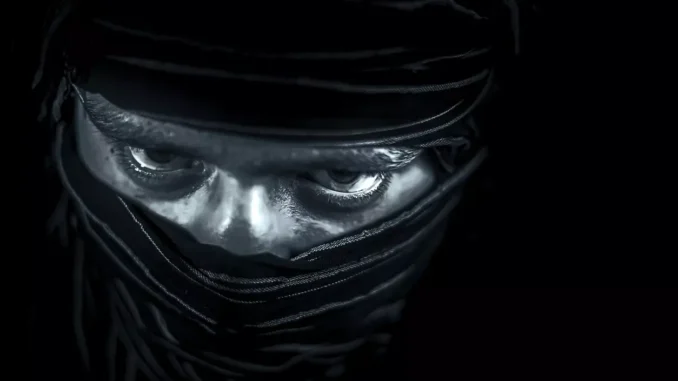
Abu Bilal al-Minuki was a Nigerian-born jihadist commander who rose from the ranks of Boko Haram to become one of the most dangerous and operationally significant figures in the global Islamic State (ISIS) network.
Described by United States President Donald Trump as “the second in command of ISIS globally” and “the most active terrorist in the world,” al-Minuki was killed on May 16, 2026, in a joint military operation conducted by United States and Nigerian armed forces in the Lake Chad Basin region of northeastern Nigeria.
His elimination marked one of the most significant counterterrorism victories in West Africa in recent years and was confirmed simultaneously by both the US and Nigerian governments.
Profile
| Full Name | Abu Bakr ibn Muhammad ibn Ali al-Mainuki (also known as Abu Bilal al-Minuki) |
| Other Names / Aliases | Abor Mainok, Abubakar Mainok, Abu-Mainok |
| Born | 1982 |
| Age at Death | Approximately 44 years old |
| Birthplace | Mainok, Benisheikh, Borno State, Nigeria |
| State of Origin | Borno State, Nigeria |
| Nationality | Nigerian |
| Occupation | Jihadist Commander, ISIS Senior Leader |
| Affiliation | Islamic State (ISIS); Islamic State West Africa Province (ISWAP); formerly Boko Haram |
| Designation | US Specially Designated Global Terrorist (SDGT) – June 8, 2023 |
| Death | May 16, 2026 – Killed in a joint US-Nigerian military operation, Lake Chad Basin, Nigeria |
Early Life
Abu Bilal al-Minuki was born in 1982 in Mainok, a town in the Benisheikh area of Borno State, in Nigeria’s volatile northeast a region that would become the epicentre of one of Africa’s most devastating jihadist insurgencies.
His birth name is reported to be Abu Bakr ibn Muhammad ibn Ali al-Mainuki, with “al-Minuki” (or “al-Mainuki”) being a nisba derived from his hometown of Mainok, a common Arabic naming convention that ties a person’s identity to their place of origin.
Very little is publicly known about his childhood, family background, or early education. Borno State, where he was born and raised, sits at the intersection of Nigeria, Niger, Chad, and Cameroon a region historically marked by porous borders, weak state infrastructure, and deep social inequalities that have made it fertile ground for extremist recruitment.
It was in this environment that al-Minuki first came into contact with radical jihadist ideology, eventually joining the Boko Haram movement before its fracture into multiple factions.
Rise Through Boko Haram
Before pledging allegiance to the Islamic State in 2015, Abu Bilal al-Minuki was a recognized senior commander within Boko Haram the jihadist group founded by Mohammed Yusuf in 2002 and later radicalized under Abubakar Shekau into one of the deadliest terrorist organizations in the world.
Al-Minuki’s rise within Boko Haram’s ranks placed him at the heart of its military and logistical operations in the Lake Chad Basin, a vast and strategically important geography straddling Nigeria, Chad, Niger, and Cameroon.
His relationship with Boko Haram’s supreme commander Abubakar Shekau was reportedly tense and contentious.
According to the International Crisis Group, al-Minuki was among those within the movement who favoured a closer and more formal operational relationship with the global Islamic State organization. Shekau, however, bristled at the IS caliph’s assertions of authority and resisted external direction.
This ideological and power conflict would ultimately become a defining fracture point leading to the formal breakaway of the Islamic State West Africa Province (ISWAP) from Shekau’s faction in 2016.
Career as an ISIS Commander
When the Islamic State officially recognized ISWAP as an affiliate province in 2015, al-Minuki was among the early figures to pledge bayah (oath of allegiance) to ISIS caliph Abu Bakr al-Baghdadi. His defection was not merely symbolic it had immediate operational consequences.
Between March 2015 and early 2016, when Shekau refused an ISIS directive to dispatch fighters to Libya to help defend the city of Sirte, al-Minuki then serving as ISWAP’s commander in the Lake Chad region overrode the refusal and sent fighters himself. This act of direct defiance deepened the rift between Shekau’s loyalists and those aligned with the Islamic State’s global hierarchy.
Nigerian military and intelligence sources have also revealed that al-Minuki arrived in the Lake Chad Basin alongside nearly 60 foreign fighters dispatched by ISIS to strengthen ISWAP’s operational capabilities.
These fighters, many of whom carried combat experience from the Middle East and other jihadist theatres, introduced a new phase of insurgent warfare into Nigeria’s northeast.
Their presence coincided with notable tactical shifts in ISWAP operations: an increase in coordinated night assaults on military bases, deployment of armed drones for surveillance and attack purposes, more sophisticated use of improvised explosive devices (IEDs), renewed suicide bombing campaigns, and improved battlefield coordination.
Following the assassination of Mamman Nur, the leader of ISWAP, in 2018, al-Minuki emerged as one of the most prominent figures in the organisation’s leadership transition.
He had reportedly been among the hardliners dissatisfied with Nur’s leadership style and was described as a rival who competed for influence.
By 2020, an internal ISWAP letter addressing a leadership crisis formally identified al-Minuki as the organisation’s second deputy emir a position that placed him near the apex of the group’s West African command structure.
At some point thereafter, al-Minuki ascended to the leadership of ISIS’s al-Furqan office one of the Islamic State’s most active and well-established regional coordination networks globally.
The al-Furqan office oversees ISIS operations in Nigeria and neighbouring countries, as well as the Islamic State in the Greater Sahara (ISGS) affiliate in the western Sahel. Through this role, al-Minuki provided operational guidance, coordinated international funding flows, managed recruitment networks, and oversaw media and propaganda activities across multiple countries.
Nigerian military sources confirmed that he also played a key role in the development of drone technology and weapons production for ISIS affiliates operating in West Africa.
In 2023, he was serving as the Nigeria-based al-Furqan General Directorate of Provinces (GDP) Office Emir, overseeing ISIS-linked operations across the Sahel and West Africa, including attacks against civilians in ethnic and religious minority communities.
His influence extended far beyond Nigeria, with the US State Department noting he was a key link in international terrorist financing between West Asia and the Sahel.
US Sanctions and Global Terrorist Designation
On June 8, 2023, the United States Department of State formally designated Abu Bilal al-Minuki as a Specially Designated Global Terrorist (SDGT) under Executive Order 13224, which targets individuals who commit, threaten to commit, or support acts of terrorism.
The designation was announced alongside other ISIS General Directorate of Provinces leaders as part of a broader campaign to disrupt the group’s global administrative infrastructure.
The State Department described al-Minuki as a Sahel-based ISIS senior leader and a member of the General Directorate of Provinces the group’s administrative body that provides operational guidance and funding to ISIS affiliates around the world.
The designation effectively froze any US-held assets linked to al-Minuki and prohibited American citizens and financial institutions from engaging in any transactions with him. It also served as a formal international signal of the global threat he posed, catalysing heightened intelligence and military surveillance of his movements.
Link to the 2018 Dapchi School Kidnapping
One of the most disturbing dimensions of al-Minuki’s operational legacy is his alleged link to the February 2018 mass abduction of over 100 schoolgirls from the Government Girls Secondary School in Dapchi, Yobe State, Nigeria. The kidnapping drew widespread international condemnation and rekindled memories of the 2014 Chibok abductions carried out by Boko Haram. Among the Dapchi girls abducted was Leah Sharibu, a Christian girl who was reportedly refused release because she declined to convert to Islam and remains in captivity as of 2026.
Nigeria’s Defence Headquarters officially confirmed al-Minuki’s connection to the Dapchi kidnapping in its statement announcing his death, stating that the terrorist leader had “maintained longstanding operational ties with ISIS-West Africa and was linked to the 2018 Dapchi kidnapping of over 100 schoolgirls.” This connection underscored the human cost of his extremist activities and added a deeply personal dimension to the significance of his elimination for many Nigerian families.
Death – US-Nigeria Joint Operation, May 2026
In the early hours of May 16, 2026, US President Donald Trump announced on his Truth Social platform that American and Nigerian forces had successfully eliminated Abu Bilal al-Minuki in a joint military operation. Trump described the mission as “meticulously planned and very complex,” carried out at his direct direction and executed “flawlessly” by both countries’ armed forces. He stated that al-Minuki “thought he could hide in Africa, but little did he know we had sources who kept us informed on what he was doing.” Trump also declared that the operation had “greatly diminished” ISIS’s global operations.
Nigerian President Bola Tinubu separately confirmed the operation in a statement on May 16, 2026, describing it as “a significant example of effective collaboration in the fight against terrorism.” Nigeria’s Defence Headquarters, in a formal statement issued by Major General Samaila Uba, confirmed that al-Minuki was killed along with “several of his lieutenants” during a strike on his compound in the Lake Chad Basin. The Nigerian military described al-Minuki as “a senior ISIS leader and one of the world’s most active terrorists.”
The operation came as part of an escalating US-Nigeria counterterrorism partnership. US forces had previously carried out an air strike in Sokoto State on Christmas Day 2025, targeting ISIS fighters in the region. In the months preceding al-Minuki’s elimination, the US had deployed hundreds of troops to Nigeria to provide technical support and intelligence-sharing capabilities in the fight against armed groups across the country’s northwest and northeast.
Significance and Impact of His Death
Security experts and counterterrorism analysts have described the killing of Abu Bilal al-Minuki as one of the most consequential blows to the Islamic State in Africa since the death of Abu Bakr al-Baghdadi in Syria in 2019. As a senior official responsible not just for tactical command but for the strategic architecture of ISIS’s African network including logistics, international financing, recruitment, drone development, and propaganda his death disrupts multiple layers of the group’s operational infrastructure simultaneously.
Analysts note that organizations like ISWAP do not rely solely on battlefield fighters; they depend on strategic networks that provide direction, resources, and coordination. Removing a figure of al-Minuki’s seniority and breadth of influence creates immediate confusion within militant ranks and can lead to operational hazards as the group scrambles to establish a new command structure. In the short to medium term, this is expected to weaken ISWAP’s ability to coordinate sophisticated cross-border operations across the Sahel and Lake Chad Basin.
However, counterterrorism experts caution that jihadist organizations have historically shown resilience in replacing slain leaders, and that the structural conditions poverty, weak governance, porous borders, and long-standing ethnic and religious tensions that enabled al-Minuki’s rise remain present in the region. The fight against insurgency in West Africa will require sustained effort well beyond any single military operation.
Frequently Asked Questions (FAQs)
Who was Abu Bilal al-Minuki?
Abu Bilal al-Minuki was a Nigerian-born Islamic State (ISIS) commander from Mainok, Borno State. He served as a senior leader of ISIS’s al-Furqan office and was described by the US as the second-in-command of ISIS globally at the time of his death in May 2026.
Where was Abu Bilal al-Minuki born?
He was born in 1982 in Mainok, Benisheikh, in Borno State, northeastern Nigeria. His name “al-Minuki” (or “al-Mainuki”) is derived from his hometown of Mainok.
What was Abu Bilal al-Minuki’s role in ISIS?
He was a senior leader of ISIS’s al-Furqan office and a leading official in the Lake Chad division of ISIS’s General Directorate of Provinces (GDP). He oversaw operational guidance, international terrorist financing, recruitment, drone and weapons development, and coordinated ISIS-linked activities across Nigeria and multiple Sahel countries.
Was Abu Bilal al-Minuki linked to Boko Haram?
Yes. Before pledging allegiance to ISIS in 2015, al-Minuki was a recognized senior commander within Boko Haram. He later became a founding figure of the Islamic State West Africa Province (ISWAP) breakaway faction.
Was Abu Bilal al-Minuki linked to the Dapchi kidnapping?
Yes. Nigeria’s Defence Headquarters officially confirmed his connection to the February 2018 mass abduction of over 100 schoolgirls from Dapchi, Yobe State an attack that also resulted in the continued captivity of Leah Sharibu.
When was Abu Bilal al-Minuki designated a global terrorist?
He was designated a Specially Designated Global Terrorist (SDGT) by the US Department of State on June 8, 2023.
How was Abu Bilal al-Minuki killed?
He was killed on May 16, 2026, in a joint counterterrorism operation carried out by US and Nigerian military forces. He was struck at his compound in the Lake Chad Basin along with several of his lieutenants. The operation was announced by both US President Donald Trump and Nigerian President Bola Tinubu.
What does his death mean for ISIS in West Africa?
Analysts consider his killing a major blow to ISIS’s African command structure, disrupting logistics, financing, and operational coordination across the Sahel. However, experts caution that the underlying conditions driving insurgency in the region remain and that the group may seek to reconstitute its leadership over time.
Conclusion
Abu Bilal al-Minuki’s life and death represent both the terrifying reach of the Islamic State’s global ambitions and the hard-won results of sustained international counterterrorism cooperation. Born in a small town in Nigeria’s troubled northeast, he rose through the most dangerous jihadist networks on the continent, eventually becoming one of the most wanted men in the world a transnational terrorist architect responsible for coordinating violence, financing, and recruitment across an entire region.
His elimination on May 16, 2026, was the product of meticulous intelligence work, deepened US-Nigeria security cooperation, and the relentless tracking of a man who believed geography could shield him from accountability. For the families of the Dapchi schoolgirls, for the communities that have suffered at the hands of ISWAP, and for the broader project of regional stability in West Africa, his death is a moment of significant if still incomplete justice. The battle against jihadist insurgency in the Sahel and Lake Chad Basin continues, but the removal of one of its most consequential architects has undeniably altered the landscape.
Related People






Leave a Reply