
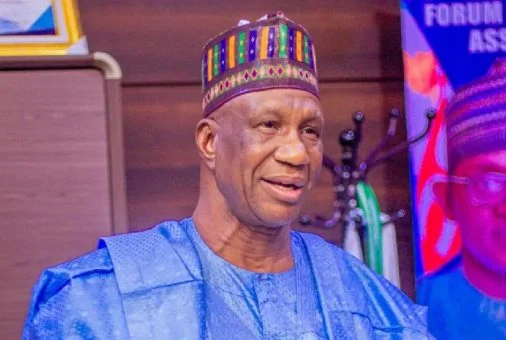
Alhaji Baba Mallam Wali, also widely known as Bamalum Wali, is one of the most distinguished technocrats and public administrators in northeastern Nigeria.
A career civil servant who rose through the ranks over four decades, he has served as the Secretary to the Yobe State Government (SSG) under two successive governors, Governor Ibrahim Gaidam and Governor Mai Mala Buni earning a reputation as a consummate administrator, a stabilising force in government, and a trusted custodian of state policy.
In 2026, he resigned from the SSG office and emerged as the preferred consensus governorship candidate of the Yobe State APC for the 2027 election, catapulting him from the corridors of bureaucracy into the full glare of Nigerian political life.
| Alhaji Baba Mallam Wali | |
|---|---|
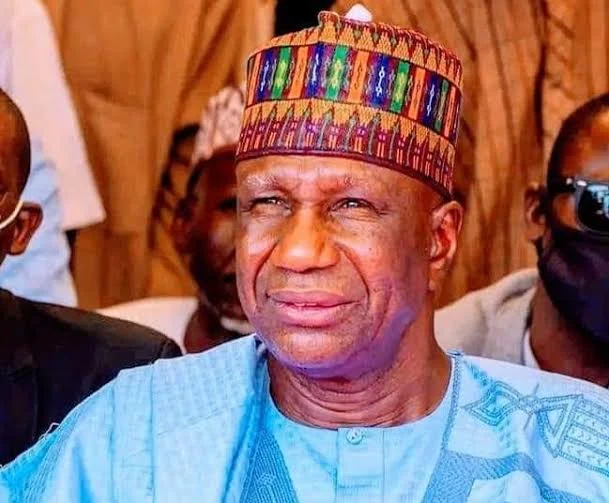 Alhaji Baba Mallam Wali: History · Bio · Photo
|
|
| Wiki Facts & About Data | |
| Full Name: | Alhaji Baba Mallam Wali |
| Stage Name: | Bamalum Wali, Baba Malam Wali |
| Born: | December 25, 1958 |
| Age: | 67 years old |
| Birthplace: | Nguru, Yobe State, Nigeria |
| State of Origin: | Yobe State |
| Nationality: | Nigerian |
| Occupation: | Public Administrator, Politician |
| Religion: | Islam |
| Parents: | Mallam Shettima Modu (Father), Hajiya Fatima Muhammad (Mother) |
| Relationship: | Married |
Early Life
Alhaji Baba Mallam Wali was born on December 25, 1958, in Nguru, a town in what is today Yobe State in northeastern Nigeria.
He was born into the family of Mallam Shettima Modu and Hajiya Fatima Muhammad, a Muslim household rooted in the culture and traditions of the northeastern Nigerian community. Nguru, the town of his birth, is the headquarters of Nguru Local Government Area and sits within the broader socio-cultural landscape of the Hausa-Fulani majority region of the northeast.
Growing up in Nguru in the late 1950s and 1960s, Baba Mallam Wali came of age in a society that placed great value on formal education as a pathway to public service and community leadership.
His family, though not among the most privileged, understood the importance of schooling their children. From an early age, Wali displayed the focus, discipline, and intellectual curiosity that would go on to define a remarkable career spanning over four decades of public service.
His upbringing in the northeast of Nigeria, with its unique administrative culture and tradition of civil service excellence, shaped his values and his lifelong commitment to governance and institutional development.
Education
Baba Mallam Wali’s educational journey is one that reflects both his personal determination and the gradual development of educational infrastructure in post-colonial Nigeria.
He began his formal education at Ngilewa Primary School, Nguru, which he attended from 1965 to 1972. He then proceeded to Government Secondary School, Nguru, where he completed his secondary education between 1972 and 1977.
For his tertiary education, Wali enrolled at the School of Basic Studies, Ahmadu Bello University (ABU), Zaria, from 1977 to 1978, as a preparatory foundation course.
He was subsequently admitted into the main university and studied at Ahmadu Bello University, Zaria, graduating in 1981 with a Bachelor of Arts (Hons) degree in Geography.
Determined to deepen his academic and professional credentials, he returned to ABU in 1984 and completed a Master of Science (M.Sc.) degree in Rural Development in 1986.
Wali’s educational pursuits did not stop at Nigerian shores. He further studied at the University of Reading, United Kingdom in 1993, broadening his exposure to international development thinking and policy.
In 2007, he attended the Thames Valley University, UK, adding yet another layer of international academic experience to his already formidable credentials.
He also attended the prestigious National Institute for Policy and Strategic Studies (NIPSS), Kuru, where he participated in the Senior Executive Course 36 one of Nigeria’s most elite leadership development programmes, from which participants earn the post-nominal title mni (Member of the National Institute).
He is listed in the Biographical Legacy and Research Foundation (BLERF) of Nigeria as a distinguished administrator.
Career
Baba Mallam Wali’s career in public service is one of the most distinguished in Yobe State’s administrative history, spanning over four decades and cutting across federal development agencies, state governments, and international development programmes.
Early Career Chad Basin Development Authority (1982–1987)
After completing his National Youth Service Corps (NYSC) programme in 1981/1982, during which he taught at Abaji and Kwali Secondary Schools in the Federal Capital Territory, Wali began his professional career in 1982 as a Planning Officer at the Chad Basin Development Authority (CBDA).
Over the course of five years at the CBDA, he distinguished himself and rose through the ranks to become the Head of Planning Division at the South Chad Irrigation Project in New Marte a major agricultural development initiative in northeastern Nigeria. This early experience gave him a deep grounding in rural planning, resource management, and institutional administration.
Social Mobilisation MAMSER (1987–1989)
Between 1987 and 1989, Wali served as a Social Mobilisation Officer for Nguru Local Government under the Directorate for Social Mobilisation (MAMSER), a federal government initiative aimed at promoting civic consciousness and social development across Nigeria.
This role deepened his engagement with grassroots communities and gave him direct insight into the challenges of poverty, public participation, and local governance.
Borno State Government Principal Personnel Officer (1989–1990)
In 1989, Wali transferred his service to the Borno State Government as a Principal Personnel Officer, and by 1990 had risen to the role of Principal Secretary to the Military Administrator of Borno State a high-responsibility position that placed him at the heart of state executive governance during a period of military administration in Nigeria.
North East Arid Zone Development Programme NEAZDP (1990–1999)
In November 1990, Wali was seconded to the North East Arid Zone Development Programme (NEAZDP), an integrated rural development programme jointly funded by the Federal Government of Nigeria, the European Union, and the Borno and Yobe State Governments.
Starting as a senior officer and later serving as Deputy Programme Manager from 1995, he eventually rose to the top position of Programme Manager, a role he held from 1996 to 1999. The NEAZDP was a landmark development initiative that targeted agricultural productivity, rural infrastructure, and livelihood improvement across the arid northeast, and Wali’s management of the programme earned him considerable professional respect.
NAPEP Pioneer Yobe State Coordinator (2000–2003)
In a notable federal appointment, Wali was selected in the year 2000 by President Olusegun Obasanjo as the pioneer Yobe State Coordinator of the National Poverty Eradication Programme (NAPEP). This appointment recognised his track record in development administration and his deep knowledge of the northeastern socio-economic landscape. He served in this capacity for three years, coordinating poverty alleviation interventions across Yobe State at the grassroots level.
Return to Yobe State Service Director and Permanent Secretary (2003–2015)
After completing his tenure at NAPEP in 2003, Wali returned to the Yobe State Government and served as a Director in several ministries. He was appointed Permanent Secretary in 2007 and successively served in the Ministry of Youth and Sports, the Ministry of Transport and Energy, and the Ministry of Environment.
He later served as the Permanent Secretary, Administration and General Services, in the Office of the Secretary to the State Government the most senior permanent secretary role in the Yobe State civil service structure.
Secretary to the Yobe State Government First Appointment (2015)
In July 2015, following the dissolution of the Yobe State Executive Council on May 28, 2015, Governor Ibrahim Gaidam appointed Alhaji Baba Mallam Wali as the substantive Secretary to the Yobe State Government (SSG), with immediate effect.
The appointment, announced by the governor’s Director of Press, Abdullahi Bego, recognised Wali’s exceptional administrative record and his deep understanding of the state’s governance needs. As SSG, Wali became the chief coordinator of the state’s executive machinery, overseeing policy implementation, inter-ministerial coordination, and administrative governance across all arms of the Yobe State Government.
Reappointment Under Governor Mai Mala Buni (2019)
When Governor Mai Mala Buni assumed office in May 2019 following the conclusion of the governorship election, he reappointed Baba Mallam Wali first in an acting capacity, and subsequently as the substantive SSG.
Governor Buni’s decision to retain the SSG of the outgoing administration was a strong signal of confidence in Wali’s administrative abilities and a commitment to continuity of governance. Buni specifically cited Wali’s excellent skills in coordinating and implementing government policies, enhancing synergy among stakeholders, and promoting transparency and accountability in government.
Second Term as SSG Sworn In (2023)
In November 2023, Alhaji Baba Mallam Wali was officially sworn in for a second full term as Secretary to the Yobe State Government by Governor Mai Mala Buni at a ceremony held at the Banquet Hall, Government House, Damaturu.
Governor Buni praised Wali as a highly competent administrator and underscored the importance of the SSG’s office as the hub of government administration. By this point, Wali had served in the SSG office for over eight years, making him one of the longest-serving SSGs in Yobe State’s political history.
Key Achievements as SSG
Among the notable contributions Baba Mallam Wali made during his tenure as SSG, the following stand out:
He chaired the Local Organising Committee for the 5th Lake Chad Basin Governors’ Forum, an important regional platform aimed at promoting cooperation, stabilisation, and development among the Lake Chad Basin states of Nigeria, Niger, Cameroon, and Chad. His leadership of the committee was widely praised for its organisational effectiveness.
He played a prominent role in representing Yobe State at high-level national and international forums, consistently reaffirming the government’s commitment to addressing the humanitarian crisis of internal displacement caused by the Boko Haram insurgency in the northeast.
In October 2024, Wali chaired the entry meeting for the Solution for Internally Displaced Persons and Host Communities (SOLID) Project, an initiative aimed at creating sustainable interventions for IDPs and their host communities in Yobe State.
He was instrumental in promoting transparency, accountability, and administrative efficiency within the Yobe State Government, ensuring that the SSG’s office served as an effective coordinator of government business across all ministries, departments, and agencies.
Resignation and 2027 Governorship Bid
In 2026, Baba Mallam Wali resigned from his position as SSG to pursue the 2027 Yobe State Governorship election.
His resignation followed his endorsement at the Yobe State APC Critical Stakeholders Forum on April 23, 2026, in Abuja a meeting presided over by Governor Mai Mala Buni and former Governor Ibrahim Gaidam (now the Minister of Police Affairs) as the party’s preferred consensus governorship candidate.
The forum described Wali as a “seasoned technocrat” with the qualifications, patience, and temperament required for effective leadership, noting his long record of active participation in Yobe State governance as qualifying him for continuity of the state’s development vision.
However, the endorsement triggered significant political resistance. A group of six APC governorship aspirants the so-called “G-6” comprising Senator Ibrahim Mohammed Bomai (Yobe South), Bashir Sheriff Machina, Kashim Musa Tumsah, Engr. Mustapha Yunusa Maihaja, Lawan Kolo Geidam, and former Inspector-General of Police Mohammed Alkali Baba jointly rejected the consensus arrangement, arguing it violated the Electoral Act and the APC constitution, and demanding free, fair, and transparent primary elections.
The matter remained an active political controversy as of mid-2026, with Governor Buni indicating the party had not foreclosed the possibility of direct primaries to settle the question of the APC’s gubernatorial flag bearer for 2027.
Political Life
Baba Mallam Wali is a member of the All Progressives Congress (APC), Nigeria’s ruling political party.
Though he spent the bulk of his career as a non-partisan civil servant and administrator, his appointment as SSG under two separate governorship administrations and his emergence as the preferred gubernatorial successor of Governor Buni firmly establishes him as a significant figure in Yobe State’s APC political structure.
His political journey is characterised by technocratic credibility rather than partisan activism, a factor that both his supporters and critics have highlighted in debates over the 2027 governorship race.
Social Media
Alhaji Baba Mallam Wali maintains a relatively low social media presence, consistent with his identity as a career administrator who has historically operated within institutional rather than public-facing roles.
His activities are primarily covered through official government communications, state media, and news outlets rather than through personal social media accounts.
As his political profile has grown heading into the 2027 election cycle, his name and activities have attracted increased coverage across Nigerian digital news platforms, including Daily Trust, Premium Times, Daily Post Nigeria, and Blueprint Newspapers, among others.
Personal Life
Alhaji Baba Mallam Wali is a married man. He is a devout Muslim, which is reflected in his name, his lifestyle, and his professional conduct.
While detailed information about his spouse and children has not been extensively published in the public domain consistent with the private nature he has maintained throughout his career he is known to be deeply rooted in the Nguru community where he was born, and he has retained strong ties to Yobe State throughout his professional journey.
Those who have worked with Wali describe him as calm, composed, detail-oriented, and principled qualities that have earned him the respect of political leaders across party lines.
He is a Member of the National Institute (mni), having completed the Senior Executive Course at the National Institute for Policy and Strategic Studies (NIPSS), Kuru a distinction that marks him as part of Nigeria’s elite class of trained public sector leaders.
As he approaches the twilight of his civil service career and steps into full-scale political life, Wali carries with him decades of institutional memory, governance experience, and administrative goodwill that position him as a credible if contested candidate for the highest political office in Yobe State.
Net Worth
Alhaji Baba Mallam Wali’s exact net worth is not publicly disclosed, as is the case with most Nigerian civil servants and administrators.
However, given his over four decades of continuous service in senior public sector roles including as a Programme Manager in a European Union-funded development programme, a federal NAPEP coordinator appointed by President Obasanjo, multiple Permanent Secretary postings, and over a decade as Secretary to the Yobe State Government his financial profile is that of a senior, well-compensated Nigerian public official.
His primary sources of income throughout his career have been government salaries and allowances commensurate with his senior executive roles.
As he transitions into political life with a governorship ambition, his profile and visibility have increased considerably, drawing attention both to his governance record and his personal standing in Yobe State’s political economy.
Career Timeline
| Year | Role / Position |
| 1981 – 1982 | NYSC Service Teacher, Abaji & Kwali Secondary Schools, FCT |
| 1982 – 1987 | Planning Officer / Head of Planning Division, Chad Basin Development Authority (CBDA) |
| 1987 – 1989 | Social Mobilisation Officer, Nguru LGA (MAMSER) |
| 1989 – 1990 | Principal Personnel Officer / Principal Secretary to Military Administrator, Borno State |
| 1990 – 1999 | Deputy Programme Manager (1995), then Programme Manager, NEAZDP |
| 2000 – 2003 | Pioneer Yobe State Coordinator, National Poverty Eradication Programme (NAPEP) |
| 2003 – 2007 | Director, Various Yobe State Ministries |
| 2007 – 2015 | Permanent Secretary Ministry of Youth & Sports; Ministry of Transport & Energy; Ministry of Environment; Admin & General Services |
| 2015 – 2019 | Secretary to the Yobe State Government (SSG) under Governor Ibrahim Gaidam |
| 2019 – 2026 | SSG (Acting, then Substantive; Second Term sworn in 2023) under Governor Mai Mala Buni |
| 2026 – Present | APC Governorship Aspirant, Yobe State (2027 Election) |
FAQs
Who is Baba Mallam Wali?
Alhaji Baba Mallam Wali, also known as Bamalum Wali, is a senior Nigerian public administrator and politician from Nguru, Yobe State. He served as the Secretary to the Yobe State Government (SSG) under Governors Ibrahim Gaidam and Mai Mala Buni, spanning over a decade of executive service. He is currently pursuing the Yobe State governorship under the APC for the 2027 elections.
Where is Baba Mallam Wali from?
He is from Nguru, in Yobe State, northeastern Nigeria. His hometown and state of origin are both Nguru/Yobe State.
What is Baba Mallam Wali’s educational background?
He holds a BA (Hons) in Geography and an M.Sc. in Rural Development, both from Ahmadu Bello University, Zaria. He also studied at the University of Reading (UK), Thames Valley University (UK), and completed the Senior Executive Course at NIPSS, Kuru, earning the post-nominal title mni.
When was Baba Mallam Wali appointed SSG of Yobe State?
He was first appointed as the substantive SSG of Yobe State in July 2015 by Governor Ibrahim Gaidam. He was retained by Governor Mai Mala Buni in 2019 and sworn in for a second full term in November 2023.
Is Baba Mallam Wali running for governor of Yobe State?
Yes. As of 2026, Baba Mallam Wali has resigned from the SSG office and emerged as the APC’s preferred consensus governorship candidate for the 2027 Yobe State governorship election, endorsed at the APC Critical Stakeholders Forum on April 23, 2026. However, his emergence has been contested by six other APC aspirants who demand a primary election.
What does mni stand for after Baba Mallam Wali’s name?
The post-nominal mni stands for Member of the National Institute, awarded to graduates of the Senior Executive Course at the National Institute for Policy and Strategic Studies (NIPSS), Kuru, Nigeria one of the country’s most prestigious leadership development programmes for senior public officials.
What is Baba Mallam Wali known for?
He is best known for his long and distinguished career in public administration in Yobe State and northeastern Nigeria, his decade-long service as Secretary to the Yobe State Government, his role as pioneer NAPEP coordinator in Yobe State, his management of the NEAZDP development programme, and his emergence in 2026 as the preferred APC candidate for the 2027 Yobe governorship election.
Conclusion
Alhaji Baba Mallam Wali’s biography is the story of a man who dedicated his life to the service of his state and country not through the loud theatre of politics, but through the quiet, disciplined work of public administration.
From a planning officer at the Chad Basin Development Authority in 1982 to the most senior civil servant in the Yobe State Government, his journey spans over four decades of institutional contribution, rural development work, poverty alleviation programming, and executive governance.
Now standing at the threshold of political leadership as the preferred successor to Governor Mai Mala Buni, Baba Mallam Wali carries with him a record that few aspirants in the 2027 Yobe gubernatorial race can match in terms of breadth, depth, and continuity of service.
Whether he emerges from a consensus arrangement or a competitive primary, the narrative of his life and work makes him one of the most consequential figures in Yobe State’s recent political history.
His story is a testament to the enduring value of patience, education, and dedicated public service and a reminder that the path to political leadership does not always run through noise and spectacle, but sometimes through decades of quiet, purposeful work in the service of one’s people.
Related People







Leave a Reply