
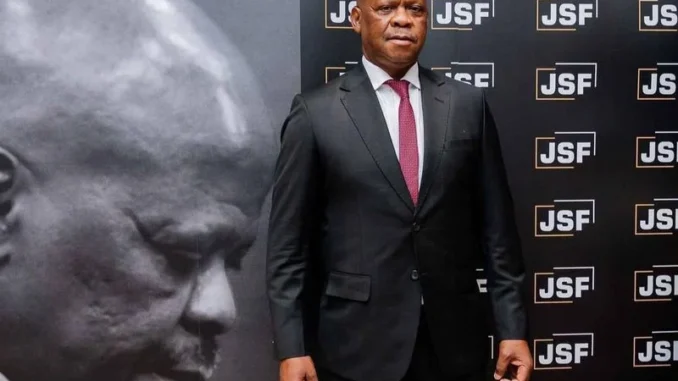
Joe Ferrari Sibanyoni, full name Madoda Joe Sibanyoni is one of South Africa’s most powerful, most colourful, and most controversial figures in the taxi industry. Sibanyoni’s rise is the stuff of township legend.
From the dusty taxi ranks of Kwaggafontein in Mpumalanga in 1985, where a young man began driving a minibus to earn a living, he has built a transport and business empire of extraordinary breadth spanning minibus taxis, trucking, property, mining, construction, and information technology.
He earned the nickname “Joe Ferrari” not from any affiliation with the Italian car manufacturer but from his well-documented passion for high-end sports cars, reportedly including four actual Ferraris.
His influence across South Africa’s most important taxi corridors from Soshanguve and Mamelodi in the north of Tshwane to Hammanskraal and Atteridgeville has made him one of the most significant power brokers in the transport sector for three decades.
On 12 May 2026, Joe Ferrari Sibanyoni was arrested in an early-morning raid by the Special Task Force at his home. He appeared on Wednesday, 13 May 2026, at the Kwaggafontein Magistrate’s Court in Mpumalanga alongside co-accused Mvimbi Daniel Masilela and Philemon Msiza. The trio faces charges of extortion and two counts of money laundering after being arrested by members of the South African Police Service.
His arrest the most dramatic personal crisis of a career already marked by extraordinary volatility sent shockwaves through South Africa’s taxi industry and national media landscape, and placed the full weight of public scrutiny on a man who has navigated decades of controversy with the characteristic combination of community philanthropy, industry power, and steadfast personal denial that defines his public identity.
| Madoda Joe Sibanyoni | |
|---|---|
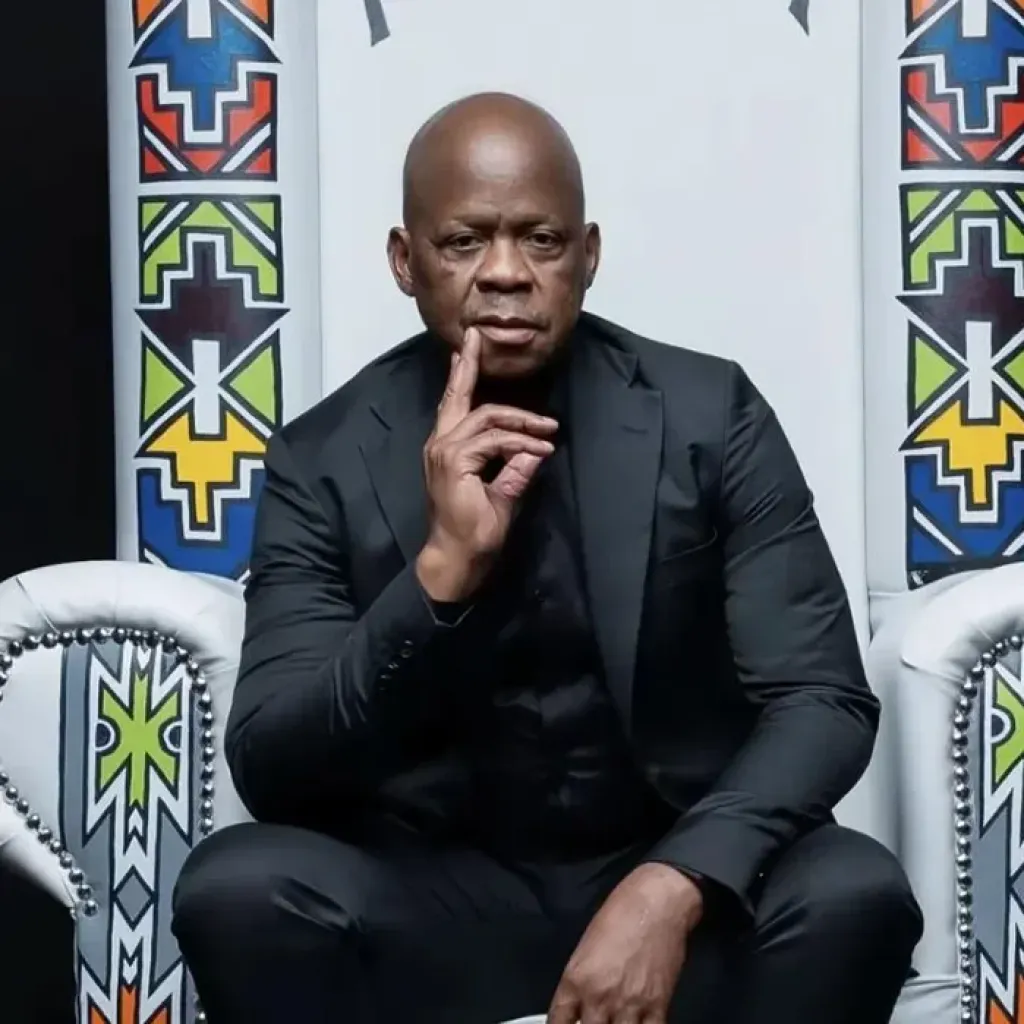 Madoda Joe Sibanyoni: History · Bio · Photo
|
|
| Wiki Facts & About Data | |
| Full Name: | Madoda Joe Sibanyoni |
| Stage Name: | Joe Ferrari; Joe Sibanyoni; Mr Joe Ferrari |
| Age: | 60 Years Old |
| Birthplace: | Mpumalanga, South Africa |
| Nationality: | South African |
| Occupation: | Businessman, Transport Tycoon, Taxi Boss, Philanthropist |
| Religion: | Zion Christian Church (ZCC) |
| Children: | Fourteen children |
| Net Worth: | R200 Million – R300 Million |
Early Life
Born in Mpumalanga, Madoda Joe Sibanyoni grew up in Kwaggafontein a township in the Nkangala District of Mpumalanga province, situated near the town of Middelburg.
Kwaggafontein is a community whose social and economic character was shaped, like much of Mpumalanga, by the proximity of coal mining and associated industries, by the daily realities of a township economy, and by the particular combination of resilience and resourcefulness that characterises communities historically excluded from mainstream economic participation.
I have learned the true value of hard work and self-reliance from my father, Sibanyoni has said in public statements a rare personal disclosure that reveals the paternal influence on the values that have driven his extraordinary entrepreneurial career.
His upbringing was not one of privilege; it was one shaped by the kind of everyday economic precarity that produces either defeat or the fierce ambition to escape it. For Sibanyoni, it produced the latter.
He is a staunch member of the Zion Christian Church (ZCC) the largest African-initiated church in southern Africa, with millions of members and a culture of spiritual discipline, community solidarity, and personal integrity that has shaped generations of South African working-class and professional families.
His ZCC membership is an important part of his public identity and one he has consistently affirmed including in his court appearance following his May 2026 arrest, when he stated: “I am a man of God.”
He has three wives and fourteen children a family configuration that is publicly acknowledged and that reflects both the polygamous traditions of certain South African cultural communities and the financial capacity to maintain multiple substantial family households. The specific names of his wives and children are not publicly disclosed in any verified source.
Education
Specific details about Joe Sibanyoni’s formal educational background the schools he attended, the qualifications he obtained, and his academic record are not documented in any publicly available verified source.
Consistent with the biographical profile of many South African self-made business figures from township backgrounds in the 1970s and 1980s, his formal schooling would have taken place within the Bantu Education system a system designed by the apartheid government to provide black South African children with an inferior, deliberately limited education that prepared them for manual labour rather than professional or managerial careers.
That Sibanyoni built a multi-hundred-million-rand business empire despite this deliberately compromised educational starting point is itself a measure of his entrepreneurial intelligence and personal determination.
His real education like many of South Africa’s most formidable self-made businessmen was the education of the street, the taxi rank, the driver’s seat, and the negotiating table of the taxi industry’s often violent and always competitive economic environment.
Career
Taxi Driver Kwaggafontein (1985–1995)
Mr Sibanyoni started his career in the taxi industry as a taxi driver almost 40 years ago in 1985 in the dusty streets of Kwaggafontein in the Mpumalanga Province. The year 1985 placed him at the beginning of the minibus taxi industry’s extraordinary growth era in South Africa a period when deregulation of the public transport sector opened the door for private operators to fill the massive gap left by inadequate state-provided public transport in townships across the country. The minibus taxi rapidly became the primary mode of transport for millions of black South Africans, and with that centrality came enormous economic power for those who controlled the routes.
For ten years, Sibanyoni worked as a driver in the taxi ranks of Kwaggafontein learning the industry from its most fundamental level: understanding routes, building relationships with commuters and rank marshals, navigating the complex and often violent world of taxi association politics, and accumulating the savings and the knowledge that would eventually allow him to make the leap from employee to owner.
First Taxi Purchase (1995)
In 1995 he managed to buy his own taxi vehicle. He entered the industry as a taxi driver in 1985 and bought his first taxi in 1995. The purchase of his first minibus taxi in 1995 ten years after he had begun driving for others was the defining moment that set him on the path from worker to entrepreneur. In the taxi industry, owning your vehicle is not merely an economic step; it is a statement of independence, ambition, and arrival. From that first vehicle, everything else followed.
Building the Transport Empire (1995–2024)
From a single minibus in the 1980s, he built a transport empire now estimated at R300 million. Over time, he diversified into trucking, property, mining, IT and construction, cementing his reputation as both a risk-taker and empire builder.
The progression from a single minibus taxi to an empire is not linear or simple it involves navigating the particular politics of the South African taxi industry, where routes are valuable assets contested through a combination of association membership, negotiation, and, frequently, violence.
IRS Forensics investigator Chad Thomas told eNCA that Sibanyoni currently operates roughly 400 taxis. He is rumoured to have over 400 taxi vehicles.
Operating 400 minibus taxis is an extraordinary scale of ownership placing him among the largest individual taxi fleet owners in South Africa. Each minibus taxi generates daily revenue that, across a fleet of 400 vehicles operating across multiple routes in multiple provinces, represents a cash flow of tens of millions of rands per month.
Sibanyoni’s influence stretches across Pretoria’s townships Soshanguve, Mamelodi, Hammanskraal, and Atteridgeville as well as the manicured suburbs of Mooikloof and Waterkloof, where he is regarded as both a power broker and a benefactor.
His geographic reach across Tshwane’s most important commuter corridors reflects both the scale of his taxi operations and the social and political influence that comes with controlling transport infrastructure that millions of ordinary South Africans depend on daily.
Leadership in Taxi Associations
He has been involved in the leadership circles of various taxi associations like the South African Black Taxi Association (SABTA) in 1995, then SALTA and SANTACO.
His progression through the leadership structures of South Africa’s taxi association hierarchy from local Vukanini Taxi Association through regional bodies to national structures mirrors his business expansion and reflects the importance of associational politics in the taxi industry, where the ability to influence or control route allocation, fare-setting, and operational rules is as important as fleet size in determining market position.
Joe has been re-elected three times since his first election to the committee, with his third re-election taking place in 2022. On his third re-election, he stated publicly: “To be re-elected doesn’t mean that I must relax, I must work harder for the members.
That is a huge responsibility, and another concern is to clean up the Vukanini Taxi Association by removing all of those who are doing dirty things within the association. We can’t have people who want to kill others, and as we speak, some children are starving and without their parents as a result of their fathers being killed.”
This public commitment to cleaning up the association reflects the Robin Hood dimension of his public persona the taxi boss who publicly deplores the violence that his industry is widely associated with, even as his own career has unfolded within the same violent ecosystem.
President SALLTBO (2024–Present)
Two years ago, following the death of taxi boss Jotham “Mswazi” Msibi, Sibanyoni was elevated to president of the South African Local and Long-Distance Taxi and Bus Association (SALLTBO), an ascent that further consolidated his standing in the industry.
SALLTBO the South African Local and Long-Distance Taxi and Bus Organisation is one of South Africa’s major national taxi umbrella bodies, coordinating the interests of taxi associations across provincial boundaries and engaging with government on transport policy, route regulation, and industry matters.
His elevation to the SALLTBO presidency following Msibi’s death in January 2024 placed him at the apex of South Africa’s taxi industry power structure.
Joe Sibanyoni Foundation (Launched November 2024)
The Joe Sibanyoni Foundation was launched at a glittering ceremony at the Menlyn Time Square in Tshwane. The launch attended by SANTACO president Abner Tsebe, Advocate Busisiwe Mkhwebane, and various taxi association leaders was one of the most high-profile philanthropic events in the South African taxi industry in recent years.
The Joe Sibanyoni Foundation (JSF) is a Not for Profit Company founded to lead the subjects of transformation of the lives of black people of South Africa, existing as a special purpose vehicle to address the socio-economic challenges of unemployment, unemployability, and marginalisation facing black South African communities.
The launch of the foundation is very special to me because it is the culmination of the journey of my life and all that I have gone through. I have realised from a young age that my wish to become a better person doesn’t rest solely in the hands of the government. The Joe Sibanyoni Foundation is a vehicle that will be used to uplift the people and communities around me, he said at the launch. He also addressed unemployed graduates directly, vowing that the JSF would be a catalyst for graduate employment and economic empowerment.
Quoting the late USA President JF Kennedy from his 1962 inauguration speech, Sibanyoni said: “Ask not what the country can do for you, ask what you can do for your country.” The use of Kennedy’s famous words at a South African taxi industry event was both unexpected and revealing reflecting Sibanyoni’s aspiration to be seen not merely as a business figure but as a civic leader with a genuine vision for national development.
Controversies
Attempted Murder Centurion Golf Estate Shooting (August 2022)
Taxi boss Joe “Ferrari” Sibanyoni sustained two gunshot wounds to the stomach after shots were fired from a white BMW at the Centurion Golf and Country Club estate in August 2022. The shooting one of dozens of serious incidents of violence connected to the South African taxi industry’s turf wars in recent years left Sibanyoni fighting for his life.
During a failed bail application for Matlala last year, related to the botched hit on his former girlfriend Tebogo Thobejane, the court heard that Sibanyoni was shot outside Centurion Golf Estate in Pretoria in August 2022, in another botched hit. The court heard that Vusimuzi “Cat” Matlala the alleged underworld figure facing multiple criminal charges was linked to the alleged plot against Sibanyoni’s life.
The Madlanga Commission of Inquiry
Sibanyoni has surfaced multiple times in proceedings at the Madlanga Commission, which is probing links between organised crime figures, business interests and elements within law enforcement.
The Madlanga Commission formally the Commission of Inquiry into allegations of criminal activity, corruption and misconduct in the South African Police Service has become one of the most significant ongoing judicial inquiries in South Africa, exposing alleged links between business figures, taxi bosses, police officials, and organised crime networks.
In the testimony of suspended organised crime head Major-General Richard Shibiri, he described Sibanyoni as an influential industry figure but denied he was part of the alleged “Big Five” criminal network. Shibiri acknowledged that Sibanyoni’s influence deepened following Msibi’s death, even as he sought to distance him from cartel leadership.
That distinction has been contested. Under cross-examination, Shibiri was confronted with recorded evidence suggesting deeper knowledge of a network of powerful businessmen linked to organised crime and mining interests.
Testimony from suspended police sergeant Fannie Nkosi added another layer to the allegations. Nkosi told the commission that he acted as a conduit between senior police officials and organised crime figures, and described close links between himself, Msibi and Matlala. He also alleged that Sibanyoni was part of this broader network, including frequenting Msibi’s farm and being positioned to assume greater leadership after Msibi’s death.
Taxi tycoon Joe “Ferrari” Sibanyoni demonstrated that he is not an average Joe when he ended his bromance with the late former taxi boss Jotham “Mswazi” Msibi after discovering that he was entangled with the now-infamous criminal cartel called the “Big Five”. He decided to keep Msibi at arm’s length when Msibi started warming up to members of the alleged notorious gang. Sibanyoni has consistently distanced himself from all allegations of organised crime involvement.
Records presented to the commission show a police officer visited Sibanyoni’s residence at least 12 times between March 2024 and September 2025, raising further questions about the nature of their relationship.
Extortion and Money Laundering Arrest (May 2026)
On 12 May 2026, prominent Mpumalanga taxi boss Joe Sibanyoni, also known as “Ferrari“, was arrested during an early morning raid at his home by heavily armed police officers. The 60-year-old businessman was detained at a police station in Middelburg. The arrest was linked to an extortion investigation. He was taken in by the Special Task Force in Pretoria in the early hours of the morning.
Sibanyoni appeared on Wednesday, 13 May 2026, at the Kwaggafontein Magistrate’s Court in Mpumalanga alongside co-accused Mvimbi Daniel Masilela and Philemon Msiza. The trio faces charges of extortion and two counts of money laundering. It is alleged that the accused extorted money, reportedly R2 million, from a businessman over a prolonged period.
Sibanyoni has denied any involvement. “I am a man of God,” he stated outside the court. He is represented by former National Director of Public Prosecutions (NDPP) Advocate Shaun Abrahams one of South Africa’s most senior and recognisable legal figures, whose retention to lead Sibanyoni’s defence is itself an indicator of the seriousness and the resources brought to bear on the case.
Abrahams criticised the National Prosecuting Authority, accusing it of failing to engage with the defence legal team. “They have ignored our telephone calls, the investigating officer switched off his telephone, and the Director of Public Prosecutions didn’t come back to us. We are not happy with the game they are playing,” he told reporters outside the court.
As of the date of publication 14 May 2026 the case is continuing. The charges have not been proven in court and Sibanyoni is entitled to the presumption of innocence.
Links to “Cat” Matlala and Royal AM
Sibanyoni is also closely linked to Umkhonto Wesizwe Party Member of Parliament and former SuperSport United communications director, David “Mazolman” Skosana. Sibanyoni has also been linked, in testimony, to a turbulent relationship with notorious tender tycoon and alleged underworld figure, Vusimusi “Cat” Matlala.
Sibanyoni and an associate recently submitted a joint R15 million bid to a South African Revenue Service (SARS)-appointed curator to acquire Royal AM the Premier Soccer League club that had come under SARS curatorship following tax compliance issues. His interest in acquiring a professional football club was widely noted in South African media as another dimension of the extraordinary breadth of his commercial ambitions.
Luxury Lifestyle
His lifestyle mirrors his success: multimillion-rand homes, a fleet of luxury vehicles and, reportedly, four Ferraris.
The “Ferrari” nickname now inseparable from his public identity originates precisely from this documented passion for high-end sports cars, and specifically from the multiple Ferraris that have been associated with his ownership over the years.
His multimillion-rand homes across Pretoria’s most affluent neighbourhoods including the manicured suburbs of Mooikloof and Waterkloof represent a lifestyle that is entirely removed from the dusty taxi ranks of Kwaggafontein where his story began four decades ago.
The contrast between his public persona as a community philanthropist and the material opulence of his personal lifestyle is one of the defining tensions of his public biography.
He has acknowledged this tension directly, stating at the Foundation launch: “I have lived a life of privilege and I am grateful about it, and I believe that God blesses people like him so that they in turn can be a blessing to other people.”
Social Media
Joe Ferrari Sibanyoni maintains a public profile through the Joe Sibanyoni Foundation’s official digital channels and through his broader presence across South African social media, where he is discussed extensively by commentators, journalists, and members of the taxi industry community.
His personal social media accounts are not widely publicised, consistent with his preference for managing his public image through the Foundation’s institutional platforms and through personal statements delivered at official events and to the media.
- Joe Sibanyoni Foundation Website: joesibanyoni.mdumbeglobal.co.za the official platform for the Foundation’s activities, board membership, and vision statement.
- Social media presence: The Joe Sibanyoni Foundation has an active Facebook presence and the Foundation’s launch at Menlyn Time Square was widely covered across South African digital media platforms.
Personal Life
He has three wives and fourteen children and is a staunch member of the Zion Christian Church (ZCC). His polygamous family arrangement three wives and fourteen children is publicly acknowledged and reflects both his cultural traditions and his substantial financial capacity to maintain multiple households. The names and specific details of his wives and children are not publicly disclosed.
He is described across multiple accounts of his character as simultaneously a tough, ruthless operator in one of South Africa’s most competitive and violent industries, and a genuine community figure who is deeply invested in the welfare of the people around him.
In Pretoria’s townships, he is regarded as both a power broker and a benefactor. The Robin Hood dimension of his public persona the powerful man who gives back coexists with the more troubling allegations that have attended his career and that have come to a head in his May 2026 arrest.
His personal courage is documented: surviving two gunshot wounds to the stomach in the August 2022 Centurion shooting, and returning to his public role in the industry without apparent diminishment of his energy or ambition, reflects the kind of personal resilience that the taxi industry has historically both demanded and produced in its most powerful figures.
Net Worth
Joe Sibanyoni is valued at R200 million due to his presence in the industry. From a single minibus in the 1980s, he built a transport empire now estimated at R300 million.
Various sources place his net worth in the range of R200 million to R300 million, with some suggesting even higher figures given the breadth of his diversified business interests.
His primary assets include his fleet of approximately 400 minibus taxis each valued at between R300,000 and R500,000 new, representing a fleet value alone of between R120 million and R200 million as well as his trucking operations, property holdings across Pretoria’s townships and suburbs, interests in mining and construction, and his IT business.
His personal assets including multiple homes in Mooikloof and Waterkloof and his fleet of luxury vehicles including reportedly four Ferraris add further to his total wealth picture.
The extortion and money laundering charges currently before the Kwaggafontein Magistrate’s Court, if ultimately resulting in conviction, could have significant implications for his business empire and personal assets. However, the case is in its earliest stages and no final determination has been made.
Frequently Asked Questions (FAQs)
Who is Joe Ferrari Sibanyoni?
Joe Ferrari Sibanyoni full name Madoda Joe Sibanyoni is a South African taxi tycoon, businessman, and philanthropist from Kwaggafontein, Mpumalanga. He is the founder of MySol Foundation (Joe Sibanyoni Foundation), the Executive President of SALLTBO, a leader in the Vukanini Taxi Association, and the owner of one of South Africa’s largest individual taxi fleets estimated at approximately 400 vehicles. He is nicknamed “Joe Ferrari” for his passion for luxury cars, reportedly including four actual Ferraris.
How old is Joe Ferrari Sibanyoni?
Based on reports at the time of his arrest in May 2026 describing him as a “60-year-old businessman,” Joe Ferrari Sibanyoni is approximately 60 years old as of 2026.
Where is Joe Ferrari Sibanyoni from?
He was born in Mpumalanga and is originally from Kwaggafontein the township near Middelburg where he began his taxi driving career in 1985.
When was Joe Sibanyoni arrested?
He was arrested in an early-morning Special Task Force raid on 12 May 2026 and appeared at the Kwaggafontein Magistrate’s Court in Mpumalanga on 13 May 2026, alongside co-accused Mvimbi Daniel Masilela and Philemon Msiza. The trio faces charges of extortion and two counts of money laundering related to the alleged extortion of R2 million from a businessman over a prolonged period.
What is SALLTBO?
SALLTBO the South African Local and Long-Distance Taxi and Bus Organisation is a national taxi umbrella body that coordinates taxi associations across provincial boundaries and engages with government on transport policy. Sibanyoni was elevated to its presidency following the death of the previous president, Jotham “Mswazi” Msibi, in January 2024.
What is the Joe Sibanyoni Foundation?
The Joe Sibanyoni Foundation (JSF) is a not-for-profit organisation founded by Madoda Joe Sibanyoni and launched in November 2024 at Menlyn Time Square in Tshwane. It focuses on addressing unemployment, unemployability, and marginalisation in black South African communities through education, empowerment, and social welfare programmes.
How many wives and children does Joe Sibanyoni have?
He has three wives and fourteen children. He is a member of the Zion Christian Church (ZCC). The names of his wives and children are not publicly disclosed.
What is the “Big Five” cartel?
The “Big Five” is an alleged criminal cartel comprising former police officers and businessmen that has been a central focus of the Madlanga Commission of Inquiry. The cartel has been linked to taxi violence, corruption, and the infiltration of senior SAPS positions. Sibanyoni has distanced himself from the alleged cartel, though his name has appeared in commission testimony in connection with associated figures.
What happened in the Centurion Golf Estate shooting?
In August 2022, Sibanyoni was shot twice in the stomach outside the Centurion Golf and Country Club estate in Pretoria when shots were fired from a white BMW. The alleged plot against his life has been linked in court proceedings to Vusimuzi “Cat” Matlala, who is facing charges relating to this and other alleged criminal acts.
What is Joe Ferrari Sibanyoni’s net worth?
His net worth is estimated at between R200 million and R300 million, based on his taxi fleet of approximately 400 vehicles, trucking operations, property holdings across Pretoria’s townships and suburbs, and interests in mining, construction, and IT. Some sources suggest the figure could be higher given the full breadth of his business diversification.
Conclusion
Joe Ferrari Sibanyoni’s biography is one of the most genuinely complex stories in South African contemporary public life a story that resists easy classification as either heroic self-made success or criminal enterprise.
Sibanyoni’s rise is the stuff of township legend from the taxi ranks of Kwaggafontein in 1985 to a transport empire estimated at R300 million, four Ferraris, and homes in Mooikloof and Waterkloof is a journey that few South Africans from his background could have made, and that millions find genuinely inspiring.
The philanthropic dimension of his career the Joe Sibanyoni Foundation’s commitment to unemployed graduates, educational empowerment, and community transformation reflects a genuine desire to use his success in service of the community that shaped him, and adds a layer of social purpose to what might otherwise appear to be pure accumulation.
His commitment to cleaning up the Vukanini Taxi Association, his public denunciations of taxi violence, and his ZCC faith all speak to a man who sees himself and wants to be seen as a force for good in a deeply troubled industry.
And yet the Madlanga Commission testimony, the 2022 shooting, the alleged underworld connections, and the May 2026 extortion and money laundering charges collectively paint a more complicated picture one in which the boundaries between legitimate business, political influence, and criminal enterprise are less clear than any simple narrative of township-boy-made-good would suggest. As his case proceeds through the South African judicial system, the full picture of Joe Ferrari Sibanyoni’s life and legacy will be for the courts and for history to determine.
What is not in dispute is the scale of what he has built, the complexity of the man who built it, and the extraordinary story however it ultimately resolves of a boy from Kwaggafontein who drove a minibus taxi in 1985 and built one of South Africa’s most talked-about transport empires from that single, ordinary beginning.
Related People







Leave a Reply